
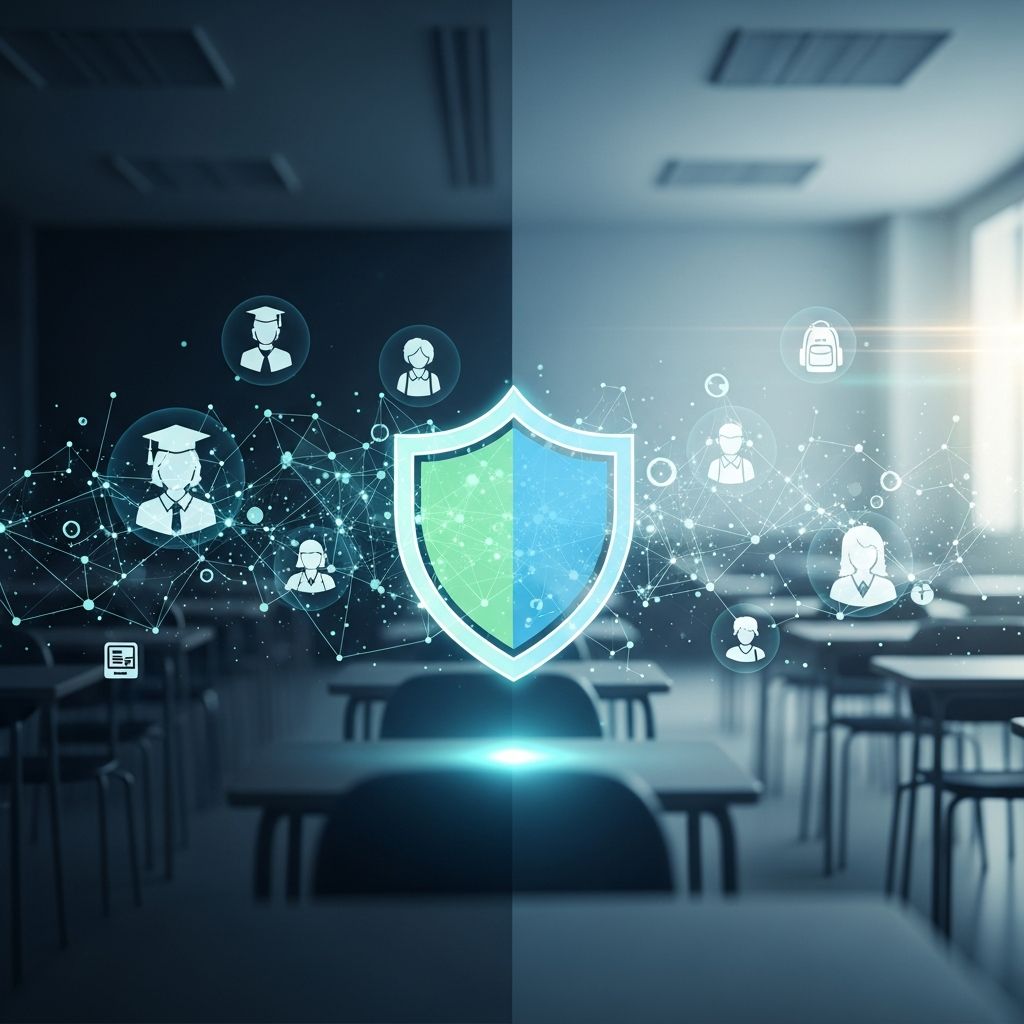
Artificial intelligence, particularly natural language processing (NLP), is transforming education by personalizing learning and automating assessments. However, these advancements introduce significant privacy challenges for student data, including personal identifiers, academic performance, and behavioral insights. Protecting this sensitive information requires vigilance from educators, administrators, and edtech providers to comply with laws and mitigate risks.
Understanding AI and NLP in Educational Settings
AI tools powered by NLP analyze text and speech to generate feedback, grade assignments, and create individualized plans. These systems process vast amounts of student-generated content, from essays to voice recordings, enabling efficient evaluation but also raising concerns about data exposure. For instance, platforms used for reading apps or writing aids interpret student inputs to provide real-time support, yet mishandling can lead to misinterpretations or unauthorized sharing.
Educators often input student work into general-purpose AI for tasks like lesson planning, unaware that such data might train models or be accessed by others. This practice underscores the need for tools designed specifically for education, which incorporate privacy safeguards from the outset.
Key Privacy Risks Posed by AI Tools
- Data Retention and Model Training: Many AI platforms retain user inputs to improve their algorithms, potentially exposing student details to future queries or third parties.
- Third-Party Sharing: Information entered may be shared for advertising or sold, harming students long-term through targeted profiling.
- Bias and Mislabeling: NLP errors can inaccurately label students, affecting records and opportunities.
- Breaches and Surveillance: Sensitive data like health records or disciplinary history becomes vulnerable without robust security.
Teachers report avoiding AI for sensitive tasks like Individualized Education Programs (IEPs) to prevent leaks, highlighting a widespread awareness gap.
Legal Frameworks Protecting Student Information
Federal laws form the backbone of student privacy protections in the U.S. The Family Educational Rights and Privacy Act (FERPA), enacted in 1974, safeguards education records from unauthorized disclosure without consent. It applies to schools receiving federal funds and restricts sharing personally identifiable information (PII) unless exceptions like school official purposes apply.
| Law | Scope | Key Requirements |
|---|---|---|
| FERPA | Students in federally funded schools | Parental consent for PII disclosure; annual notifications |
| COPPA | Children under 13 using online services | Parental verifiable consent for data collection |
| State Laws | Varies by state | Often stricter; limit non-educational uses of data |
COPPA mandates parental consent for collecting data from children under 13 via online services, crucial for AI apps involving student inputs. State regulations frequently exceed federal standards, prohibiting edtech firms from using data beyond K-12 purposes without district approval.
Best Practices for Educators Using AI
To minimize risks, educators must adopt proactive measures:
- Review platform policies on data usage, retention, and sharing before inputting any student information.
- Avoid entering PII; anonymize data by describing scenarios without names or identifiers.
- Select edtech tools with built-in safeguards, such as alerts for sensitive content and no-training agreements.
- Implement access controls like multi-factor authentication and limit permissions.
For example, some educational AI platforms automatically detect and redact PII, anonymize queries, and contractually prohibit model training on user data. Districts can mandate templates where AI outputs are reviewed and populated manually.
School-Wide Strategies for Data Security
Administrators play a pivotal role in establishing district policies. Comprehensive data governance includes:
- Conducting privacy impact assessments for new AI tools.
- Training staff on legal compliance and ethical AI use.
- Communicating transparently with parents about tools, data practices, and opt-out options.
- Partnering with vendors under strict contracts defining data purposes and destruction timelines.
Teaching digital literacy to students fosters awareness of privacy, encouraging responsible online behavior and recognition of cyber threats.
Ethical Considerations in AI Deployment
Beyond compliance, ethical deployment addresses biases in NLP algorithms that could disadvantage certain student groups. Over-reliance on AI risks diminishing human oversight in nuanced educational decisions. Balancing innovation with privacy ensures technology enhances, rather than undermines, learning equity.
Proposals for updating FERPA reflect AI’s evolution, with states introducing bills to regulate data in edtech explicitly.
Frequently Asked Questions
What should teachers do before using AI for student work?
Check the platform’s privacy policy, avoid PII, and confirm data isn’t used for training or ads. Opt for education-specific tools with safeguards.
Does FERPA cover AI-generated insights?
Yes, if derived from education records, FERPA protections apply, requiring secure handling and limited disclosure.
How can parents get involved in AI tool approvals?
Districts should notify parents, provide tool details, and secure consent where required, especially under COPPA for young children.
Are there AI tools safe for grading assignments?
Select platforms like those anonymizing inputs and prohibiting data retention; always review outputs manually.
What if a data breach occurs?
Follow district protocols, notify affected parties per law, and conduct audits to prevent recurrence.
Future Directions for Privacy in EdTech
As AI integrates deeper into education, collaboration between policymakers, educators, and developers is essential. Emerging standards, inspired by codes like the U.K.’s Age Appropriate Design Code, prioritize child welfare in tech design. Districts adopting these proactively position themselves as leaders in ethical innovation.
By embedding privacy-by-design principles, education can reap AI benefits—scalable assessments, personalized tutoring—without compromising student rights. Ongoing research distinguishes routine data use from research risks, refining protections accordingly.
References
- AI tools used by teachers can put student privacy and data at risk — Chalkbeat. 2024-12-13. https://www.chalkbeat.org/2024/12/13/ai-tools-used-by-teachers-can-put-student-privacy-and-data-at-risk/
- AI in Ed Tech: Privacy Considerations for AI-powered Ed Tech tools — Loeb & Loeb LLP. 2022-03-01. https://www.loeb.com/en/insights/publications/2022/03/ai-in-ed-tech-privacy-considerations-for-aipowered-ed-tech-tools
- Student and Educator Data Privacy — National Education Association (NEA). 2025-06-20. https://www.nea.org/professional-excellence/student-engagement/tools-tips/student-and-educator-data-privacy
- FERPA – Protecting Student Privacy — U.S. Department of Education. 2026. https://studentprivacy.ed.gov/ferpa
- AI and the Law: What Educators Need to Know — Edutopia. N/A. https://www.edutopia.org/article/laws-ai-education/

Medha Deb is an editor with a master's degree in Applied Linguistics from the University of Hyderabad. She believes that her qualification has helped her develop a deep understanding of language and its application in various contexts. Medha specializes in the areas of beauty, health, sports, and wellness and is committed to ensuring that the content on the website is…