
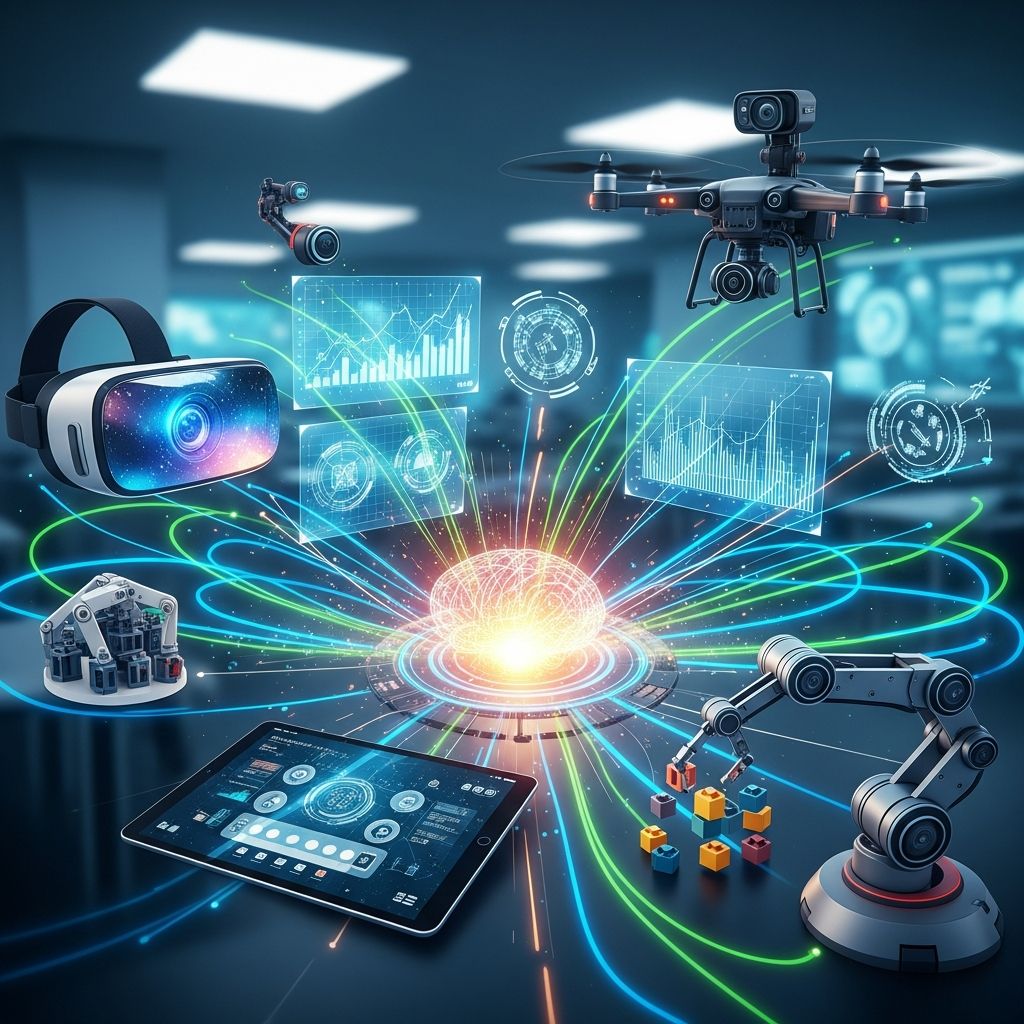
Digital innovations are reshaping education by enabling students to move beyond rote memorization toward meaningful skill development. These tools support complex cognitive processes, real-world application, and interpersonal dynamics essential for future success.
Understanding Deeper Learning Fundamentals
Deeper learning emphasizes competencies like analysis, synthesis, creativity, and collaboration over surface-level recall. It prepares learners for dynamic careers by cultivating adaptability and problem-solving prowess. Educational frameworks highlight four key dimensions: advanced cognitive demands, authentic tasks, learner ownership, and tech integration.
Traditional instruction often prioritizes standardized tests measuring basic facts, limiting growth in higher-order skills. In contrast, deeper approaches use technology to create immersive, interactive environments where students tackle genuine challenges.
Key Technologies Empowering Educational Depth
Several cutting-edge technologies stand out for their ability to facilitate profound learning experiences.
- Intelligent Tutoring Systems: These AI-driven platforms provide personalized guidance, adapting to individual needs in real-time. They analyze student responses to offer targeted feedback, promoting mastery in subjects like mathematics.
- Virtual and Augmented Reality: VR immerses users in simulated environments, allowing exploration of historical events or scientific phenomena without physical constraints. AR overlays digital information on the real world, enhancing understanding through interactive visualizations.
- Natural Language Processing (NLP): NLP tools evaluate written work by assessing structure, argumentation, and coherence, delivering formative insights that refine critical thinking and communication.
- Game-Based Simulations: These engage learners in scenario-based challenges that mirror professional contexts, building decision-making under uncertainty.
Promoting Collaboration Through Digital Platforms
Learning thrives in social contexts, yet many tools focus on solitary use. Modern platforms bridge this gap by enabling seamless group interactions.
Shared digital workspaces allow multiple users to co-edit documents, slides, or designs simultaneously. Teachers monitor progress live, intervening with timely input. Discussion forums enhanced by AI detect engagement levels, predicting success based on interaction quality.
| Collaboration Tool | Key Features | Deeper Learning Benefit |
|---|---|---|
| Shared Docs & Slides | Real-time editing, comments | Fosters teamwork and iterative refinement |
| AI-Moderated Forums | Social presence analytics | Enhances discourse and accountability |
| VR Group Simulations | Multi-user virtual spaces | Builds empathy and collective problem-solving |
Assessing Complex Skills Innovatively
Measuring deeper competencies requires moving past multiple-choice formats. Technology enables nuanced evaluation of skills like critical thinking and creativity.
Game-based assessments embed challenges within engaging narratives, capturing behaviors indicative of higher-order thinking. NLP analyzes essays for depth of argument, while machine learning models predict growth trajectories from interaction data.
One effective method involves adaptive feedback loops: students receive suggestions on revising content for stronger logic and evidence, iteratively improving output.
Redesigning Lessons for Maximum Impact
Effective integration demands intentional lesson overhaul. Protocols like the 4 Shifts guide educators: shift to deeper thinking tasks, authentic contexts, student-driven choices, and robust tech use.
- Inquiry-Driven Projects: Students investigate real issues, using tools like drawing apps to prototype solutions for community problems.
- Blended Personalization: Combine self-paced modules with group critiques, leveraging data analytics for tailored paths.
- Creative Expression: Platforms for design and AI generation encourage originality while teaching ethical use.
Real-World Applications and Case Studies
Programs worldwide demonstrate success. In adult education, VR headsets simulate job scenarios, boosting employability skills. Math platforms during disruptions sustained progress via adaptive exercises. ELA resources with quizzes advanced reading comprehension remotely.
Research underscores potential: studies link forum participation metrics to outcomes, while writing tools correlate revision patterns with enhanced reasoning.
Challenges and Pathways Forward
Despite promise, hurdles persist. Rapid iteration may favor measurable gains over subtle ones. Equity issues arise without universal access. Collaborative designs lag behind individual tools.
Solutions include accelerated R&D in learning engineering—iteratively testing platforms with educators. Investments in infrastructure ensure inclusivity. Teacher training emphasizes ethical AI deployment.
Frequently Asked Questions
What distinguishes deeper learning from traditional methods?
Deeper learning prioritizes higher-order skills like analysis and collaboration over memorization, using tech for authentic, student-centered experiences.
How can teachers start integrating these tools?
Begin with familiar platforms like shared docs for collaboration, then layer in AI feedback and VR for immersion. Use redesign protocols for guidance.
Are these technologies accessible for all schools?
Many are cloud-based and scalable, but success depends on professional development and equitable device access.
What evidence supports their effectiveness?
Studies show gains in writing, math proficiency, and engagement, particularly in remote settings and skill-building simulations.
Can AI replace teachers in deeper learning?
No—AI augments by handling personalization and assessment, freeing educators for facilitation and relationship-building.
References
- Harnessing Technology for Deeper Learning — Scott McLeod and Julie Graber. Solution Tree. 2018-10-01. https://eric.ed.gov/?id=ED594962
- Learning Technology for Deeper Learning — The Learning Agency Lab. 2023-01-01. https://the-learning-agency-lab.com/the-learning-curve/learning-technology-for-deeper-learning/
- 10 Ways to Foster Deeper Learning with Technology — Hāpara Blog. 2023-05-15. https://hapara.com/blog/10-ways-to-foster-deeper-learning-in-the-classroom-with-technology/
- The Role of Digital Technologies in Deeper Learning — Jobs for the Future (JFF). 2022-11-10. https://www.jff.org/idea/role-digital-technologies-deeper-learning/
- Harnessing Technology for Deeper Learning Excerpt — Solution Tree Press. 2022-10-01. https://www.otb.ie/wp-content/uploads/2022/10/Harnessing-Technology-EXCERPT.pdf

Medha Deb is an editor with a master's degree in Applied Linguistics from the University of Hyderabad. She believes that her qualification has helped her develop a deep understanding of language and its application in various contexts. Medha specializes in the areas of beauty, health, sports, and wellness and is committed to ensuring that the content on the website is…