
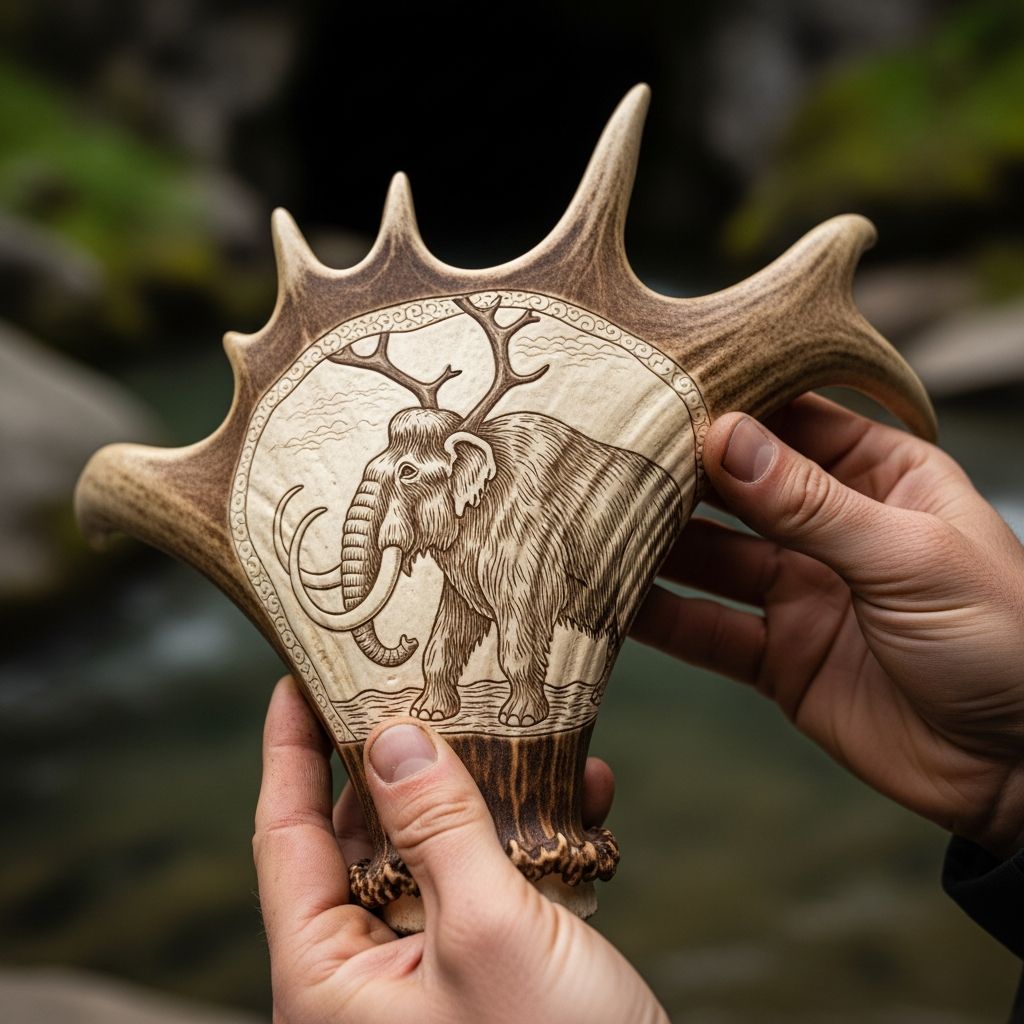
Portable art encompasses small, movable objects crafted by early humans during the Upper Paleolithic period, typically from materials like bone, ivory, antler, and stone. These artifacts, distinct from fixed cave paintings, highlight the ingenuity and nomadic lifestyle of prehistoric peoples.
Defining the Essence of Movable Prehistoric Creations
At its core, portable art—also known as mobiliary art—refers to compact artistic expressions that prehistoric communities could transport easily. Unlike the stationary parietal art found in deep caves, these pieces were integral to daily life and migration patterns. Crafted primarily between 40,000 and 10,000 years ago, they demonstrate advanced technical skills and symbolic thinking in hunter-gatherer societies across Eurasia and beyond.
These objects served multiple roles: from practical tools adorned with engravings to symbolic figurines possibly linked to fertility rites or spiritual beliefs. Their portability allowed them to accompany people on hunts, travels, and seasonal moves, preserving cultural expressions amid constant motion.
Materials and Techniques: Crafting with Nature’s Gifts
Prehistoric artisans selected durable, accessible materials suited to their mobile existence. Ivory from mammoth tusks provided a smooth canvas for intricate carvings, while reindeer antler offered resilience for tools like spear points and harpoons. Bone from hunted animals was abundant and versatile, often incised with geometric patterns or animal forms.
Techniques varied from simple scratching with flint tools to sophisticated engraving and low-relief sculpting. Some pieces feature painted elements, though engraving dominated due to its permanence on hard surfaces. This diversity underscores the Magdalenian culture’s (c. 17,000–12,000 BCE) exceptional creativity, evident in the sheer volume and variety of surviving artifacts.
- Ivory: Prized for fine detail, used in figurines like the Venus of Willendorf.
- Bone and Antler: Common for utilitarian items with decorative motifs.
- Stone: Pebbles and plaques etched with figures or abstracts.
- Clay: Rare molded sculptures, often fired for durability.
Iconic Examples That Captivate Modern Imagination
Among the most renowned are the Venus figurines, small statuettes emphasizing exaggerated female forms, discovered across Europe. Over 200 examples exist, dating from 35,000 to 10,000 BCE, suggesting roles in fertility cults or amulets for safe childbirth.
| Artifact | Date (BCE) | Material | Location Found | Key Features |
|---|---|---|---|---|
| Venus of Willendorf | ~25,000 | Limestone | Austria | Exaggerated breasts, hips; stylized face. |
| Lion-Man of Hohlenstein-Stadel | ~40,000 | Mammoth ivory | Germany | Human-animal hybrid, 31 cm tall. |
| Batons de commandement | ~20,000 | Antler | France | Engraved with animals; possible ritual use. |
| Swimming Reindeer | ~13,000 | Antler | France | Dual-figure carving showing motion. |
These pieces, often under 20 cm, reveal a mastery of form and narrative, with therianthropes—hybrid human-animal figures—hinting at shamanistic practices or mythological worlds.
Contrasting Portable and Parietal Art Forms
While portable art was personal and mobile, parietal art adorned cave walls with large-scale murals of beasts and symbols, likely tied to communal rituals. Sites like Lascaux and Chauvet exemplify parietal grandeur, but portable works offer intimate glimpses into individual creativity.
- Portability: Carried by individuals vs. fixed in caves.
- Scale: Small and handheld vs. monumental wall scenes.
- Purpose: Daily/ritual use vs. ceremonial/sacred spaces.
- Distribution: Widespread finds vs. concentrated in specific caves.
This duality enriches our understanding of prehistoric expression, showing art permeated both transient and permanent aspects of life.
Cultural Significance and Interpretive Debates
Portable art illuminates social structures, beliefs, and economies. Animal depictions dominate, reflecting hunting prowess and totemic reverence, while human figures suggest concerns with reproduction and identity. Therianthropes, like the Lion-Man, may represent shamans bridging human and spirit realms.
Debates persist: Were Venuses fertility idols, self-portraits, or trade goods? Their stylistic variations across regions indicate cultural exchanges along migration routes. Magdalenian abundance points to specialized artisans, hinting at emerging social complexity.
Archaeological Discovery and Preservation Challenges
Thousands of pieces have surfaced from sites like La Madeleine in France and Dolní Věstonice in Czechia, often preserved in anaerobic cave sediments. Modern techniques like 3D scanning reveal hidden details, aiding authentication and study.
Challenges include fragmentation, weathering, and looting. Climate change threatens organic materials, urging global conservation efforts.
Modern Relevance: Lessons from Ancient Hands
Portable art challenges views of prehistoric people as primitive, showcasing cognitive sophistication akin to modern artists. It informs anthropology on symbolism’s universality and inspires contemporary sculpture.
In education, these artifacts teach about human adaptability, fostering appreciation for intangible heritage.
Frequently Asked Questions (FAQs)
What distinguishes portable art from other prehistoric art?
Portable art consists of small, movable objects like carvings and figurines, unlike fixed parietal art on cave walls.
What periods are associated with portable art?
Primarily the Upper Paleolithic (40,000–10,000 BCE) and Mesolithic eras.
Why are Venus figurines significant?
They represent possible fertility symbols, with over 200 found across Europe, highlighting female-centric themes.
What materials were commonly used?
Bone, ivory, antler, stone, and occasionally clay for durable, portable pieces.
How do therianthropes factor into portable art?
These human-animal hybrids suggest shamanic or spiritual beliefs, exemplified by the Lion-Man figurine.
Exploring Further: Key Sites and Collections
Major repositories include the British Museum and French prehistoric shelters, housing engravings on tools and pebbles. Sites like Abri du Poisson yield decorated spears, blending utility and aesthetics.
Recent finds in South Africa extend portable art’s reach, suggesting African origins for symbolic behavior.
References
- Portable art — Wiktionary. Accessed 2026. https://en.wiktionary.org/wiki/portable_art
- Portable art and decorative items — French Ministry of Culture. Accessed 2026. https://archeologie.culture.gouv.fr/sculpture-prehistoire/en/portable-art-and-decorative-items
- Portable Art: Art History I – Prehistory to Middle Ages — Fiveable. Accessed 2026. https://fiveable.me/art-prehistoric-to-middle-ages/key-terms/portable-art
- Portable art — Wikipedia. Accessed 2026. https://en.wikipedia.org/wiki/Portable_art
- portable art — British Museum Collection. Accessed 2026. https://www.britishmuseum.org/collection/term/x333642
- Paleolithic Cave Art and Portable Art — Humanities LibreTexts (Coalinga College). 2023-10-15. https://human.libretexts.org/Courses/Coalinga_College/The_Human_Story:_An_Introduction_to_the_Humanities/02:_Prehistory/2.03:_Paleolithic_Cave_Art_and_Portable_Art

Medha Deb is an editor with a master's degree in Applied Linguistics from the University of Hyderabad. She believes that her qualification has helped her develop a deep understanding of language and its application in various contexts. Medha specializes in the areas of beauty, health, sports, and wellness and is committed to ensuring that the content on the website is…