
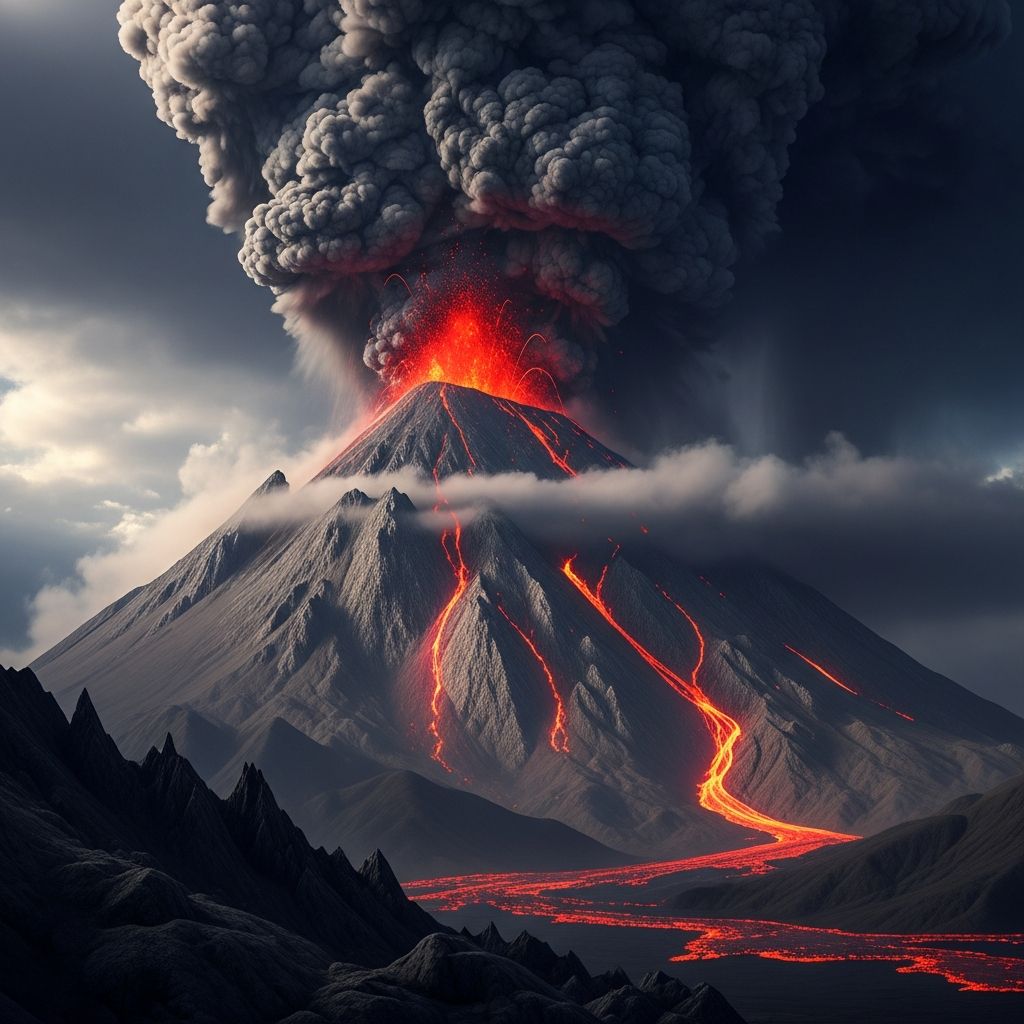
Volcano models have long been a staple in science education, captivating learners with their explosive demonstrations of chemical reactions. Adding a layer of **smoke** elevates the project from a simple fizz to a mesmerizing display reminiscent of real volcanic activity. This guide explores safe, effective techniques to produce billowing vapors using household items and dry ice, combined with the timeless baking soda and vinegar eruption. Whether for a school fair, homeschool lesson, or family fun, these methods ensure safety while maximizing visual impact.
Understanding Volcanic Smoke and Eruptions
Real volcanoes emit smoke-like plumes from gases, ash, and superheated particles escaping the magma chamber. In science models, we replicate this with **sublimation**—the process where dry ice (solid carbon dioxide) turns directly into gas upon warming, creating dense fog when interacting with warm water. This fog rises dramatically from the crater, setting the stage for the acid-base reaction that produces foamy ‘lava.’ Educational value lies in teaching phase changes, chemical reactions, and geological concepts hands-on.
Benefits include engaging multiple senses: visual mist, bubbling sounds, and even a faint, fresh scent from the fog. These projects align with STEM curricula, fostering curiosity about earth sciences.
Gathering Materials for Your Smoke Volcano
Assemble these accessible supplies to build a sturdy, reusable model:
- Plastic bottle (500ml, as the crater core)
- Cardboard or foam board base (A3 size or larger)
- Newspaper or brown paper bags for structure
- Flour, water, and salt for papier-mâché paste
- Acrylic paints (browns, grays, reds, oranges)
- Dry ice (small chunks, about 50g; source from grocery stores or suppliers)
- Heavy gloves and tongs for handling dry ice
- Baking soda (1/2 cup), vinegar (1 cup), dish soap (2 tbsp), red food coloring
- Small cup or dish for water inside crater
- Tools: scissors, tape, hot glue gun, paintbrushes
**Pro Tip:** Dry ice is colder than -78°C, so always handle with protection to prevent frostbite. Plan ahead—dry ice sublimates quickly outside insulation.
Step-by-Step Construction of the Volcano Base
Building a stable foundation ensures your volcano withstands multiple eruptions.
Prepare the base: Cut a circle in the center of your cardboard slightly larger than the bottle bottom. This allows secure placement.
Position the bottle: Invert the bottle (neck up as crater) and glue it firmly to the base. Scrunch newspaper around it to form sloping sides, taping securely for a mound shape.
Apply papier-mâché: Mix 2 cups flour, 1 cup water, and a pinch of salt into a paste. Dip newspaper strips and layer over the form, smoothing for texture. Aim for 3-4 layers; let dry overnight between coats.
Paint and detail: Once dry, paint earthy tones, adding lava streaks and rocky textures with sponges or dry brushing. Seal with clear glue for durability.
This method yields a lightweight yet robust model, approximately 12-18 inches tall, perfect for tabletops.
Producing the Smoke Effect Safely
The highlight: generating **realistic smoke** without fire hazards. Dry ice in warm water creates carbon dioxide fog that mimics volcanic gases.
| Method | Materials | Pros | Cons |
|---|---|---|---|
| Dry Ice Fog | Dry ice chunk, warm water in small cup | Dense, rising mist; reusable | Requires gloves; short-lived (10-15 min) |
| Soap Bubble Smoke | Dish soap, water, glycerin | No special materials | Less dense; bubbles more than fog |
| Ammonium Chloride (Advanced) | Chemical pellets, heat source | Continuous smoke | Hazardous fumes; not for kids |
Primary Dry Ice Technique:
- Place a heat-safe cup inside the bottle crater, filled with 1/4 cup warm (not boiling) water.
- Wearing gloves, use tongs to drop a 2-3 cm dry ice piece into the water.
- Watch fog cascade and rise—add dish soap for bubble-enhanced plumes.
Safety first: Ventilate the area, supervise children, and never touch dry ice barehanded. Effects last until ice fully sublimates.
Triggering the Classic Eruption
After smoke sets the mood, initiate the eruption with a vigorous acid-base reaction.
- Pre-mix ‘lava’: Combine 4 tbsp baking soda, 2 tbsp dish soap, 1 tbsp water in a bowl for thicker foam.
- Scoop into crater: Pack around the water cup if smoke is active.
- Add activator: Pour 1/2 cup vinegar mixed with red food coloring swiftly.
The reaction produces carbon dioxide gas, foaming over like molten lava. Experiment: Increase soap for more bubbles or coloring for vivid flows.
Safety Guidelines and Best Practices
Prioritize protection in every step:
- Dry ice handling: Use insulated containers; thaw residues in ventilated spots.
- Chemical reactions: Wear goggles; avoid eyes and ingestion. Work on newspaper-covered surfaces for easy cleanup.
- Supervision: Ideal for ages 8+ with adult oversight.
- Allergies/Environment: Use food-safe dyes; dispose mixtures down drain with water flush.
Store dry ice in a cooler with ventilation holes. Never seal in airtight containers—pressure buildup risks explosion.
Creative Variations and Enhancements
Customize for wow-factor:
- LED Lights: Place battery LEDs inside for glowing magma effects during smoke.
- Miniature Scale: Use film canisters for palm-sized demos.
- Layered Eruptions: Alternate smoke and fizz cycles for prolonged shows.
- Themed Builds: Ocean base with blue paint or snowy peak with baking soda dusting.
For classrooms, scale up with shared dry ice stations. Record time-lapse videos to analyze reaction rates.
Educational Extensions and Science Lessons
Transform play into learning:
- Chemistry: Discuss endothermic sublimation vs. exothermic reactions.
- Geology: Compare to real volcanoes like Kilauea (Hawaiian shield) or Mount Vesuvius (stratovolcano).
- Math: Measure eruption height, foam volume, or fog duration; graph variables.
Challenge: Predict outcomes by altering ratios—e.g., more vinegar for faster, taller eruptions.
Frequently Asked Questions (FAQs)
What if I can’t get dry ice for smoke?
Substitute with a fog machine or mix dish soap, water, and glycerin in the crater, then blow gently for wispy effects. Alka-Seltzer in warm water offers mild bubbling vapor.
How long does the smoke last?
A standard chunk produces 5-15 minutes of fog, depending on size and water temperature. Add pieces sequentially for extended displays.
Is this safe for young children?
Yes, with adult supervision. Skip direct dry ice handling for under-12s; focus on observation.
Can I reuse the volcano model?
Absolutely—rinse thoroughly and dry. Papier-mâché withstands 10+ eruptions if sealed properly.
How do I clean up after?
Wipe foam with damp cloth; vinegar neutralizes residue. Recycle papier-mâché scraps.
Troubleshooting Common Issues
Encounter problems? Quick fixes:
- No smoke: Water too cold—warm to 40-50°C; ensure dry ice is fresh.
- Weak eruption: Fresh baking soda/vinegar; more soap for foam.
- Model tips over: Wider base, heavier weighting.
Word count: 1782 (excluding HTML tags).
References
- How To Make Smoke Come Out Of A Volcano — Sciencing. 2018-05-15. https://sciencing.com/make-smoke-come-out-volcano-8548973/
- How to make a volcano — Natural History Museum. Accessed 2026. https://www.nhm.ac.uk/discover/how-to-make-a-volcano.html
- Safe Dry Ice Handling Guidelines — CDC (Centers for Disease Control and Prevention). 2023-07-12. https://www.cdc.gov/niosh/topics/dryice/default.html
- Baking Soda and Vinegar Volcano Experiment — American Chemical Society. 2024-02-20. https://www.acs.org/education/resources/k-8/inquiryinaction/fifth-grade/chapter-1-investigating-matter-at-the-particle-level/lesson-1-2-erupting-volcano.html
- Phase Changes and Sublimation Education Resource — NASA Glenn Research Center (.gov). 2022-11-08. https://www.grc.nasa.gov/www/k-12/airplane/state.html

Medha Deb is an editor with a master's degree in Applied Linguistics from the University of Hyderabad. She believes that her qualification has helped her develop a deep understanding of language and its application in various contexts. Medha specializes in the areas of beauty, health, sports, and wellness and is committed to ensuring that the content on the website is…