
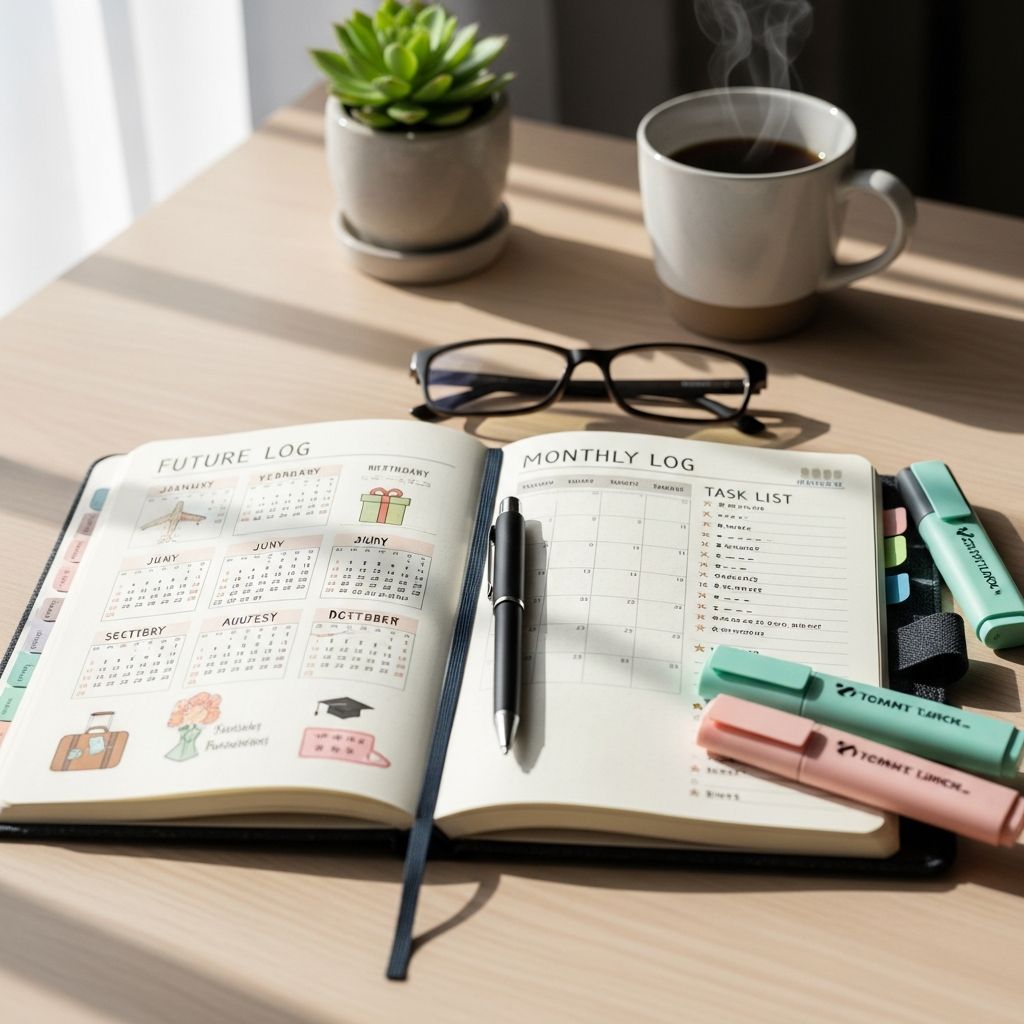
Transform chaos into clarity with bullet journaling, a flexible analog system that combines planning, tracking, and reflection into one customizable notebook. This method empowers users to craft a personalized tool for managing tasks, goals, and ideas without rigid templates.
Understanding the Bullet Journal Method
The bullet journal approach emphasizes mindful organization through rapid logging—short, actionable entries using simple symbols. Unlike digital apps or pre-printed planners, it encourages deliberate thought, fostering better focus and intentionality in daily life. Originating from designer Ryder Carroll’s need for a versatile system, it adapts to any lifestyle, from students to professionals.
Key benefits include enhanced productivity, reduced mental clutter, and creative expression. Studies on journaling show it improves memory retention and goal achievement by externalizing thoughts, making bullet journaling a scientifically supported habit for self-improvement.
Selecting the Right Tools
Begin with a sturdy dotted or grid notebook for flexibility—dotted grids allow precise alignments without lines constraining creativity. Recommended sizes are A5 for portability or A4 for detailed spreads. Pair it with archival-quality pens like fine-tip gel inks to prevent bleeding and ensure longevity.
Optional supplies include highlighters, washi tape, and stickers for personalization, but prioritize basics to avoid overwhelm. Digital enthusiasts can hybridize with apps for backups, though the core method thrives on analog tactility, which slows decision-making and boosts retention.
| Tool | Pros | Cons | Best For |
|---|---|---|---|
| Dotted Notebook | Versatile layouts | Slightly pricier | Custom spreads |
| Grid Notebook | Easy alignment | Less flexible | Beginners |
| Plain Notebook | Cheapest | Harder to rule lines | Minimalists |
| Gel Pens | Smooth, vibrant | May smudge | Color coding |
Building Your Journal’s Foundation
Start simple to grasp the system’s logic: future planning cascades to monthly, then daily views. Dedicate the first two pages to an Index, your dynamic table of contents. Number all pages as you go, logging start-end page ranges here for quick navigation.
- Page 1-2: Index
- Page 3-6: Future Log
- Page 7-8: Current Monthly Log
This structure ensures scalability—no need for consecutive pages, freeing you from wasted space in traditional planners.
Designing the Future Log
Create a six-month overview by drawing lines to form boxes across 2-4 pages. Label months vertically; fill with high-level events like birthdays or deadlines. This log feeds into monthly views, preventing overlooked commitments.
Example layout: Divide double-page spread into three rows (two months each), using circles for events and dots for tasks. Review quarterly to migrate unfinished items.
Establishing Monthly and Daily Structures
For your Monthly Log, title the page with the current month—start anytime, not just January. Left page: Calendar with dates and weekday initials. Right page: Task list using bullets: dot (•) for tasks, circle (○) for events, dash (-) for notes.
Daily logs flow organically: Date the top of a new page, rapid log today’s priorities. Keep entries concise—one line per item—for speed. At day’s end, review: Migrate (• to new page), schedule (○ to future), or strike (X) completed tasks.
Weekly Overviews for Balance
Enhance with weekly spreads: List days Monday-Sunday, pull tasks from monthly log. This bridges macro planning and micro execution, ideal for routines like workouts or meal preps.

Mastering Rapid Logging and Signifiers
Rapid logging is the heartbeat: Symbols streamline processing.
- • Task
- X Completed
- > Migrated
- < Scheduled
- ○ Event
- –
- Priority: Star (*)
- Inspiration: !
These keep logs scannable, turning reflection into action. Monthly migration—reviewing and carrying forward—builds accountability without guilt.
Customizing with Collections
Collections group related items: Books to read, habit trackers, project brainstorms. Title a new page, add to Index, populate with logs. Start with 3-5: Gratitude log, fitness tracker, finance overview.
Habit trackers use grids: Columns for days, rows for habits (e.g., water intake). Color-code success for motivation. Brainstorm first: What areas need tracking—health, career, relationships?
| Collection Type | Purpose | Example Entries |
|---|---|---|
| Habit Tracker | Build routines | Exercise, meditate, read |
| Gratitude Log | Mindfulness | Daily wins, appreciations |
| Project Board | Goal progress | Steps, deadlines, notes |
Creative Enhancements and Aesthetics
Once basics click, infuse personality: Hand-lettered headers, doodles, color themes. Use washi for dividers, stamps for fun. Themes like seasonal (fall tones) or minimalist (monochrome) keep it fresh without distracting from function.
Avoid ‘spread anxiety’—imperfect pages build authenticity. Photography apps digitize favorites for sharing in communities.
Overcoming Common Hurdles
Beginners falter on consistency; combat with 5-minute daily sessions. Burnout? Simplify—skip decorations. Notebook full? Start fresh, archiving old ones.
- Too busy? Log on-the-go with pocket notebook.
- Lost motivation? Review wins monthly.
- Perfectionism? Embrace ‘ugly journals’ movement.
Advanced Techniques for Long-Term Success
Layer in yearly logs for 12-month overviews, thread collections across journals. Integrate Pomodoro timers or mood trackers. Pair with apps like Notion for digital sync, maintaining analog core.
Annual migration ritual: Celebrate progress, refine intentions. This evolves your journal into a time capsule of growth.
Frequently Asked Questions (FAQs)
What is bullet journaling exactly?
A customizable analog system using a notebook for tasks, events, and notes via rapid logging and modular pages.
Do I need artistic skills?
No—focus on function; art is optional and improves with practice.
How often should I review my journal?
Daily for logs, weekly for migration, monthly for reflection.
Can I use a digital bullet journal?
Yes, but analog maximizes mindfulness benefits.
What’s the best notebook for starters?
Dotted grid A5, like Leuchtturm1917, for versatility.
Sustaining Your Bullet Journal Practice
Commit by aligning with values: Why journal? Track progress quarterly. Share in online forums for inspiration. Over time, it becomes a habit shaping proactive living.
Word count: 1723 (including HTML tags).
References
- How to Start a Bullet Journal for Beginners — Bullet Journal Official. 2023-05-15. https://bulletjournal.com/blogs/faq/how-to-start-a-bullet-journal-for-beginners
- How to Bullet Journal: The Absolute Ultimate Guide — The Lazy Genius Collective. 2022-08-10. https://www.thelazygeniuscollective.com/blog/how-to-bullet-journal
- Bullet Journal starten: Eine 4-Schritte-Anleitung — Punkt Kariert. 2023-01-20. https://www.punktkariert.de/bullet-journal-starten
- Bullet Journal Set-Up 2019 – Back to Basics — Sketchnotes by Diana. 2020-01-06. https://www.sketchnotes-by-diana.com/2020/01/06/bullet-journal-set-up-2019-back-to-basics/
- Bullet Journal for Beginners Playlist — YouTube. 2023-11-12. https://www.youtube.com/playlist?list=PLFmDbK4-NLnloAExNOEPVkibK0GAkEkq-

Medha Deb is an editor with a master's degree in Applied Linguistics from the University of Hyderabad. She believes that her qualification has helped her develop a deep understanding of language and its application in various contexts. Medha specializes in the areas of beauty, health, sports, and wellness and is committed to ensuring that the content on the website is…