
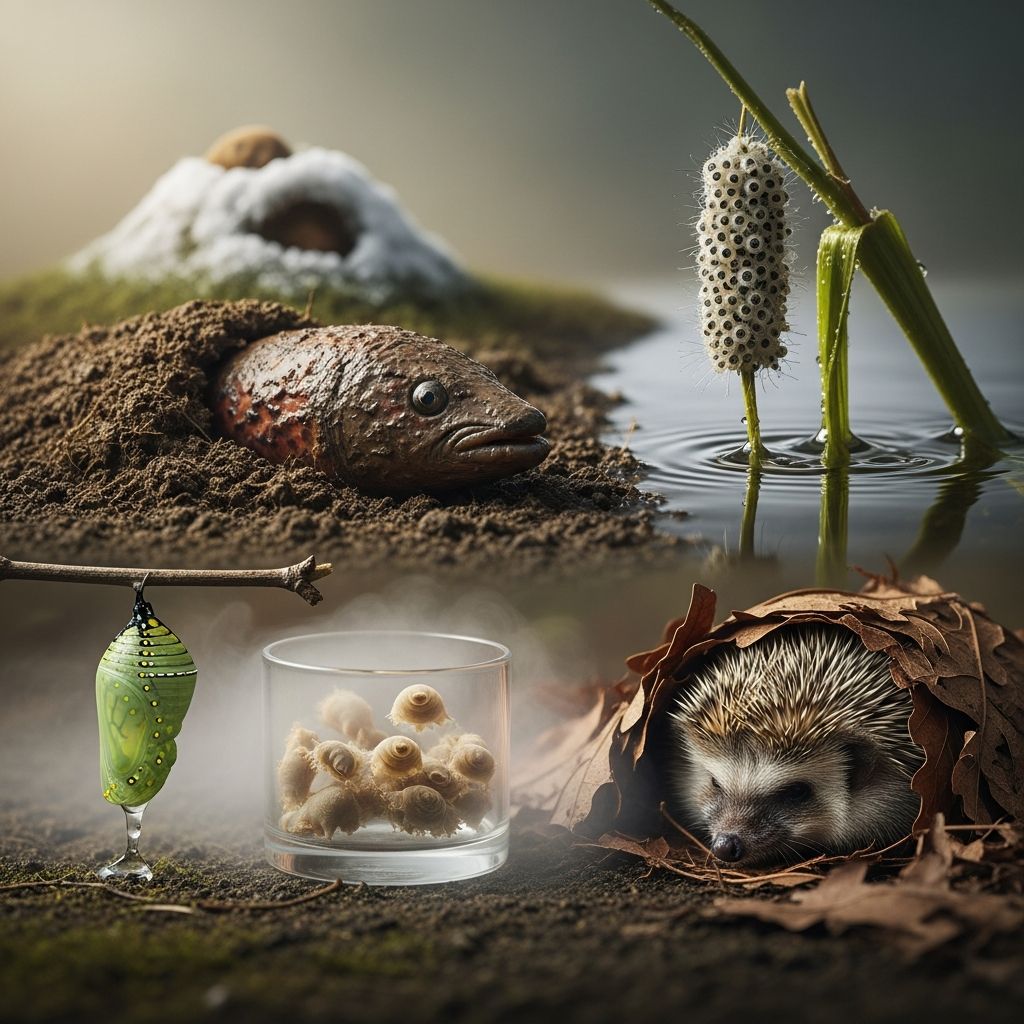
Diapause represents a remarkable biological phenomenon where organisms temporarily halt their development to withstand challenging environmental conditions. This adaptive strategy is prevalent among arthropods, including insects and crustaceans, and involves complex physiological and molecular changes that synchronize life cycles with seasonal favorable periods.
What Is Diapause and Why Does It Matter?
At its core, diapause is a genetically programmed suspension of growth and reproduction, distinct from simple quiescence, which is a direct response to immediate stressors. While quiescence resumes instantly upon favorable conditions, diapause requires specific internal physiological shifts and often persists even if conditions improve temporarily. This mechanism ensures survival during predictable hardships like winter cold, summer droughts, or food shortages, preventing energy waste and mortality.
In evolutionary terms, diapause enhances fitness by timing reproduction to optimal seasons. For instance, many insects enter diapause to avoid overwintering as vulnerable active stages. Its study reveals insights into endocrine regulation, gene expression, and resilience, with implications for pest management and climate change adaptation.
Core Characteristics of Diapause
- Predictive Nature: Triggered by environmental cues like photoperiod or temperature, anticipating future adversity rather than reacting to it.
- Stage-Specific: Occurs at precise life cycle points, such as eggs, larvae, pupae, or adults.
- Physiological Arrest: Features reduced metabolism, halted cell division, and altered hormone levels.
- Termination Signals: Ends via specific stimuli like prolonged cold or hormonal changes.
Major Types of Diapause Across Life Stages
Diapause manifests differently depending on the developmental stage, each tailored to species-specific ecologies. Understanding these variations highlights nature’s versatility in dormancy strategies.
Embryonic Diapause: Pausing at the Start
Embryonic diapause halts development early, often in eggs, protecting fragile embryos from harsh conditions. In crustaceans like the brine shrimp Artemia franciscana, females switch to producing encysted embryos during autumn, releasing them into diapause at the gastrula stage. These cysts withstand desiccation, extreme temperatures, and anoxia for years.
Over 60% of inland water crustaceans exhibit this, with freshwater copepods releasing diapausing eggs to pond bottoms for annual hatching. Marine copepods vary, with some arresting at naupliar stages influenced by low oxygen or temperature. In insects, embryonic diapause occurs in species like the bagworm, ensuring synchronized spring emergence. Molecularly, it involves downregulated developmental genes (WNT, FGF) and transcriptome reprogramming.
Larval Diapause: Surviving as Juveniles
Larval diapause is common in insects, arresting feeding stages to endure winter or dry spells. The southwestern corn borer enters it early in larval life, while flesh flies like Sarcophaga crassipalpis do so similarly. Nematodes form dauer larvae, a stress-resistant form using insulin/FoxO signaling and small RNAs for maintenance.
In parasitic wasps, larval diapause can occur even in favorable conditions, linked to host availability. This stage often features germ cell hyperplasia in some species, balancing arrest with reproductive preparation.
Pupal Diapause: The Transformation Hold
During pupal diapause, metamorphosis pauses, preserving energy in a protected cocoon. Many moths and butterflies use this to overwinter, with hormonal balances preventing adult emergence until spring. Mechanisms include cyclin-dependent kinase inhibition, halting cell cycles.
Adult (Imaginal) Diapause: Reproductive Standstill
Adult diapause, or imaginal diapause, stops reproduction and feeding, focusing on survival. In the elm leaf beetle, adults enter it post-summer, seeking shelters. Mosquitoes like Anopheles gambiae aestivate in dry seasons, a summer diapause aiding malaria transmission cycles.
Ovarian arrest is typical, halting egg maturation. Parasitic hymenoptera may enter if isolated from hosts, resuming only upon feeding. Prolonged cases last over a year.
Obligate vs. Facultative Diapause: Fixed or Flexible?
| Type | Description | Examples | Triggers |
|---|---|---|---|
| Obligate | Genetically fixed, occurs every generation regardless of environment | Bagworm (egg), European corn borer (larva) | Internal programming |
| Facultative | Environmentally induced, optional based on cues | Brine shrimp embryos, Anopheles mosquitoes | Photoperiod, temperature, drought |
Obligate diapause ensures rhythmicity in seasonal species, while facultative allows flexibility in variable climates.
Molecular and Physiological Mechanisms
Diapause regulation integrates hormones like juvenile hormone and ecdysone, with insulin signaling central in nematodes and insects. AMPK mutants disrupt maintenance, emphasizing energy sensing. Small RNAs, chromatin modifications, and mitophagy (mitochondrial cleanup) reprogram cells.
In embryos, developmental pathways shut down, erasing proliferation signatures. Gnotobiotic studies reveal microbial influences, and hourglass timers count days without circadian input.
Ecological and Evolutionary Significance
Diapause synchronizes populations, reduces competition, and enables range expansion into harsh habitats. Tropical species respond to biotic cues like food peaks post-rain. In vectors, it sustains disease cycles; disrupting mosquito aestivation could curb malaria.
Climate change may alter cues, potentially desynchronizing diapause and phenology, impacting biodiversity.
Diapause in Non-Arthropods
Beyond arthropods, embryonic diapause appears in 130+ mammal species, delaying implantation, and in fish like Cyprinodontiformes. These parallels suggest conserved mechanisms.
Frequently Asked Questions (FAQs)
What triggers the start of diapause?
Common triggers include short day lengths (photoperiod), cooling temperatures, drought, or food scarcity, sensed via neuroendocrine systems.
How long can diapause last?
From weeks to several years; prolonged diapause exceeds one year in some insects.
Is diapause the same as hibernation?
No, hibernation is temperature-driven in vertebrates; diapause is programmed developmental arrest, mainly in invertebrates.
Can diapause be broken prematurely?
Typically not; it requires specific termination signals like vernalization or hormonal shifts, preventing mistimed development.
Why study diapause today?
Insights aid pest control, conservation, and understanding climate resilience in changing ecosystems.
Future Research Directions
Emerging tools like genomics and CRISPR will decode regulators, potentially engineering diabause for biotech or agriculture. Gnotobiotic models clarify microbiome roles.
References
- Mechanisms of animal diapause: recent developments from … – PMC — Hand et al. 2016-06-15. https://pmc.ncbi.nlm.nih.gov/articles/PMC4935499/
- Insect diapause: from a rich history to an exciting future — Journal of Experimental Biology. 2023-02-15. https://journals.biologists.com/jeb/article/226/4/jeb245329/290764/Insect-diapause-from-a-rich-history-to-an-exciting
- Diapause – Dormant Biology Lab @ Stony Brook — Stony Brook University. 2023-01-01. https://dormantbiologylab.org/diapause/
- Diapause – Wikipedia — Wikipedia Contributors. 2026-04-01. https://en.wikipedia.org/wiki/Diapause
- Insect Word of the Week: Diapause – BYGL (osu.edu) — Ohio State University. 2023-10-01. https://bygl.osu.edu/node/1914
- Pausing Insect Activity – Asimov Press — Asimov Press. 2024-01-01. https://press.asimov.com/articles/insect-diapause
- Diapause in Developmental States <Arthropods – faculty.ucr.edu — University of California Riverside. 2023-01-01. https://faculty.ucr.edu/~legneref/biotact/bc-23.htm

- Integrated M.A. in Applied Linguistics, University of Hyderabad
- 5+ years in editorial, instructional, SEO, and research-based writing
Sneha is a relationships and lifestyle writer with a strong foundation in applied linguistics and certified training in relationship coaching. She brings over five years of writing experience to theskillvault, crafting thoughtful, research-driven content that empowers readers to build healthier relationships, boost emotional well-being, and embrace holistic living. Her writing and insights reflect the belief that beauty, happiness, and wellness…