
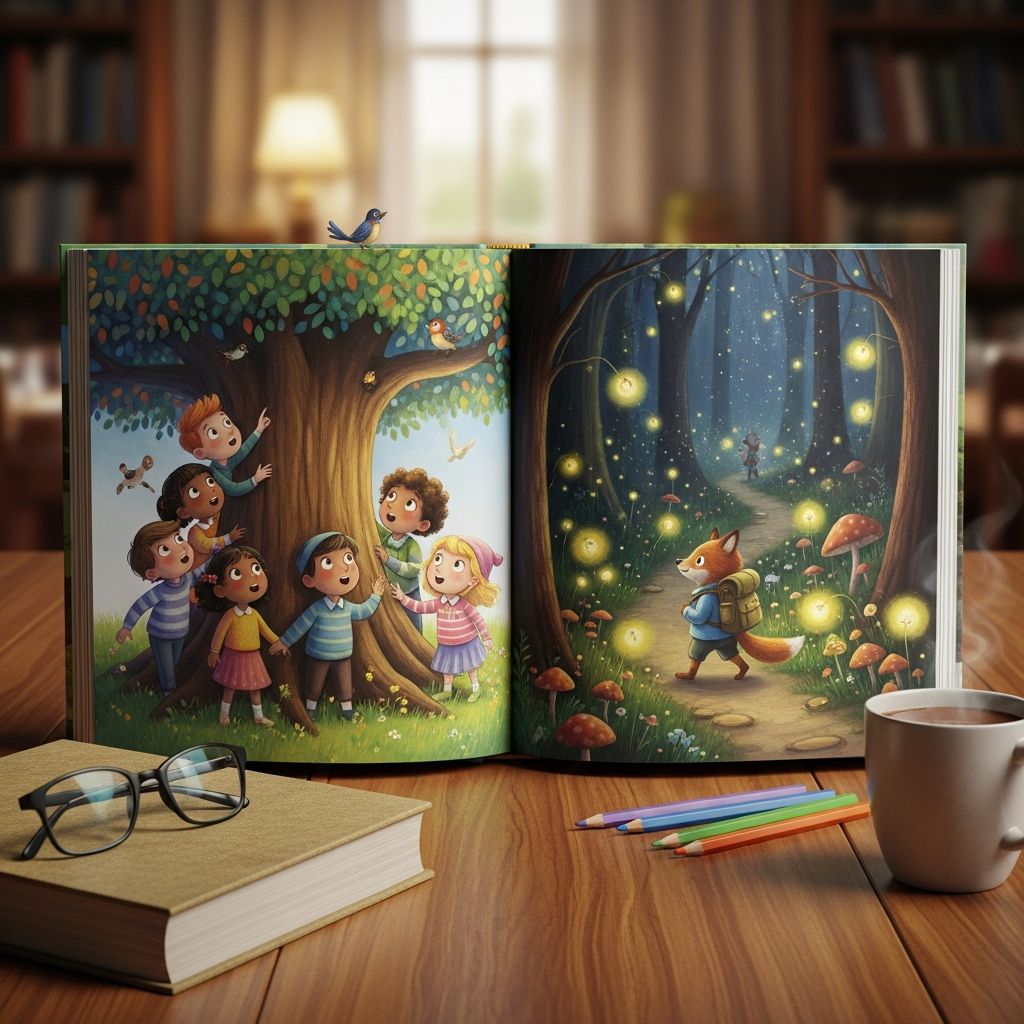
Picture books represent a unique fusion of artwork and narrative designed primarily for young audiences, creating immersive experiences that spark imagination and support early learning. These books integrate illustrations and text seamlessly to convey stories or concepts, distinguishing them from other children’s formats.
The Essence of Picture Books
At their core, picture books blend visual art with written words to form a cohesive storytelling medium, typically targeted at children from infancy through early elementary years. Unlike illustrated novels where images merely supplement text, in picture books, visuals play an indispensable role, often carrying equal or greater narrative weight. This interdependence allows young readers to grasp complex ideas through intuitive visual cues paired with simple language.
Commonly spanning 32 pages due to standard bookbinding practices, these volumes feature high-quality, colorful illustrations crafted in diverse media like watercolor, acrylics, or digital tools. The result is an engaging format that promotes vocabulary growth, comprehension skills, and emotional intelligence in children.
Historical Evolution of Picture Books
Picture books emerged as a distinct genre in the early 20th century, evolving from earlier illustrated chapbooks and primers. Pioneers like Wanda Gág revolutionized the form with works such as Millions of Cats (1928), breaking from rigid text-image separations to integrate them fluidly across pages. Her innovative layouts influenced giants like Maurice Sendak, Dr. Seuss, and Eric Carle, who expanded the genre’s artistic and narrative possibilities.
Post-World War II saw explosive growth, with publishers recognizing picture books’ educational value. By the mid-20th century, they became staples in homes and classrooms, adapting to cultural shifts while maintaining their child-centric focus. Today, digital innovations and diverse voices continue to reshape this vibrant field.
Key Characteristics That Define Great Picture Books
Exceptional picture books exhibit several hallmarks that elevate them beyond basic entertainment:
- Rhythmic Language: Text often employs rhyme, repetition, and alliteration to mimic speech patterns, aiding memorization and reading readiness.
- Dynamic Illustrations: Images must advance the plot, reveal character emotions, and provide subtext not explicit in words, creating layers of meaning.
- Concise Word Count: Modern fiction picture books average 300-500 words, with non-fiction up to 1,200, ensuring accessibility for read-aloud sessions.
- Universal Themes: Stories explore friendship, courage, family, and self-discovery, resonating across generations.
- Interactive Elements: Some incorporate flaps, textures, or prompts to boost engagement.
These elements ensure picture books captivate both children and adults during shared reading, fostering bonding and discussion.
How Illustrations and Text Collaborate
The magic of picture books lies in the symbiotic relationship between visuals and prose. Text might describe a character’s action, while illustrations depict subtle expressions or background details that deepen the narrative. For instance, a sparse line like “The fox waited” gains tension from an image showing its twitching tail and watchful eyes.
This synergy mirrors how children naturally process information—visually first—enhancing retention. Studies from educational institutions highlight how such books accelerate language acquisition by linking symbols (words) to concrete imagery.
| Element | Role of Text | Role of Illustrations |
|---|---|---|
| Plot Advancement | Outlines key events | Depicts actions and settings |
| Character Development | Reveals dialogue/thoughts | Conveys emotions via expressions |
| Theme Exploration | States morals subtly | Symbolizes ideas through motifs |
| Pacing | Controls rhythm | Builds tension with composition |
This table illustrates the balanced contributions, underscoring why neither can stand alone effectively.
Diverse Genres Within Picture Books
Picture books transcend fiction, encompassing:
- Fiction: Narrative tales with clear arcs—inciting incident, rising action, climax, resolution—often in 24-40 pages.
- Non-Fiction: Introduces science, history, or biographies accessibly, like counting concepts or animal facts, ideal for ages 3-12.
- Concept Books: Teach colors, shapes, emotions, or opposites through repetitive structures.
- Board and Interactive Books: Durable formats for toddlers with pop-ups or touch elements.
This variety ensures picture books meet developmental stages, from sensory exploration to critical thinking.
The Publishing Journey for Picture Books
Aspiring creators face a competitive market, but success follows structured steps. Manuscripts should hook immediately, with manuscripts polished to under 500 words. Illustrators prepare portfolios showcasing style consistency and storytelling prowess.
Agents and editors prioritize originality, diversity, and market fit. Self-publishing offers alternatives via platforms like Amazon, though traditional paths yield prestige. Trends favor inclusive stories and eco-conscious printing.
Educational Impact on Young Minds
Beyond delight, picture books are powerful literacy tools. They build phonological awareness through rhyme, expand sight-word recognition, and encourage inference skills via visual-text gaps. Libraries and educators recommend them for pre-K to grade 2, noting improved empathy from diverse characters.
Parental involvement amplifies benefits: discussing illustrations prompts questions, enhancing comprehension. Long-term, early exposure correlates with sustained reading habits, per academic research from institutions like Penn State.
Tips for Parents and Educators
To maximize picture books’ potential:
- Read interactively: Point to images, predict outcomes, relate to real life.
- Diversify selections: Include global authors and varied protagonists.
- Follow up: Draw scenes, act out stories, or journal reactions.
- Build collections: Mix classics with contemporaries for broad exposure.
These practices transform passive reading into active learning adventures.
Spotlight on Iconic Picture Book Creators
Visionaries have shaped the genre:
- Eric Carle: Collage techniques in The Very Hungry Caterpillar teach sequencing innovatively.
- Maurice Sendak: Where the Wild Things Are blends fantasy with emotional depth.
- Dr. Seuss: Whimsical rhymes in The Cat in the Hat revolutionized phonics fun.
Contemporary talents like Oliver Jeffers continue this legacy with minimalist yet profound works.
Future Trends in Picture Book World
Digital formats, AR integrations, and e-books expand access, though print endures for tactile joy. Emphasis grows on sustainability, mental health themes, and underrepresented voices, promising richer narratives ahead.
Frequently Asked Questions (FAQs)
What age group are picture books for?
Primarily birth to age 8, with board books for infants, standard ones for 3-7, and advanced for 7-12.
How many words should a picture book have?
Fiction: 100-800 words, ideally 300-500; non-fiction up to 1,200.
Do picture books need rhymes?
No, though effective; prioritize natural prose and strong visuals.
Can adults enjoy picture books?
Absolutely—their artistry and wit appeal across ages.
What’s the difference from chapter books?
Picture books rely on images for narrative; chapter books on text alone.
References
- What is a Picture Book — HarperCollins Publishers UK. 2023-05-15. https://harpercollins.co.uk/blogs/glossary/what-is-picture-book
- Picture book — Wikipedia. 2026-03-20. https://en.wikipedia.org/wiki/Picture_book
- Picture Book Guide — Enoch Pratt Free Library. 2024-11-10. https://www.prattlibrary.org/research/guides/picture-book-guide
- What Is a Picture Book and What Makes a Great Picture Book! — Brooke Vitale. 2022-07-22. https://brookevitale.com/blog/what-is-a-picture-book
- How picture books work (a very brief primer) — Nathan Bransford. 2018-03-12. https://nathanbransford.com/blog/2018/03/picture-books-work-brief-primer
- LL ED 462: The Art of the Picturebook — Penn State World Campus (.edu). 2025-01-08. https://courses.worldcampus.psu.edu/welcome/lled462/samplecontent/02_overview_02.html

- Integrated M.A. in Applied Linguistics, University of Hyderabad
- 5+ years in editorial, instructional, SEO, and research-based writing
Sneha is a relationships and lifestyle writer with a strong foundation in applied linguistics and certified training in relationship coaching. She brings over five years of writing experience to theskillvault, crafting thoughtful, research-driven content that empowers readers to build healthier relationships, boost emotional well-being, and embrace holistic living. Her writing and insights reflect the belief that beauty, happiness, and wellness…