
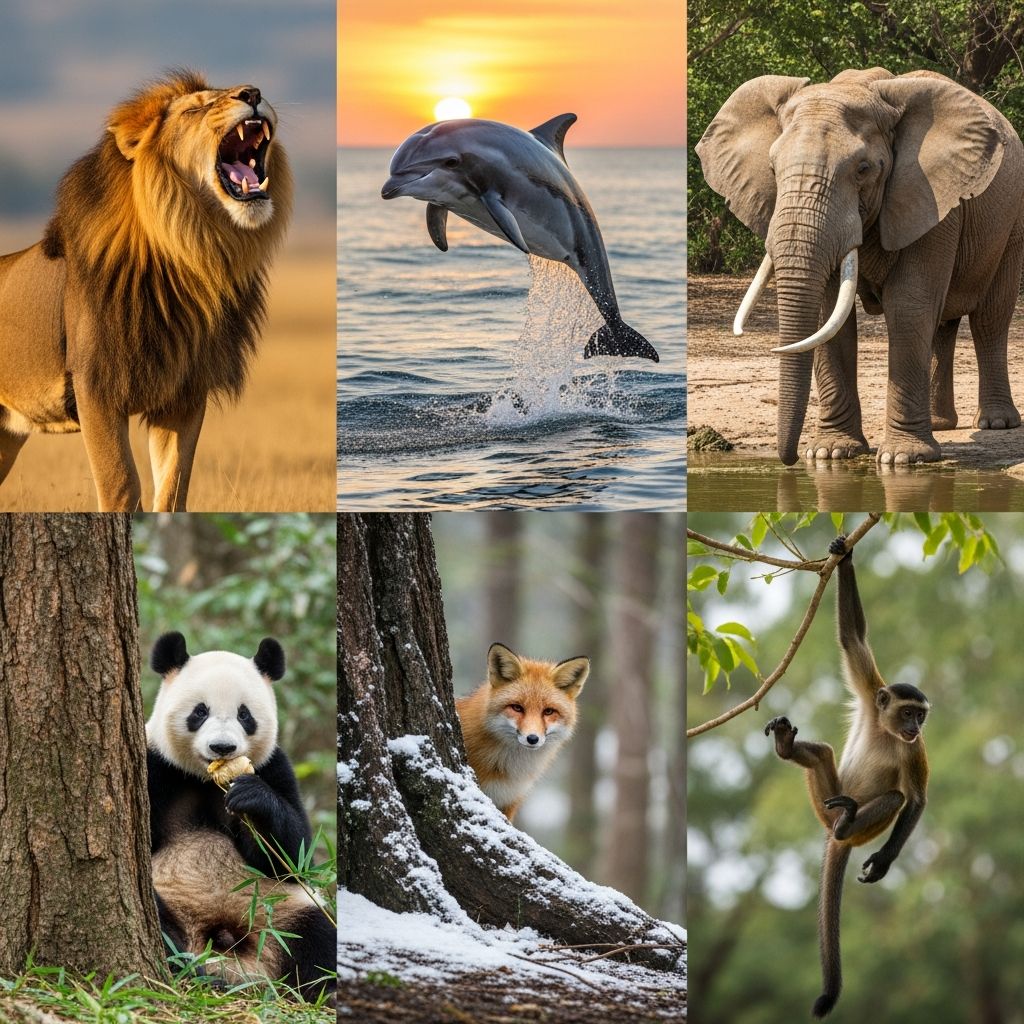
Mammals represent one of the most successful and diverse groups of vertebrates on Earth, characterized by unique traits like milk production, fur coverage, and advanced brain structures that enable them to thrive in nearly every environment.
Defining Characteristics of Mammals
Mammals belong to the class Mammalia, distinguished primarily by the presence of mammary glands that produce milk to nourish their offspring, a feature derived from the Latin word ‘mamma’ meaning breast. This adaptation allows newborns to receive vital nutrients without immediate foraging, fostering strong parent-offspring bonds. Additionally, mammals possess fur or hair, which provides insulation, camouflage, and sensory functions, setting them apart from reptiles and birds.
A key anatomical feature is the three middle ear bones—the malleus, incus, and stapes—which enhance hearing capabilities compared to the single ear bone in reptiles. Mammals are also warm-blooded, or endothermic, meaning they maintain a constant internal body temperature through metabolic processes, enabling activity in extreme climates from arctic tundras to scorching deserts. Most give birth to live young via viviparity, developing in a uterus, though monotremes like platypuses lay eggs.
- Milk production: Essential for early development, varying in composition across species.
- Fur or hair: Ranges from dense coats in polar bears to sparse bristles in elephants.
- Advanced neocortex: Supports complex cognition, intelligence, and behaviors like tool use.
Evolutionary Journey and Survival
Mammals trace their origins to cynodont therapsids during the Late Triassic, around 200-225 million years ago, coexisting with early dinosaurs. For over 160 million years, they remained small and nocturnal, overshadowed by reptilian giants. The catastrophic extinction event 66 million years ago, likely triggered by an asteroid impact, wiped out non-avian dinosaurs, paving the way for mammals to diversify explosively during the Cenozoic era.
Their adaptability—small size, endothermy, and flexible diets—allowed survival through this mass extinction, leading to dominance in terrestrial ecosystems. Today, mammals occupy niches from ocean depths to mountain peaks, with body plans evolving from quadrupedal basics to flight in bats, swimming in cetaceans, and bipedalism in humans and kangaroos.
Diversity and Species Count
Approximately 6,400 to 6,640 mammal species exist today, divided into 27 orders, though numbers fluctuate with new discoveries and taxonomic debates. Rodents lead with the highest count, followed by bats (nearly 1,400 species, about 20-25% of all mammals), then Eulipotyphla (shrews, moles), primates, Cetartiodactyla (whales, ungulates), and Carnivora. This diversity surpasses many vertebrate groups but trails insects and certain invertebrates.
| Order | Approximate Species Count | Examples |
|---|---|---|
| Rodentia | 2,000+ | Mice, squirrels, beavers |
| Chiroptera (Bats) | 1,400 | Fruit bats, vampire bats |
| Primates | 500+ | Humans, monkeys, lemurs |
| Cetartiodactyla | 500+ | Whales, deer, pigs |
| Carnivora | 280+ | Cats, dogs, bears |
This table highlights the top orders, showcasing mammals’ ecological breadth.
Habitat Adaptations and Body Plans
The quintessential mammal form is quadrupedal, suited for land locomotion, but adaptations abound: whales and dolphins evolved streamlined bodies with flippers and tail flukes for aquatic life, their hind limbs reduced to vestiges. Bats modified forelimbs into wings for flight, comprising nearly a quarter of mammal species. Arboreal primates feature grasping hands and tails, while burrowing moles have powerful claws and reduced eyes.
Bipedal locomotion appears in kangaroos (hopping) and humans (upright walking), optimizing energy for specific terrains. Semi-aquatic species like otters and beavers blend terrestrial and aquatic traits, demonstrating mammals’ versatility across air, land, sea, and underground.
Intelligence, Communication, and Societies
Mammals boast a broad neocortex, enabling high intelligence, self-awareness in species like dolphins and elephants, and tool use in primates and sea otters. Communication is multifaceted: vocalizations range from whale songs to bat echolocation and human language; chemical signals via pheromones mark territories; visual displays and touch reinforce bonds.
Social structures vary—solitary tigers contrast with elephant matriarchies, wolf packs, and primate troops. Many form fission-fusion groups, harems, or hierarchies, aiding hunting, defense, and rearing. Mating systems include polygyny (e.g., lions), monogamy (e.g., gibbons), and polyandry (e.g., some bats), with parental investment typically high, especially from mothers.
Record-Breaking Mammals
Mammals hold extremes: the blue whale (Balaenoptera musculus) is Earth’s largest animal ever, up to 100 feet long and 200 tons, dwarfing dinosaurs. The cheetah (Acinonyx jubatus) sprints at 60-70 mph, the fastest land animal. Smallest is the bumblebee bat at 0.05 ounces. Rhinoceroses boast the thickest skin (up to 2 inches), while the giant anteater devours 30,000 insects daily without teeth, using a sticky tongue.
- Largest: Blue whale—largest animal in history.
- Fastest: Cheetah—up to 98 km/h sprints.
- Flying mammals: Bats, 23% of species.
- Unique traits: Kangaroos produce dual milk types; dolphins unihemispherically sleep.
Reproduction and Parental Care
Most mammals are viviparous, with embryos nourished via placenta, born relatively developed. Monotremes (platypus, echidna) lay leathery eggs, an ancient trait. Lactation periods vary: short in rabbits, years in elephants. Females often provide extended care, males variably (e.g., seahorses carry embryos, wolves co-parent). Gestation lengths correlate with size—from 12 days in shrews to 22 months in elephants.
Ecological Roles and Human Impact
Mammals shape ecosystems as predators (lions), herbivores (elephants dispersing seeds), pollinators (bats), and decomposers. Their intelligence aids resilience but heightens vulnerability to habitat loss, climate change, and poaching. Conservation efforts focus on hotspots like rainforests, protecting keystone species.
Frequently Asked Questions (FAQs)
Are all mammals warm-blooded?
Yes, mammals are endothermic, regulating body temperature internally to remain active across environments.
How many mammal species exist?
Around 6,400-6,640 species across 27 orders, with rodents and bats most numerous.
Do mammals lay eggs?
Most give live birth, but monotremes like platypuses lay eggs.
What enables bats to fly?
Modified forelimbs form wings with elongated fingers supporting skin membranes.
Why did mammals survive dinosaur extinction?
Small size, warm-bloodedness, and dietary flexibility allowed endurance through the catastrophe 66 million years ago.
References
- Mammal — Wikipedia. 2023-10-01. https://en.wikipedia.org/wiki/Mammal
- 12 Fascinating Facts about Mammals — Tynemouth Aquarium. 2023-01-15. https://www.tynemouthaquarium.co.uk/blog/animal-stories/12-fascinating-facts-about-mammals/
- 27 Facts About Mammals: Largest, Smallest & Smelliest — Earth Life. 2023-05-20. https://earthlife.net/mammal-facts/
- What Makes a Mammal a Mammal? — Illinois Department of Natural Resources (.gov). 2022-08-10. https://dnr.illinois.gov/content/dam/soi/en/web/dnr/education/documents/wmmammalmammal.pdf

- Integrated M.A. in Applied Linguistics, University of Hyderabad
- 5+ years in editorial, instructional, SEO, and research-based writing
Sneha is a relationships and lifestyle writer with a strong foundation in applied linguistics and certified training in relationship coaching. She brings over five years of writing experience to theskillvault, crafting thoughtful, research-driven content that empowers readers to build healthier relationships, boost emotional well-being, and embrace holistic living. Her writing and insights reflect the belief that beauty, happiness, and wellness…