
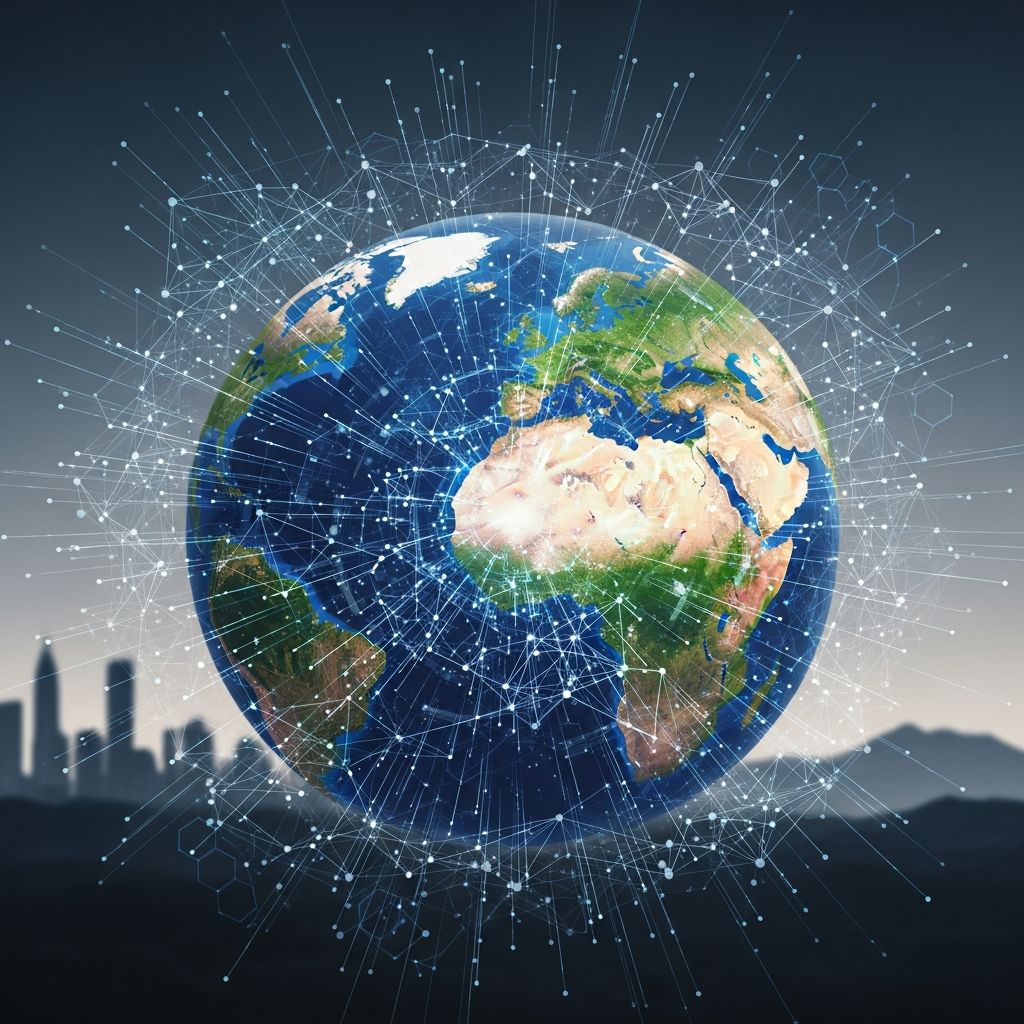
Geography represents far more than the study of maps and capitals. In an increasingly complex global landscape marked by climate instability, migration patterns, and interconnected economies, geographic literacy has become essential for informed citizenship and professional success. The discipline uniquely bridges natural and social sciences, offering insights into how environmental systems function and how human societies adapt to their surroundings. Whether examining the causes of resource scarcity, analyzing patterns of urbanization, or understanding geopolitical tensions, geography provides analytical frameworks that illuminate some of our most pressing contemporary challenges.
The Integrative Nature of Geographic Inquiry
What distinguishes geography from other academic disciplines is its commitment to examining interconnections across physical and human dimensions of our world. Unlike specialized fields that focus narrowly on single aspects of human experience or natural phenomena, geographers adopt a systems-based perspective that acknowledges how environmental conditions influence human behavior, how cultural practices shape landscapes, and how economic decisions ripple across regions and continents.
This integrative approach enables geographers to address complex problems that resist simple solutions. When investigating coastal vulnerability, for instance, geographers must understand ocean dynamics, sediment transport, human settlement patterns, economic factors influencing development decisions, and social dimensions of risk perception. This multifaceted analytical capability proves invaluable in addressing genuine complexity rather than oversimplifying multifaceted issues.
Environmental Stewardship and Natural System Comprehension
Fundamental to geographic understanding is recognition that human survival depends entirely on natural systems. Atmospheric circulation patterns distribute moisture necessary for agriculture. Soil formation processes determine productive capacity of land. Water cycle mechanics govern freshwater availability. Yet many people lack basic comprehension of these essential systems, hindering their ability to make informed decisions about environmental management and personal consumption patterns.
Geography equips students with knowledge of how weather systems operate, why certain regions experience drought while others face flooding, and how natural hazards develop and propagate across landscapes. This understanding transforms abstract environmental concepts into concrete, locally-relevant applications. Students examining their own watersheds, for example, develop appreciation for the interconnected nature of water resources that extends far beyond their immediate surroundings.
The discipline also provides practical tools for addressing environmental challenges. Geographers specializing in conservation work to protect biodiversity and manage natural resources sustainably. Climate scientists use geographic methods to model future atmospheric conditions and evaluate mitigation strategies. Natural resource managers apply geographic principles to balance extraction needs with ecosystem preservation. These applications demonstrate how geographic knowledge directly translates into environmental problem-solving.
Developing Spatial Reasoning and Analytical Capabilities
Geographic education cultivates spatial thinking—the ability to visualize relationships between places, understand scale variations, and recognize patterns across landscapes. These cognitive skills extend far beyond academic contexts. Professional applications range from urban planners designing transportation networks to business analysts identifying optimal store locations to emergency responders mapping evacuation routes during crises.
Contemporary geographic practice increasingly employs Geographic Information Systems (GIS), sophisticated software tools that enable analysis of spatial data with remarkable precision and sophistication. Proficiency with GIS represents a highly marketable skill across numerous industries, from environmental consulting to public health administration to real estate development. Students who develop GIS expertise during geographic studies gain competitive advantages in job markets across multiple sectors.
Beyond technological competencies, geography develops critical thinking capabilities essential for professional success in virtually any field. The discipline encourages students to question assumptions, evaluate evidence from multiple perspectives, and recognize limitations in available data. Geographic research methods encompassing both quantitative statistical analysis and qualitative fieldwork prepare students for careers requiring diverse research approaches.
Cultural Literacy and Global Perspective Development
Human geography—the subdiscipline examining cultural, economic, political, and social dimensions of human organization—exposes students to remarkable diversity in how people organize societies, construct meaning, and interact with their environments across the globe. This exposure builds cultural competency increasingly vital in multicultural societies and globally-integrated economies.
Understanding how different populations perceive their environments, make decisions within particular cultural contexts, and navigate economic and political systems requires abandoning ethnocentric assumptions that one’s own cultural practices represent universal norms. Geographic study cultivates appreciation for alternative worldviews and recognition that different solutions may be appropriate in different contexts. Such cultural sensitivity proves essential for professionals working in international development, diplomacy, business, education, and numerous other fields.
This global perspective also helps students recognize how decisions made in distant locations affect their own communities and vice versa. Understanding supply chains that connect resource extraction in one region with consumption in another illuminates interdependencies that might otherwise remain invisible. Recognizing how colonial histories continue shaping contemporary geopolitical relationships deepens comprehension of persistent global inequalities and international tensions.
Addressing Global Crisis Phenomena Through Geographic Analysis
Contemporary crises spanning environmental degradation, disease transmission, resource scarcity, and geopolitical conflict all possess geographic dimensions that geographic expertise uniquely illuminates. The COVID-19 pandemic, for instance, demonstrated how geographic factors including population density, healthcare infrastructure distribution, transportation networks, and international connectivity patterns influenced disease spread and policy responses.
Climate change—perhaps the defining challenge of our era—fundamentally represents a geographic problem. Understanding climate change requires knowledge of atmospheric science, ocean circulation, ecosystem responses, human-induced emissions patterns, and differential vulnerability across regions and populations. Geographers contribute essential perspectives to both understanding climate dynamics and developing equitable adaptation and mitigation strategies that consider local conditions and human dimensions of climate impacts.
Similar geographic dimensions characterize other global challenges. Water scarcity emerges from interactions between precipitation patterns, human demand patterns, infrastructure inefficiencies, and competing uses across sectors and populations. Political conflicts frequently involve contested territory, resource competition, or historical grievances rooted in geographic factors. Pandemic preparedness requires understanding disease ecology, human-wildlife contact patterns, and healthcare system capacities across different regions. Geographic training equips professionals to address these multifaceted challenges effectively.
Professional Opportunities and Career Development
Geographic expertise opens pathways to diverse career opportunities across public, private, and nonprofit sectors. Government agencies employ geographers in environmental protection, urban planning, intelligence analysis, and emergency management roles. Private companies utilize geographic expertise in marketing, supply chain optimization, real estate development, and sustainability planning. Nonprofit organizations working in international development, conservation, and humanitarian assistance rely on geographic professionals.
The job market consistently demonstrates demand for professionals combining geographic knowledge with technical skills. Urban planners shape cities to promote sustainability and livability. Environmental consultants assess ecological impacts and develop remediation strategies. GIS specialists analyze spatial data to inform business and policy decisions. Conservation professionals work to protect biodiversity and manage natural resources. Climate scientists model future conditions and evaluate policy responses. Intelligence analysts assess geopolitical developments with implications for national security.
Beyond these geography-specific roles, geographic training enhances career prospects across numerous fields. Professionals in business, healthcare, education, law, journalism, and countless other domains benefit from geographic perspectives, spatial thinking capabilities, and understanding of global systems.
Understanding Economic Globalization and Trade Dynamics
The modern global economy represents an extraordinarily complex system of international trade, capital flows, labor migration, and technology transfer. Geographic analysis illuminates how these systems developed historically, how they currently function, and what consequences they generate across different regions and populations.
Understanding globalization requires examining how comparative advantages in resource endowments, labor costs, or technological capabilities create specialization patterns. It requires recognizing how transportation networks, trade agreements, and communication technologies enable rapid movement of goods, capital, and information. It necessitates examining how wealth concentrates in certain regions while other areas remain economically marginalized despite possessing valuable resources.
Geographic analysis reveals how trade relationships create dependencies, how supply chains render certain regions vulnerable to disruptions, and how economic decisions in powerful nations reverberate through global systems affecting distant populations. This understanding helps students recognize how their consumption choices connect to labor conditions in distant factories, how agricultural policies affect food security across multiple continents, and how investment decisions influence development trajectories in different regions.
Practical Problem-Solving Through Geographic Methodology
Distinguished from disciplines that primarily convey existing knowledge, geography actively engages students in identifying problems, evaluating potential solutions, and making informed decisions about complex issues. This problem-oriented approach directly prepares students for professional environments where they must move beyond understanding issues to developing actionable responses.
Geographic coursework frequently involves analyzing real-world data, evaluating competing policy options, and justifying recommendations based on evidence. Students examining flood risk, for example, analyze historical flood patterns, model future precipitation scenarios, evaluate structural and non-structural mitigation options, and consider trade-offs between different approaches. Students investigating resource management examine data on resource availability, current extraction rates, competing demands, and sustainability implications before recommending management strategies. This active engagement with authentic problems develops decision-making capabilities directly applicable across professional contexts.
Geographical Literacy and Informed Citizenship
In democratic societies, citizens regularly encounter geographic dimensions of policy debates without always recognizing them as such. Water policy discussions involve geographic factors. Immigration debates contain geographic components. Energy policy inherently reflects geographic realities. International relations involve geographic considerations. Trade policy affects regions differentially based on geographic factors. Climate policy requires geographic understanding.
Citizens possessing geographic literacy navigate these debates more effectively, recognize hidden assumptions, evaluate policy proposals more critically, and advocate for positions grounded in geographic reality rather than wishful thinking or ideological preference. Geographic education thus contributes not only to individual professional success but to more functional democratic deliberation about shared challenges.
Interdisciplinary Connections and Intellectual Flexibility
Geography’s positioning as a bridge discipline connecting natural and social sciences uniquely enables geographers to collaborate productively across traditional academic boundaries. A geographer studying urban heat might partner with engineers, public health professionals, urban planners, and economists to develop comprehensive solutions. An environmental geographer addressing deforestation collaborates with biologists, economists, and policy specialists.
This interdisciplinary orientation develops intellectual flexibility, communication capability across disciplinary boundaries, and appreciation for diverse perspectives on shared problems. These capabilities increasingly characterize successful professional work in complex domains where no single discipline possesses sufficient expertise to address problems comprehensively.
Practical Competencies for Professional Success
Beyond subject-specific knowledge, geographic education develops transferable skills highly valued across professional sectors:
- Critical Thinking: Geographic analysis requires evaluating evidence, recognizing assumptions, assessing data quality, and drawing defensible conclusions from incomplete information—capabilities essential across professional domains.
- Communication Skills: Geography requires presenting complex information accessibly through written analysis, verbal presentation, and visual representation—fundamental professional capabilities.
- Research Methodology: Geographic training encompasses literature review, data collection and analysis (both quantitative and qualitative), and synthesis of findings from diverse sources.
- Quantitative Literacy: Many geographic analyses involve statistical methods, spatial statistics, and interpretation of numerical data requiring mathematical competency.
- Technological Proficiency: GIS expertise combined with capabilities using remote sensing, database management, and statistical software ensures geography graduates possess contemporary technical skills.
- Fieldwork Capabilities: Geographic training frequently involves direct observation, interviews, surveys, and environmental measurement, developing practical research skills.
Frequently Asked Questions
Q: What specific jobs can geography graduates pursue?
A: Geography graduates work as urban planners, environmental consultants, GIS analysts, climate scientists, conservation professionals, intelligence analysts, development professionals, journalists, teachers, and in numerous other roles across public, private, and nonprofit sectors.
Q: How does geography differ from studying history or social studies?
A: While these disciplines overlap in some ways, geography distinctively emphasizes spatial relationships, environmental-human interactions, and systematic analysis of how location influences phenomena. Geography extends beyond historical narratives or general social studies to develop sophisticated understanding of place-based processes.
Q: Is geography relevant in the digital age?
A: Absolutely. Geographic expertise proves increasingly valuable for understanding global supply chains, analyzing digital infrastructure distribution, examining environmental impacts of resource extraction, and addressing challenges like climate change that require sophisticated spatial analysis and systems thinking.
Q: Can geography students develop technical skills?
A: Yes. Geographic training increasingly emphasizes GIS, remote sensing, database management, statistical analysis, and programming capabilities alongside traditional geographic knowledge, making geography graduates competitive in technical job markets.
Q: How does studying geography make someone a better citizen?
A: Geographic literacy enables informed engagement with policy debates containing spatial dimensions, recognition of global interconnections, understanding of environmental constraints on development, and appreciation for diverse cultural and economic systems worldwide.
References
- Why Study Geography and Sustainability? — Salem State University, College of Arts and Sciences. Accessed April 4, 2026. https://www.salemstate.edu/academics/college-arts-and-sciences/geography-and-sustainability/why-study-geography-and-sustainability
- 11 Benefits of Studying Geography — Discover the World. Accessed April 4, 2026. https://www.discover-the-world.com/study-trips/blog/why-geography-is-important/
- Why Study Geography — Illinois State University Department of Geography. Accessed April 4, 2026. https://geo.illinoisstate.edu/academics/why-geography/
- Why Geography? — University of Georgia Department of Geography. Accessed April 4, 2026. https://geography.uga.edu/why-geography
- 11 Reasons You Should Study Geography — Longwood University. Published November 2014. https://www.longwood.edu/news/2014/11-reasons-you-should-study-geography/

Medha Deb is an editor with a master's degree in Applied Linguistics from the University of Hyderabad. She believes that her qualification has helped her develop a deep understanding of language and its application in various contexts. Medha specializes in the areas of beauty, health, sports, and wellness and is committed to ensuring that the content on the website is…