
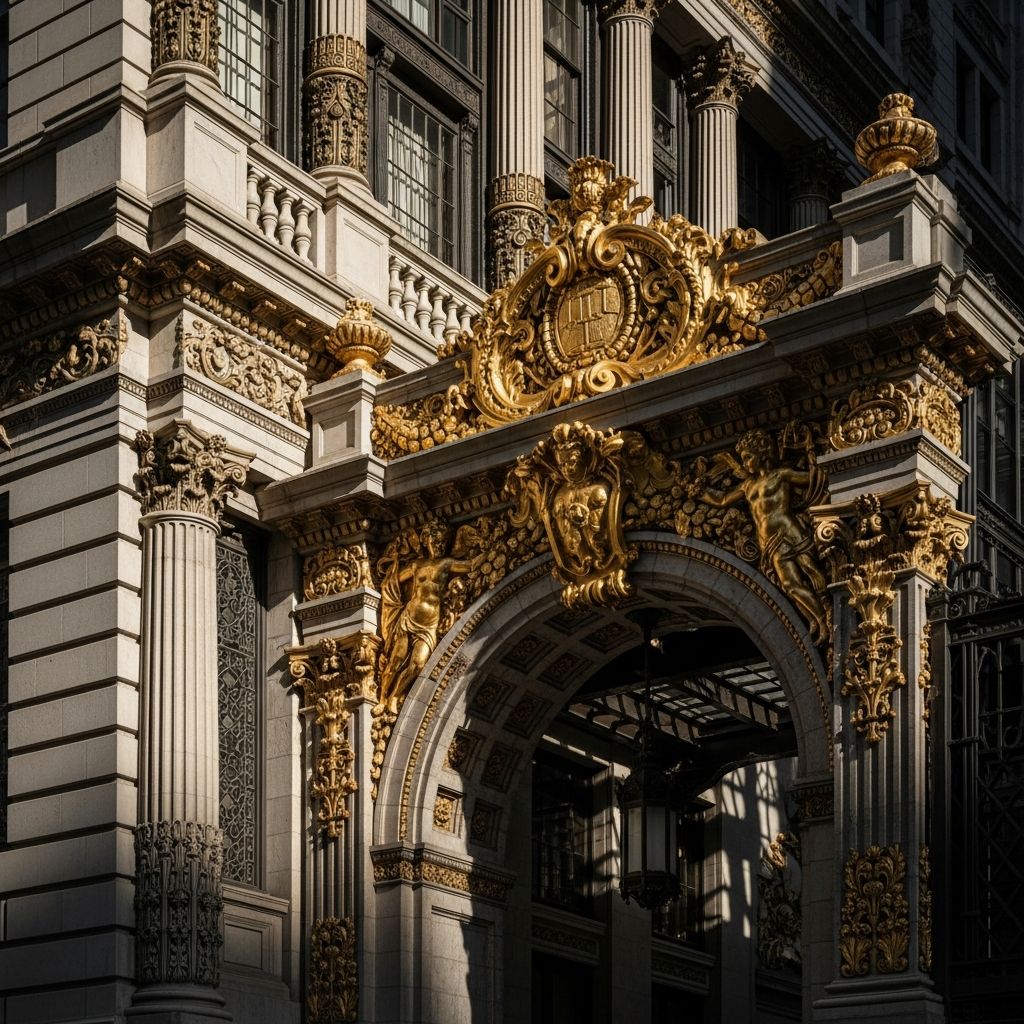
The Gilded Age, spanning roughly from the 1870s to the early 1900s, marked a transformative period in American history where rapid industrialization created immense wealth for a select few. This era’s architecture embodied extreme extravagance, with newly rich industrialists commissioning palatial residences and public edifices that rivaled European royalty. Structures featured intricate details, diverse stylistic borrowings, and cutting-edge technologies, symbolizing both personal triumph and societal aspirations.
Historical Context: Rise of Industrial Titans
Post-Civil War America saw explosive economic growth driven by railroads, steel, oil, and finance. Magnates like the Vanderbilts, Astors, and Carnegies amassed fortunes that funded architectural spectacles. These ‘robber barons’ sought to legitimize their status through grand homes, often called ‘summer cottages’ despite their scale, particularly in Newport, Rhode Island. Public buildings, such as libraries and halls, also proliferated, showcasing civic pride amid urbanization.
Technological innovations underpinned this boom. Elisha Otis’s safety elevator enabled skyscrapers, while Thomas Edison’s electric lighting and streetcars revolutionized urban life, allowing taller, more illuminated buildings. Yet, this opulence contrasted sharply with widespread poverty, tenement overcrowding, and labor struggles, highlighting the era’s inequalities.
Core Architectural Styles and Their Characteristics
Gilded Age designs rejected simplicity, embracing eclecticism—’the architecture of choice’—where builders mixed historical motifs freely. Key styles included:
- Beaux Arts: Inspired by French academies, featuring symmetrical facades, grand arches, and lavish ornamentation. Exemplified in New York Public Library with its Romanesque and classical elements.
- Queen Anne: Originating from England via the 1876 Philadelphia Centennial, known for asymmetrical forms, turrets, and textured surfaces creating an ‘organic sprawl’.
- Chateausque: French castle-like with steep gables, towers, and terra-cotta details, often blended with Moorish influences in places like Louisville’s mansions.
- Romanesque Revival: Heavy stonework, rounded arches, and robust massing for a sense of solidity and power.
These styles combined Renaissance grandeur, Roman solidity, and Rococo flourish, often gilded with gold leaf, exotic marbles, and hardwoods.
Iconic Private Residences: Palaces for the Elite
The era’s private homes were feats of excess, designed as statements of wealth. In Newport, The Breakers (Vanderbilt family) boasted marble staircases, priceless vases, and murals, used seasonally by railroad tycoons. The Elms and Chepstow similarly featured inlaid furniture, Roman statues, and opulent ballrooms.
In Louisville, Third Avenue’s ‘City of Beautiful Homes’ displayed Victorian Gothic, Italianate, and rare Chateausque mansions with intricate arabesques. These interiors acted as ‘domestic museums,’ crammed with global artifacts for psychological comfort—affirming status in a competitive society.
| Mansion | Location | Style | Key Features |
|---|---|---|---|
| The Breakers | Newport, RI | Beaux Arts/Renaissance | Marble interiors, grand ballrooms, exotic imports |
| The Elms | Newport, RI | Classical Revival | French-inspired gardens, lavish furnishings |
| Old Louisville Mansions | Louisville, KY | Chateausque/Eclectic | Steep gables, Moorish elements, terra-cotta |
Public Buildings: Monuments to Progress
Beyond homes, public architecture reflected collective ambition. Carnegie Hall in New York and the Palace of Fine Arts in San Francisco employed Romanesque and Beaux Arts for cultural prestige. Washington, D.C.’s structures integrated heavy gilding and pilasters, treating citizens to ‘American royalty’ aesthetics. Libraries nationwide, with their palatial designs, democratized knowledge amid growing literacy.
Skyscrapers emerged as urban icons, their steel frames and elevators allowing vertical expansion. Electric lighting transformed nights, fostering vibrant cityscapes.
Interior Design: Layers of Luxury
Interiors matched exteriors’ complexity, with every surface adorned. Parlors overflowed with silver services, French beds, and castle-inspired decor. Murals from Italy, statuary from Rome, and fabrics from Europe created immersive environments. This ‘overstuffed’ aesthetic provided ‘psychological ease’—a sanctuary of self-confidence in a taut era.
Ballrooms hosted lavish events, supported by modern plumbing and electricity, blending old-world pomp with new-world convenience.
Social and Psychological Dimensions
Architecture wasn’t mere decoration; it mirrored societal psychology. Eclecticism allowed personalization, blending global influences to project cosmopolitanism. For the affluent, homes offered status security amid rapid change. Critics like President Grant decried the ‘fearless’ mixing of styles, yet it fulfilled the middle-class dream of a unique family domain.
However, great houses struggled with unresolved design challenges, lacking precedents like English country estates. Inflated forms often resulted in gargantuan yet self-indulgent results.
Legacy and Modern Influence
Many Gilded Age structures endure as museums, like Newport’s mansions, preserving techniques in gilding and stonework. They inspire contemporary luxury design, emphasizing detail amid minimalism. The era’s innovations—elevators, electricity—paved the way for modernism, though its excesses waned with Progressive reforms and World War I.
Today, these buildings remind us of architecture’s power to reflect economic disparity and ambition.
Frequently Asked Questions (FAQs)
What defined Gilded Age architecture?
It was characterized by eclectic styles like Beaux Arts and Queen Anne, opulent materials, and grandeur reflecting industrial wealth.
Where are famous Gilded Age mansions located?
Primarily in Newport, RI (e.g., The Breakers), and Louisville, KY’s Old Louisville district.
Why was the style so extravagant?
Industrial tycoons used architecture to display status, blending European influences with American innovation for psychological comfort.
What technologies enabled this architecture?
Elevators, steel framing, and electric lighting allowed taller, more elaborate buildings.
Is Gilded Age architecture still visible today?
Yes, in preserved mansions, libraries, and urban landmarks across the U.S..
References
- The Gilded Age — Shore Home & Garden Magazine. 2018-11-01. https://shorehomeandgarden.com/2018/11/01/the-gilded-age/
- The Architectural Psychology of the Gilded Age — Rutherford B. Hayes Presidential Library & Museums. 1988. https://www.rbhayes.org/research/hayes-historical-journal-the-architectural-psychology-of-the-gilded-age/
- Gilded Age Mansions/Chateausque Architecture — Kentucky Historical Society. 2005-02-25. https://history.ky.gov/markers/gilded-age-mansionschateausque-architecture
- Building the Gilded Age — The New Criterion. N/A. https://newcriterion.com/article/building-the-gilded-age/
- Gilded Age — Wikipedia. Accessed 2026. https://en.wikipedia.org/wiki/Gilded_Age

Medha Deb is an editor with a master's degree in Applied Linguistics from the University of Hyderabad. She believes that her qualification has helped her develop a deep understanding of language and its application in various contexts. Medha specializes in the areas of beauty, health, sports, and wellness and is committed to ensuring that the content on the website is…