
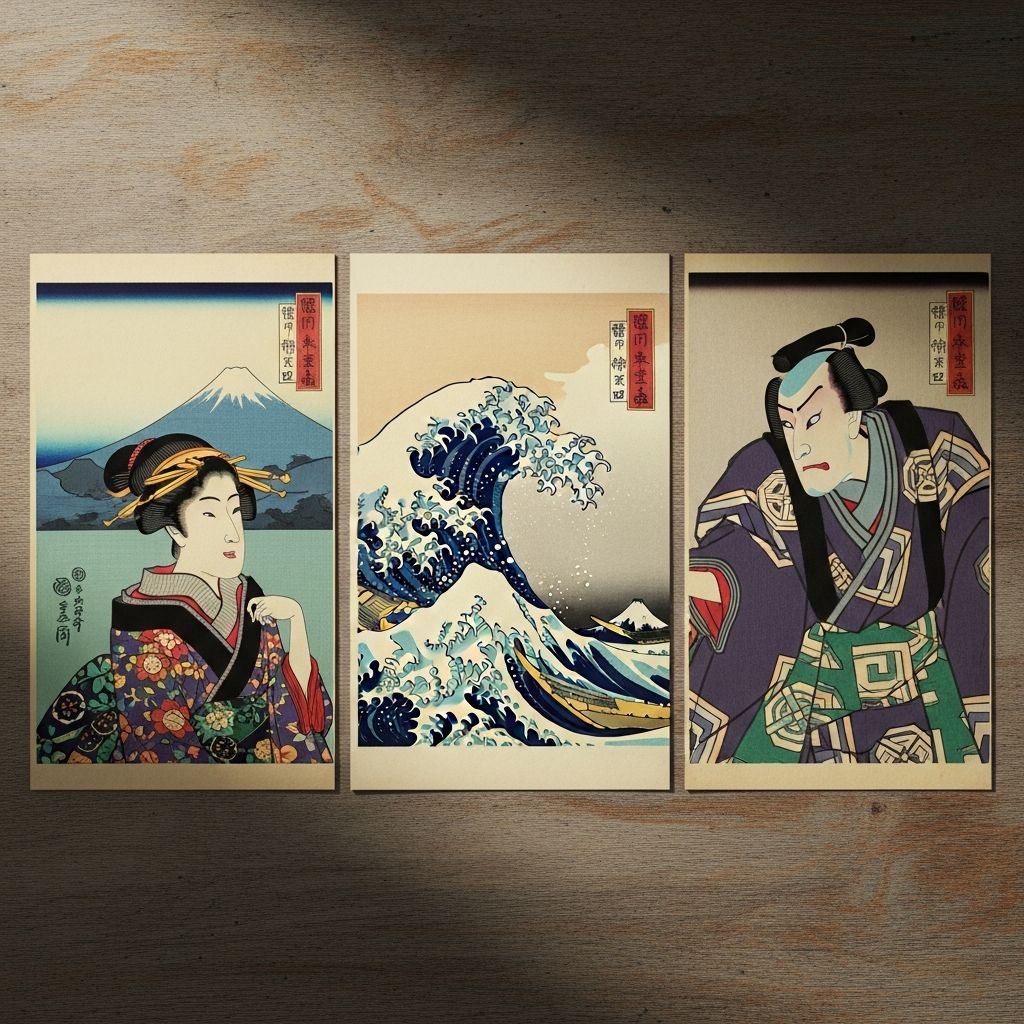
Ukiyo-e, meaning ‘pictures of the floating world,’ emerged as a defining art form during Japan’s Edo period (1603–1868), capturing the ephemeral joys of urban life through affordable woodblock prints.
Historical Foundations of Ukiyo-e
The Edo period marked a time of relative peace under the Tokugawa shogunate, which centralized power in Edo (modern Tokyo) after centuries of civil war. This stability fostered economic growth, particularly among the merchant class, known as chōnin, who rose in wealth despite their low social status. Urban centers like Edo swelled to over a million people, with males comprising nearly 70% of the population due to labor demands.
Strict social hierarchies placed samurai at the top and merchants at the bottom, but economic prosperity allowed merchants to indulge in leisure. Walled pleasure districts, such as Yoshiwara in Edo, became hubs for entertainment, theater, and courtesans, inspiring art that celebrated these transient pleasures.
The term ‘floating world’ originally stemmed from Buddhist ideas of life’s impermanence but evolved into a hedonistic embrace of momentary delights amid Japan’s isolationist sakoku policies.
Artistic Beginnings and Early Innovators
Ukiyo-e traces its roots to the late 17th century, evolving from yamato-e traditions but focusing on contemporary urban scenes. Early works included painted scrolls like the Portraits of Kanbun Beauties around 1661, signaling the genre’s independence.
Iwasa Matabei (1578–1650) influenced proto-ukiyo-e with his affinity for everyday life depictions, while Hishikawa Moronobu (1618–1694) formalized the style through masterful lines derived from calligraphy. Moronobu’s prints featured street scenes, historical references, beautiful women, and erotica, making him a pivotal figure.
- Key Early Developments: Bold lines and vibrant colors distinguished ukiyo-e from elite arts.
- Social Role: Prints served as affordable decor for merchant homes and promotional materials for theaters.
- Influence of Calligraphy: Fluid strokes brought dynamic energy to compositions.
Production Techniques in Woodblock Printing
Ukiyo-e prints were collaborative masterpieces involving multiple artisans. An artist sketched the design, which carvers transferred to cherry wood blocks—one per color plus a key block for outlines. Printers applied pigments and pressed paper onto the inked blocks, often using water-based colors for vivid hues.
| Step | Description |
|---|---|
| Design | Artist draws on thin paper with brush and ink. |
| Carving | Specialists chisel blocks, reversing the image. |
| Proofing | Test prints ensure color registration. |
| Printing | Layers of color applied; paper rubbed over blocks. |
| Publishing | Prints sold cheaply in urban markets. |
This labor-intensive process allowed mass production, making art accessible to the masses—prices rivaled a bowl of noodles.
Iconic Themes and Subjects
Ukiyo-e depicted the ‘floating world’ through diverse motifs:
- Beauty (Bijin-ga): Elegant courtesans and women in kimonos, showcasing fashion and grace.
- Kabuki Actors (Yakusha-e): Dramatic portraits of performers, pioneered by the Torii School.
- Landscapes: Later masters like Hokusai and Hiroshige revolutionized scenic views.
- History and Myth: Warriors, ghosts, and legends from folklore.
- Erotica (Shunga): Private, playful scenes of intimacy.
In Kamigata (Kyoto-Osaka), prints focused more on actor portraits, differing from Edo’s broader range.
Major Schools and Master Artists
Torii School (Early 18th Century)
Founded by Torii Kiyonobu I, a student of Moronobu, this school specialized in kabuki promotions with thick, bold lines emphasizing theatrical drama.
Utagawa School (Late 18th–Mid-19th Century)
The longest-lasting school, started by Utagawa Toyoharu, integrated Western perspective, as in Perspective Pictures of Places in Japan. Prolific artists included Toyokuni, whose works faced censorship.
Peak Masters: Utamaro, Sharaku, and Beyond
Kitagawa Utamaro (1753–1806) excelled in bijin-ga with intimate, sensual portraits but was imprisoned for depicting historical figures. Toshusai Sharaku captured kabuki actors’ raw expressions in stark psychological depth. Torii Kiyonaga and Hosoda Eishi brought elegance and harmony.
Late giants Katsushika Hokusai (1760–1849) and Utagawa Hiroshige (1797–1858) shifted toward nature, with Hokusai’s Thirty-Six Views of Mount Fuji showcasing innovative compositions.
Censorship and Societal Challenges
From 1790, prints required censor seals; violations led to bans or imprisonment. Utamaro’s 1804 arrest exemplified crackdowns on political imagery. Economic reforms like the Kansei era (1789–1801) briefly emphasized harmony, but decadence followed.
Decline and Global Legacy
Post-1868 Meiji Restoration, Westernization, photography, and journalism eclipsed ukiyo-e. Tastes shifted, deeming it outdated. Yet, exported prints influenced Impressionists like Van Gogh and Monet, bridging East and West.
Today, ukiyo-e symbolizes Japanese aesthetics, with revivals in modern prints and digital art.
Frequently Asked Questions (FAQs)
What does ‘ukiyo-e’ literally mean?
It translates to ‘pictures of the floating world,’ referring to life’s fleeting pleasures.
Who were the most famous ukiyo-e artists?
Hokusai, Hiroshige, Utamaro, and Sharaku stand out for their innovative styles.
Why did ukiyo-e decline?
Meiji-era modernization, photography, and changing tastes led to its fall.
How were ukiyo-e prints made?
Through collaborative woodblock carving and multi-color printing on paper.
Did ukiyo-e influence Western art?
Yes, profoundly impacting Impressionism and Post-Impressionism.
References
- Ukiyo-e – Wikipedia — Wikipedia Contributors. 2024-04-01. https://en.wikipedia.org/wiki/Ukiyo-e
- Ukiyo-e Japanese Prints Movement Overview — The Art Story. 2023-10-15. https://www.theartstory.org/movement/ukiyo-e-japanese-woodblock-prints/
- Art of the Pleasure Quarters and the Ukiyo-e Style — The Metropolitan Museum of Art. 2022-05-20. https://www.metmuseum.org/essays/art-of-the-pleasure-quarters-and-the-ukiyo-e-style
- What Is Ukiyo-e? A Look into Japan’s Iconic Woodblock Print Art — Musubi Kiln. 2024-03-12. https://musubikiln.com/blogs/journal/what-is-ukiyo-e-a-look-into-japans-iconic-woodblock-print-art
- An Introduction to Edo Period Japan and Ukiyo-e — A Place Between the Trees. 2024-05-29. https://aplacebetweenthetrees.com/2024/05/29/artists-of-the-floating-world-what-is-ukiyo-e/

- Integrated M.A. in Applied Linguistics, University of Hyderabad
- 5+ years in editorial, instructional, SEO, and research-based writing
Sneha is a relationships and lifestyle writer with a strong foundation in applied linguistics and certified training in relationship coaching. She brings over five years of writing experience to theskillvault, crafting thoughtful, research-driven content that empowers readers to build healthier relationships, boost emotional well-being, and embrace holistic living. Her writing and insights reflect the belief that beauty, happiness, and wellness…