
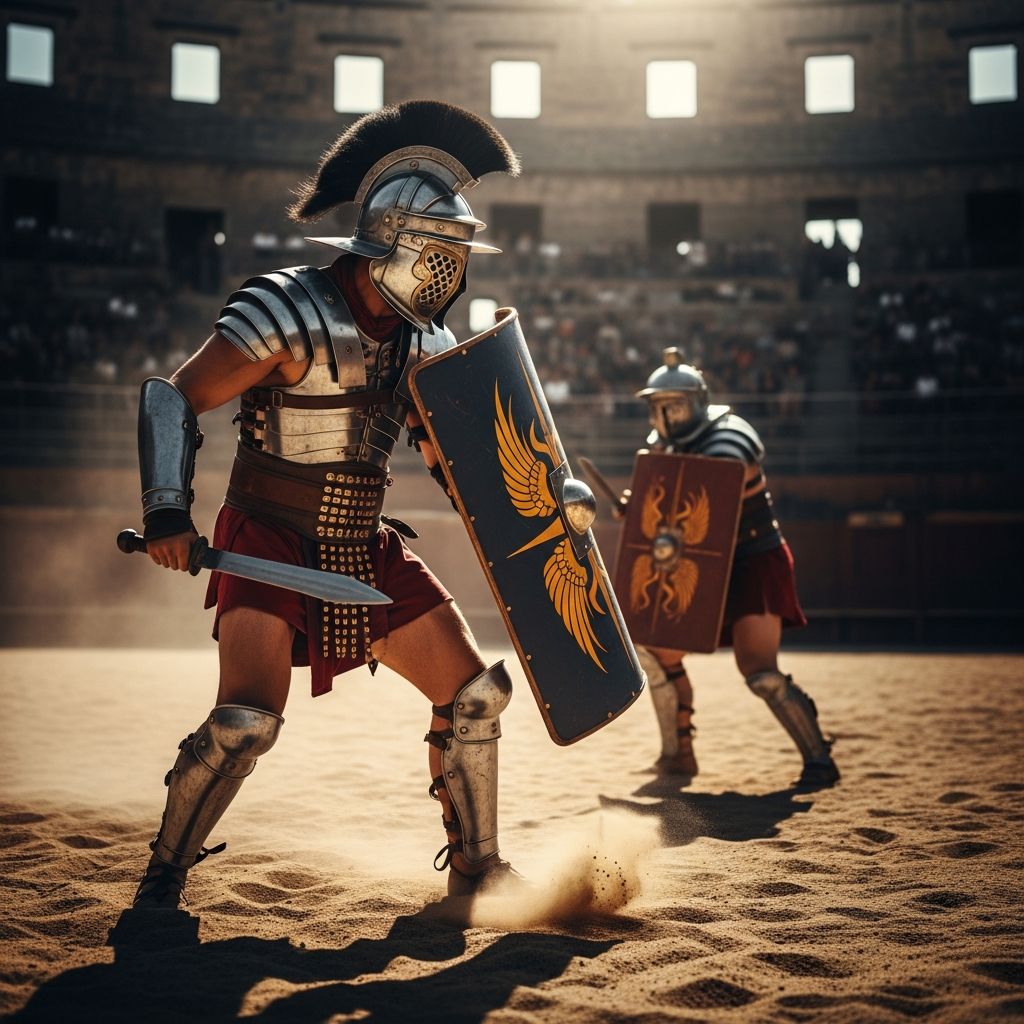
Roman gladiators represented a unique class of combatants who fought in public spectacles, embodying both brutality and skill in the empire’s amphitheaters. These fighters, often slaves, prisoners, or volunteers, were trained in specialized styles that pitted them against each other or wild beasts, drawing massive crowds for entertainment.
The Origins and Evolution of Gladiator Combat
Gladiatorial games, known as munera, began as funerary rituals in the 3rd century BCE and evolved into state-sponsored events by the imperial era. Early fights featured heavily armed warriors mimicking Rome’s enemies, but types adapted as political alliances shifted, phasing out references to integrated tribes.
Training occurred in ludi (gladiator schools), where recruits learned techniques with wooden weapons before advancing to metal ones. Fighters swore an oath of submission and faced grueling regimens to build strength and precision.
Major Categories of Arena Fighters
Gladiators were broadly divided into heavily armored (scutarii) and lightly armored (parmularii) types. Heavy fighters relied on large shields for protection, while light ones emphasized speed.
- Heavily Armored: Used scutum (large rectangular shield) and one greave.
- Lightly Armored: Carried parmula (small shield) and two greaves for mobility.
Iconic Gladiator Types and Their Gear
Each type had distinct equipment reflecting regional or tactical inspirations, ensuring varied matchups.
The Murmillo: Fish-Crested Guardian
Murmilles were sturdy fighters with a large scutum shield and gladius sword. Their helmet bore a fish crest, symbolizing agility in water-like combat. They protected their torso with a padded sleeve on the right arm and a greave on the left leg, balancing defense with thrusting attacks.
The Thraex: Thracian Blade Master
Inspired by Thracian warriors, Thraeces wielded a curved sica sword and small parmula shield. Full helmets with griffin crests and dual greaves allowed slashing maneuvers against larger opponents like Murmilles.
The Retiarius: Net and Trident Hunter
Retiarii fought with minimal armor—a shoulder guard, arm protector, and loincloth—using a weighted net to ensnare foes and a trident for strikes. A dagger served as backup. This style demanded precision and speed, often facing heavily armored types.
The Samnite: Early Heavyweight Powerhouse
Among the earliest types, Samnites were heavily equipped with a scutum, plumed helmet, short sword, and leg greave. Modeled after Italian rivals, they vanished post-integration into Rome around Augustus’ time.
Rare and Specialized Combatants
Beyond staples, exotic types added spectacle.
| Type | Weapons/Armor | Role/Notes |
|---|---|---|
| Hoplomachus | Spear, gladius, small shield, dual greaves | Greek-inspired; threw spear before close combat, matched against Thraeces. |
| Provocator | Gladius or spatha, tall shield, breastplate | Fought only same type; unique rectangular or crescent chest protection. |
| Essedarius | Chariot-mounted weapons | Rare chariot fighter, evoking Celtic warfare. |
| Dimachaerus | Dual swords, minimal armor | Two-sword specialist for relentless offense. |
| Scissor | Forearm blade or scissor-like sword | Experimental close-range slicer. |
Beast Fighters and Blind Warriors
Bestiarii battled animals like lions using spears, distinct from human duels. Andabatae fought blindfolded with heavy clubs, heightening danger for dramatic effect.
Famous Fighters and Victory Customs
Legends like Spartacus led revolts, but most sought freedom via the rudis—a wooden sword granted to retirees. Palm branches marked wins; thumbs decided fates.
The Daily Life and Training Regimen
Gladiators ate barley-rich diets for bulk, trained with palus (stakes) simulating foes, and wore heavy loads for endurance. Despite risks, fame and wealth awaited victors.
Women occasionally fought, though rare and later banned. Freeborn volunteers joined for glory, risking status loss.
Strategic Matchups in the Arena
Promoters paired types for balance: Retiarius vs. Secutor (smooth helmet to snag nets), Thraex vs. Hoplomachus. This created tactical depth, thrilling spectators.
Decline and Legacy of the Games
Games peaked under Trajan but waned with Christianity’s rise, ending by 435 CE. Today, they symbolize Roman excess and martial prowess.
Frequently Asked Questions
What were the most common gladiator types?
The Murmillo, Thraex, Retiarius, and Samnite dominated arenas, each with unique gear for balanced fights.
Did gladiators always fight to the death?
No, most survived; editors granted mercy based on crowd response, with only 1 in 10 bouts fatal.
Who trained gladiators?
Doctores in ludi like the one at Pompeii oversaw rigorous programs emphasizing weapon mastery.
Were female gladiators real?
Yes, evidence from reliefs shows gladiatrices, though petitions banned them by 200 CE.
How did gladiators earn freedom?
Repeated victories led to a rudis, symbolizing discharge as a rudiarius.
References
- Ancient Roman Gladiators: Types, Training, and Famous Fighters — The Colosseum.org. Accessed 2026. https://www.thecolosseum.org/gladiators/
- Types of Gladiators — BCCampus Pressbooks (Academic). 2023. https://pressbooks.bccampus.ca/spectaclesintheromanworldsourcebook/chapter/types-of-gladiators/
- Gladiator History, Types & Facts — Study.com (Educational). Accessed 2026. https://study.com/learn/lesson/ancient-roman-gladiators-history-types.html
- List of Roman Gladiator Types — Wikipedia (Sourced references). Accessed 2026. https://en.wikipedia.org/wiki/List_of_Roman_gladiator_types
- Gladiators: Types and Training — The Metropolitan Museum of Art (.org, Museum). Accessed 2026. https://www.metmuseum.org/essays/gladiators-types-and-training
- The Gladiators of Ancient Rome — Librarypoint.org (Library). Accessed 2026. https://www.librarypoint.org/blogs/post/gladiators-of-ancient-rome/

- Integrated M.A. in Applied Linguistics, University of Hyderabad
- 5+ years in editorial, instructional, SEO, and research-based writing
Sneha is a relationships and lifestyle writer with a strong foundation in applied linguistics and certified training in relationship coaching. She brings over five years of writing experience to theskillvault, crafting thoughtful, research-driven content that empowers readers to build healthier relationships, boost emotional well-being, and embrace holistic living. Her writing and insights reflect the belief that beauty, happiness, and wellness…