
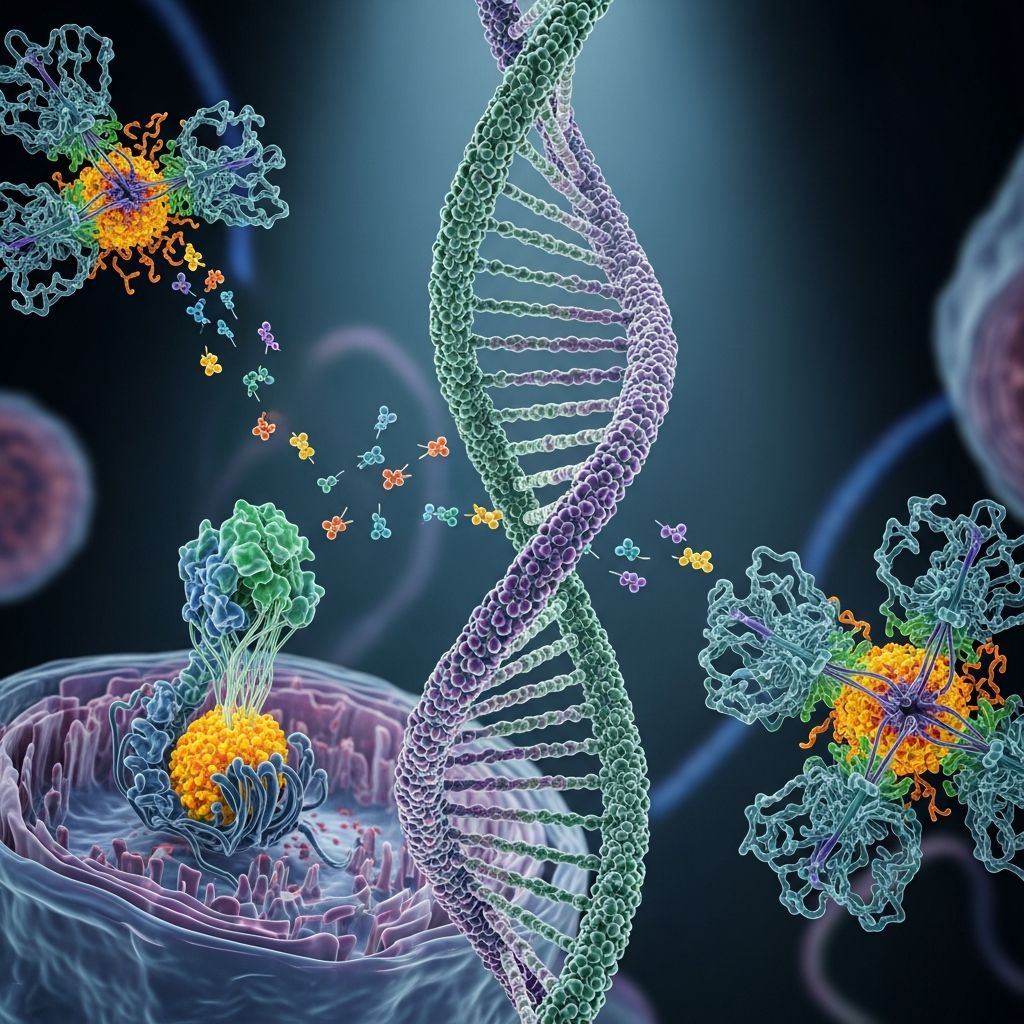
Ribonucleic acid, commonly known as RNA, represents one of the most versatile and essential biomolecules in all living organisms. Found in bacteria, viruses, plants, animals, and every other form of life, RNA molecules orchestrate countless cellular processes that sustain life itself. Unlike DNA, which serves primarily as a stable repository of genetic information locked away in the nucleus, RNA operates dynamically throughout the cell, taking on multiple roles that range from delivering genetic instructions to catalyzing chemical reactions. The structural simplicity of RNA—a single-stranded chain of nucleotides—belies its remarkable functional complexity and adaptability.
The Structural Foundation of RNA
To understand the diverse functions of RNA, one must first grasp its fundamental structure. RNA shares many similarities with DNA, yet possesses distinct characteristics that enable its unique biological roles. The backbone of an RNA molecule consists of ribose sugar molecules linked by phosphodiester bonds, with nitrogenous bases attached to each sugar unit. Where RNA diverges from DNA is in two critical ways: first, the sugar component is ribose rather than deoxyribose, and second, RNA incorporates uracil (U) as a nitrogenous base instead of thymine (T). This seemingly minor substitution has profound implications for RNA’s function and stability.
The single-stranded nature of RNA, compared to DNA’s characteristic double helix, confers tremendous structural flexibility. This plasticity allows RNA molecules to fold into complex three-dimensional configurations that are essential for their diverse functions. Some RNA molecules can form hairpin loops, bulges, and other intricate structures that interact with proteins, other RNA molecules, and even DNA. This dynamic structural capability is central to why RNA can perform such a wide array of biological tasks, from serving as a template during protein synthesis to acting as a catalyst in biochemical reactions.
The Primary Messenger: Understanding mRNA
Messenger RNA, abbreviated as mRNA, carries one of the most critical responsibilities in cellular biology: transporting genetic instructions from the nucleus to the ribosome. When genes are transcribed, they are first converted into mRNA molecules that capture the genetic code encoded within DNA. These mRNA transcripts then exit the nucleus and travel to ribosomes located throughout the cytoplasm, serving as templates for protein synthesis. The process by which ribosomes read mRNA sequences is known as translation, and it occurs three nucleotides at a time, with each three-nucleotide unit called a codon corresponding to a specific amino acid.
The role of mRNA extends beyond merely delivering information; mRNA stability and abundance directly influence protein production levels within cells. Regulatory mechanisms can increase or decrease mRNA lifespans, thereby controlling how much of each protein is produced. This layer of regulation allows cells to respond dynamically to changing conditions and needs without altering the underlying genetic code. In modern biotechnology, mRNA has gained particular prominence through its application in vaccines, where synthetic mRNA sequences direct cells to produce specific proteins that train the immune system to recognize pathogens.
The Adapter Molecule: Transfer RNA Functions
Transfer RNA molecules represent nature’s elegant solution to a fundamental problem in protein synthesis: how to match the genetic code in mRNA with the correct amino acids needed to build proteins. tRNA molecules function as adapter molecules that bridge the gap between the genetic language of nucleic acids and the chemical language of proteins. Each tRNA molecule is specifically designed to recognize a particular codon on mRNA while simultaneously carrying the corresponding amino acid. This dual recognition capability, sometimes referred to as the \”cloverleaf\” structure when viewed two-dimensionally, enables tRNA molecules to deliver precisely the right amino acid during translation.
The three-dimensional structure of tRNA is equally important as its function. These molecules fold into an L-shaped conformation that positions the anticodon at one end—the region that pairs with mRNA codons—and the amino acid attachment site at the other end. At each terminus of the amino acid, tRNA maintains its connection until the amino acid is incorporated into the growing protein chain. This reliable delivery system ensures that proteins are built with high fidelity, minimizing errors that could result in non-functional or harmful proteins. The specificity and accuracy of tRNA function represents one of nature’s most refined molecular recognition systems.
The Structural Foundation: Ribosomal RNA and Ribosome Assembly
Ribosomal RNA, or rRNA, constitutes the structural and catalytic core of ribosomes, the cellular machinery responsible for assembling proteins. Unlike the other major types of RNA that function individually, rRNA molecules form the fundamental framework of ribosomal subunits, which are themselves made of both RNA and protein components. Within eukaryotic cells, ribosomal RNA represents the most abundant type of RNA, comprising the majority of total cellular RNA content. This prevalence reflects the critical importance of protein synthesis in maintaining and building cellular structures and functions.
Beyond its structural role, rRNA possesses catalytic properties that make it a ribozyme—an RNA molecule capable of catalyzing chemical reactions. Specifically, rRNA catalyzes the formation of peptide bonds between amino acids during translation through a process known as peptidyl transferase activity. This catalytic function is central to the formation of polypeptide chains and represents one of the most fundamental chemical reactions in all of biology. The fact that an RNA molecule, rather than a protein enzyme, catalyzes this essential reaction suggests that RNA’s catalytic capabilities may trace back to ancient evolutionary origins, when RNA possibly dominated primordial biochemistry.
Gene Expression Control: The Regulatory RNA Network
Beyond the three major RNA types involved in protein synthesis, cells produce numerous regulatory RNA molecules that control how genes are expressed. These noncoding RNAs represent a vast and still-expanding category of molecules that fine-tune cellular function through diverse mechanisms. Small nuclear RNAs, or snRNAs, participate in the splicing of mRNA, a process that removes unnecessary sequences and joins functional segments together to create mature mRNA molecules ready for translation. The snRNAs work as components of the spliceosome, positioning themselves to recognize and cleave introns at precise sites while facilitating the joining of exons. This post-transcriptional processing is particularly important in eukaryotic cells, where genes are interrupted by non-coding sequences.
MicroRNAs represent another important class of regulatory molecules. These short RNA sequences, typically containing 20 to 24 nucleotides, participate in post-transcriptional gene regulation by binding to complementary sequences on mRNA molecules. When a microRNA binds to its target mRNA, the result is typically either degradation of that mRNA or prevention of its translation into protein. By controlling the levels of specific messenger RNAs, microRNAs effectively fine-tune gene expression and are involved in numerous biological processes including development, cell differentiation, and programmed cell death.
Long-Range Regulators: Long Noncoding RNA Functions
Long noncoding RNAs, or lncRNAs, represent an emerging frontier in molecular biology, with researchers continuously discovering new roles for these molecules. Unlike microRNAs, lncRNAs can be hundreds or thousands of nucleotides in length, providing greater complexity and versatility in their functions. lncRNAs can act as scaffolds that bring together multiple proteins or other RNA molecules, as guides that direct enzymes to specific genomic locations, or even as decoys that sequester proteins away from their normal targets. Their involvement in chromatin remodeling, transcriptional regulation, and splicing suggests that lncRNAs play foundational roles in determining cellular identity and function.
The long noncoding RNA Xist provides a well-characterized example of lncRNA function. In female mammals carrying two X chromosomes, one X chromosome is inactivated through a process called X-chromosome inactivation or lyonization. The Xist lncRNA coats one of the two X chromosomes, attracting proteins that chemically modify the DNA to prevent gene expression on that chromosome. This process ensures that cells maintain appropriate levels of X-linked proteins, preventing the potential problems that could arise from having two active copies of X-linked genes. The Xist example illustrates how lncRNAs can coordinate large-scale changes in cellular function through their structural and regulatory properties.
Fine-Tuning Cellular Processes: Small Nucleolar and Interfering RNAs
Small nucleolar RNAs, known as snoRNAs, carry out a specialized function focused on modifying other RNA molecules, particularly ribosomal RNA and other small RNAs. These modifications occur through various chemical processes that alter the structure and function of target RNAs, thereby fine-tuning their properties and interactions. This level of post-transcriptional modification represents an additional layer of gene expression regulation, allowing cells to adjust the properties of existing molecules without synthesizing new ones.
Small interfering RNAs, or siRNAs, participate in RNA interference, a cellular defense mechanism that silences the expression of specific genes. These short RNA molecules, similar in size to microRNAs, can be either endogenously produced by cells or artificially introduced for research or therapeutic purposes. The RNA interference pathway has proven invaluable for biotechnology applications, enabling researchers to selectively disable genes for study or therapeutic benefit. The technology has progressed to encompass CRISPR genome editing tools, which leverage RNA components to direct molecular machinery to specific genetic locations for precise editing.
Comparative Functions of RNA Types
| RNA Type | Primary Location | Main Function | Structural Feature |
|---|---|---|---|
| mRNA | Nucleus and Cytoplasm | Carries genetic instructions for protein synthesis | Single-stranded, variable length |
| tRNA | Cytoplasm | Delivers correct amino acids during translation | Cloverleaf secondary structure, L-shaped tertiary |
| rRNA | Ribosomes (Cytoplasm) | Structural and catalytic component of ribosomes | Large, complex, multiple types per ribosome |
| snRNA | Nucleus | Participates in mRNA splicing | Short, part of spliceosome |
| miRNA | Nucleus and Cytoplasm | Post-transcriptional gene regulation | Very short (20-24 nucleotides) |
| lncRNA | Nucleus and Cytoplasm | Chromatin remodeling and gene regulation | Long (hundreds to thousands of nucleotides) |
| snoRNA | Nucleus | Modification of rRNA and other RNAs | Small, guides modification enzymes |
The Diversity of Cellular Functions
The remarkable diversity of RNA molecules reflects the complexity of cellular life. Each type of RNA has evolved to perform specific functions that contribute to the overall operation of the cell. Some RNA molecules, like mRNA, tRNA, and rRNA, work together in coordinated fashion to synthesize proteins—the workhorses of cellular function. Other RNA molecules, like the regulatory RNAs, operate in parallel to control which genes are activated or silenced, determining cellular identity and response to environmental stimuli.
The functions of RNA are so broad and varied that some researchers propose the RNA World Hypothesis, which suggests that early life on Earth may have been based primarily on RNA molecules capable of both storing genetic information and catalyzing chemical reactions. This hypothesis gains credibility from the discovery of ribozymes, RNA molecules that can catalyze reactions, and from the central role RNA plays in modern molecular biology. Whether or not this hypothesis reflects early evolutionary history, it underscores the fundamental importance of RNA as a biological molecule.
RNA as Dynamic Cellular Communicator
A defining characteristic of RNA, in contrast to DNA, is its transient and dynamic nature. While DNA molecules remain relatively stable, locked away and protected in the nucleus, RNA molecules are continuously synthesized, modified, and degraded. This rapid turnover allows cells to respond quickly to changing conditions, adjusting protein production and gene expression within minutes or hours. When environmental circumstances change—such as temperature fluctuations, nutrient availability, or stress signals—cells can alter their RNA profiles to adapt their physiology accordingly.
The versatility of RNA stems from its structural flexibility and the multiple forms it can adopt. A single RNA sequence can fold into different three-dimensional shapes depending on the environment, affecting how it interacts with other molecules. This conformational flexibility, combined with RNA’s ability to form base pairs with complementary sequences, enables RNA molecules to serve simultaneously as templates, regulators, catalysts, and scaffolds. Few other biomolecules demonstrate such multifaceted functionality, making RNA central to understanding cellular organization and function.
Frequently Asked Questions
Q: What is the main difference between RNA and DNA?
A: RNA and DNA differ in three key ways: RNA contains ribose sugar while DNA contains deoxyribose; RNA uses uracil as a base while DNA uses thymine; and RNA is typically single-stranded while DNA is double-stranded. These differences enable RNA to perform dynamic cellular functions while DNA serves as stable genetic storage.
Q: Can RNA act as an enzyme?
A: Yes, some RNA molecules called ribozymes possess catalytic activity. The ribosomal RNA within ribosomes catalyzes peptide bond formation during protein synthesis, making it a ribozyme. This enzymatic capability suggests ancient biological roles for RNA and remains important in modern molecular processes.
Q: How do microRNAs regulate gene expression?
A: MicroRNAs bind to complementary sequences on messenger RNA molecules. This binding typically results in either degradation of the target mRNA or prevention of its translation into protein. By controlling mRNA levels, microRNAs effectively reduce the production of specific proteins, providing a mechanism for fine-tuning cellular protein composition.
Q: Why is tRNA called an \”adapter\” molecule?
A: Transfer RNA is called an adapter because it bridges two distinct biological languages. One end of the tRNA molecule recognizes specific codons on mRNA (nucleic acid language), while the other end carries the corresponding amino acid (protein language). This dual specificity allows tRNA to correctly translate genetic instructions into protein sequences.
Q: What is the RNA World Hypothesis?
A: The RNA World Hypothesis proposes that early life on Earth may have been based on RNA molecules that could both store genetic information and catalyze chemical reactions, prior to the evolution of DNA and proteins. This hypothesis is supported by the discovery of ribozymes and the central role RNA plays in modern molecular biology.
Q: How does the spliceosome use snRNA?
A: Small nuclear RNAs are components of the spliceosome, a complex that removes non-coding sequences (introns) from mRNA and joins coding sequences (exons) together. The snRNAs help align the spliceosome at correct splice sites, directing the removal of introns and the ligation of exons to produce mature, functional mRNA.
References
- Structure, Functions and Types of RNA — BYJU’S. Accessed 2025. https://byjus.com/biology/structure-of-rna/
- Types of RNA — Khan Academy. 2025. https://www.khanacademy.org/test-prep/mcat/biomolecules/x04f6bc56:transcription-and-translation/a/types-of-rna
- What is RNA? Structure and functions explained — QIAGEN. Accessed 2025. https://www.qiagen.com/us/knowledge-and-support/knowledge-hub/bench-guide/rna/introduction/what-is-rna
- Ribonucleic Acid (RNA) Fact Sheet — National Human Genome Research Institute. Accessed 2025. https://www.genome.gov/about-genomics/educational-resources/fact-sheets/ribonucleic-acid-fact-sheet
- Different types of RNAs and their functions — FutureLearn. Accessed 2025. https://www.futurelearn.com/info/courses/translational-research/0/steps/14201

- Integrated M.A. in Applied Linguistics, University of Hyderabad
- 5+ years in editorial, instructional, SEO, and research-based writing
Sneha is a relationships and lifestyle writer with a strong foundation in applied linguistics and certified training in relationship coaching. She brings over five years of writing experience to theskillvault, crafting thoughtful, research-driven content that empowers readers to build healthier relationships, boost emotional well-being, and embrace holistic living. Her writing and insights reflect the belief that beauty, happiness, and wellness…