
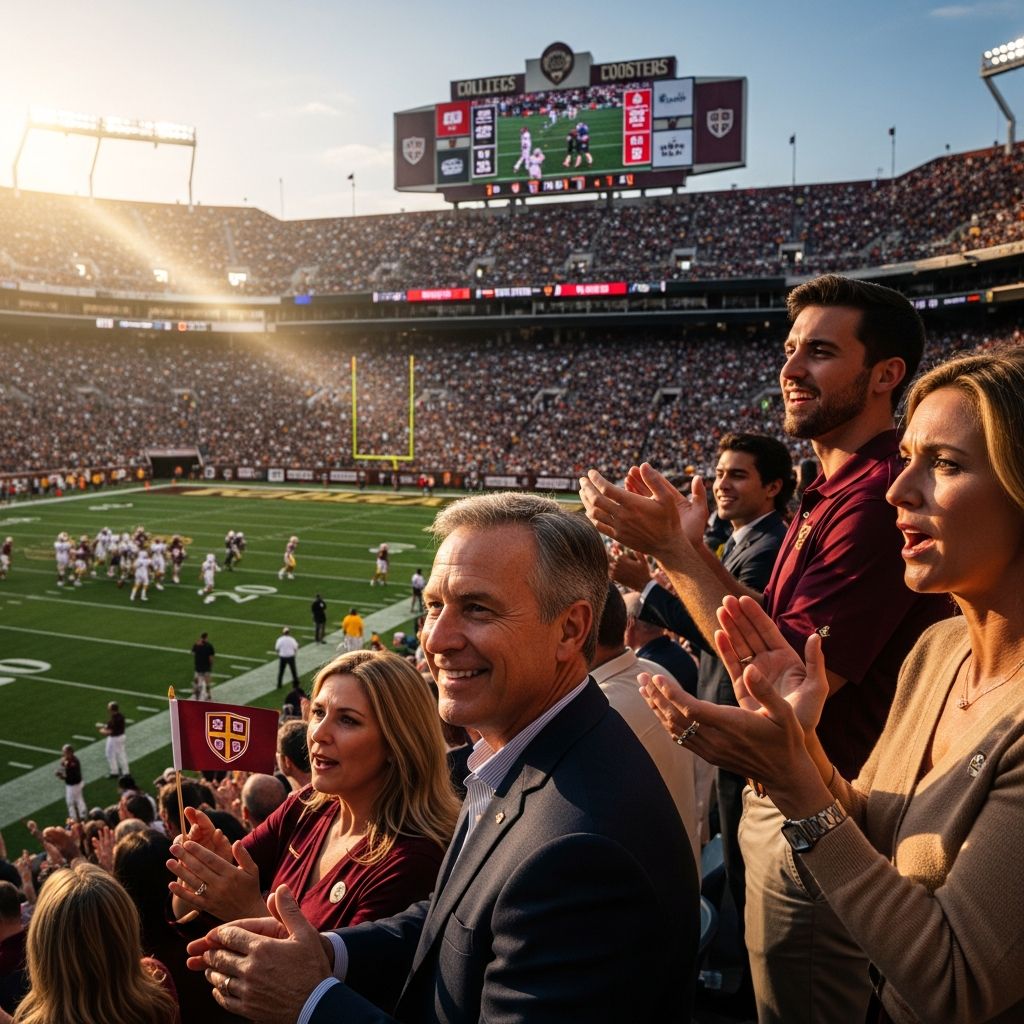
College boosters are dedicated individuals and groups who provide essential financial, emotional, and communal support to university athletic programs. These supporters enhance the student-athlete experience by funding facilities, scholarships, and events, all while adhering to rigorous regulatory frameworks set by organizations like the NCAA.
Defining the Role of Boosters in University Sports
In the landscape of intercollegiate athletics, boosters—officially termed ‘representatives of the institution’s athletic interests’ by the NCAA—play a pivotal part. They encompass a wide array of people who have ever contributed to a school’s sports initiatives, whether through direct donations, season ticket purchases, or involvement in promotional activities.
Once designated as a booster, this status is permanent, binding individuals to specific compliance rules indefinitely. This designation ensures that support remains ethical and does not compromise the integrity of amateur athletics. Boosters might include alumni, local business owners, former athletes, or even parents of current players who have engaged in any promotional or financial capacity.
How Individuals Become Boosters
Becoming a booster often happens organically through enthusiasm for a university’s teams. Common pathways include:
- Making financial gifts to the athletic department or affiliated organizations.
- Purchasing season tickets to gain access to games.
- Joining or leading booster clubs that rally community support.
- Assisting in recruitment efforts at the request of athletic staff.
- Providing jobs or benefits to enrolled student-athletes or their families.
These actions, while well-intentioned, trigger lifelong oversight under NCAA bylaws. For instance, even a one-time donation for seats can classify someone as a booster, subjecting them to rules that govern interactions with prospects and athletes.
The Power of Booster Clubs in Collegiate Athletics
Booster clubs formalize this support, operating as nonprofit entities that organize fundraisers, sell merchandise, and host events to bolster school sports. At the college level, these groups are typically driven by alumni, fans, and athletic department affiliates.
Funds raised often cover extras like travel expenses, equipment upgrades, and facility improvements—areas strained by public budget limitations. Online crowdfunding and membership dues have modernized their efforts, expanding reach beyond local communities.
| Booster Club Activity | Purpose | Example Benefit |
|---|---|---|
| Merchandise Sales | Generate revenue | T-shirts with team logos funding new uniforms |
| Event Concessions | Engage fans | Popcorn sales at games supporting trips |
| Crowdfunding Campaigns | Broaden support | Online drives for scholarship endowments |
| Membership Fees | Sustain operations | Exclusive events for donors |
This structured support creates a vibrant ecosystem where community passion translates into tangible enhancements for athletes.
Permissible Ways Boosters Can Contribute
Boosters have numerous avenues to show support without risking violations. Key permissible actions include:
- Donating money or in-kind gifts directly to university programs, which athletics departments can allocate appropriately.
- Attending games and cheering enthusiastically to boost team morale.
- Volunteering time for official events organized by the school.
- Maintaining pre-existing personal relationships with prospects, without athletic inducements.
These methods allow boosters to foster a positive environment while complying with regulations. Contributions funneled through institutional channels ensure benefits reach student-athletes equitably.
Navigating NCAA Restrictions: What Boosters Cannot Do
Strict prohibitions protect the amateur status of college sports. Boosters must avoid:
- Contacting prospective student-athletes via phone, email, or in person to discuss enrollment or athletics.
- Offering gifts, discounts, free services, or transportation to prospects or their families.
- Providing extra benefits to enrolled athletes, such as special deals, loans, free housing, or event tickets beyond standard allotments.
- Arranging employment for prospects’ relatives as enrollment incentives.
- Influencing high school or club coaches with benefits to sway recruits.
Violations can result in severe penalties, including loss of athlete eligibility, institutional sanctions, or booster privileges revocation. Prospects remain such until they begin classes or practice, heightening the need for caution.
Understanding Prospects vs. Enrolled Student-Athletes
A prospect is any individual who has not yet started classes at the university, even after signing commitments like a National Letter of Intent. Boosters must refrain from new benefits during this phase, though ongoing friendships are allowed if they predate athletic interest.
Once enrolled and participating, student-athletes can receive institutional benefits, but boosters cannot extend extras like performance-based gifts or free rentals. This distinction upholds fairness across programs.
Consequences of Non-Compliance
Breaches erode trust in collegiate athletics. Potential outcomes include:
- Ineligibility for implicated student-athletes.
- NCAA sanctions against the school, such as postseason bans or scholarship reductions.
- Permanent loss of booster perks, like ticket access.
Historical cases underscore these risks, emphasizing education and compliance training for all involved parties.
Building Positive Relationships Within the Rules
Boosters can nurture ties ethically by focusing on general university support rather than individual athletes. Hosting community events, sponsoring scholarships through official channels, and promoting school spirit via social media amplify impact safely.
Many universities offer compliance resources, workshops, and hotlines to guide boosters, ensuring enthusiasm translates into sustainable success.
Frequently Asked Questions (FAQs)
Q: Can boosters attend games with prospects?
A: Boosters may attend public events but cannot provide free or reduced tickets to prospects or their families, nor discuss athletics.
Q: Is employing a student-athlete allowed?
A: Yes, if the job meets market rates, is unrelated to athletics, and follows NCAA employment guidelines without recruitment ties.
Q: Do booster clubs need school approval?
A: While independent, clubs often coordinate with administrations for facilities and alignment with institutional policies.
Q: Can boosters contact high school coaches?
A: No, providing benefits or discussing prospects with coaches is prohibited to prevent undue influence.
Q: What if a booster has a family friendship with a prospect?
A: Pre-existing relationships can continue normally, but no new athletic-related benefits or encouragements are permitted.
Future Trends in Booster Involvement
As collegiate athletics evolves with NIL deals and conference realignments, boosters adapt by supporting Name, Image, and Likeness opportunities through collectives—still under compliance scrutiny. Digital platforms enable global engagement, while transparency tools help navigate complexities.
Ultimately, boosters remain the heartbeat of college sports, blending passion with prudence to elevate programs nationwide.
References
- Role of Boosters — NCAA.org. 2013-11-27. https://www.ncaa.org/sports/2013/11/27/role-of-boosters.aspx
- Booster – Spry — Spry.so. N/A. https://spry.so/term/booster/
- Who is a Booster? — UA Pine Bluff Athletics. 2016-03-23. https://uapblionsroar.com/sports/2016/3/23/who-is-a-booster.aspx?id=43
- Parents, Donors and Boosters NCAA Do’s and Dont’s — Vanguard University Athletics. 2023-06-30. https://vanguardlions.com/sports/2023/6/30/parents-donors-and-boosters.aspx
- Booster club — Wikipedia. N/A. https://en.wikipedia.org/wiki/Booster_club
- What Is the Purpose of a Booster Club? — BoosterHub. N/A. https://www.boosterhub.com/blog/what-is-the-purpose-of-a-booster-club
- Boosters DO’s and DON’Ts — SNU Athletics. N/A. https://snuathletics.com/custompages/Compliance/Boosters%20DO’s%20and%20DON’Ts.pdf

- Integrated M.A. in Applied Linguistics, University of Hyderabad
- 5+ years in editorial, instructional, SEO, and research-based writing
Sneha is a relationships and lifestyle writer with a strong foundation in applied linguistics and certified training in relationship coaching. She brings over five years of writing experience to theskillvault, crafting thoughtful, research-driven content that empowers readers to build healthier relationships, boost emotional well-being, and embrace holistic living. Her writing and insights reflect the belief that beauty, happiness, and wellness…