
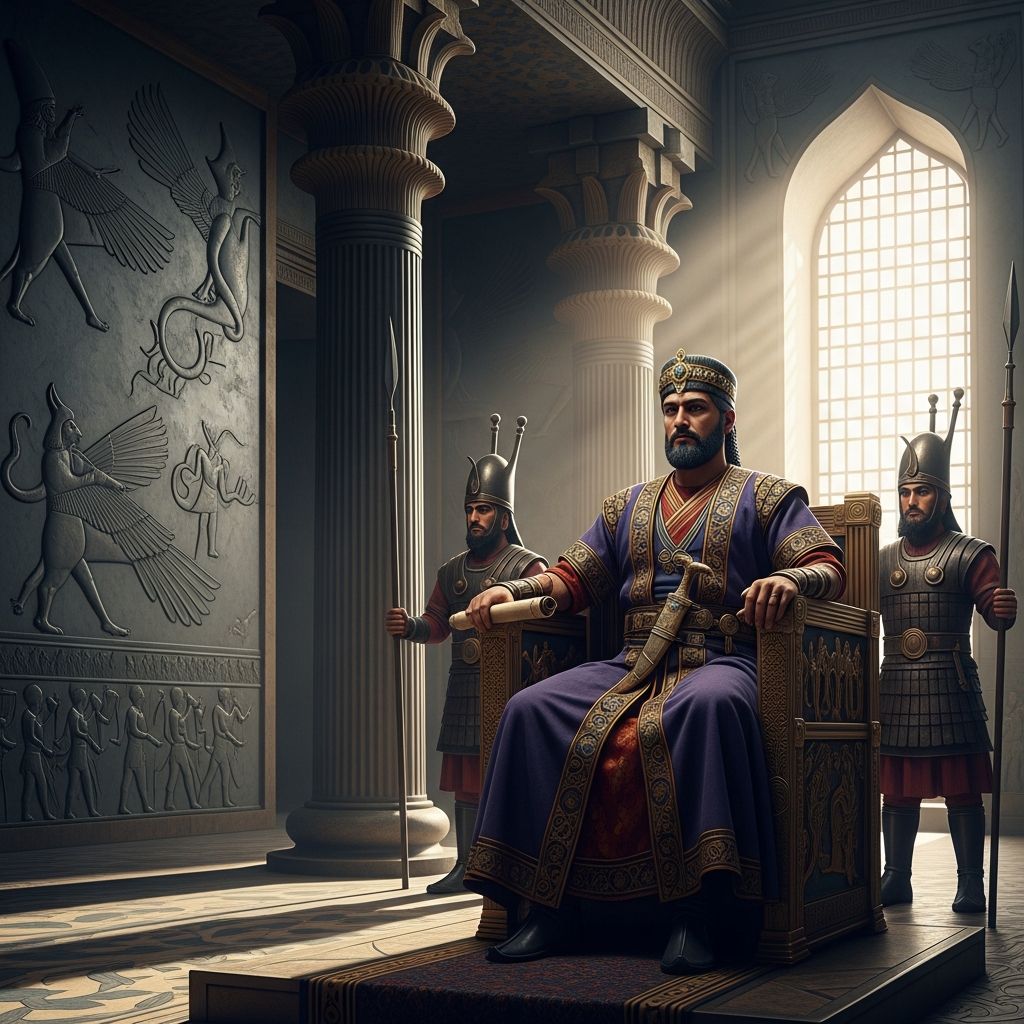
The Achaemenid Empire, spanning from the Indus Valley to the Mediterranean, relied on a sophisticated administrative system to govern its vast territories. At the heart of this system were the satraps, provincial governors who acted as the king’s representatives in distant regions. Derived from the Old Persian term *khshathrapavan* meaning “protector of the realm,” these officials managed satrapies—large provinces that formed the empire’s backbone.
Origins and Evolution of the Satrapal System
The satrapal system emerged during the rise of the Achaemenid Empire under Cyrus the Great around 559 BCE. As Cyrus conquered vast lands, he adapted administrative structures from predecessor empires like the Medes, dividing his realm into manageable satrapies to maintain control. This innovation allowed local autonomy while ensuring loyalty to the central authority in Persepolis.
Darius I (r. 522–486 BCE) formalized the system, organizing the empire into approximately 20 to 30 satrapies, each with defined boundaries and tribute obligations. Herodotus, the Greek historian, documented this structure, noting the ninth satrapy encompassing Babylon and Assyria, which paid 1,000 talents of silver annually. Darius’s reforms included fixed taxation schedules, promoting economic stability across diverse cultures from Egypt to Thrace.
- Cyrus the Great: Initiated division of conquered lands into satrapies for efficient governance.
- Darius I: Standardized 20 satrapies with annual tributes, enhancing imperial revenue.
- Cambyses II: Expanded the system during conquests in Egypt, adapting local bureaucracies.
Post-Achaemenid, the system persisted under the Seleucids and Parthians, with terms like *shahrab* in Middle Persian replacing *satrap* but retaining similar functions.
Appointment and Social Status of Satraps
Satraps were typically drawn from the Persian nobility or royal family, appointed directly by the king to ensure loyalty. Holding office indefinitely, they wielded immense power but were subject to oversight. Royal inspectors, known as the “eyes of the king,” conducted periodic audits to prevent corruption.
In the hierarchical structure, satraps oversaw local officials managing districts and villages. Military commanders and scribes reported independently to the king, creating checks and balances. This prevented any single satrap from amassing unchecked authority, though weakening central control later led to virtual independence for some.
| Rank | Role | Reporting Line |
|---|---|---|
| Satrap | Provincial Governor | Direct to King |
| Military Commander | Army Maintenance | Direct to King |
| Royal Scribe | Inspections & Records | Direct to King |
| Local Officials | District Administration | To Satrap |
This table illustrates the balanced power distribution, crucial for sustaining the empire’s stability.
Core Responsibilities in Provincial Governance
Satraps served as the chief administrators, juggling multiple duties to keep provinces productive and secure. Tax collection was paramount; they assessed and forwarded tribute—silver, gold, grain, or livestock—to the royal treasury, fueling imperial projects like the Royal Road.
Judicial authority rested with the satrap, who adjudicated disputes, imposed punishments, and awarded compensations. As supreme judges, they upheld Persian law blended with local customs, fostering tolerance in multicultural satrapies.
Military obligations included recruiting, training, and maintaining armies for defense and campaigns. Satraps mobilized forces against rebellions or invasions, such as Greek incursions in Asia Minor. Internal security fell under their purview, suppressing uprisings and managing crises.
- Taxation: Gathering fixed tributes based on satrapy productivity.
- Justice: Resolving civil and criminal cases locally.
- Military: Raising troops and ensuring border defenses.
- Infrastructure: Overseeing roads, canals, and royal postal systems.
These duties varied by era and region but underscored the satraps’ role as imperial linchpins.
Checks, Balances, and Instances of Rebellion
To curb abuses, Darius implemented dual reporting lines for key officials. The “eyes and ears of the king”—traveling inspectors—visited unannounced, reporting directly to the monarch. Garrison commanders, independent of satraps, secured major cities.
Despite safeguards, ambitious satraps occasionally rebelled. In the 4th century BCE, declining central authority sparked the Satraps’ Revolt (366–360 BCE), where western satraps challenged Artaxerxes II. Cyrus the Younger, satrap of Lydia, even launched a bid for the throne in 401 BCE, culminating in the Battle of Cunaxa.
Such events highlight the system’s dual nature: effective yet vulnerable to personal ambition when royal oversight waned.
Satrapies: Diversity and Economic Contributions
Satrapies varied in size, wealth, and ethnicity, from fertile Babylonia to rugged Thrace. Herodotus listed 20, but Persian records suggest up to 30, grouped for efficiency. Wealthy satrapies like Egypt provided massive tributes, funding palaces and armies.
The system promoted economic integration via standardized coinage (darics) and trade routes. Satraps facilitated agriculture, mining, and commerce, boosting imperial prosperity.
- Babylonia (9th Satrapy): 1,000 silver talents + 500 eunuchs annually.
- Egypt: Grain supplies and naval support.
- Lydia: Gold from Pactolus River mines.
- India: Largest tribute in talents of gold dust.
Legacy Beyond the Achaemenid Empire
Alexander the Great retained the satrapal system post-330 BCE, appointing Macedonian satraps to stabilize conquered lands. The Seleucids and Parthians adapted it, influencing Hellenistic and later Islamic administrations.
In biblical texts, satraps appear as “princes” or “lieutenants” in Daniel and Esther, overseeing provinces like Media. The model’s emphasis on delegated authority inspired Roman provinces and Mughal subahdars in India.
Today, the term evokes efficient, decentralized governance, a testament to Persian ingenuity in ruling diverse populations.
Frequently Asked Questions (FAQs)
What was the primary role of a satrap?
A satrap acted as the king’s governor over a satrapy, handling administration, taxes, justice, and military affairs.
How many satrapies existed in the Achaemenid Empire?
Herodotus cited 20, though records indicate variations up to 30 depending on the reign.
Who appointed satraps?
The Great King personally selected them from nobility or family, often for life.
Did satraps have unchecked power?
No, royal inspectors and separate military commands provided oversight.
How did the satrap system end?
It evolved under Alexander and successors, persisting in modified forms until the Islamic conquests.
Comparative Administration: Satraps vs. Modern Governors
While modern governors focus on state legislatures and elections, ancient satraps embodied absolute royal will with local flexibility. Both collect revenues and enforce laws, but satraps lacked democratic accountability, relying on personal loyalty.
| Aspect | Satrap (Ancient Persia) | Modern Governor |
|---|---|---|
| Appointment | By monarch | Elected |
| Taxation | Tribute to empire | State budgets |
| Military | Raises armies | National Guard |
| Oversight | Royal inspectors | Legislature/courts |
This comparison reveals enduring principles of provincial rule.
The satrapal system exemplifies how ancient Persia achieved unprecedented imperial cohesion. By balancing central control with regional empowerment, satraps enabled governance over 44% of the world’s population at its peak. Their story illuminates the art of empire-building, blending coercion, incentives, and cultural accommodation.
References
- Satrap Definition, History & Importance — Study.com. Accessed 2026. https://study.com/academy/lesson/satrap-overview-history-origin.html
- Satrap | Achaemenid Empire, Autonomous Rule, Taxation — Encyclopaedia Britannica. 2024-10-15. https://www.britannica.com/topic/satrap
- Satrap — BiblicalTraining.org. Accessed 2026. https://www.biblicaltraining.org/library/satrap
- Achaemenid Satrapies — Encyclopaedia Iranica. 1982-01-01 (authoritative historical reference). https://www.iranicaonline.org/articles/achaemenid-satrapies/
- Satraps and Satrapies — Livius.org. Accessed 2026. https://www.livius.org/articles/concept/satraps-and-satrapies/
- Satrapies and Provinces in the Persian Empire — BibleOdyssey.org. Accessed 2026. https://www.bibleodyssey.org/articles/satrapies-and-provinces-in-the-persian-empire/

- Integrated M.A. in Applied Linguistics, University of Hyderabad
- 5+ years in editorial, instructional, SEO, and research-based writing
Sneha is a relationships and lifestyle writer with a strong foundation in applied linguistics and certified training in relationship coaching. She brings over five years of writing experience to theskillvault, crafting thoughtful, research-driven content that empowers readers to build healthier relationships, boost emotional well-being, and embrace holistic living. Her writing and insights reflect the belief that beauty, happiness, and wellness…