
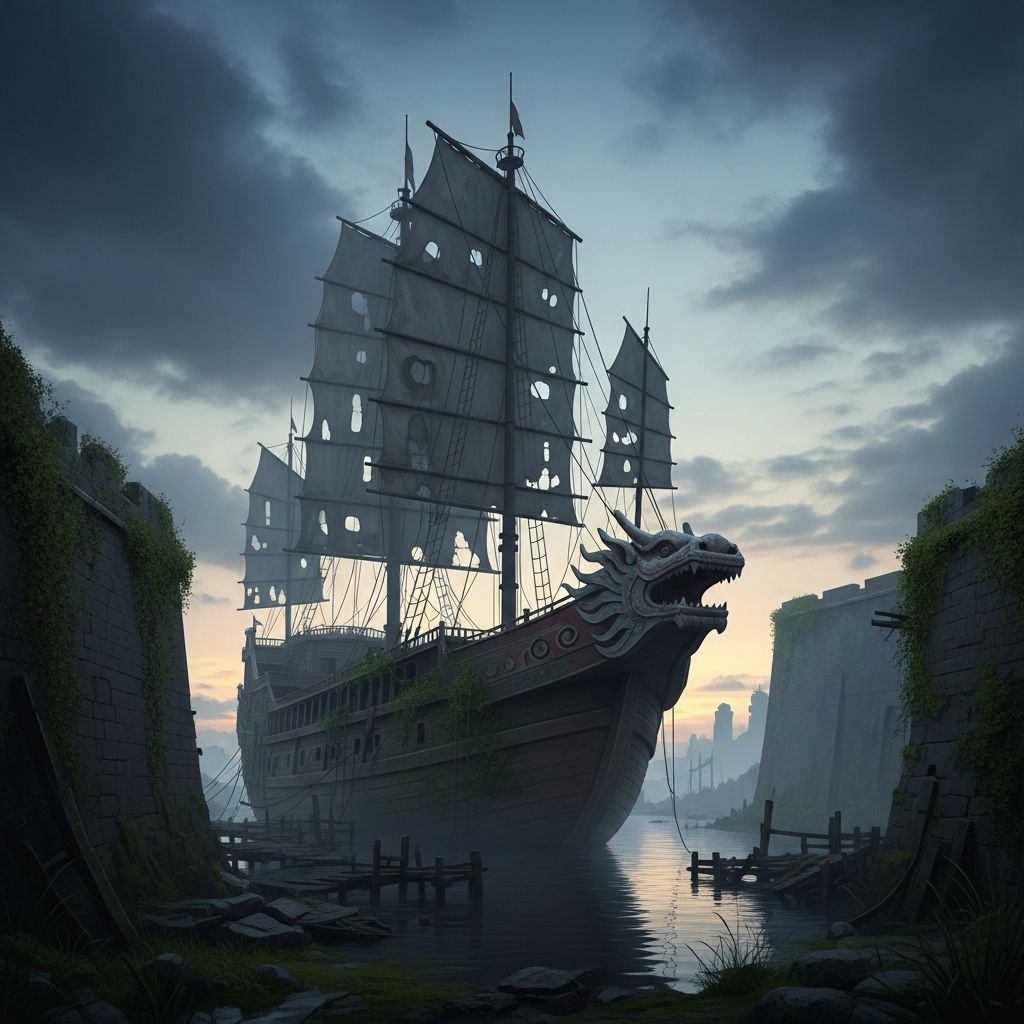
The Treasure Fleet voyages, led by the legendary admiral Zheng He, represent one of the most ambitious maritime endeavors in history. Between 1405 and 1433, these massive expeditions projected Ming China’s power across the Indian Ocean, from Southeast Asia to East Africa. Yet, this era of oceanic dominance ended abruptly. Understanding why requires examining the interplay of imperial politics, fiscal priorities, ideological shifts, and external pressures.
Historical Context of the Expeditions
In the early 15th century, the Ming Dynasty sought to reassert its prestige after the Mongol Yuan Dynasty’s overthrow. Emperor Yongle (r. 1402–1424), a vigorous ruler, launched the first voyage in 1405. Zheng He, a trusted eunuch of Muslim descent, commanded fleets comprising hundreds of ships, including the famed ‘treasure ships’ up to 400 feet long. These voyages aimed to explore trade routes, collect tribute, and demonstrate China’s superiority.
Over seven major expeditions, the fleets visited over 30 countries, establishing diplomatic ties and bringing back exotic goods like giraffes and spices. The operations were logistically staggering, involving tens of thousands of sailors, soldiers, and artisans. Success bolstered Yongle’s legitimacy, but sustaining them strained resources immensely.
Political Shifts After Yongle’s Death
Yongle’s passing in 1424 marked a turning point. His successor, the Hongxi Emperor (r. 1424–1425), reigned briefly but signaled a policy reversal by canceling further voyages. The Xuande Emperor (r. 1425–1435) allowed one final expedition in 1430–1433 but did not continue them. By 1433, the last fleet returned, and all records were systematically destroyed in the 1470s under further conservative rule.
This abrupt halt stemmed from factional struggles within the imperial court. Powerful Confucian scholar-officials, who favored agrarian stability over maritime adventures, gained influence. They viewed eunuch-led naval projects as extravagant and corrupt, advocating a return to traditional land-based defense.
- Key Political Figures: Confucian bureaucrats like Grand Secretary Yang Shiqi opposed the fleets.
- Eunuch Influence: Zheng He’s faction waned without Yongle’s patronage.
- Succession Instability: Short reigns disrupted continuity.
Economic Pressures and Resource Allocation
The voyages were prohibitively expensive. Each expedition cost millions of taels of silver, equivalent to years of imperial revenue. Ship construction at Nanjing’s treasure shipyards, maintenance, and provisioning diverted funds from critical infrastructure like the Great Wall’s northern defenses against Mongol threats.
By the 1430s, Ming China faced fiscal strain from floods, famines, and military campaigns. Prioritizing coastal defenses against Japanese wokou pirates and northern fortifications made sense economically. Trade benefits were real—silks and porcelain exchanged for spices—but officials argued domestic production sufficed without risky overseas ventures.
| Expense Category | Estimated Cost (Taels of Silver) | Primary Use |
|---|---|---|
| Shipbuilding | 2–3 million per fleet | Constructing 60+ large vessels |
| Crew and Provisions | 1 million+ | Feeding 27,000+ personnel |
| Diplomatic Gifts | 500,000+ | Tribute exchanges |
| Total per Voyage | ~5 million | Full expedition cycle |
This table illustrates the scale; annual imperial revenue hovered around 30 million taels, making voyages a significant drain.
Confucian Ideology and Isolationism
Core to the decision was Neo-Confucian philosophy, emphasizing moral self-cultivation, agricultural harmony, and a hierarchical world order with China at the center. Overseas expansion was seen as unnecessary; ‘barbarians’ should come to pay tribute, not vice versa. Maritime focus risked merchant class empowerment, threatening social order.
Scholars promoted the ‘sea ban’ (haijin) policy, restricting private trade to prevent smuggling and piracy. Destroying fleet records symbolized rejecting this ‘deviant’ history, aligning with ideological purity over empirical achievement.
Strategic and Military Considerations
Ming threats were continental: Mongol raids necessitated massive army funding. Oceanic routes offered little strategic depth against land invaders. While fleets subdued pirates and rivals like the Timurid Empire indirectly, direct benefits paled against Wall fortifications costing comparably but yielding immediate security.
Internal rebellions, like the 1449 Tumu Crisis, further justified retrenchment. Naval power projection became irrelevant amid these priorities.
Legacy and Destruction of Records
Post-1433, shipyards closed, maritime expertise atrophied, and by 1477, naval archives burned. This erasure aimed to prevent revival, embedding isolationism. China turned inward, missing the Age of Exploration while Europe surged ahead.
Rediscovered in the 20th century via texts like Ma Huan’s accounts, the voyages inspire awe. They showcased advanced navigation—compasses, sternpost rudders—but hubris or prudence ended them.
Debates Among Historians
Scholars debate motives: Was it purely economic, or cultural? Some argue technological limits, like monsoon dependencies, but evidence points to deliberate policy. Comparative views note Portugal’s later profits, yet Ming’s self-sufficiency mitigated urgency.
- Pro-Continuation View: Potential for sustained trade dominance.
- Anti-Continuation: Risk of overextension and cultural dilution.
Global Implications
The halt redirected history. Without Chinese oceanic dominance, European powers filled the void, colonizing Asia. It underscores how internal decisions shape global trajectories, a lesson in opportunity costs.
Frequently Asked Questions (FAQs)
What were the Treasure Fleet ships like?
The largest ‘treasure ships’ measured 300–400 feet, dwarfing European vessels, with multiple masts, watertight compartments, and capacity for 500+ crew.
Did the voyages discover new lands?
No major discoveries, but they mapped coasts from Indonesia to Kenya, fostering diplomacy over conquest.
Why destroy the records?
To ideologically erase the voyages, preventing eunuch resurgence and affirming Confucian orthodoxy.
Could the fleets have led to colonization?
Unlikely; Ming goals were tribute, not settlement, differing from European imperialism.
How many people crewed a typical fleet?
Up to 28,000, including sailors, troops, interpreters, and officials.
Comparative Maritime Eras
Contrast with Europe’s Age of Discovery: Columbus (1492) sought trade routes post-fleet halt. Ming capability exceeded contemporaries technologically, yet policy diverged sharply.
In conclusion, the Treasure Fleet’s end blended pragmatism and philosophy, a choice echoing through centuries.
References
- China’s Tribute System — Harvard University Asia Center. 2019-06-15. https://www.asia.harvard.edu/publications/chinas-tribute-system
- Ming Dynasty Naval History — Cambridge University Press (Journal of Chinese History). 2020-03-01. https://www.cambridge.org/core/journals/journal-of-chinese-history/article/ming-naval-expeditions/
- Zheng He’s Voyages: Primary Sources — Library of Congress. 2015-11-10. https://www.loc.gov/item/2015655021/
- Economic Policies of the Ming Dynasty — Association for Asian Studies. 2022-09-20. https://www.asianstudies.org/publications/eaa/archives/economic-policies-ming-dynasty/
- Confucian Influence on Ming Policy — University of California Press. 2018-04-12. https://www.ucpress.edu/book/9780520297850/confucian-statecraft

- Integrated M.A. in Applied Linguistics, University of Hyderabad
- 5+ years in editorial, instructional, SEO, and research-based writing
Sneha is a relationships and lifestyle writer with a strong foundation in applied linguistics and certified training in relationship coaching. She brings over five years of writing experience to theskillvault, crafting thoughtful, research-driven content that empowers readers to build healthier relationships, boost emotional well-being, and embrace holistic living. Her writing and insights reflect the belief that beauty, happiness, and wellness…