
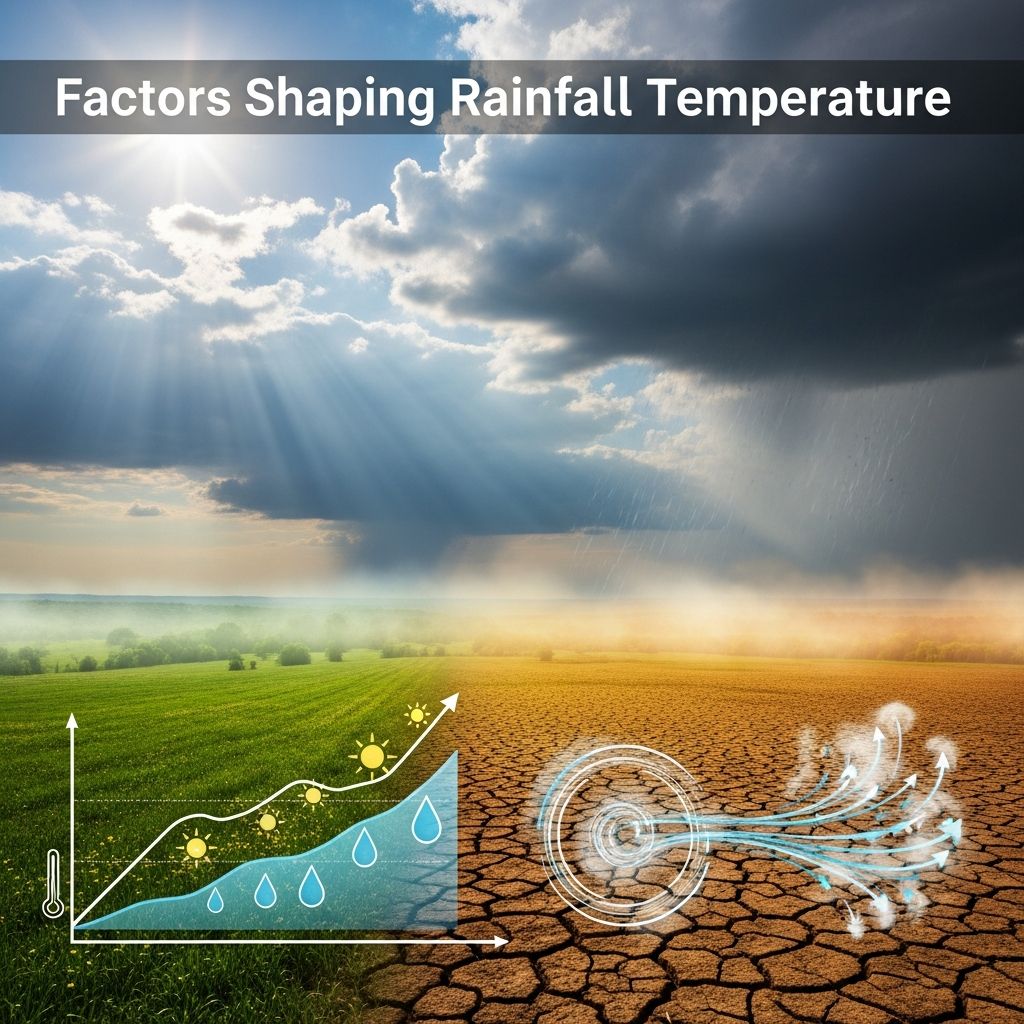
Rain temperature is primarily determined by the temperature of the air through which raindrops fall, with typical drops cooling to match ambient conditions several hundred meters above the ground. Warmer air masses produce warmer rain, while colder environments yield cooler precipitation, influenced by regional climate factors like latitude and proximity to water bodies.
Core Principles of Raindrop Formation and Cooling
Raindrops originate high in clouds where temperatures are often below freezing, but they warm or cool as they descend through varying atmospheric layers. The journey from cloud to surface typically spans 1-2 kilometers, allowing drops to equilibrate with surrounding air via conduction and minimal evaporation effects. In tropical regions, rain often arrives at 20-25°C, contrasting with sub-zero drops in polar storms.
- Condensation Nuclei: Drops form around tiny particles, starting small and growing via coalescence.
- Fall Speed: Larger drops fall faster, spending less time cooling but still matching air temperature.
- Evaporation Limit: Dry air below clouds can slightly cool drops, but this is secondary to initial air mass warmth.
This process ensures rain reflects local boundary layer conditions rather than cloud-top frigidity, making summer showers pleasantly warm in humid climates.
Geographic Influences on Rain Warmth
Location profoundly affects rain temperature through latitude, elevation, and ocean proximity. Equatorial zones receive consistently warm rain due to high solar heating, while polar rains remain icy.
| Region | Avg. Rain Temp (°C) | Key Factor |
|---|---|---|
| Tropics | 22-28 | High humidity, warm air |
| Temperate | 5-15 | Seasonal air mass shifts |
| Polar | 0-5 | Cold stable air |
Latitude and Solar Input
Closer to the equator, intense sunlight heats air masses, promoting evaporation and warm moisture uplift. This results in raindrops that mirror surface temperatures around 25°C. Poleward, reduced insolation cools the troposphere, dropping rain warmth significantly.
Proximity to Oceans
Coastal areas benefit from maritime air, which is milder and moister, delivering rain at temperatures moderated by sea surfaces. Inland regions experience greater diurnal swings, with continental air producing cooler rain in winter.
Topography’s Role in Modifying Rain Temperature
Mountains force air ascent, cooling it adiabatically and triggering orographic precipitation. Windward slopes get abundant, relatively cool rain as moist air condenses rapidly; leeward rain shadows are drier with warmer drops from subsiding air.
- Adiabatic Cooling: Rising air expands, dropping 1°C per 100m elevation.
- Rain Shadow: Descending air warms, inhibiting clouds and warming any sparse rain.
- Elevation Effect: Higher altitudes always yield cooler rain due to thinner, colder air.
For example, Pacific Northwest mountains drench with 10°C rain, while eastern deserts see rare 20°C drops.
Ocean Currents and Air Mass Dynamics
Warm currents like the Gulf Stream inject heat into overlying air, fostering warmer rain along eastern coasts. Cold currents, such as the Benguela, suppress evaporation, leading to cooler, scarcer precipitation.
Prevailing winds transport these modified air masses: onshore flows bring ocean-tempered rain, while offshore winds deliver drier, warmer continental drops.
Atmospheric Stability and Pressure Patterns
Low-pressure systems promote convective uplift of warm, moist air, yielding heavy, warm rain. High-pressure zones feature sinking stable air, warming drops but limiting rainfall.
Instability indices like CAPE (Convective Available Potential Energy) correlate with warmer, intense summer storms versus stable winter rains.
Vegetation and Surface Feedback Loops
Forested areas enhance local humidity via transpiration, slightly warming rain through increased low-level moisture. Urban heat islands elevate city rain temperatures by 1-2°C compared to rural surroundings.
Seasonal and Climatic Variations
Annual cycles dominate: summer convection produces the warmest rain, while winter frontal systems deliver colder precipitation. Monsoon regimes amplify this, with peak warmth during humid seasons.
Climate change may warm rain globally by 1-2°C per degree of surface warming, altering patterns and intensity.
Frequently Asked Questions (FAQs)
Why is rain colder than the air temperature on the ground?
Rain often falls from higher, cooler cloud layers but equilibrates quickly; perceived coldness stems from evaporative cooling on skin or light drops from colder aloft air.
Can rain ever be warmer than the ground?
Yes, in deserts or heatwaves, subsiding warm air can produce raindrops slightly above surface temperature due to compression warming.
Does drop size affect rain temperature?
Larger drops fall faster, spending less time in cold layers, arriving slightly warmer than drizzle from stable, low clouds.
How do mountains change rain temperature?
They cool ascending air, producing chillier windward rain and warmer leeward drops from dry subsidence.
Is tropical rain always warm?
Typically yes, but intense thunderstorms can mix colder upper air, cooling drops temporarily.
Practical Implications for Weather Forecasting
Understanding rain temperature aids agriculture, aviation, and hydrology. Warm rain enhances infiltration; cold rain promotes runoff and erosion. Meteorologists use soundings to predict drop warmth for severe weather alerts.
In summary, rain temperature encapsulates atmospheric history—from source moisture to descent path—offering a window into broader climate dynamics.
References
- 10 FACTORS AFFECTING PRECIPITATION — YouTube. 2023. https://www.youtube.com/watch?v=XtFj6OVUN0M
- 5 Factors That Influence Temperature And Rainfall Grade 8 — Twinkl. 2023-10-01. https://www.twinkl.com/resource/factors-that-influence-temperature-and-rainfall-za-ss-1674737400
- Factors affecting climate — UK Environmental Change Network (ecn.ac.uk). 2024. https://ecn.ac.uk/what-we-do/education/tutorials-weather-climate/climate/factors-affecting-climate
- Lesson 5 Factors affecting Temperature and Precipitation — grayepc.weebly.com. 2022. https://grayepc.weebly.com/uploads/2/3/6/2/23621820/climate_-_day_5.pdf
- The 5 Factors that influence temperature and rainfall — YouTube. 2023. https://www.youtube.com/watch?v=eXzwTi60zUw
- What causes weather? — NCAS (ncas.ac.uk). 2025-01-15. https://ncas.ac.uk/learn/what-causes-weather/

- Integrated M.A. in Applied Linguistics, University of Hyderabad
- 5+ years in editorial, instructional, SEO, and research-based writing
Sneha is a relationships and lifestyle writer with a strong foundation in applied linguistics and certified training in relationship coaching. She brings over five years of writing experience to theskillvault, crafting thoughtful, research-driven content that empowers readers to build healthier relationships, boost emotional well-being, and embrace holistic living. Her writing and insights reflect the belief that beauty, happiness, and wellness…