
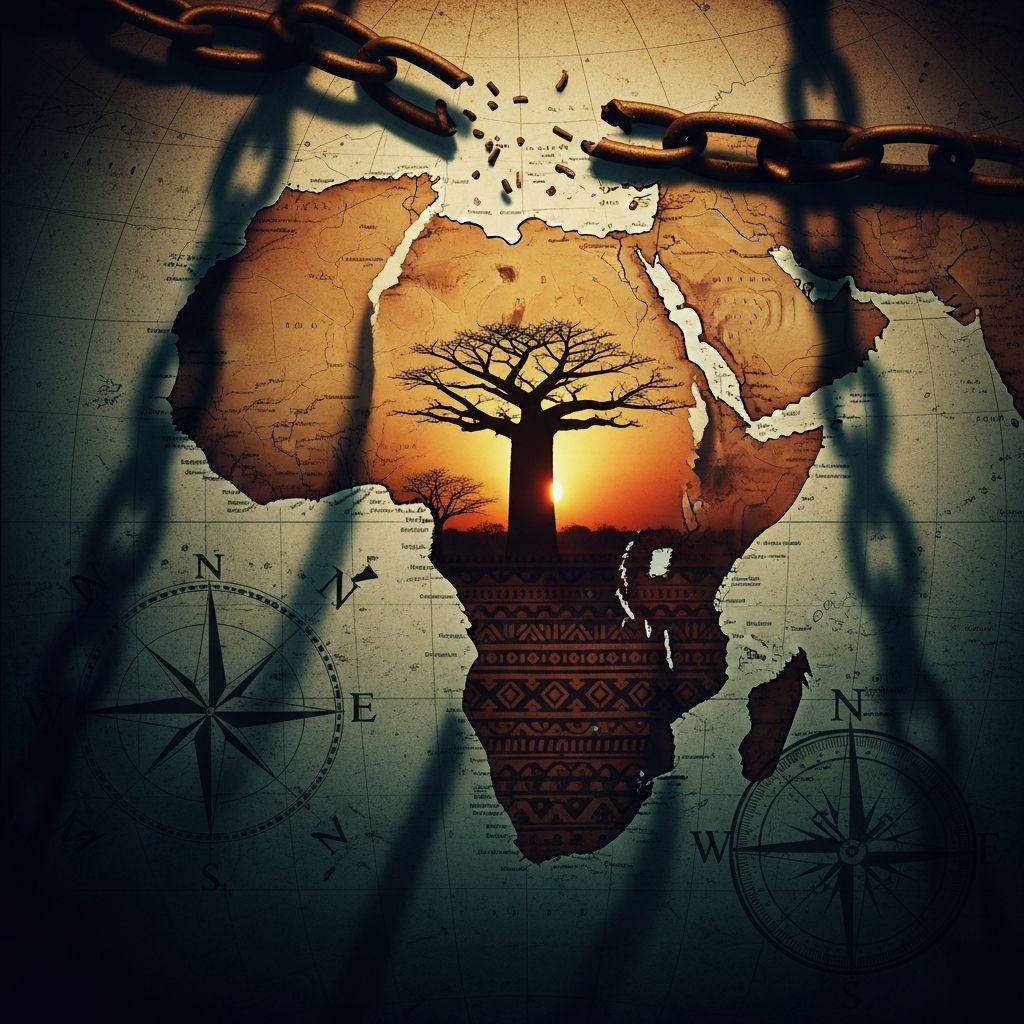
The Geographic Misconception That Shaped a Continent’s Image
The designation of Africa as the “Dark Continent” represents one of history’s most consequential mischaracterizations, one that persists in shaping global perceptions centuries after its inception. This label, far from being an objective geographic description, emerged from a deliberate European narrative designed to justify colonization and mask the continent’s sophisticated civilizations. Understanding the true origins and purpose of this terminology requires examining the intersection of European exploration, commercial interests, and the ideological frameworks that supported imperial expansion.
The phrase gained widespread prominence during the nineteenth century, when European powers accelerated their involvement in African affairs. Welsh journalist and explorer Henry Morton Stanley played a pivotal role in popularizing this characterization, employing it strategically in his published accounts of African expeditions. Stanley’s use of the term was not incidental; it served as a powerful marketing mechanism for his narratives, capturing public imagination by presenting Africa through a lens of mystery and danger. This branding approach transformed geographic terminology into a commercial tool, one that would have far-reaching consequences for how the world understood and treated an entire continent.
The Historical Context: Trade Routes and Pre-Colonial Connections
Contrary to the implications embedded in the “Dark Continent” label, Africa maintained extensive commercial and cultural networks long before European arrival. For over two millennia, African kingdoms and city-states engaged in sophisticated trade with Middle Eastern, Asian, and Mediterranean civilizations. These connections facilitated the exchange of goods, technologies, and ideas, demonstrating that African societies were neither isolated nor technologically stagnant.
The presence of these established trade networks meant that Europeans possessed indirect knowledge of African geography, resources, and peoples well before the nineteenth-century exploration boom. Cartographers incorporated African information into their maps, and merchants understood the continent as a location of commercial opportunity. However, this existing knowledge posed a problem for European powers seeking to justify colonial conquest: how could they claim to be bringing civilization to regions that already possessed developed institutions and complex societies?
The Erasure Strategy: Maps, Uncertainty, and Manufactured Mystery
During the Enlightenment period of the seventeenth and eighteenth centuries, a curious reversal occurred in European cartography. Rather than accumulating knowledge about Africa’s interior, mapmakers increasingly removed details from their representations of the continent. This erasure was not accidental; it reflected genuine uncertainty about precise locations and boundaries in regions where European presence remained limited. Yet this geographic gap in European knowledge became a strategic advantage for those advocating colonial expansion.
The manufactured mystery surrounding Africa’s interior created narrative space for explorers like Stanley and David Livingstone to position themselves as discoverers venturing into unknown territories. Their expeditions, documented in popular publications, transformed vague geographic uncertainty into dramatic tales of exploration and achievement. The public consumed these narratives eagerly, with little awareness that they were reading carefully constructed marketing rather than objective geographic reporting. This transformation of incomplete knowledge into sensational adventure stories provided the emotional and intellectual foundation for imperial ambitions.
Economic Motivation and the Discovery of Extractable Wealth
As European explorers penetrated deeper into African territories, they documented the continent’s vast natural resources and the productive capacity of its peoples. This economic reconnaissance revealed opportunities for exploitation far exceeding what the existing trade networks had offered. The identification of mineral deposits, agricultural potential, and most critically, the availability of human labor for coercion, intensified European determination to establish territorial control.
The colonial project required more than military force and economic incentive; it demanded ideological justification that would satisfy European audiences and provide moral cover for the subjugation of African peoples. The “Dark Continent” narrative served this purpose perfectly. By depicting Africa as mysterious, undeveloped, and inhabited by peoples lacking civilization, European powers could frame colonization not as exploitation but as a humanitarian mission to illuminate darkness and bring progress to backward regions.
Dehumanization Through Narrative: Erasure of African Achievement
The most insidious dimension of the “Dark Continent” mythology involved the systematic erasure of African accomplishments and the deliberate misrepresentation of African societies. Rather than acknowledging the architectural sophistication of Great Zimbabwe, the administrative complexity of the Mali Empire, or the technological innovations developed across the continent, European chroniclers portrayed Africa exclusively through narratives of savagery and primitivism.
Explorers and colonial administrators strategically emphasized accounts of hostile environments, disease, and dangerous wildlife while omitting evidence of advanced agricultural systems, established trade networks, and organized governance structures. This selective representation served multiple purposes simultaneously. It justified European intervention as necessary rescue of “uncivilized” populations, it deflected moral questioning about the violence inherent in colonization, and it provided intellectual support for the emerging racial hierarchies that would structure the colonial enterprise.
The Role of Religious Institutions in Perpetuating Inferiority Narratives
Christian missionary organizations substantially amplified this dehumanizing portrayal. Missionaries who established themselves across Africa frequently characterized indigenous religions and cultural practices as demonic or barbaric. Rather than engaging with African spiritual traditions as sophisticated philosophical and social systems, missionaries depicted them as evidence of spiritual darkness requiring European Christian salvation. This religious framing added theological weight to the broader “Dark Continent” mythology, positioning colonization as a spiritual calling rather than economic predation.
The legacy of this missionary activity extended far beyond the colonial period. Many African communities internalized the characterization of Christianity as a European religion, creating persistent religious identity complexities that continue into contemporary times. The conflation of religious conversion with cultural subordination fundamentally disrupted social structures and knowledge transmission systems that had persisted for centuries.
The White Savior Industrial Complex: Then and Now
The “Dark Continent” narrative established the foundational logic of what contemporary scholars identify as the “White Savior” framework. By depicting Africa as a space of darkness requiring external illumination, colonial powers positioned European intervention as benevolent assistance rather than territorial conquest and resource extraction. This framing allowed colonizers to view themselves as noble liberators rather than ruthless exploiters.
The practical manifestations of this ideology extended to policies explicitly justified through humanitarian rhetoric. The British colonial authorities, having profited substantially from centuries of slave trading, launched ostensibly anti-slavery campaigns that primarily served to extend British territorial control over additional African regions. The moral language of anti-slavery provided cover for military conquest and resource seizure, demonstrating how effectively the “Dark Continent” narrative could be weaponized across different historical moments and policy contexts.
Cultural Continuity and Memory: What Colonialism Attempted to Obscure
Despite the systematic attempts at erasure and misrepresentation, African communities preserved and transmitted knowledge through sophisticated systems of oral tradition. Technological information, migration strategies, governance principles, and historical memories were carried within communities through oral recitation, observation, and practical demonstration. This transmission system, refined over millennia, proved remarkably resilient against attempts to suppress or rewrite African history.
The knowledge systems maintained through oral traditions during the colonial period represented far more than nostalgic preservation. They constituted active resistance to the narrative of African backwardness and inferiority. When Africans were forcibly transported during the Atlantic slave trade, many carried this accumulated knowledge in their memories and within their social networks, effectively transferring African intellectual and technological traditions to the Americas despite the dehumanizing conditions of enslavement.
Contemporary Manifestations: The Dark Continent Label in Modern Media
The “Dark Continent” designation ostensibly belongs to history, yet its underlying narrative structures persist in contemporary media representations. Western news organizations continue portraying Africa selectively, emphasizing conflict, disease, and poverty while minimizing coverage of African innovations, democratic developments, and economic growth. This continued selective representation ensures that global audiences encounter Africa through essentially the same lens that the colonial narrative established: as a region requiring external intervention and characterized by deficit rather than dynamism.
The persistence of this framing reflects the enduring power of colonial-era mythology. Modern audiences may not explicitly reference the “Dark Continent” terminology, yet they encounter contemporary versions of the same underlying assumptions: that Africa requires Western guidance, that African problems demand Western solutions, and that African agency and achievement warrant secondary importance compared to external interventions and perspectives.
Reframing African History: From Darkness to Complexity
Scholarly work in African history, linguistics, archaeology, and anthropology has systematically documented the sophistication and accomplishment of African civilizations. Researchers studying oral traditions have demonstrated how African societies maintained complex knowledge systems without written records. Archaeologists have revealed the architectural and technological achievements of pre-colonial African societies. Historians have documented extensive trade networks, institutional development, and cultural achievements across the continent.
This scholarship demonstrates conclusively that the “Dark Continent” label reflected European ignorance and colonial ideology rather than objective geographic or cultural reality. Africa was neither unknown nor undeveloped; rather, it was strategically misrepresented to justify European appropriation of African territories, resources, and labor. The manufactured darkness served as a convenient fiction obscuring European intentions and enabling exploitation under the guise of humanitarian intervention.
The Lasting Impact: Trauma and Contemporary Challenges
The colonial period and its ideological foundations inflicted enduring damage to African societies. The extraction of resources, the disruption of social structures, the imposition of artificial borders, and the systematic degradation of African peoples created conditions of poverty and instability that persist generations after political independence. The psychological impacts of colonization, including internalized inferiority narratives and distorted self-perceptions, continue affecting African communities.
The “Dark Continent” mythology contributed substantially to these outcomes. By delegitimizing African agency and achievement, this narrative framework made predatory colonization appear not merely acceptable but benevolent. Contemporary challenges facing African nations cannot be understood without acknowledging this foundational violence and the ideological mechanisms that enabled and justified it.
Key Distinctions: Understanding Geographic versus Ideological Factors
| Geographic Factors | Colonial Ideology | Contemporary Reality |
|---|---|---|
| Sahara Desert created transportation challenges | Framed as evidence of African isolation and backwardness | African societies developed complex adaptation strategies to geographic challenges |
| Dense interior forests limited certain types of European exploration | Used to justify claims of European discovery and mapping | African peoples had successfully navigated and utilized these environments for millennia |
| Limited European familiarity with interior regions | Deliberately exaggerated into claims of complete African mystery | European ignorance reflected European limitations, not African invisibility |
Frequently Asked Questions
Q: Did Henry Morton Stanley actually discover Africa’s interior?
A: Stanley documented portions of Africa’s interior previously unknown to European audiences, but African peoples had inhabited, mapped, and navigated these regions for centuries. Stanley’s “discovery” reflected European knowledge gaps rather than geographic unknowability.
Q: Why do historians dispute the accuracy of the “Dark Continent” label?
A: Historians argue the label perpetuated false claims about African isolation and lack of development. In reality, Africa maintained extensive trade networks, developed complex societies, and possessed sophisticated knowledge systems. The label served ideological purposes justifying colonization rather than describing geographic reality.
Q: How did the “Dark Continent” narrative justify colonialism?
A: By portraying Africa as undeveloped and its peoples as uncivilized, European powers framed colonization as humanitarian intervention bringing progress and civilization. This narrative obscured the economic exploitation and violence inherent in colonial conquest.
Q: What role did Christian missionaries play in perpetuating this narrative?
A: Missionaries characterized African religions as demonic and depicted African peoples as requiring spiritual salvation. This religious framing reinforced the broader “Dark Continent” mythology and contributed to cultural disruption and identity complexities that persist today.
Q: How does the “Dark Continent” narrative affect contemporary perceptions of Africa?
A: Modern media often perpetuates similar patterns by emphasizing African challenges while minimizing achievements. This selective representation continues positioning Africa through a deficit lens rather than acknowledging contemporary African innovation and agency.
References
- The Real Reason Why Africa Was Called the Dark Continent — Africa Rebirth. Accessed April 2026. https://www.africarebirth.com/the-real-reason-why-africa-was-called-the-dark-continent/
- Shining Light on the “Dark Continent” — University of Minnesota College of Liberal Arts, African American and African Studies Department. Accessed April 2026. https://cla.umn.edu/aaas/news-events/story/shining-light-dark-continent
- Why is Africa called the Dark continent? — KnowledgeBoat. Accessed April 2026. https://www.knowledgeboat.com/question/why-is-africa-called-the-dark-continent–722558903303844500

Medha Deb is an editor with a master's degree in Applied Linguistics from the University of Hyderabad. She believes that her qualification has helped her develop a deep understanding of language and its application in various contexts. Medha specializes in the areas of beauty, health, sports, and wellness and is committed to ensuring that the content on the website is…