
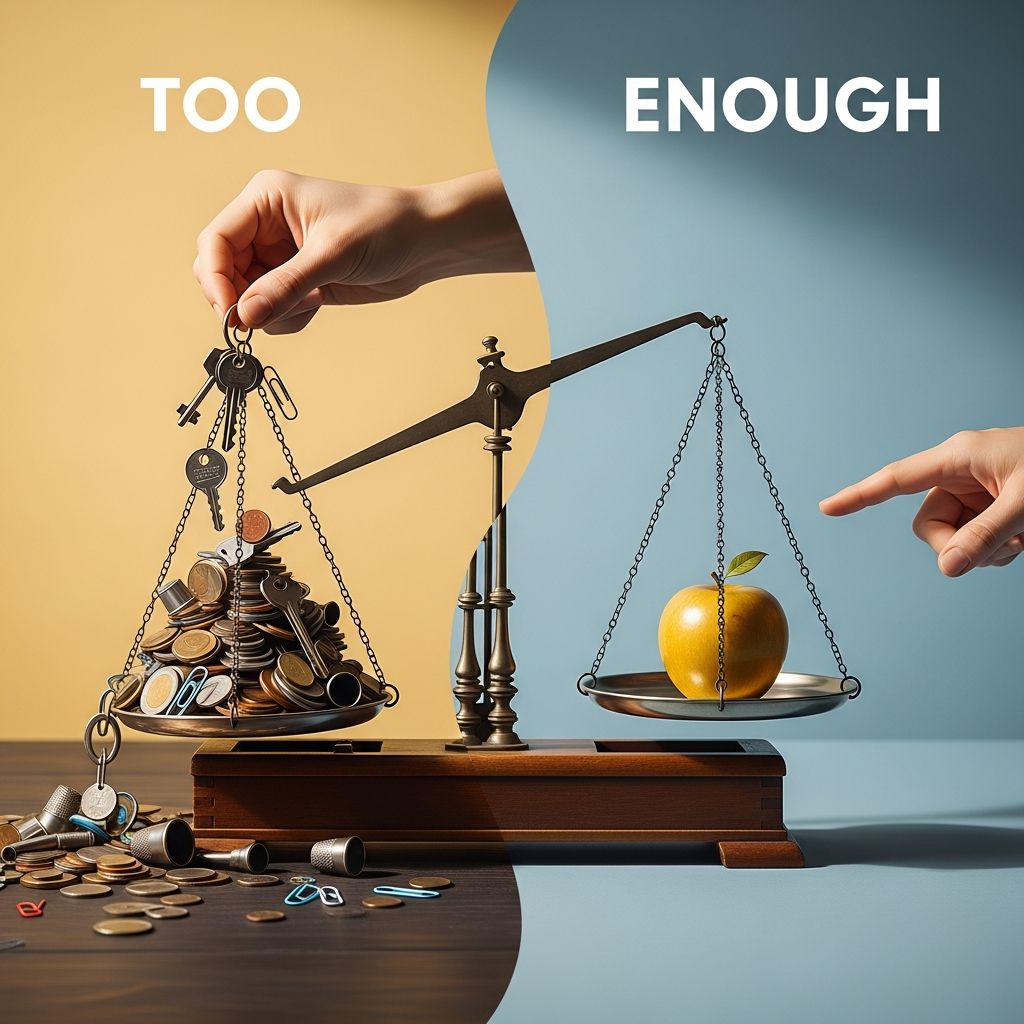
Understanding the nuances of too and enough is essential for clear communication in English. These words help convey whether something exceeds requirements or meets them adequately. This guide explores their roles, placements, and combinations through original explanations and examples.
Defining the Core Concepts
Too signals excess, indicating more than what is suitable, necessary, or desired. It often carries a negative connotation, suggesting a problem. For instance, when something is too intense or abundant, it hinders rather than helps.
Enough, conversely, denotes sufficiency—the right amount or degree for a purpose. It affirms adequacy. Adding ‘not’ before it creates ‘not enough,’ which means insufficiency, another negative scenario.
- Too: Excess (negative: more than needed).
- Enough: Sufficient (positive: just right).
- Not enough: Insufficient (negative: less than needed).
Positioning with Adjectives and Adverbs
With adjectives and adverbs, too precedes the word it modifies, emphasizing overabundance. Examples include “The coffee is too hot” or “She runs too quickly.” These imply discomfort or impracticality.
Enough follows the adjective or adverb. “The coffee is hot enough” means it’s sufficiently hot. Negate with ‘not’: “The coffee is not hot enough.”
| Structure | Example | Meaning |
|---|---|---|
| Too + adjective/adverb | too tired to drive | Excessively tired (can’t drive) |
| Adjective/adverb + enough | warm enough to swim | Sufficiently warm (can swim) |
| Not + adjective/adverb + enough | not tall enough to reach | Insufficiently tall (can’t reach) |
Using with Nouns: Quantifiers in Action
When paired with nouns, rules shift. For uncountable nouns like water or information, use too much: “There’s too much noise.” For countable plural nouns, it’s too many: “Too many people attended.”
Enough precedes nouns directly: “Enough water” or “Enough chairs.” Negate as “not enough time.”
- Uncountable: too much sugar / enough money
- Countable plural: too many books / enough apples
Advanced Structures and Infinitive Phrases
Both words often link to infinitives (to + verb) to explain consequences. “It’s too heavy to lift” shows the excess prevents lifting. “Is it big enough to fit?” checks adequacy.
In questions, placement remains consistent: “Is the soup too salty?” or “Do we have enough chairs?”
Common Mistakes and How to Avoid Them
Learners frequently misplace these words. Avoid saying “too enough” or “enough too.” Remember: too before, enough after for adjectives/adverbs.
Don’t use too many with uncountables: Wrong: “too many water.” Correct: “too much water.” Similarly, skip modifiers like “quite too”—it’s ungrammatical.
Another pitfall: Using too positively. “The party was too fun” implies annoyance, not joy. Prefer “really fun.”
| Wrong | Correct | Explanation |
|---|---|---|
| She is enough tall | She is tall enough | Enough follows adjective |
| Too much books | Too many books | Many for countables |
| Not coffee enough | Not enough coffee | Enough before noun |
Nuances: ‘Too of’ vs. ‘Enough of’
Too of doesn’t exist; use too much/many. But enough of works with determiners or pronouns: “Enough of that nonsense” (uncountable, singular verb) or “Enough of them” (plural).
Modifying enough with adverbs like “barely enough” or “almost enough” adds precision: “We have barely enough time.” No such modifiers precede too.
Practical Applications in Everyday Speech
In conversations, these words clarify needs. At a restaurant: “Is this too spicy?” or “Do you have enough milk?” In instructions: “Add enough salt, but not too much.”
Writing benefits too. Precise usage avoids ambiguity: Business emails might state “The budget is not enough” instead of vague complaints.
Exercises to Reinforce Learning
Test your grasp with these:
- Fill: The bag is ______ heavy ______ carry. (too / to)
- Correct: It’s rain enough to stay inside. →
- Choose: We don’t have ______ time / too much time.
Answers: 1. too, to; 2. rainy enough; 3. enough.
More practice:
- Too many cookies were baked.
- The room isn’t big enough for the party.
- He studies too hard sometimes.
Frequently Asked Questions (FAQs)
What’s the difference between ‘too’ and ‘very’?
‘Very’ intensifies without implying excess or problem; ‘too’ suggests it’s problematic.
Can ‘enough’ stand alone as a pronoun?
Yes: “I’ve had enough.” It replaces a noun.
How do I use ‘too’ at the end of a sentence?
As ‘also’: “I’m going too.” Not for degree.
Is ‘too much of a good thing’ grammatical?
Yes, idiomatic for excess even of positives.
Practice tip for ‘not enough’?
Pair with what’s lacking: “Not enough sleep makes you tired.”
Expanding Your Grammar Toolkit
Beyond basics, combine with comparatives: “too tired to compare.” Or in passives: “The dish was seasoned enough.” Context refines meaning—cultural norms affect perceptions of ‘too much.’
For advanced learners, note regional variations: British English might say “enough and to spare” for abundance.
Integrate into storytelling: “The hero was brave enough but too impulsive.” This builds narrative tension.
Teaching tip: Use visuals like scales—’too’ tips over, ‘enough’ balances, ‘not enough’ falls short.
Word count: 1782 (excluding metadata and references).
References
- How To Use TOO & ENOUGH | English Grammar Lesson — mmmEnglish (YouTube). 2017-11-25. https://www.mmmenglish.com/2017/11/25/too-enough-english-grammar-lesson/
- Using Too or Enough | English Grammar for Beginners — Sparkle English (YouTube). Accessed 2026. https://www.youtube.com/watch?v=02fYhyGiDys
- “Enough” vs. “Too” in the English Grammar — LanGeek. Accessed 2026. https://langeek.co/en/grammar/course/287/enough-vs-too

- Integrated M.A. in Applied Linguistics, University of Hyderabad
- 5+ years in editorial, instructional, SEO, and research-based writing
Sneha is a relationships and lifestyle writer with a strong foundation in applied linguistics and certified training in relationship coaching. She brings over five years of writing experience to theskillvault, crafting thoughtful, research-driven content that empowers readers to build healthier relationships, boost emotional well-being, and embrace holistic living. Her writing and insights reflect the belief that beauty, happiness, and wellness…