
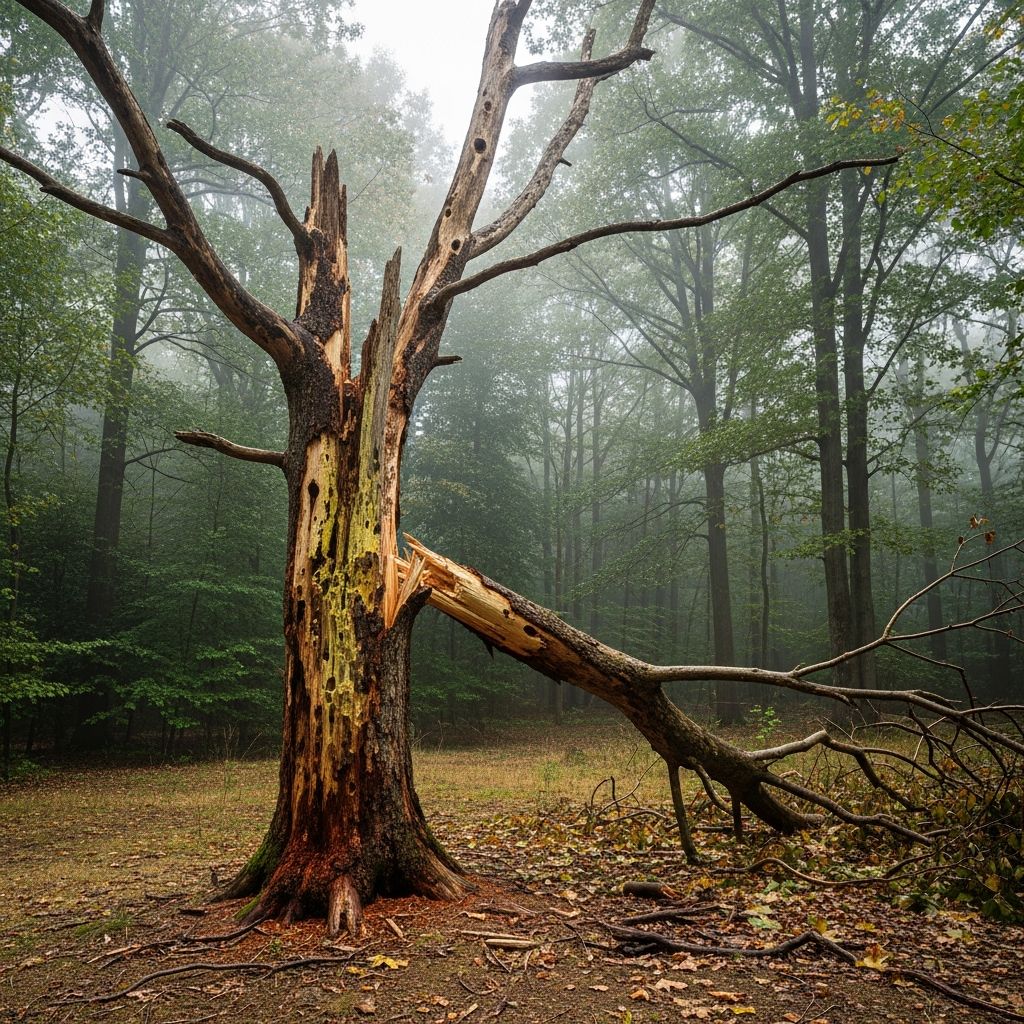
Trees form the backbone of ecosystems, providing oxygen, habitat, and stability to landscapes worldwide. Yet, their survival is increasingly precarious due to a complex interplay of factors. Understanding these threats is crucial for mitigation, whether in urban settings, forests, or backyards. This article delves into the primary reasons trees succumb, drawing from ecological research and field observations.
Environmental Pressures: The Silent Killers
Non-living factors, known as abiotic stresses, often initiate tree decline. These include extremes in water availability, temperature fluctuations, and soil quality issues. Trees weakened by such conditions become vulnerable to secondary attacks.
Drought stands out as a major culprit. Prolonged dry spells impair hydraulic function, preventing water transport from roots to leaves. This leads to hydraulic failure, where tissues cavitate and block fluid flow. Concurrently, carbon starvation occurs as photosynthesis halts, depleting energy reserves needed for survival. In California’s Sierra Nevada, extended drought combined with warming temperatures has felled over 102 million trees, creating hazardous deadwood landscapes.
- Hydraulic failure: Xylem vessels collapse under tension, starving upper canopy.
- Carbon starvation: Reduced sugar production exhausts stored reserves for respiration.
- Combined effects: Drought often triggers both mechanisms simultaneously.
Excess water poses equal danger through root rot and oxygen deprivation. Poor drainage floods root zones, suffocating fine roots essential for nutrient uptake. Symptoms include yellowing foliage and basal bark decay. Soil compaction from foot traffic or machinery exacerbates this by limiting air and water infiltration.
Soil and Site Mismatches: Foundation Failures
Trees thrive when matched to their site conditions. Mismatches lead to chronic stress. Compacted soils reduce porosity, hindering root expansion. Deep planting buries root collars, promoting girdling roots that strangle the trunk base.
| Symptom | Common Causes | Prevention |
|---|---|---|
| Yellowing leaves (chlorosis) | Soil pH imbalance, nutrient deficiency, excess water | Test soil pH, amend with lime or sulfur |
| Branch dieback | Girdling roots, drought, trunk damage | Proper planting depth, root collar exposure |
| Bark cracking | Winter injury, lightning, root damage | Install lightning protection, mulch properly |
| Stunted growth | Compaction, deep planting, excess mulch | Aerate soil, avoid volcano mulching |
Urban environments amplify these issues. Limited soil volumes in parking lots or lawns restrict root systems, making trees dependent on irrigation. Without it, decline accelerates. Grade changes during construction bury roots, altering hydrology and inviting decay.
Biological Invaders: Pests and Pathogens
Biotic agents exploit stressed trees. Insects like bark beetles target water-stressed hosts, burrowing under bark to disrupt nutrient flow. In Yosemite, native bark beetles thrive amid drought-weakened pines, carrying fungi that clog vascular tissues. Larvae feed on phloem, girdling cambium layers.
Fungal diseases activate under stress. Latent pathogens—dormant microbes in healthy microbiomes—awaken during drought or displacement. In California, nine fungal species infect 10 woody plants across six regions, driving range shifts for species like blue oaks and manzanitas. Sudden Oak Death, caused by Phytophthora ramorum, exemplifies this, killing tanoaks and oaks via cankers and root infections.
- Bark beetles: Exploit drought-stressed trees, vectoring fungi.
- Root rots: Thrive in wet, compacted soils.
- Foliar pathogens: Defoliate, reducing photosynthesis (e.g., Swiss needle cast on Douglas-fir).
Nematodes, bacteria, and viruses contribute less visibly but compound damage. Defoliators strip leaves, hastening starvation.
Human Influences: Accelerating Decline
Anthropogenic factors compound natural stresses. Habitat fragmentation isolates trees, reducing genetic diversity. Pollution acidifies soils, leaching nutrients. Poor pruning wounds invite canker fungi.
Fire suppression alters ecosystems. In California, excluded fires allow dense stands, intensifying competition for water. Species like bay laurels grow beyond optimal ranges, succumbing to latent pathogens. Construction damages roots, while herbicides cause distorted growth.
Progressive Decline: From Stress to Death
Tree mortality unfolds gradually. Initial stress depletes reserves. Secondary invaders colonize, accelerating decay. Respiration outpaces photosynthesis, leading to starvation. In forests, this creates feedback loops: dead trees fuel wildfires, releasing carbon.
Age factors in; mature trees with extensive canopies demand more resources. Climate change shifts zones, stranding species at ecological edges.
Prevention Strategies for Healthy Trees
Proactive care counters threats. Select site-adapted species. Plant at proper depth, exposing root flares. Mulch in rings, not volcanoes. Irrigate deeply during establishment, mimicking natural cycles.
Monitor for early signs: wilting, discoloration, beetle frass. Aerate compacted soils. Prune judiciously outside growing seasons. In forests, restore fire regimes to thin stands.
For urban trees, expand root zones via permeable surfaces. Soil testing guides amendments. Integrated pest management prioritizes cultural fixes over chemicals.
Case Studies: Real-World Tree Losses
California’s die-offs illustrate synergies. Drought weakens trees; beetles invade; fungi finish them. Sierra Nevada lost 102 million conifers, heightening fire risks. Coastal manzanitas decline from latent fungi as climates warm.
Oregon’s Douglas-firs suffer Swiss needle cast, a fungal foe reducing growth amid wet springs. These events signal broader shifts.
Frequently Asked Questions (FAQs)
Can a single factor kill a mature tree?
Rarely; most deaths result from stress-pest interactions. Abiotic factors predispose, biotic agents exploit.
How do I spot drought stress early?
Look for leaf scorch, premature drop, or branch tip dieback. Test soil moisture before symptoms worsen.
Are bark beetles always fatal?
No, healthy trees resist via pitch-outs. Stressed ones succumb, especially during droughts.
Can I save a declining tree?
Often, if addressed early. Improve site conditions, consult arborists. Advanced decline may be irreversible.
Does climate change kill trees directly?
Indirectly, via intensified stresses activating pathogens. Trees at range edges are most vulnerable.
Future Outlook: Safeguarding Tomorrow’s Forests
As climates evolve, adaptive forestry is essential. Breed resilient varieties. Restore habitats. Policy must prioritize green infrastructure. By addressing root causes—literally and figuratively— we can sustain vital tree populations.
(Word count: 1678)
References
- Ecology of Tree Diseases – Sudden Oak Death — Sudden Oak Death Organization. Accessed 2026. https://www.suddenoakdeath.org/about-sudden-oak-death/ecology-of-tree-diseases/
- What Causes Trees and Shrubs to Die? — University of Maryland Extension (.edu). Accessed 2026. https://extension.umd.edu/resource/what-causes-trees-and-shrubs-die
- How Do Trees Die? — Tree Care Industry Magazine (TCIA). Accessed 2026. https://tcimag.tcia.org/training/plant-health-care-strategies/how-do-trees-die/
- Climate, diseases driving death of several tree species — UC ANR (.edu). 2024. https://ucanr.edu/blog/green-blog/article/treedeath
- Tree Mortality can Cause Hazardous Conditions — National Park Service (.gov). Accessed 2026. https://www.nps.gov/yose/planyourvisit/hazardtrees.htm
- Trees in Peril — The Nature Conservancy. Accessed 2026. https://www.nature.org/en-us/what-we-do/our-priorities/tackle-climate-change/climate-change-stories/trees-in-peril/
- Tree disease: a sneaky forest threat — Oregon Forests Resources Institute. Accessed 2026. https://oregonforests.org/tree-disease-sneaky-forest-threat

- Integrated M.A. in Applied Linguistics, University of Hyderabad
- 5+ years in editorial, instructional, SEO, and research-based writing
Sneha is a relationships and lifestyle writer with a strong foundation in applied linguistics and certified training in relationship coaching. She brings over five years of writing experience to theskillvault, crafting thoughtful, research-driven content that empowers readers to build healthier relationships, boost emotional well-being, and embrace holistic living. Her writing and insights reflect the belief that beauty, happiness, and wellness…