
Building Effective Learning Environments Through Intentional Design
The quality of a classroom extends far beyond the subjects taught or the curriculum delivered. A well-designed learning space serves as a foundation for educational success, influencing how students absorb information, interact with peers, and develop confidence in their abilities. Teachers who invest time in creating purposeful classroom environments report higher engagement rates, improved behavior, and stronger academic outcomes. The difference between a typical classroom and an exceptional one often lies in the deliberate choices educators make about layout, organization, resources, and atmosphere.
Establishing Clear Structures and Expectations
One of the most fundamental aspects of an effective classroom is the presence of clear, communicated expectations and well-established procedures. Students thrive when they understand what is expected of them and know how to navigate the daily rhythms of the classroom. Teachers should develop transparent systems for activities such as entry routines, material collection, lesson progression, and closing activities. When students enter the room, they should immediately understand what task awaits them through a clearly visible agenda or introductory assignment. This structure eliminates confusion, maximizes instructional time, and helps students feel oriented and secure.
Beyond initial routines, teachers benefit from organizing lesson structures in consistent formats. A predictable sequence—such as introduction, instructional segment, practice time, and summary—helps students anticipate transitions and maintain focus. This predictability also allows students with anxiety or sensory sensitivities to prepare mentally for what comes next. Additionally, classroom procedures should address practical matters like accessing materials, submitting work, asking for help, and transitioning between activities. When procedures are taught explicitly and reinforced regularly, they become automatic, freeing up mental energy for actual learning.
Creating Physical Spaces That Support Diverse Learning Needs
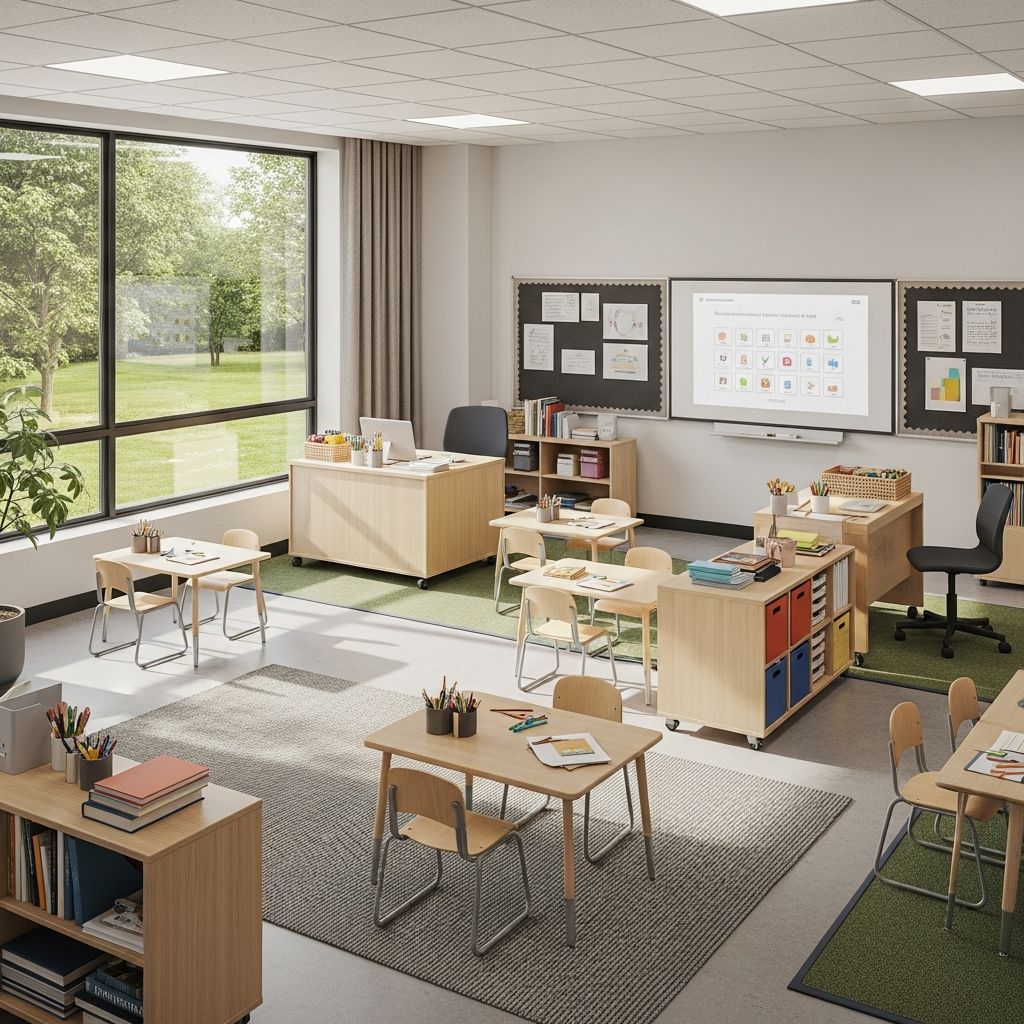
The physical arrangement of a classroom profoundly affects how learning occurs. Teachers should move beyond traditional row seating to explore flexible configurations that support various instructional approaches. Circular or semi-circular seating arrangements increase student involvement, prevent students from remaining passive observers, and improve overall behavior. Some educators have successfully transitioned their classrooms to accommodate small group work, whole-class instruction, and individual learning simultaneously by dividing space into distinct learning zones.
Furniture flexibility represents a significant consideration in modern classroom design. When students can choose from different seating options—such as standing desks, floor cushions, wobble stools, or traditional chairs—they gain agency over their physical comfort and can adjust their positioning to support focus and concentration. This approach acknowledges that bodies have different needs throughout the day and that what works for one student may not work for another. Teachers can establish clear guidelines about which seating options are available in different areas and when transitions occur, ensuring that flexibility enhances rather than distracts from learning.
Strategic Use of Classroom Walls and Display Space
Classroom walls serve dual purposes: they can reinforce learning or create visual clutter that distracts from it. Intentional wall displays support literacy development through word walls, vocabulary displays, and anchor charts that students reference throughout lessons. Student work should be exhibited thoughtfully, showcasing projects that demonstrate mastery of standards rather than filling every available surface. Teachers can display step-by-step problem-solving guides, performance rubrics, reading strategies, and other instructional tools that students access regularly during lessons. This approach transforms walls into active teaching tools rather than mere decorations, reinforcing key concepts throughout the day.
Optimizing Lighting and Environmental Comfort
Research demonstrates that natural light significantly impacts student performance. Studies show that students exposed to more natural light perform better in reading and mathematics and achieve higher exam scores. Teachers should maximize window access by opening blinds during the day and using natural light whenever possible. For supplementary lighting, soft, adjustable artificial light reduces eye strain and creates a calmer atmosphere than harsh fluorescent fixtures. Many educators report that simply turning off overhead lights and relying on natural illumination creates a more peaceful environment conducive to focus and learning.
Beyond lighting, teachers should attend to sound levels, temperature, and overall sensory comfort. While some background noise is natural in a busy classroom, excessive noise can overwhelm students, particularly those with sensory sensitivities or auditory processing challenges. Creating quiet spaces where students can retreat when overwhelmed provides essential breaks and supports self-regulation. Some classrooms include designated calming corners equipped with white noise machines, headphones, fidgets, and comfortable seating—resources that help students transition back to their thinking brain after experiencing big emotions.
Building Emotional Safety and Belonging
Emotional safety forms the foundation upon which all learning rests. Students must feel psychologically secure enough to take academic risks, ask questions, and participate fully in classroom discussions. Teachers cultivate emotional safety by demonstrating consistent care, valuing student contributions, and creating communities where differences are appreciated rather than tolerated. Social-emotional learning should be woven throughout the day, not confined to isolated lessons. This integration involves explicitly teaching and practicing skills like empathy, respectful disagreement, and perspective-taking across various instructional contexts.
Belonging represents another critical emotional need. When students feel valued, heard, and seen by their teachers and peers, they are more likely to engage actively in learning. Classrooms that foster belonging create spaces where students can be authentically themselves without fear of judgment. Teachers can support this environment by learning about students’ interests and incorporating them into lesson planning, involving students in classroom decisions, and celebrating diverse backgrounds and perspectives. When students see themselves reflected in curriculum materials and classroom decorations, they feel acknowledged and included.
Designing Collaborative and Supportive Learning Communities
Effective classrooms function as communities where students learn from and with one another. Teachers should create regular opportunities for face-to-face interaction, small group work, and peer collaboration. These interactions build emotional intelligence and develop critical communication skills necessary for success beyond school. When students work together on meaningful tasks, they develop perspectives different from their own and learn to navigate disagreements constructively.
Seating arrangements and room configuration play important roles in facilitating collaboration. When desks face each other in small clusters rather than toward the front of the room, students naturally engage in conversation and teamwork. Teachers can position their own desks toward the back or sides of the classroom to reinforce their role as facilitators and guides rather than lecturers, making themselves more accessible to students who need support.
Balancing Challenge with Support Through Rigorous Learning Tasks
An effective classroom provides academically rigorous tasks that challenge students to think deeply while offering appropriate scaffolding and support. Teachers should design learning experiences that require students to engage with real-world problems, analyze information critically, and defend their conclusions. These cognitively complex tasks develop essential competencies including collaboration, communication, critical thinking, and problem-solving—skills vital for academic and professional success.
The classroom environment should foster student ownership of learning, allowing learners to have input in their educational journey. When students participate in selecting topics for investigation, choosing how to demonstrate understanding, or determining classroom procedures and arrangements, they develop greater investment in their work. This sense of agency, combined with challenging tasks and teacher support, creates conditions where learning becomes purposeful and meaningful rather than merely compulsory.
Incorporating Creativity and Student Voice
Creativity should be integrated throughout the learning process, not confined to art class. Teachers can encourage students to approach problems from multiple perspectives, propose original solutions, and demonstrate understanding through varied formats. When classrooms celebrate creative thinking and value different approaches to learning, students develop confidence in their abilities and feel empowered to take intellectual risks.
Student input in classroom design decisions significantly impacts learning outcomes. When educators allow students to influence classroom layout, decoration choices, and procedures, students develop a sense of ownership that translates to improved engagement and behavior. Research indicates that personalization factors account for a substantial portion of academic improvement attributed to classroom design, suggesting that student choice and flexibility in physical spaces matter considerably for learning success.
Organizing Materials and Resources for Student Independence
A well-organized classroom enables students to work independently and access resources without constant teacher direction. Materials should be labeled clearly, stored at student height, and organized logically so learners know where to find what they need. Teachers can maintain classroom libraries with abundant books available for casual reading during transitions or when students finish assignments early. When materials are ready and accessible, students develop independence, responsibility, and can maximize instructional time rather than waiting for teacher assistance.
Technology should be organized similarly—nimble and easy to access without requiring extensive teacher setup. When tech-savvy students mentor peers who are less experienced with tools, both groups benefit. This peer-teaching model builds confidence, develops leadership skills, and ensures that technology enhances rather than hinders instruction.
Designing Quiet Spaces and Calming Corners
Not all students can sustain focus in busy classroom environments all day. Designated quiet spaces where students can retreat when overstimulated or overwhelmed provide essential support for emotional regulation and well-being. These spaces might include comfortable seating, fidget tools, noise-reducing headphones, calming visuals, or opportunities for drawing or writing about feelings. Some teachers equip calming corners with stuffed animals, coloring pages, and other materials that help students de-escalate and return to learning ready. Creating these spaces communicates that managing big emotions is normal and supported, not shameful or punitive.
Using Assessment to Drive Continuous Improvement
Assessment in effective classrooms extends beyond traditional tests to include varied, ongoing methods of monitoring student understanding. Teachers might use entrance activities to assess prior knowledge, check understanding through observations and conversations during practice, and collect evidence through performance-based tasks and student work samples. This varied approach provides comprehensive pictures of student learning and informs adjustments to teaching. When classrooms incorporate robust assessment practices, teachers can differentiate instruction more effectively, ensuring all students receive appropriate challenges and support.
Frequently Asked Questions
Q: How can teachers create an effective classroom with limited space?
A: Teachers can maximize limited space by using vertical storage, choosing furniture with multiple purposes, arranging seating in zones rather than spreading activities across the room, and utilizing wall space strategically for displays and materials. Flexible, movable furniture allows quick reconfiguration for different learning activities.
Q: What’s the most important element of a successful classroom environment?
A: While all elements matter, emotional safety forms the foundation. When students feel psychologically secure, valued, and supported, they are more likely to engage with academic content, take risks, and achieve at higher levels across all other classroom dimensions.
Q: How should teachers balance structure with flexibility?
A: Clear procedures and expectations provide the structure students need to feel secure, but teachers should build flexibility into how those procedures operate. For example, establishing clear expectations about noise levels is important, but allowing students to choose quiet or collaborative spaces respects individual needs within that structure.
Q: Can classroom design really impact academic achievement?
A: Yes. Research shows that thoughtful classroom design, particularly elements involving personalization, student ownership, and physical comfort, accounts for a significant portion of academic improvement. Natural lighting, flexible seating, and organized spaces all contribute measurably to student success.
Q: How often should teachers reorganize their classroom?
A: There’s no single answer—reorganization frequency depends on student needs, instructional goals, and how well the current setup supports learning. Some teachers reorganize seasonally, others monthly or as needed. Regular reflection on whether the current arrangement serves students’ learning needs guides these decisions.
References
- The 5 Elements of a Successful Classroom Environment — REEL2e. 2024. https://www.reel2e.org/post/the-5-elements-of-a-successful-classroom-environment
- 4 Conditions of a Classroom Environment That Will Maximize Learning for Today’s Students — Marzano Evaluation Center, Martha Hightower, Ed.D. 2024. https://marzanoevaluationcenter.com/library/4-conditions-of-a-classroom-environment-that-will-maximize-learning-for-todays-students/
- 10 Things To Look For In A “Perfect” Classroom — Work It Daily. 2024. https://www.workitdaily.com/perfect-classroom
- What is Your Ideal Classroom? — Teaching Channel. 2024. https://www.teachingchannel.com/k12-hub/blog/ideal-classroom/
- 27 Ways to Optimize Your Classroom Design for Better Learning — Edutopia. 2024. https://www.edutopia.org/article/optimize-classroom-design-better-learning/
- 5 Elements of a Positive Classroom Environment for Students Living with Adversity — ASCD. 2024. https://www.ascd.org/blogs/five-elements-of-a-positive-classroom-environment-for-students-living-with-adversity
- 10 Best Classroom Setup Ideas Every Teacher Needs to Know — Prodigy Game. 2024. https://www.prodigygame.com/main-en/blog/classroom-setup

- Integrated M.A. in Applied Linguistics, University of Hyderabad
- 5+ years in editorial, instructional, SEO, and research-based writing
Sneha is a relationships and lifestyle writer with a strong foundation in applied linguistics and certified training in relationship coaching. She brings over five years of writing experience to theskillvault, crafting thoughtful, research-driven content that empowers readers to build healthier relationships, boost emotional well-being, and embrace holistic living. Her writing and insights reflect the belief that beauty, happiness, and wellness…