
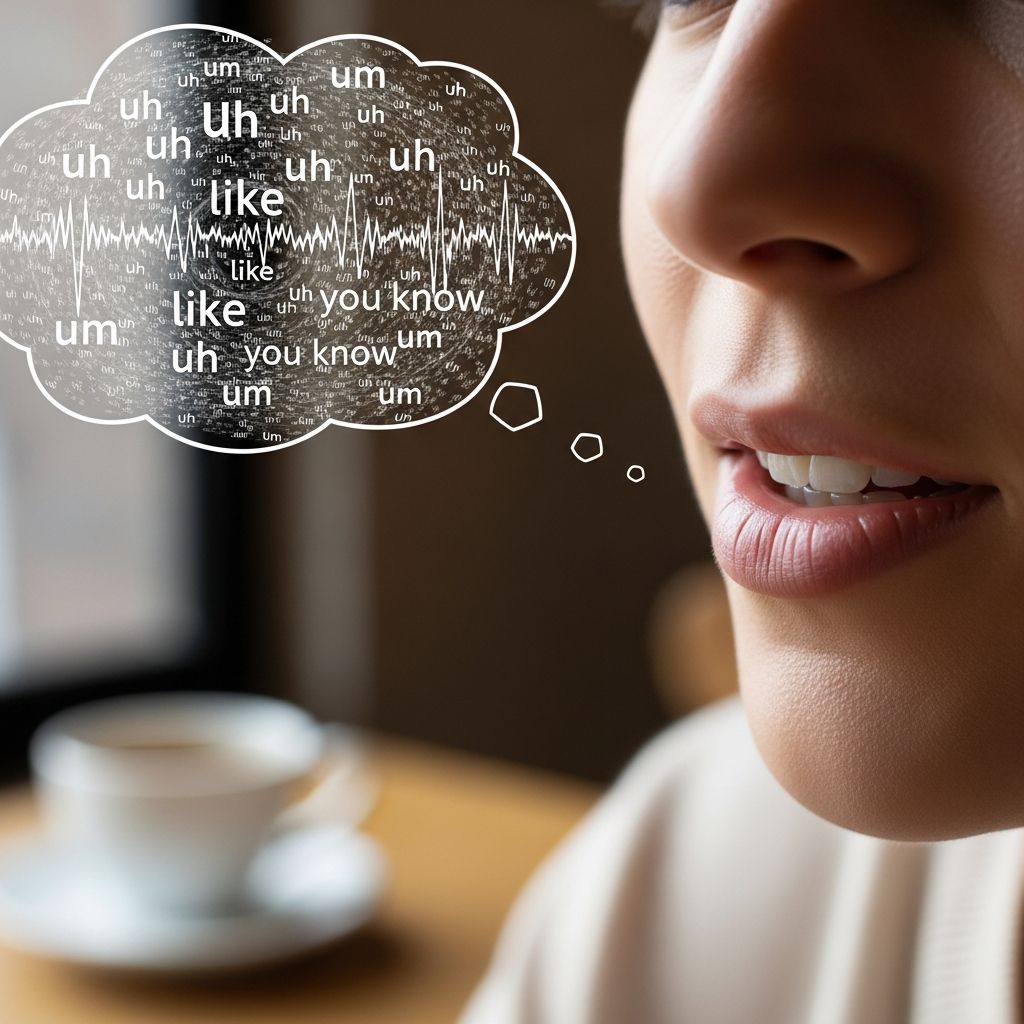
The Nature of Verbal Fillers in Modern Communication
Filler words represent a fascinating intersection of linguistics, psychology, and social behavior. These seemingly inconsequential utterances—from simple sounds like “um” and “uh” to longer phrases such as “you know” and “I mean”—serve as critical bridges in human dialogue. While often dismissed as poor communication habits, filler words actually play multifaceted roles in how we process thoughts, maintain conversational flow, and navigate social dynamics. Understanding their purpose and prevalence offers valuable insights into human communication patterns and provides practical pathways for improvement when necessary.
Defining Filler Words and Their Core Functions
Filler words, technically known as discourse markers or hesitation markers, encompass sounds, individual words, and multi-word phrases that speakers insert into their speech without contributing substantive content to their message. These utterances function as temporal placeholders, allowing speakers to retain conversational control while their cognitive processes catch up to their vocal output. Unlike intentional pauses, which can feel awkward or inappropriate in certain contexts, filler words signal to listeners that the speaker has more information forthcoming and simply requires momentary processing time.
The distinction between filler words and meaningful language lies in their information density. When someone states, “The project requires significant resources,” every word carries semantic weight. Conversely, when that same person says, “The project, um, requires significant resources,” the “um” adds no factual or conceptual value to the statement. Yet despite this apparent insignificance, research demonstrates that filler words serve multiple communicative and cognitive purposes.
The Psychology Behind Filler Word Usage
Human cognition operates at remarkable speeds, yet the process of translating thoughts into organized speech requires measurable time. When speakers encounter complex ideas, retrieve specific vocabulary, or formulate nuanced explanations, their brains engage in intensive computational work. During these microsecond intervals, filler words prevent uncomfortable silence while signaling active thought processing.
Interestingly, research suggests that different filler words convey distinct cognitive states. Studies indicate that “uh” typically emerges when speakers search for relatively straightforward words or minor details, whereas “um” appears more frequently when individuals grapple with more complex conceptual challenges or deeper cognitive reorganization. This distinction reveals that filler words function as windows into mental activity, allowing listeners to gauge the speaker’s confidence level and processing demands.
Beyond mere cognitive necessity, filler words address psychological dimensions of social interaction. They communicate politeness, manage conversational anxiety, and demonstrate engagement with one’s audience. When speakers employ fillers like “you know” or “I mean,” they often seek implicit agreement or shared understanding, strengthening interpersonal connection.
Distinguishing Context-Dependent Usage Patterns
Filler words manifest differently across spoken and written communication. In oral contexts, they emerge as natural byproducts of real-time speech production. Speakers cannot revise words already vocalized, and listeners expect some verbal bumps and pauses as speakers compose their thoughts. This context-dependent expectation legitimizes filler word usage in conversation.
Written communication presents a fundamentally different scenario. Writers possess the luxury of revision, reflection, and careful composition before publishing their work. When filler words appear in written prose, they typically function as stylistic choices rather than cognitive necessities. Writers might incorporate them to achieve a conversational tone, create authenticity in dialogue, or reveal character psychology in fictional narratives. A business email packed with filler phrases appears less professional than one demonstrating careful word selection, yet the same filler-laden dialogue in a novel depicting a nervous character serves narrative purpose.
Common Varieties of Discourse Fillers
Filler words exist across a spectrum from pure phonetic sounds to complex syntactic structures. The following categories represent common manifestations:
Phonemic Fillers
The most basic category consists of vocal sounds without defined phonetic structure:
- “Um” and “uh”—the most prevalent fillers in American English
- “Er” and “erm”—equivalent sounds more common in British English
- “Ah” and “oh”—expressions conveying surprise, realization, or acknowledgment
- “Hmm” and “mmhmm”—sounds indicating consideration or agreement
Morphological Fillers
Individual words functioning as discourse markers include:
- “Like,” “literally,” and “actually”—common among younger speakers
- “You know,” “I mean,” and “I guess”—phrases seeking validation or softening statements
- “Well,” “right,” and “okay”—transitional words managing conversational flow
- “Very,” “really,” and “basically”—intensifiers lacking substantial contribution
Syntactic Fillers
Longer phrases functioning as discourse management tools:
- “You see” and “sort of”—explanatory softeners
- “I’m telling you” and “believe me”—emphatic markers
- “So to speak” and “if you will”—qualifying or hedging expressions
- “At the end of the day” and “at this point in time”—temporal framing devices
Regional and Generational Variations
Filler word preferences vary significantly across geographic regions and age cohorts. American English speakers favor “uh,” “ah,” and “um,” while British English speakers predominantly employ “er” and “erm.” These regional distinctions reflect phonetic traditions and linguistic conventions established over generations.
Generational differences prove equally striking. Older speakers tend toward basic phonetic fillers, while younger demographics incorporate lexical fillers more liberally. Contemporary youth frequently employ “like,” “basically,” “actually,” “so,” and “right?” as discourse markers, reflecting evolving communication norms in digital-age environments. This generational divergence suggests that filler word preferences adapt alongside cultural communication patterns.
The Nuanced Functions Beyond Simple Pausing
While cognitive necessity represents one significant function, filler words accomplish far more sophisticated communicative work. They serve as politeness markers, allowing speakers to soften assertions or hedge claims without explicit qualification. They indicate emotional states—hesitation, enthusiasm, or uncertainty—through subtle variation. They maintain conversational momentum when speakers need time for complex idea formulation.
Certain fillers demonstrate specialized functions. “Oh” performs considerable semantic work, particularly signaling surprise and positive affect. Its collocates with adjectives like “nice,” “good,” “cool,” and “brilliant” reveal its frequent association with pleasant reactions. “Erm” typically appears alongside conjunctions and discourse markers, functioning as a break signal while speakers organize their next contributions. These specialized functions suggest that filler words possess grammatical sophistication beyond their surface appearance.
When Filler Words Become Problematic
While filler words serve legitimate communicative purposes, excessive usage can undermine professional credibility and audience engagement. In high-stakes contexts such as presentations, interviews, or formal speeches, frequent fillers may suggest inadequate preparation, limited confidence, or poor audience respect. Listeners often interpret heavy filler usage negatively, attributing it to nervousness, uncertainty, or insufficient expertise.
The challenge intensifies in written contexts, where fillers consistently detract from professionalism and clarity. Business communications, academic writing, and marketing content should minimize these markers because readers can detect them as padding or stylistic laziness. The absence of real-time cognitive pressure in writing eliminates the legitimate necessity for these utterances.
Practical Strategies for Reducing Filler Word Dependency
For individuals seeking to minimize filler word usage, several evidence-based approaches prove effective:
- Embrace strategic silence—Replace fillers with brief pauses. Listeners interpret silence more favorably than excessive vocalization, and pauses permit genuine cognitive processing without seeming unprepared.
- Improve preparation—Thoroughly organize thoughts before speaking. Increased familiarity with material reduces cognitive strain and decreases filler necessity.
- Practice mindfulness—Develop awareness of personal filler habits through audio or video recording. Consciousness of patterns facilitates intentional change.
- Slow deliberate delivery—Speaking slightly slower provides additional processing time, reducing pressure to vocalize continuously.
- Structured breathing—Intentional breathing techniques provide natural pauses and regulate speech pace without resorting to fillers.
- Gradual substitution—Replace frequent fillers with one or two manageable alternatives, progressively eliminating even those.
Contextual Appropriateness and Communication Flexibility
Effective communicators recognize that filler word appropriateness depends entirely on context. Casual conversation with friends tolerates—even expects—moderate filler usage. Professional presentations demand conscious reduction. Academic lectures occupy middle ground. This flexibility reflects communication sophistication; rigid elimination regardless of context may seem unnatural or create forced speaking patterns.
Rather than pursuing total filler eradication, strategic communicators develop awareness and control. They employ fillers deliberately in appropriate contexts while minimizing them in high-stakes situations. This adaptive approach acknowledges filler words’ legitimate roles while respecting audience expectations across diverse communicative environments.
Frequently Asked Questions
Q: Are all filler words equally distracting to audiences?
A: No, impact varies considerably. Phonetic fillers like “um” often register as less intrusive than lexical fillers like “like,” which listeners consciously notice. Context also matters—mild filler usage in casual settings rarely bothers audiences, while the same frequency in formal presentations substantially damages credibility.
Q: Do filler words serve any positive communicative function?
A: Yes, they maintain conversational flow, signal ongoing thought, demonstrate politeness, and indicate emotional engagement. They also serve listeners by preventing unsettling silence and maintaining connection. Strategic, moderate filler usage can actually enhance communication authenticity.
Q: How can non-native English speakers address filler word concerns?
A: Non-native speakers often benefit from slightly slower speech pacing, which provides additional processing time. Focusing on clear pronunciation and strategic emphasis typically matters more than eliminating fillers entirely. Listeners demonstrate greater patience with non-native speaker verbal bumps than with native speakers’ excessive fillers.
Q: Is it possible to eliminate filler words completely?
A: Complete elimination rarely occurs naturally in spontaneous speech. Instead, aim for conscious reduction and contextual appropriateness. Professional speakers develop habits that minimize fillers in important contexts while remaining authentic in casual conversation.
Q: Do filler words indicate intelligence or competence?
A: No direct correlation exists between filler word frequency and intelligence. However, their excessive use in professional contexts can create negative impressions about preparation or expertise, regardless of actual competence levels.
References
- What Are Filler Words? (Examples and Tips To Avoid Them) — Indeed Career Advice. 2024. https://www.indeed.com/career-advice/career-development/filler-word
- What Are Filler Words, and How Do You Cut Them? — Grammarly. 2024. https://www.grammarly.com/blog/grammar/how-we-use-filler-words/
- Filler Words and Floor Holders: The Sounds Our Thoughts Make — JSTOR Daily. 2024. https://daily.jstor.org/filler-words-floor-holders-the-sounds-our-thoughts-make/
- The Hidden Uses of Fillers — Cambridge University Press English Language Teaching Blog. 2020. https://www.cambridge.org/elt/blog/2020/04/17/the-hidden-uses-of-fillers/
- Filler (linguistics) — Wikipedia. 2025. https://en.wikipedia.org/wiki/Filler_(linguistics)

Medha Deb is an editor with a master's degree in Applied Linguistics from the University of Hyderabad. She believes that her qualification has helped her develop a deep understanding of language and its application in various contexts. Medha specializes in the areas of beauty, health, sports, and wellness and is committed to ensuring that the content on the website is…