
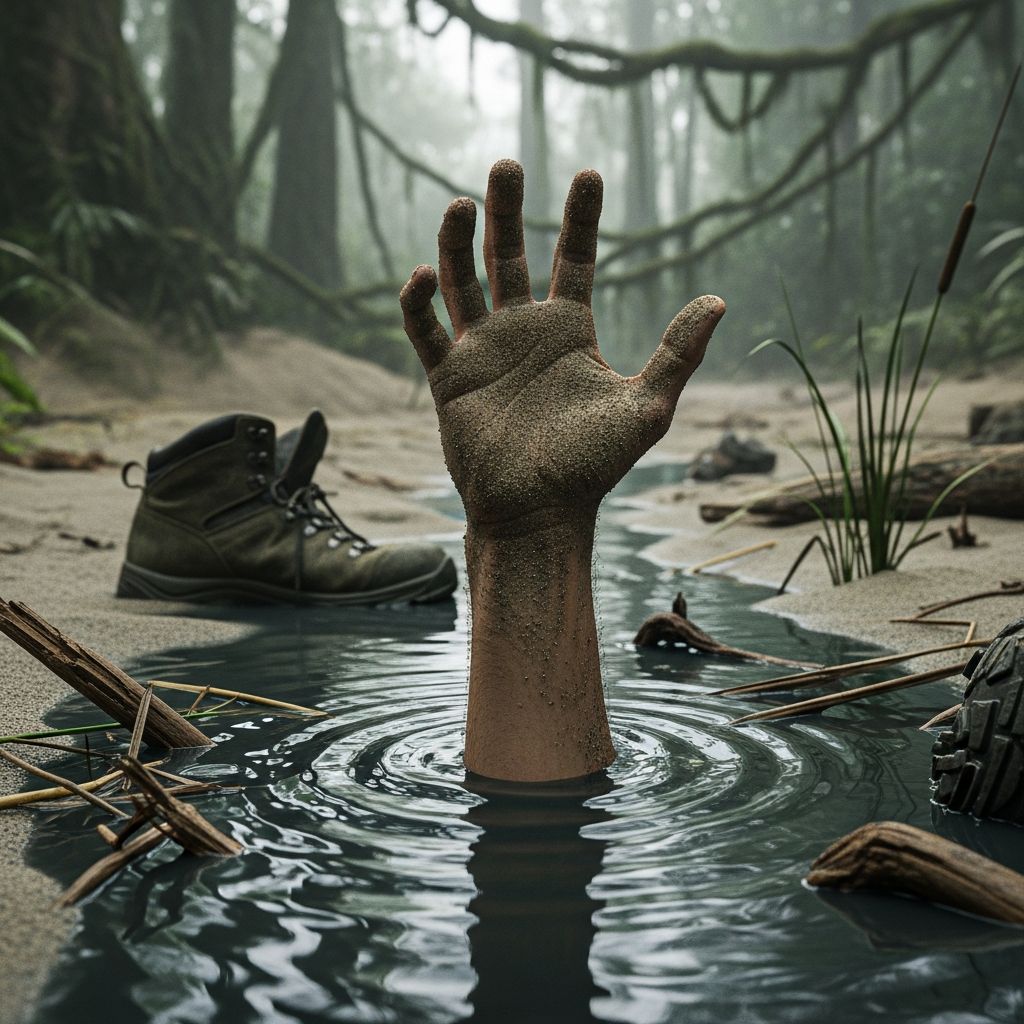
Quicksand captures imaginations through dramatic movie scenes, but reality differs sharply from fiction. This natural phenomenon poses real risks in certain environments, yet understanding its properties allows safe navigation and escape. This guide draws from scientific insights to explain quicksand’s nature, locations, dangers, and reliable escape methods.
Understanding Quicksand: A Natural Phenomenon
Quicksand forms when sand or similar fine particles become saturated with water, creating a non-Newtonian fluid that behaves like a solid until disturbed. Under normal conditions, grains lock together due to friction. However, when weight or agitation is applied, water pressure between grains rises, reducing friction and causing the mixture to liquefy.
Unlike depictions of endless sinking pits, quicksand’s density exceeds that of the human body—typically around 2 grams per cubic centimeter compared to the body’s 1 gram per cubic centimeter—preventing complete submersion. Most people sink only to waist or chest level, with buoyancy from the torso aiding flotation.
Where Quicksand Lurks: Common Locations
Quicksand thrives in areas with loose sediments and upward water flow. Key hotspots include:
- Riverbanks and lake shores: Underground springs or recent floods saturate sands.
- Coastal marshes and tidal flats: Incoming tides mix salt water with sediments, especially post-storm.
- Swamps and bogs: Organic-rich muds mimic quicksand behavior.
- Desert oases or glacier outflows: Rare but possible where hidden water sources meet fine sands.
Visual cues signal danger: bubbling water, rippled surfaces, or unusually soft, waterlogged ground. Avoid these, particularly after heavy rain when saturation peaks.
Real Dangers Beyond Sinking
The primary threat isn’t burial but secondary hazards. In tidal zones, rising water can drown trapped individuals before rescue arrives. Prolonged exposure leads to hypothermia in cold climates, dehydration in arid areas, or exhaustion from futile struggling. UK rescue data shows dozens of annual incidents, often near beaches or rivers, underscoring the need for vigilance.
| Risk Factor | Description | Prevention |
|---|---|---|
| Tidal Flooding | Rapid water rise in coastal areas | Check tide tables; avoid alone |
| Hypothermia | Cold water saps body heat | Wear insulating layers |
| Exhaustion | Struggling worsens entrapment | Stay calm, conserve energy |
| Dehydration | Stranded without water access | Carry supplies, signal early |
Proven Escape Techniques: Step-by-Step
Survival hinges on calm, deliberate actions. Panic induces thrashing, which liquefies the mixture further, deepening the sink. Follow these sequenced steps:
- Shed excess weight: Discard backpack, jacket, or shoes to lighten your load and improve buoyancy.
- Distribute weight: Lean back slowly into a floating position, spreading body mass like backstroking. Keep head and arms above the surface.
- Loosen limbs: Gently wiggle legs side-to-side or up-and-down. This creates water pockets, reducing suction without agitating the whole.
- Float and inch out: Once legs free, paddle slowly toward firm ground using small arm motions near the body.
- Use aids: Reach for branches or solid edges only after stabilizing; never lunge.
For shallow traps (ankle-deep), backpedal carefully without straddling legs, as this splits weight unevenly. Deeper entrapments may take hours—patience is key, as rapid pulls create vacuum resistance.
Prevention Strategies for Outdoor Enthusiasts
Avoidance trumps escape. Essential precautions include:
- Stick to established trails in risky terrains.
- Travel with partners and share itineraries.
- Monitor weather and tides via apps or locals.
- Equip with a charged phone and location tools like what3words.
- Scout for visual warnings: mushy, rippled, or bubbling spots.
In groups, designate a leader to prevent chain rescues—multiple victims complicate operations.
Scientific Insights into Quicksand Behavior
Research from the University of Amsterdam demonstrates quicksand’s stress-dependent fluidity. Low stress keeps it solid; higher stress (like stepping) triggers rapid liquefaction. Introducing water via leg movements counters this by restoring grain separation. A 2005 Nature study confirms human buoyancy limits sinking, debunking total engulfment myths.
These findings guide techniques: minimal agitation preserves structure elsewhere, allowing gradual extraction.
Assisting Others Safely
If witnessing someone trapped, resist pulling them out directly—this causes pain and deeper sinking. Instead:
- Call emergency services (e.g., coastguard at 999 in UK) with precise location.
- Coach them to float back and self-extricate.
- Extend a pole, rope, or branch from solid ground once positioned.
- Never enter the quicksand yourself.
Frequently Asked Questions (FAQs)
Can quicksand swallow you whole?
No, its higher density supports the body; sinking stops at chest level for most.
How long does escape take?
Shallow cases: minutes. Deeper: up to hours with patient wiggling.
Is quicksand only at beaches?
No, it forms near rivers, marshes, swamps, and even deserts with springs.
What if it’s up to my waist?
Float back, wiggle legs free slowly, then swim to edge.
Does struggling help?
No, it liquefies the mix more. Slow movements succeed.
Global Incidents and Lessons Learned
Rescues occur worldwide: Florida sinkholes, UK tidal flats, Australian outback bogs. Common threads? Solo ventures into unmarked areas post-rain. Lessons emphasize preparation and calm.
Expand your knowledge: Study local geology apps or join guided eco-tours in prone regions for hands-on awareness.
References
- This is the surprisingly simple trick to escape quicksand — BBC Science Focus. 2023-05-15. https://www.sciencefocus.com/news/simple-trick-to-escape-quicksand
- How To Get Out Of Quicksand Tips & Where It’s Found — Eagle Creek. 2022-08-10. https://eaglecreek.com/blogs/articles/adventure-travel-emergency-how-escape-quicksand
- What is quicksand and what do you when you become stuck in it — Fox Weather. 2024-03-20. https://www.foxweather.com/learn/what-is-quicksand-what-do-you-when-you-become-stuck
- How To Survive Quicksand | Primal Survivor — YouTube (Primal Survivor). 2021-07-12. https://www.youtube.com/watch?v=7CIOWh1JNTs
- Quicksand – University of Amsterdam Study (via Scientific American reference) — Daniel Bonn, Physics Professor. 2005 (referenced 2024). https://www.scientificamerican.com/article/quicksand-scientists/

Medha Deb is an editor with a master's degree in Applied Linguistics from the University of Hyderabad. She believes that her qualification has helped her develop a deep understanding of language and its application in various contexts. Medha specializes in the areas of beauty, health, sports, and wellness and is committed to ensuring that the content on the website is…