
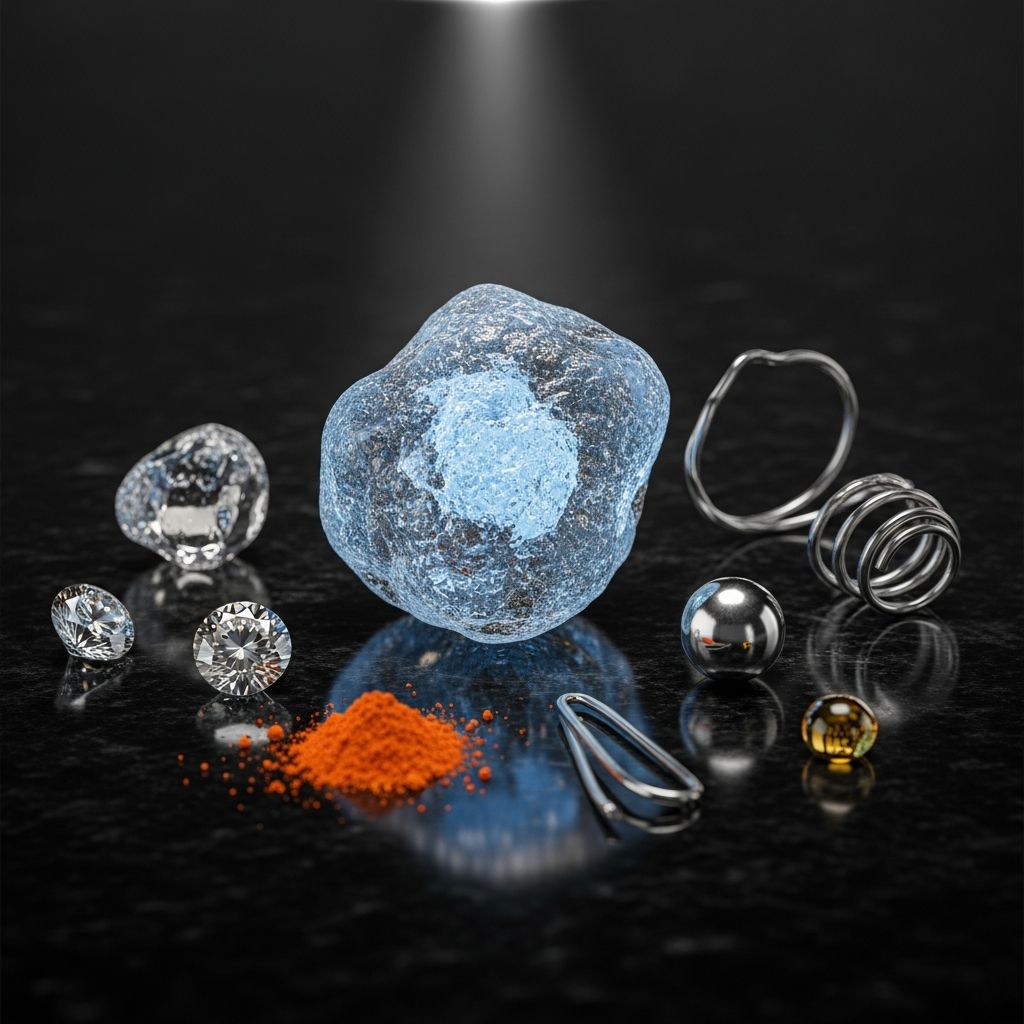
Rare chemical elements top global markets with astonishing price tags, driven by extreme scarcity, complex production, and specialized uses. As of 2025, non-synthetic metals like rhodium lead by mass, while synthetic isotopes like californium dominate per-gram costs.
Why Do Some Elements Cost a Fortune?
Element prices stem from natural abundance, extraction difficulty, and demand in high-tech sectors. Precious metals like rhodium shine in automotive catalysis, while lab-made actinides serve nuclear research. Carbon, ubiquitous in coal, soars in diamond form due to structural perfection.
Market volatility amplifies costs: supply disruptions or tech booms spike values. Rhodium, for instance, trades at thousands per ounce amid platinum mining byproducts. Synthetic elements evade natural limits, relying on particle accelerators with billion-dollar upkeep.
Top Contenders: Non-Synthetic Heavyweights
Among naturally occurring elements, platinum-group metals rule. Rhodium, the current mass-price king, owes its throne to catalytic converter dominance, reducing vehicle emissions.
- Rhodium (Rh): Priced around $1,200–thousands per ounce, extracted as platinum/nickel byproduct. Essential for alloys in spark plugs and furnace linings.
- Iridium (Ir): Tops volume pricing due to density; used in electronics and medical devices.
- Caesium (Cs) and Palladium (Pd): Follow closely, with caesium in atomic clocks and palladium in hydrogen purification.
- Gold (Au) and Platinum (Pt): Volume standouts for jewelry and catalysis, though outpaced by rhodium recently.
These metals’ rarity—rhodium atoms scattered like sand grains—fuels perpetual shortages. Electric vehicles may dent catalytic demand, but rhodium’s versatility endures.
Synthetic Marvels: Lab-Born Billionaires
Transuranic elements, forged in reactors, eclipse natural rarities. Their instability demands constant synthesis, inflating costs exponentially.
| Element | Est. Price per Gram | Key Use | Half-Life Challenge |
|---|---|---|---|
| Francium (Fr) | $1 billion | Research only | 22 minutes |
| Californium (Cf) | $27 million | Neutron source for oil exploration | Years (isotope-dependent) |
Francium’s blink-and-miss-it existence—largest sample ever: 300,000 atoms—renders gram-scale pricing theoretical. Californium, born from curium bombardment, powers neutron radiography in energy sectors.
Carbon’s Dual Personality: Cheap to Cherished
Element six flips from bargain-basement coal to luxury diamonds at $60,000/gram. Diamond’s tetrahedral lattice enables unmatched hardness for tools and gems; carbon nanotubes push composites to $150/pound.
Industrial carbon fiber revolutionizes aerospace, trading bulk affordability for engineered excellence. This form-price chasm highlights atomic arrangement’s economic power.
Industrial Powerhouses and Future Shifts
Beyond prestige, expensive elements drive innovation. Rhodium alloys withstand extreme heat; californium detects oil reserves without drilling. Iridium sparked mass extinction theories via Cretaceous layers, now aiding LEDs.
Emerging tech like fusion reactors may boost demand for scarce isotopes. Yet, recycling and substitutes loom: rhodium reclamation from spent catalysts curbs mining. Electric mobility challenges auto-catalysts, pivoting rhodium to hydrogen fuel cells.
Ranking the Elite: 2025 Price Tiers
- Francium: $1B/g – Ultimate rarity.
- Californium: $27M/g – Neutron king.
- Diamond Carbon: $60K/g – Structured splendor.
- Rhodium: $1,200+/oz (~$40K/g) – Catalytic champion.
- Iridium: High volume premium.
Prices fluctuate; 2025 data crowns rhodium for natural mass, iridium for bulk. Cheapest? Chlorine, sulfur, coal-carbon.
Economic and Geopolitical Ripples
Concentrated mining—South Africa’s platinum belt for rhodium—breeds supply risks. Geopolitics sway markets: sanctions or strikes cascade prices. Investment-grade elements like rhodium attract speculators, mirroring gold’s allure.
Labs producing californium, often U.S.-based, control global supply, tying costs to research budgets. Sustainable extraction gains traction, with byproduct recovery minimizing environmental toll.
Scientific Frontiers and Price Drivers
Particle physics births pricier synthetics: beyond californium lie oganesson, fleeting noble gases at uncharted costs. Demand from quantum computing or space tech could escalate natural metal values.
Half-life hurdles explain synthetic premiums: spontaneous decay demands perpetual replenishment. Natural elements face geological lotteries—rhodium’s 0.0001% crustal fraction.
Frequently Asked Questions
What makes rhodium the priciest natural element?
Rhodium’s scarcity as a platinum byproduct, coupled with catalytic converter demand, drives prices to thousands per ounce.
Can you buy francium?
No practical market exists; its 22-minute half-life prevents stable quantities.
Will electric cars crash rhodium prices?
Potentially, but rhodium’s roles in alloys and fuel cells offer buffers.
How much californium exists worldwide?
Only grams total, produced in specialized reactors.
Is diamond truly the costliest carbon form?
Yes, flawless gems hit $60K/g, dwarfing graphite.
Investment Considerations
Precious elements lure portfolios, but volatility reigns. Rhodium ETFs track metal prices sans physical storage hassles. Synthetics remain research-exclusive, barring public trade.
Diversify with platinum-group baskets; monitor auto sector shifts. Long-term, rare earths in renewables may rival traditional heavies.
References
- Prices of chemical elements — Wikipedia. 2025. https://en.wikipedia.org/wiki/Prices_of_chemical_elements
- Rhodium: is it the most expensive Element on Earth? — YouTube (Documentary). Accessed 2025. https://www.youtube.com/watch?v=yszlM-mbgjQ
- Meet the World’s Most Valuable Elements — Noah Chemicals. Accessed 2025. https://www.noahchemicals.com/most-valuable-elements/

- Integrated M.A. in Applied Linguistics, University of Hyderabad
- 5+ years in editorial, instructional, SEO, and research-based writing
Sneha is a relationships and lifestyle writer with a strong foundation in applied linguistics and certified training in relationship coaching. She brings over five years of writing experience to theskillvault, crafting thoughtful, research-driven content that empowers readers to build healthier relationships, boost emotional well-being, and embrace holistic living. Her writing and insights reflect the belief that beauty, happiness, and wellness…