
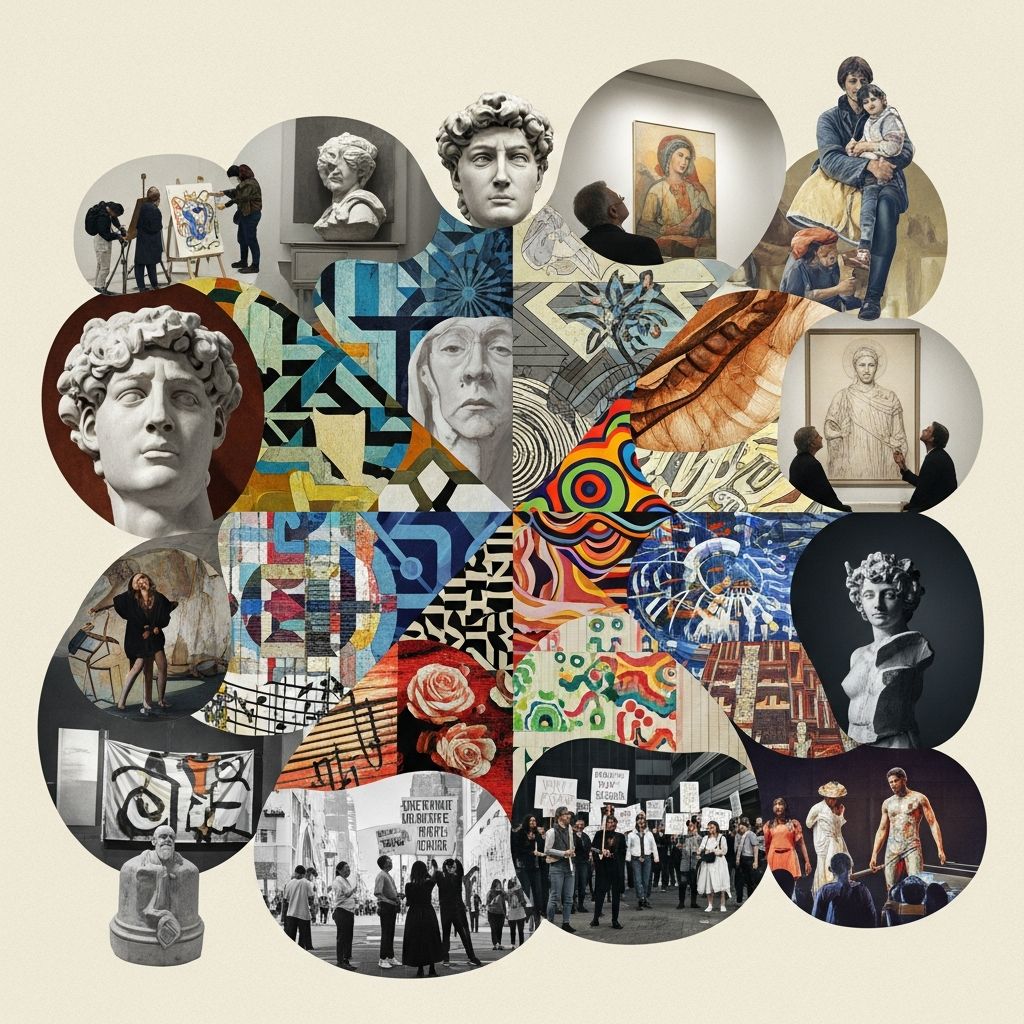
Art stands as a cornerstone of human civilization, serving diverse purposes that extend far beyond mere decoration. It influences individual lives, binds communities, challenges norms, and preserves legacies, acting as a mirror to our collective soul. This article delves into the core functions of art, drawing on its capacity to inspire, educate, unite, and transform.
Art’s Personal Dimensions: Fulfillment and Self-Discovery
At its most intimate level, art provides profound personal value. Engaging with or creating art allows individuals to explore their inner worlds, process emotions, and achieve a sense of accomplishment. For many, the act of painting, sculpting, or performing offers therapeutic release, helping to navigate life’s complexities.
Psychological studies highlight how art appreciation cultivates emotional intelligence and resilience. By immersing oneself in visual narratives or musical compositions, people gain tools for self-reflection and empathy. This personal enrichment fosters creativity, which spills over into problem-solving in daily life.
- Emotional Outlet: Art channels feelings that words cannot capture, from joy to grief.
- Skill Development: Practice hones fine motor abilities and cognitive flexibility.
- Well-Being Boost: Regular interaction with art reduces stress and enhances mood.
Consider how journaling through sketches or playing an instrument can build confidence and identity. These experiences underscore art’s role in personal growth, making it indispensable for mental health.
Social Commentary: Art as a Voice for Change
Art frequently serves as a powerful critic of society, highlighting injustices and sparking dialogue. Artists use their mediums to question authority, expose inequalities, and advocate for reform. Historical examples abound, from protest posters to contemporary street art that addresses climate crises or racial divides.
This function positions art as a catalyst for social movements. By visualizing harsh realities, it humanizes abstract issues, prompting public action. Graffiti murals in urban spaces, for instance, transform walls into platforms for marginalized voices, fostering awareness and solidarity.
| Art Form | Example of Social Commentary | Impact |
|---|---|---|
| Street Art | Banksy-style graffiti | Raises awareness on war, poverty |
| Painting | Goya’s The Third of May 1808 | Condemns violence and oppression |
| Performance | Theater protests | Mobilizes communities for justice |
Such works not only inform but also provoke discomfort, urging viewers to confront uncomfortable truths. In this way, art drives societal evolution.
Building Bridges: Art’s Power in Community Cohesion
One of art’s most unifying roles is in forging communal bonds. Collaborative projects like public murals or festivals bring diverse groups together, promoting shared experiences and mutual respect. These initiatives revitalize neighborhoods, instill pride, and encourage ongoing interaction.
Community art programs demonstrate how collective creation heals divisions. In post-conflict areas, joint sculptures or dances symbolize reconciliation, while school murals teach youth about heritage and cooperation. Art thus acts as a social glue, enhancing belonging and reducing isolation.
- Public Installations: Murals that reflect local history unite residents.
- Festivals and Rituals: Celebrations through dance or music strengthen cultural ties.
- Workshops: Hands-on sessions build skills and relationships.
By facilitating dialogue across differences, art nurtures inclusive societies where empathy flourishes.
Educational Impact: Art as a Teacher of Life
Art educates by illustrating history, culture, and human behavior in vivid, memorable ways. Museums and galleries preserve knowledge, allowing generations to learn from the past. In classrooms, art develops critical thinking, as students interpret symbols and narratives.
Beyond academics, art instills values like perseverance and innovation. Community-based programs link artistic practice to civic responsibility, empowering participants to address local needs. This contextual learning enriches understanding of one’s place in the world.
Empirical evidence supports art’s cognitive benefits: it sharpens observation, boosts memory, and encourages abstract reasoning. For children, it builds foundational skills essential for lifelong learning.
Economic Engine: Art’s Contributions to Prosperity
Often overlooked, art drives economic growth through jobs, tourism, and innovation. Galleries, theaters, and crafts markets generate revenue, while festivals attract visitors, benefiting hospitality sectors. Artists’ outputs, from designs to performances, fuel creative industries worldwide.
Public investments in art yield returns via cultural tourism and property value increases. In revitalized districts, street art draws crowds, spurring business. This economic ripple effect underscores art’s viability as a strategic asset.
| Sector | Economic Role | Examples |
|---|---|---|
| Tourism | Attracts millions annually | Museums, festivals |
| Employment | Creates diverse jobs | Curators, performers |
| Innovation | Inspires design/tech | Fashion, advertising |
Preserving Heritage: Art as Cultural Guardian
Art safeguards traditions, documenting evolutions in customs and beliefs. Artifacts in museums narrate ancestral stories, ensuring continuity amid globalization. Indigenous crafts, for example, maintain languages and practices, resisting cultural erosion.
This archival function enriches global diversity, offering insights into varied worldviews. By celebrating heritage, art promotes tolerance and appreciation across borders.
Entertainment and Aesthetic Pleasure: Art’s Joyful Side
Not all art is serious; much delights and refreshes. Concerts, films, and whimsical sculptures provide escapism and beauty, countering routine’s monotony. This recreational role enhances quality of life, making art accessible and enjoyable for all.
Aesthetic experiences stimulate senses, evoking wonder and relaxation. Public parks with sculptures or vibrant galleries invite casual engagement, democratizing pleasure.
Political Influence: Art in Power Dynamics
Art wields influence in politics, propagandizing ideals or satirizing leaders. State-commissioned monuments glorify nations, while dissident works undermine regimes. In democracies, cartoons and installations shape public opinion on policies.
This dual-edged sword highlights art’s potency in governance, often swaying elections or reforms.
Frequently Asked Questions (FAQs)
What is the primary personal function of art?
Art primarily offers personal fulfillment through emotional expression and self-discovery, aiding mental well-being and creativity.
How does art contribute to social change?
Through commentary and advocacy, art raises awareness of issues like injustice, inspiring collective action and reform.
Can art boost a local economy?
Yes, via tourism, jobs, and business growth, art serves as an economic driver in communities.
Why is art important in education?
It develops critical skills, empathy, and cultural knowledge, preparing individuals for engaged citizenship.
Does art unite diverse groups?
Absolutely, collaborative projects and shared experiences build community and mutual understanding.
References
- Social Functions — Iowa State University. Accessed 2026. https://www.nabdb.design.iastate.edu/about/thinkingskills/human_context/social_function.html
- What Is Art Good For? The Socio-Epistemic Value of Art — PMC / National Library of Medicine. 2017-08-25. https://pmc.ncbi.nlm.nih.gov/articles/PMC5581397/
- Art is an Essential Part of the Human Experience — Colorado State University College of Liberal Arts. Accessed 2026. https://magazine.libarts.colostate.edu/article/art-is-an-essential-part-of-the-human-experience/
- Exploring the Role of Art in Society — University of Dallas. Accessed 2026. https://blog.udallas.edu/tower-thoughts/exploring-the-role-of-art-in-society
- The Importance of Art: Understanding its Role in Society — Naturalist Gallery. Accessed 2026. https://naturalist.gallery/blogs/journal/the-importance-of-art-understanding-its-role-in-society

Medha Deb is an editor with a master's degree in Applied Linguistics from the University of Hyderabad. She believes that her qualification has helped her develop a deep understanding of language and its application in various contexts. Medha specializes in the areas of beauty, health, sports, and wellness and is committed to ensuring that the content on the website is…