
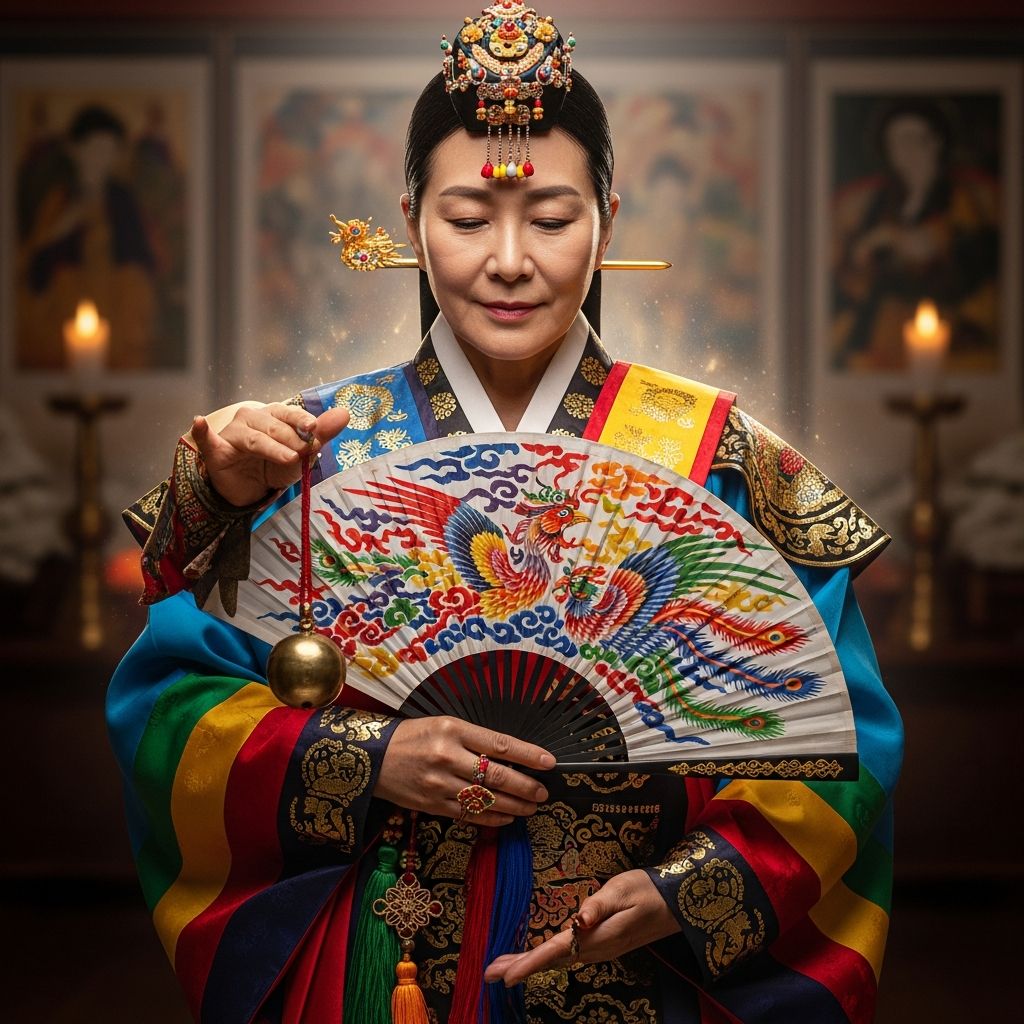
Korean shamanism, known as Musok, centers on the mudang—primarily female spiritual practitioners who serve as vital links between the human realm and the supernatural. These shamans conduct elaborate rituals to resolve misfortunes, heal ailments, and foster harmony with gods and ancestors.
The Essence of Mudang in Korean Spiritual Life
Mudang embody a unique form of religious practice deeply rooted in Korea’s pre-modern history. Unlike structured priesthoods in organized religions, mudang derive their authority from direct, ecstatic communion with spirits. They are revered for their ability to diagnose spiritual imbalances and perform corrective ceremonies.
Predominantly women, mudang have historically shouldered roles as healers, counselors, and oracles, especially for marginalized communities. Male counterparts, referred to as paksu, exist but are less common. This gender dynamic reflects broader societal patterns where women navigated spiritual domains amid patriarchal constraints.
- Core Functions: Divination to uncover misfortune causes, ritual performances to appease spirits, and guidance on life decisions.
- Social Role: Providers of practical advice on business ventures, marriages, health issues, and family disputes.
- Cultural Persistence: Despite suppression, mudang practices thrive, adapting to urban demands.
Path to Becoming a Mudang: The Call of the Spirits
The journey to mudang status often begins with intense personal trials. Many experience sinbyeong, a spirit-induced illness marked by physical pain, visions, and emotional turmoil. This ‘shaman sickness’ is interpreted as a divine summons, compelling the individual to accept their calling or face worsening symptoms.
Initiation involves naerim-gut, a grand ritual where the novice mudang entertains hosting spirits through song, dance, and offerings. This ceremony confirms their divine energy, or myeonggi, granting ritual efficacy. Training under senior mudang refines skills in trance induction and spirit communication.
| Stage | Description | Duration |
|---|---|---|
| Sinbyeong Onset | Severe illness signaling spirit selection | Weeks to years |
| Apprenticeship | Learning rituals from mentors | Months to years |
| Naerim-gut | Initiation ceremony with full gut | 1-3 days |
These stages underscore shamanism’s emphasis on embodied suffering as a gateway to spiritual power.
Central Rituals: The Power of Gut Ceremonies
The gut stands as the cornerstone of mudang practice—a multifaceted ritual blending performance, prayer, and spirit possession. Lasting hours to days, gut aims to coax communication from deities, revealing grievances and prescribing remedies.
Preparations include altars like the halabeoji sang for gods and jasang sang for ancestors, laden with food, alcohol, and symbolic items. The mudang, adorned in vibrant robes, initiates with drumming to enter trance. Props such as nok-chong (paper streamer sticks), fans, and brass bells summon and channel spirits.
During possession, the mudang dances rhythmically, often swirling to drums, mimicking divine personas—sometimes stern, other times benevolent. Oracles deliver messages, fortunes, or demands, culminating in spirit satisfaction verified through divination.
- Key Elements: Drumming, ecstatic dance, vocal invocations, offerings.
- Variations: Dodang-gut for exorcism, regional styles differing in choreography and songs.
- Purpose: Healing illness, ensuring prosperity, guiding souls.
Tools and Symbols in Shamanic Practice
Mudang employ an array of ritual artifacts to facilitate supernatural interaction. Brass bells jingle to attract spirits, fans direct energy flows, and swords represent protective forces. White paper streamers on sticks visualize spirit presence.
Costumes feature embroidered silk hanbok in reds and blues, signifying cosmic connections. Music, primarily percussion, drives the trance state essential for possession.
Historical Journey: Persecution and Revival
Shamanism predates Confucianism and Buddhism in Korea, integral to tribal life. Colonial and post-war eras saw suppression as superstition, yet it endured underground, especially among women and rural folk.
Post-1990s urbanization prompted adaptations: shorter gut for busy clients, online consultations. Today, mudang address modern woes like career stress and relational strife, blending tradition with contemporary needs.
Mudang in Modern Korean Society
Contemporary mudang operate discreetly, often from urban apartments or mountain shrines. They offer personalized services—divination for auspicious dates, rituals for business success—rivaling fortune-tellers like saju practitioners.
While official narratives favor organized faiths, surveys indicate shamanism influences 20-30% of Koreans indirectly. Media portrayals in dramas romanticize mudang, boosting cultural fascination.
| Aspect | Traditional Mudang | Modern Mudang |
|---|---|---|
| Ritual Length | Several days | Hours or virtual |
| Focus | Famine, illness | Career, relationships |
| Accessibility | Rural shrines | Urban homes, apps |
Spiritual Significance and Global Interest
Mudang rituals affirm a worldview where human plight stems from neglected spirits. By mediating, they restore balance, offering psychological relief akin to therapy.
Internationally, Korean shamanism draws scholars and tourists, recognized by UNESCO for intangible heritage value. Videos of mudangchum dances highlight its performative artistry.
Frequently Asked Questions
Are mudang only women?
Mostly yes, but male paksu perform similar roles, though rarer.
What causes sinbyeong?
A divine call via illness, visions, or crises until accepted.
How long does a gut last?
From hours to multi-day events, depending on purpose.
Is shamanism legal in Korea?
Yes, practiced freely despite past stigma.
Can anyone become a mudang?
Only those chosen by spirits through unmistakable signs.
Conclusion: Timeless Bridge to the Divine
Mudang continue to weave Korea’s spiritual fabric, adapting ancient wisdom to new eras. Their rituals remind us of enduring human quests for meaning beyond the material.
References
- Korean shamanism — Wikipedia. 2023-10-15. https://en.wikipedia.org/wiki/Korean_shamanism
- Mudang – Korean Shamanic Tradition — Robert Falconer. 2022-05-20. https://robertfalconer.us/south-korea-mudang/
- What Is A Mudang? Korean Shamanism Explained By A Local — Kculture. 2024-01-12. https://kculture.com/what-is-a-mudang-korean-shamanism/
- Mudang | Meaning, Shaman, & Facts — Encyclopaedia Britannica. 2023-11-08. https://www.britannica.com/topic/mudang
- Old Gods, New Times: A Shaman Ritual in South Korea — Association for Asian Studies. 2021-06-17. https://www.asianstudies.org/publications/eaa/archives/old-gods-new-times-a-shaman-ritual-in-south-korea/
- Mudangchum: Traditional Korean Shaman Dance — YouTube (KBS1). 2019-07-22. https://www.youtube.com/watch?v=wL4FtvGK1oI
- Mudang and Revolution: Korean Shamanism and the Role of Culture — Soapear.org. 2020-04-02. https://soapear.org/2020/04/02/mudang-and-revolution-korean-shamanism-and-the-role-of-culture-in-the-struggle-for-reunification/

- Integrated M.A. in Applied Linguistics, University of Hyderabad
- 5+ years in editorial, instructional, SEO, and research-based writing
Sneha is a relationships and lifestyle writer with a strong foundation in applied linguistics and certified training in relationship coaching. She brings over five years of writing experience to theskillvault, crafting thoughtful, research-driven content that empowers readers to build healthier relationships, boost emotional well-being, and embrace holistic living. Her writing and insights reflect the belief that beauty, happiness, and wellness…