
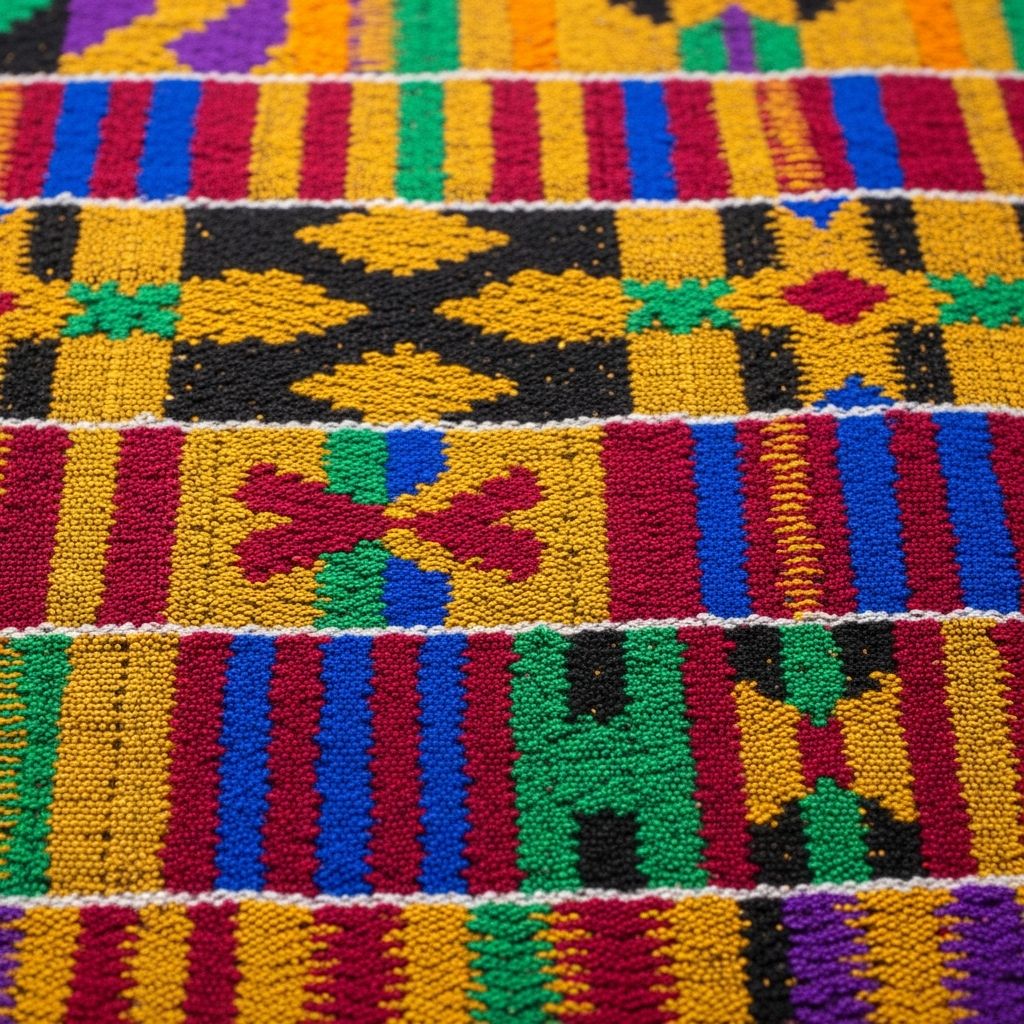
Kente cloth stands as one of Africa’s most celebrated textiles, embodying centuries of artistry, spirituality, and social hierarchy within Ghanaian society. Handwoven on narrow looms by skilled artisans, primarily from the Asante and Ewe peoples, this fabric features bold geometric patterns and vivid colors that convey deep cultural narratives. Originally reserved for royalty, Kente has evolved into a global emblem of African identity and pride.
Ancient Roots and Legendary Beginnings
The story of Kente cloth is woven into the fabric of West African history, with weaving traditions traceable to as early as the 11th century among Akan and Ewe communities. While some evidence suggests textile production dates back to 1000 BCE in regions of present-day Ivory Coast and southeastern Ghana, the distinctive Kente style emerged prominently in the 17th century among the Asante people.
Central to its origin is a captivating legend shared across Asante oral traditions. Two brothers, often named Opoku Kuragu and Kwakye Ameyaw or Nana Koragu and Nana Ameyaw, encountered the intricate web of Ananse, the mythical spider trickster. Enchanted by its geometric precision, they learned weaving techniques from the spider and replicated them using local raffia fibers from palm trees. Returning to Bonwire village in Ghana’s Asante region, they presented their creation to Asantehene Osei Tutu, the kingdom’s first ruler, who declared it a royal exclusive for ceremonies.
Bonwire remains the epicenter of Kente production today, a testament to its enduring legacy. This legend not only explains the cloth’s inception but also infuses it with spiritual significance, linking human craftsmanship to divine inspiration.
Royal Exclusivity and Evolution Through Trade
Initially, Kente—derived from the Twi word ‘kenten’ meaning ‘basket’—was a sacred garment symbolizing wealth, power, and sophistication. Worn exclusively by kings, queens, and nobility, it marked high status during festivals, funerals, marriages, and state functions. Men draped it toga-style over one shoulder, while women fashioned it into dresses or shawls, sometimes doubling as baby carriers.
The Asante Empire’s rise in the late 1500s amplified Kente’s prestige. Trade networks with Europe, North Africa, India, and beyond introduced luxurious silks from Italy and France. Artisans unraveled these imports, reweaving the threads with local cotton and wool on narrow vertical looms, creating wider cloths by sewing 4-inch strips together. By the early 1700s, this innovation birthed the dramatic, multicolored patterns we recognize today.
| Period | Key Developments |
|---|---|
| 11th Century | Early weaving traditions in West Africa (Akan, Ewe). |
| Late 1500s | Asante Empire incorporates imported silks. |
| 17th Century | Legendary invention in Bonwire; royal adoption. |
| 18th Century | Unraveling and reweaving of global silks peaks. |
| Today | UNESCO recognition (2024); global diaspora symbol. |
Over time, Kente’s exclusivity softened, extending to important life events for commoners, though its aura of prestige persists.
The Art of Weaving: Precision and Mastery
Kente weaving demands extraordinary skill, passed down through generations in family guilds. Artisans use horizontal treadle looms producing strips about 4 inches wide, which are meticulously sewn into full cloths measuring up to 9×7 feet for men’s togas. A single weaver might master hundreds of patterns, memorized by name and committed to heart without written guides.
- Narrow Loom Technique: Threads are dyed before weaving; patterns emerge from complex shuttling of weft yarns over warp.
- Materials: Traditionally cotton or raffia; modern versions blend silk for vibrancy.
- Time-Intensive: A single cloth can take weeks, with no two pieces identical—like unique fingerprints.
- Customization: Clients select patterns based on personal stories or occasions.
Weavers in Bonwire and Agotime (Ewe center) continue this labor-intensive craft, blending innovation with tradition. The process symbolizes patience, creativity, and communal heritage.
Symbolism in Patterns and Colors
Every element of Kente cloth communicates profound messages, functioning as a visual language of proverbs, history, and values. Patterns, known as ‘adweneasa’ (cleverness), depict motifs like the ‘hand of friendship,’ guinea fowl feathers (indicating status), or references to chiefs and events. Names evoke life’s wisdom, such as those honoring queen mothers or historical triumphs.
Colors amplify these meanings, drawn from natural dyes and imports:
- Gold/Yellow: Wealth, royalty, earth’s bounty.
- Red: Passion, blood, spiritual purification.
- Black: Ancestral maturity, spiritual energy.
- Green: Renewal, vegetation, growth.
- Blue: Peace, love, harmony.
- White: Purity, healing, sanctity.
In shrines, Kente honors deities (abosom), underscoring its sacred role. This semiotic richness ensures each cloth narrates an individual’s or community’s story.
From Tradition to Global Icon
Kente’s journey transcends Ghana, becoming a cornerstone of Black diaspora identity. During U.S. Civil Rights movements, it symbolized resistance and unity; today, graduates don Kente stoles at commencements, transforming personal achievement into cultural affirmation.
Recognized by UNESCO as Intangible Cultural Heritage in December 2024, Kente influences fashion—from high-end designers to streetwear—while artisans combat mass-produced imitations. Initiatives preserve techniques amid modernization.
In politics, figures like Ghanaian leaders and global icons wear Kente at summits, amplifying its diplomatic weight. Its adaptability ensures relevance in contemporary Africa and beyond.
Preserving the Craft in a Modern World
Challenges like synthetic alternatives and globalization threaten authenticity, yet Bonwire’s weavers thrive through tourism, cooperatives, and education. Programs teach youth, ensuring continuity. Ethical purchasing supports communities, honoring Kente’s royal roots.
Visitors to Ghana experience weaving demonstrations, fostering appreciation and economic sustainability.
Frequently Asked Questions (FAQs)
What is the main origin story of Kente cloth?
Asante legend attributes it to two brothers inspired by Ananse the spider’s web in Bonwire, Ghana.
Who originally wore Kente cloth?
It was exclusive to Asante royalty for sacred and ceremonial purposes.
What do Kente colors symbolize?
Colors like gold for royalty, red for passion, and green for growth carry ritual and philosophical meanings.
Is Kente still woven by hand today?
Yes, skilled artisans in Bonwire and Ewe regions maintain traditional narrow-loom methods.
How has Kente influenced global culture?
It’s a symbol in Black diaspora events, fashion, and was UNESCO-listed in 2024.
References
- The Story of Ghanaian Kente Cloth — Cabana Magazine. 2023. https://cabanamagazine.com/blogs/atlas-of-craftsmanship/craft-stories-kente-cloth
- Kente Cloth – History, Meaning & Symbolism — Adinkra Symbols. 2023. https://www.adinkrasymbols.org/pages/kente-cloth/
- Ghana: Weave a Kente Cloth — Lam Museum of Anthropology, Wake Forest University. 2023-02. https://lammuseum.wfu.edu/2023/02/ghana-weave-a-kente-cloth/
- Kente cloth — Smarthistory. 2023. https://smarthistory.org/kente-cloth/
- The History and Significance of Kente Cloth in the Black Diaspora — African American Intellectual History Society. 2023. https://www.aaihs.org/the-history-and-significance-of-kente-cloth-in-the-black-diaspora/
- Kente Cloth – African Art — Contemporary African Art. 2023. https://www.contemporary-african-art.com/kente-cloth.html
- Kente cloth — Wikipedia. 2024-12. https://en.wikipedia.org/wiki/Kente_cloth

Medha Deb is an editor with a master's degree in Applied Linguistics from the University of Hyderabad. She believes that her qualification has helped her develop a deep understanding of language and its application in various contexts. Medha specializes in the areas of beauty, health, sports, and wellness and is committed to ensuring that the content on the website is…