
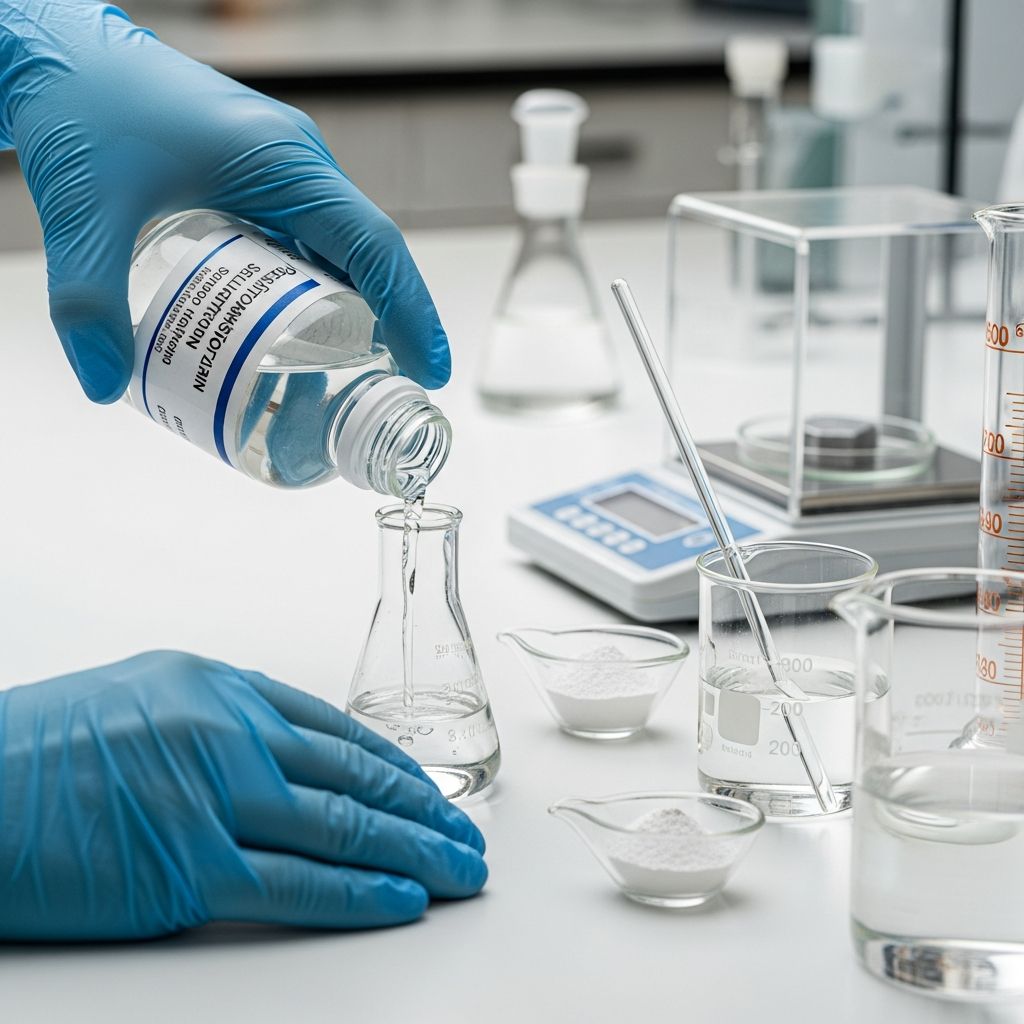
The Kastle-Meyer test stands as a cornerstone in forensic chemistry, offering a rapid presumptive method to identify potential blood stains at crime scenes or in laboratory settings. This colorimetric assay leverages the peroxidase-like activity of hemoglobin to produce a distinctive pink hue, signaling the possible presence of human or animal blood. Developed over a century ago, it remains widely used due to its simplicity, cost-effectiveness, and sensitivity, detecting blood dilutions as low as 1:512 in controlled conditions.
Historical Development and Forensic Significance
Originally formulated by American chemist Joseph Kastle in 1901, the test was refined by German physician Erich Meyer in 1903, earning its eponymous name. Its enduring relevance stems from the need for quick, on-site screening before confirmatory DNA analysis. In modern forensics, it serves as a triage tool, distinguishing blood from mimics like rust or plant peroxidases, though false positives necessitate follow-up tests.
Forensic labs value its portability; technicians can carry pre-made solutions in dropper bottles, applying them directly to swabs from suspicious stains. This efficiency accelerates investigations, preserving evidence integrity while minimizing contamination risks.
Core Chemical Principles Behind the Test
At its heart, the Kastle-Meyer reaction hinges on the oxidation of phenolphthalin—the reduced, colorless form of phenolphthalein—to its pink phenolphthalein form. Hemoglobin’s heme iron (Fe2+) catalyzes hydrogen peroxide (H2O2) decomposition, generating reactive oxygen species that drive this transformation:
Reaction Equation:
Heme-Fe4+ + phenolphthalin (colorless) + H2O2 → phenolphthalein (pink) + H2O + Heme-Fe3+
The reagent’s preparation reduces phenolphthalein using zinc in alkaline conditions, yielding phenolphthalin stock. Dilution in ethanol stabilizes it, preventing premature oxidation. Without hemoglobin, no color change occurs; a rapid pink within seconds confirms peroxidase activity indicative of blood.
Essential Materials and Safety Protocols
Before synthesis, gather high-purity reagents to ensure accuracy:
- Phenolphthalein powder (0.1–2 g, analytical grade)
- Sodium hydroxide (NaOH) pellets or 25% w/v solution
- Mossy zinc or zinc dust (0.1–20 g)
- 70% ethanol
- Deionized or distilled water
- 3% hydrogen peroxide
- Cotton swabs, pipettes, filter paper
Safety Measures: Conduct preparations in a fume hood wearing gloves, goggles, and lab coat. NaOH is corrosive; zinc reactions produce heat and hydrogen gas—extinguish flames. Dispose of zinc carbonate precipitates as non-hazardous waste after neutralization. Store reagents in amber glass bottles refrigerated to extend shelf life up to months.
Step-by-Step Reagent Preparation Methods
Several scalable recipes exist, tailored for lab or field use. Below are three validated approaches drawn from educational and technical sources.
Standard Small-Scale Method
- Dissolve 0.1 g phenolphthalein in 10 mL 25% NaOH solution; solution turns pink.
- Add 0.1 g mossy zinc; heat gently (do not boil) until colorless (10–30 minutes).
- Cool, decant, dilute to 100 mL with 70% ethanol.
- Store in sealed amber bottle.
Scaled-Up Laboratory Batch
For higher volumes, use:
- 4 g phenolphthalein
- 40 g NaOH pellets
- 20 g zinc dust
- 1000 mL deionized water
- Ethanol to 1200 mL total
Heat with stirring 2–3 hours until decolorized, decant, add ethanol. This yields stable stock for multiple tests.
Alternative One-Pot Technique
Combine all solids initially, heat to reflux until pink fades, filter zinc carbonate with sodium carbonate addition, then dilute. Ideal for time-constrained settings.
| Method | Yield | Time | Best For |
|---|---|---|---|
| Small-Scale | 100 mL | 30 min | Educational demos |
| Lab Batch | 1200 mL | 2–3 hrs | High-volume labs |
| One-Pot | Variable | 1–2 hrs | Field prep |
Performing the Presumptive Blood Test
Execute the test sequentially to rule out interferences:
- Moisten swab with water or 70% ethanol; swab suspected stain.
- Add 1–2 drops Kastle-Meyer solution; no color change expected (confirms fresh reagent).
- Add 2–3 drops 3% H2O2; instant pink = positive for blood.
Include positive (known blood) and negative (water) controls. Test time: under 1 minute per sample.
Interpreting Results and Limitations
Positive Result: Bright pink within 10–15 seconds indicates hemoglobin. Sensitivity detects trace amounts but not species-specific.
Negative Result: No color change rules out blood confidently.
False Positives: Oxidants like rust, bleach, or vegetable peroxidases (e.g., horseradish) mimic reaction. Delay color (>30 sec) suggests non-blood.
False Negatives: Rare; degraded blood or strong cleaners may suppress.
Always confirm positives with luminol, RSID, or DNA profiling.
Troubleshooting Common Issues
- Pink solution before use: Oxidized; discard and remake.
- Slow/no color on known blood: Weak H2O2; use fresh 3%.
- Persistent pink without peroxide: Contaminant on swab; retest clean surface.
- Heating too long: Over-reduction; start fresh.
Advanced Applications in Forensics
Beyond stains, apply to fabric extracts or diluted washes. In arson cases, distinguish blood from fuel residues. Educational labs use it to teach redox chemistry and enzymology, simulating CSI workflows. Recent protocols integrate it with digital imaging for quantified color analysis, enhancing court admissibility.
For aged stains, pre-extract with saline to boost sensitivity. Research explores nanoparticle enhancements for sub-picomolar detection, though classical methods suffice for most needs.
Frequently Asked Questions (FAQs)
What makes the Kastle-Meyer test presumptive?
It detects hemoglobin-like activity but can’t distinguish blood species or rule out plant/chemical mimics, requiring confirmatory tests.
How long does prepared reagent last?
Refrigerated in amber bottles, 1–6 months; discard if pinkening occurs.
Can it detect blood on porous surfaces?
Yes; use filter paper rubs or swabs for extraction before applying reagents.
Is zinc essential, or are there substitutes?
Zinc reduces phenolphthalein efficiently; alternatives like sodium amalgam work but are hazardous.
Does temperature affect the test?
Perform at room temperature; extremes alter reaction kinetics.
Storage and Scaling for Professional Use
Scale recipes proportionally for bulk: NYC OCME uses 10 g phenolphthalin/50 g KOH base. Label with prep date; test viability monthly. For fieldwork, prepare single-use ampoules.
In summary, mastering Kastle-Meyer reagent preparation empowers precise blood detection, bridging classical chemistry with contemporary forensics. Its reliability, when paired with controls, makes it indispensable.
References
- Applied Science BTEC Nationals/Chemical Laboratory Techniques/Kastle-Meyer — Wikibooks. Accessed 2026. https://en.wikibooks.org/wiki/Applied_Science_BTEC_Nationals/Chemical_Laboratory_Techniques/Kastle-Meyer
- Kastle Meyer Test for Blood — Science Notes. 2023. https://sciencenotes.org/kastle-meyer-test-for-blood/
- Making Kastle-Meyer – YouTube Transcript — YouTube. Accessed 2026. https://www.youtube.com/watch?v=m-8zddc0JnM
- Hi Does anyone know how to make Kastle–Meyer test solution for blood — Preproom Community. 2015. https://community.preproom.org/index.php?threads/hi-does-anyone-know-how-to-make-kastle-meyer-test-solution-for-blood.9504/
- Biochemistry Manual effective 033192 — NYC.gov (OCME). 1992. https://www.nyc.gov/assets/ocme/downloads/pdf/technical-manuals/forensic-biology-technical-manuals/biochemistry_033192.pdf
- Carolina Solution Sheets: Kastle-Meyer Reagent — Carolina.com. Accessed 2026. https://www.carolina.com/teacher-resources/Document/carolina-solution-sheets-kastle-meyer-reagent/tr30727.tr
- Phenolphthalein Presumptive Chemical Test for the Presence of Blood — DFS.DC.gov. Accessed 2026. https://dfs.dc.gov/sites/default/files/dc/sites/dfs/page_content/attachments/FBS02%20KM%20Testing.pdf

Medha Deb is an editor with a master's degree in Applied Linguistics from the University of Hyderabad. She believes that her qualification has helped her develop a deep understanding of language and its application in various contexts. Medha specializes in the areas of beauty, health, sports, and wellness and is committed to ensuring that the content on the website is…