
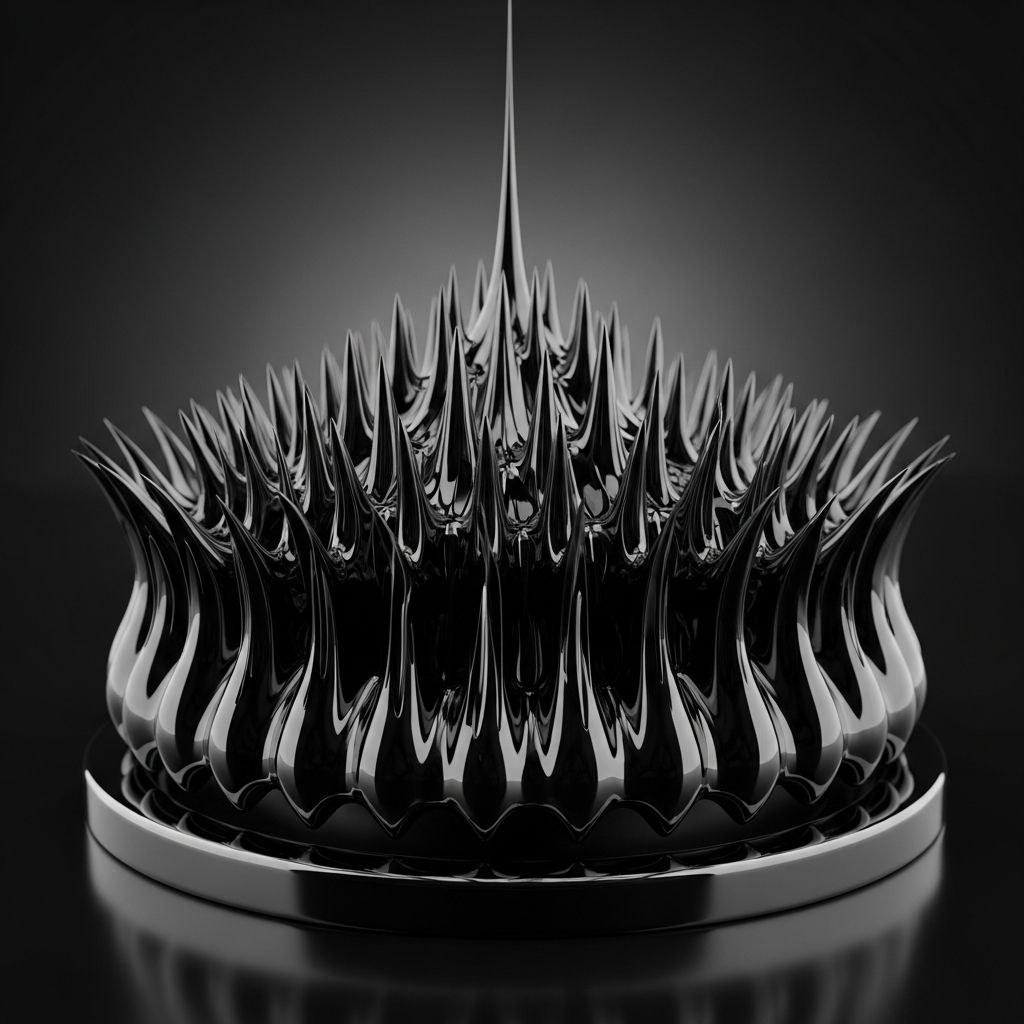
Understanding the Science of Magnetic Liquids
Ferrofluids represent a captivating intersection of chemistry and physics, creating substances that blur the line between liquid and solid states. These specialized liquids contain microscopic magnetic particles suspended throughout a liquid medium, allowing them to respond dramatically to external magnetic fields. When no magnetic force is applied, ferrofluids behave like ordinary liquids, flowing freely and conforming to their container’s shape. However, the moment a magnetic field is introduced, the individual particles align and aggregate, causing the fluid to transform into geometric structures that defy conventional liquid behavior.
The fundamental principle behind ferrofluids relies on the interaction between ferromagnetic particles and applied magnetic fields. Each particle within the fluid becomes magnetized when exposed to an external magnetic source, causing them to attract one another. What makes ferrofluids genuinely remarkable is their ability to maintain their fluid properties despite this magnetic attraction. This dual nature stems from careful formulation that includes not only the magnetic particles and liquid base but also a crucial third component: a surfactant or coating agent that prevents the particles from permanently clumping together.
Essential Components for Ferrofluid Creation
Creating functional ferrofluids requires understanding three fundamental components that work in concert. The first component is the magnetic powder, which provides the substance’s magnetic properties. Black iron oxide, commonly known as magnetite, serves as an excellent choice for home experimenters due to its availability and effectiveness. Alternatively, some methods utilize toner from laser printers or magnetic pigment extracted from cassette tapes, though these approaches require different preparation techniques.
The second component is the liquid base that suspends the magnetic particles. Different liquids produce dramatically different results. Water creates a low-viscosity ferrofluid that responds immediately to magnetic stimuli, offering quick visual feedback but limited structural stability. Vegetable oil produces a higher-viscosity substance that can hold more elaborate magnetic field formations. Motor oil, containing both a liquid base and natural surfactant properties, offers an intermediate option that simplifies the formulation process. The choice of liquid base directly influences how the finished ferrofluid behaves and what visual effects become possible.
The third essential component is a surfactant or stabilizing agent that prevents magnetic particles from permanently fusing together. Commercial ferrofluids often employ specialized surfactants designed specifically for this purpose. However, home experimenters have found that certain common substances can fulfill this role. Motor oil naturally contains surfactant properties, making it advantageous for DIY production. Some methods involve using oleic acid or similar compounds, though these require careful sourcing and handling.
Simple Water-Based Ferrofluid Method
The most straightforward approach to creating ferrofluid involves combining black iron oxide powder with distilled water. This method produces immediate results and requires minimal specialized equipment or dangerous chemicals. To begin, gather a small glass jar or container that can be sealed. Adding approximately half a scoop of black iron oxide powder to a six-ounce container provides adequate concentration without excessive saturation.
Fill the container to the brim with distilled water, allowing the water to fully saturate the powder particles. Initial mixing may reveal dry pockets of powder at the surface, but continued contact with water ensures complete integration over time. Seal the container and allow it to sit undisturbed for several hours, permitting the particles to fully disperse throughout the liquid medium. The resulting ferrofluid will respond visibly to magnetic fields, with particles moving toward magnet poles and forming visible spikes along field lines.
This water-based approach offers several advantages for initial experimentation. The ferrofluid responds rapidly to magnetic influence, providing immediate visual feedback that demonstrates the concept clearly. The materials cost virtually nothing, and water poses no health or safety hazards during preparation. However, this formulation has limitations. The water-based medium does not maintain particle suspension indefinitely; over time, some settling occurs. Additionally, the low viscosity means particles respond too quickly to magnetic fields, limiting the formation of stable, sculptural magnetic field displays.
Oil-Based Ferrofluid for Enhanced Stability
Creating ferrofluids with higher viscosity liquids produces dramatically superior results for visualization and artistic applications. Vegetable oil serves as an accessible starting point for experimenters seeking more sophisticated results. To create an oil-based ferrofluid, pour vegetable oil into a shallow dish until a thin film covers the bottom. This base layer will eventually hold iron filings that provide the magnetic component.
Iron filings, finer than traditional iron oxide powder, integrate more smoothly with oil to create a cohesive ferrofluid. Pour the iron filings into the oil and mix thoroughly until the combination achieves a thick, sludge-like consistency. At this stage, the ferrofluid may appear overly saturated with oil. Using a napkin or absorbent paper, carefully remove excess oil by placing the napkin on the ferrofluid’s surface and allowing it to absorb the surplus liquid. This process continues until the ferrofluid reaches an ideal balance between flowability and particle concentration.
Positioning a magnet beneath the dish during the oil-absorption process provides dual benefits. The magnetic field solidifies the ferrofluid, making it easier to absorb excess oil with napkins, while simultaneously demonstrating the substance’s response to magnetic influence. Once excess oil is removed, the ferrofluid maintains far superior suspension properties compared to water-based versions. The oil provides a protective medium that prevents oxidation and particle settling, allowing the ferrofluid to remain viable for extended periods. Moreover, the higher viscosity enables ferrofluids to form elaborate three-dimensional structures when exposed to magnetic fields, creating visually striking formations that resemble exotic alien landscapes or organic growths.
Toner-Based Ferrofluid Methods
An alternative approach to ferrofluid creation utilizes laser jet printer toner as the magnetic component. This method offers convenience to experimenters with access to office supplies, though it requires careful handling of toner particles. Toner consists of tiny plastic particles bonded to magnetite, creating an inherently magnetic powder optimized for printing applications.
To create toner-based ferrofluid, combine laser jet toner with vegetable oil in a container. The toner disperses readily in oil, creating a ferrofluid that responds strongly to magnetic fields. A rare earth magnet placed beneath the container demonstrates the ferrofluid’s magnetic responsiveness through the formation of characteristic spikes and geometric patterns. The advantage of toner-based ferrofluids lies in the consistency and quality of commercially produced magnetic particles, which offer more uniform size and magnetic properties than manually processed iron oxide.
However, toner-based methods introduce considerations regarding particle size and formulation. The polymer coating on toner particles influences how they interact with oil and magnetic fields. Some experimenters find toner-based ferrofluids slightly less responsive than equivalent formulations using pure magnetite, though the difference remains subtle for casual observation. Additionally, toner introduces trace chemical compounds that may influence long-term stability and behavior characteristics.
Advanced Motor Oil Formulation
Motor oil presents an elegant solution for ferrofluid creation because it naturally contains both a suitable liquid base and surfactant properties. These inherent characteristics simplify the formulation process and produce ferrofluids with excellent suspension stability and magnetic responsiveness. The surfactant compounds already present in motor oil function similarly to specialized additives used in commercial ferrofluid production, preventing magnetic particles from permanently aggregating.
Creating a motor oil-based ferrofluid begins with magnetite powder or iron oxide particles mixed directly into motor oil. The natural surfactant properties cause the magnetic particles to distribute evenly throughout the oil medium without requiring additional additives or extended mixing procedures. The resulting ferrofluid exhibits superior suspension characteristics, maintaining particle distribution for extended periods without visible settling. Motor oil’s viscosity produces ferrofluids with intermediate thickness, balancing between the too-reactive water-based formulations and the sluggish heavy oil preparations.
Motor oil ferrofluids demonstrate particularly striking magnetic field visualizations because the balanced viscosity allows particles to form intricate three-dimensional structures while moving with sufficient speed to create dynamic, flowing patterns. When a magnetic field source approaches a container of motor oil ferrofluid, the particles respond with visible spikes and waves that move smoothly rather than locking rigidly in place. This creates a mesmerizing effect that captures and holds observer attention, making motor oil ferrofluids particularly suitable for demonstrations and artistic applications.
Cassette Tape Extraction Method
Enthusiasts seeking a historical approach to ferrofluid creation can extract magnetic material directly from discarded cassette tapes. Cassettes contain magnetic oxide coatings that have been optimized for recording audio data, providing a ready source of ferromagnetic material for experimentation. This method requires patience and careful chemical handling but demonstrates the principles of material extraction and repurposing.
The extraction process begins by disassembling approximately ten cassette tapes, removing the magnetic tape itself. The tape is then submerged in acetone within a strong chemical-resistant bucket. This solvent dissolves the plastic binder that holds the magnetic particles to the tape substrate, releasing the ferromagnetic material into suspension. The process requires outdoor work or excellent ventilation, as acetone vapors present inhalation hazards. After approximately one hour of soaking, the tape material breaks down, and the magnetic particles settle to the bottom of the container.
Separating the extracted magnetic particles from the acetone solution requires careful technique. Many experimenters use earth magnets (rather than neodymium magnets) positioned outside the container to draw the magnetic particles toward one point, facilitating separation from the liquid. Once the particles are isolated and acetone has fully evaporated, they can be combined with vegetable oil or another appropriate liquid medium to create functioning ferrofluid. While this method requires more effort than simply purchasing iron oxide powder, it offers the satisfaction of creating ferrofluid from salvaged materials while demonstrating material science principles.
Practical Experimentation and Observation Techniques
Once ferrofluid has been successfully created, numerous fascinating experiments become possible. The most basic observation involves introducing magnetic fields of varying strengths at different distances from the ferrofluid container. Positioning a magnet at increasing distances demonstrates how magnetic field strength diminishes with distance and how ferrofluids respond differently to weak versus strong magnetic influences.
Geometric patterns emerge when magnets approach ferrofluids from specific angles. Vertical magnetic field lines produce characteristic spike formations as particles align along the field’s direction. Horizontal approaches create different wave-like patterns. Experimenting with multiple magnets arranged in various configurations reveals how ferrofluids respond to complex magnetic field geometries. These experiments provide tangible demonstrations of invisible magnetic field patterns that otherwise remain imperceptible to human observation.
The viscosity of the liquid medium directly influences experiment results. Water-based ferrofluids respond rapidly but settle quickly, limiting observation duration. Oil-based ferrofluids maintain responsiveness over extended periods, enabling sustained experimentation and observation. Researchers can measure magnetic field strength by observing how vigorously ferrofluids respond, with more intense spike formation indicating stronger magnetic influence.
Safety Considerations and Proper Disposal
While ferrofluid creation employs relatively benign materials compared to many chemistry experiments, several safety considerations warrant attention. Iron oxide powder, while non-toxic in small quantities, should not be inhaled, necessitating work in well-ventilated areas and occasional inhalation protection when handling large quantities. Acetone, used in cassette tape extraction methods, presents significant inhalation hazards and requires outdoor work or industrial ventilation systems.
Protective gloves prevent iron oxide staining of hands and protect against skin irritation from extended chemical exposure. Eye protection proves prudent when working with magnetic particles that could splash during vigorous mixing or magnetic field application. Children should only participate in ferrofluid creation under direct adult supervision, particularly when chemicals or powerful magnets are involved.
Proper disposal of ferrofluids represents an important environmental consideration. Ferrofluids should never be poured down drains, as the magnetic particles can accumulate in pipes and cause clogs or interfere with municipal water treatment systems. Instead, ferrofluids should be sealed in containers and disposed of through appropriate hazardous waste facilities or allowed to dry completely before standard trash disposal. This responsible approach prevents environmental contamination and protects municipal infrastructure.
Applications Beyond Home Experimentation
While ferrofluids serve primarily as educational demonstrations and artistic materials for home experimenters, the substance possesses significant industrial applications that motivate scientific research and commercial production. Ferrofluids function as cooling mediums in sophisticated electronic equipment, utilizing their thermal conductivity and magnetic field control properties to manage heat in applications ranging from specialized computing equipment to medical devices.
In mechanical engineering, ferrofluids enable precise damping and vibration control in advanced suspension systems and precision machinery. The magnetic field-responsive nature of ferrofluids allows engineers to adjust their properties in real-time, creating adaptive systems that respond to changing conditions. These applications demonstrate how the principles explored in home experiments translate into practical technologies that enhance modern life.
Frequently Asked Questions
Q: Why don’t ferrofluids remain in their solidified state after a magnet is removed?
A: Ferrofluids only become magnetized in the presence of an external magnetic field. Once the field is removed, the individual magnetic particles lack external force to maintain their alignment, and the substance reverts to its liquid state due to the molecular motion and gravity acting on the fluid components.
Q: Can ferrofluids be created using regular household iron filings instead of iron oxide powder?
A: Yes, ferrofluids can be created using iron filings, which work effectively in oil-based formulations. The primary difference involves particle size and uniformity; commercially produced iron oxide powder provides more consistent results, but repurposed iron filings still produce functional ferrofluids suitable for experimentation.
Q: What is the ideal storage method for homemade ferrofluids?
A: Store ferrofluids in sealed glass containers away from direct sunlight and temperature extremes. Oil-based ferrofluids remain stable for extended periods when properly sealed, while water-based versions may develop settling or bacterial growth over time. Cool, dark storage conditions maximize ferrofluid longevity.
Q: Are strong magnets required to observe ferrofluid response?
A: Rare earth magnets or strong neodymium magnets produce the most dramatic visible effects. However, weaker magnets still cause ferrofluids to respond; the effect magnitude simply scales with magnetic field strength. Experimenting with various magnet types reveals how strength influences ferrofluid behavior.
Q: Can ferrofluids be safely handled with bare hands?
A: Oil-based ferrofluids are safe to handle briefly without gloves, though the magnetic particles may stain skin temporarily. Water-based ferrofluids pose no hazard to bare hands. However, wearing protective gloves remains advisable during creation and extended handling to prevent staining and ensure cleanliness.
References
- Ferromagnetic Fluid: 7 Steps — Instructables. Accessed 2026. https://www.instructables.com/ferromagnetic-fluid/
- Making Ferrofluids — National MagLab, The National High Magnetic Field Laboratory. Accessed 2026. https://nationalmaglab.org/magnet-academy/try-this-at-home/making-ferrofluids/
- How To Make Ferrofluid At Home — Make: Magazine. Accessed 2026. https://makezine.com/article/home/fun-games/diy-ferrofluid/
- DIY Magnetic Fluid (Ferrofluid) — TheKingofRandom (TKOR). YouTube. Accessed 2026. https://www.youtube.com/watch?v=o1qk_2fua9k
- How to Make Magnetic Fluid (Ferro Fluid) — Household Hacker. YouTube. Accessed 2026. https://www.youtube.com/watch?v=vsQh1AT6qUE

- Integrated M.A. in Applied Linguistics, University of Hyderabad
- 5+ years in editorial, instructional, SEO, and research-based writing
Sneha is a relationships and lifestyle writer with a strong foundation in applied linguistics and certified training in relationship coaching. She brings over five years of writing experience to theskillvault, crafting thoughtful, research-driven content that empowers readers to build healthier relationships, boost emotional well-being, and embrace holistic living. Her writing and insights reflect the belief that beauty, happiness, and wellness…