
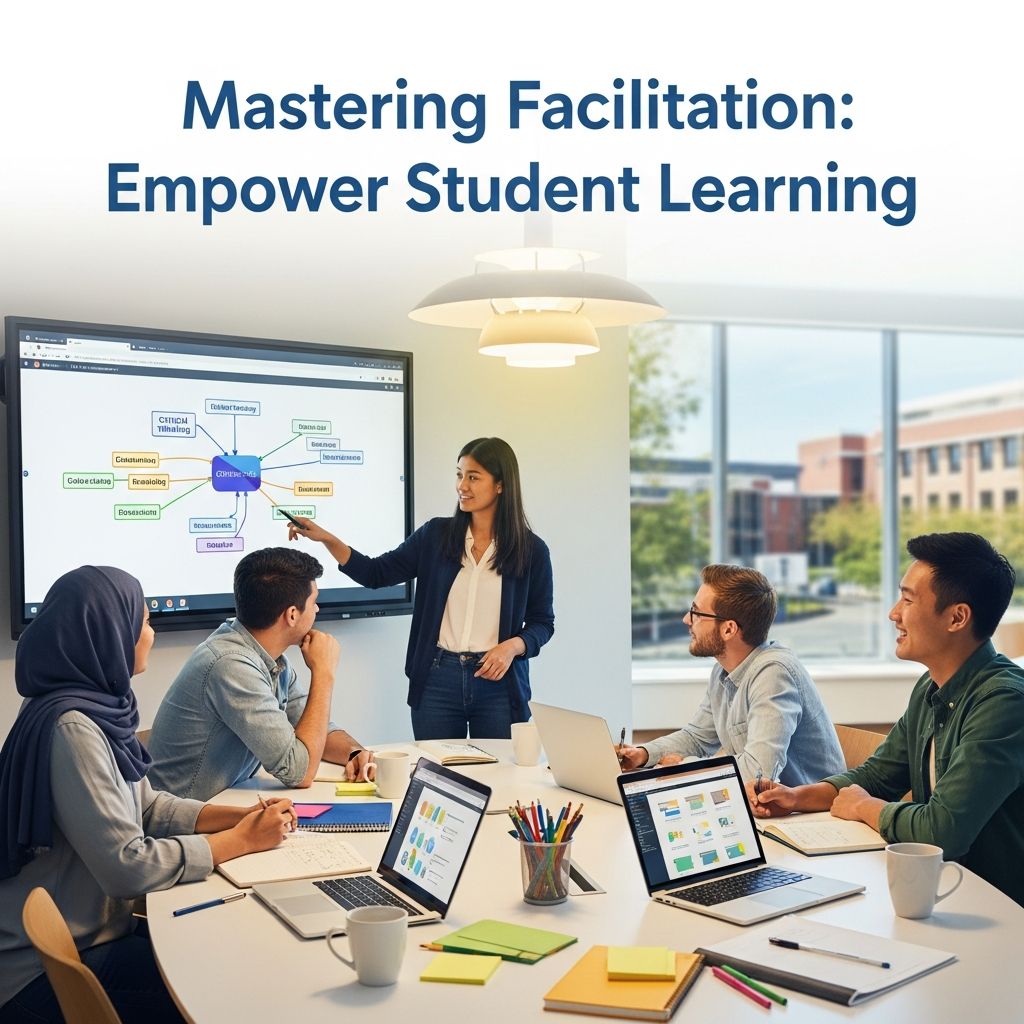
Effective education today demands a shift from traditional lecturing to dynamic facilitation, where educators guide students toward self-directed discovery and mastery. This approach cultivates critical thinking, adaptability, and lifelong learning skills essential for the 21st century.
Understanding the Shift to Facilitated Learning
Facilitation transforms the classroom into an interactive space where students actively construct knowledge rather than passively receive it. Unlike directive teaching, facilitation emphasizes process over content delivery, allowing learners to navigate challenges with support. Research from Cornell University highlights that active learning methods—such as discussions and problem-solving—significantly improve comprehension and retention compared to lectures alone.
Educators act as guides, observing student interactions and intervening strategically to enhance engagement. This mindset fosters student ownership, boosting self-efficacy and motivation. Kennesaw State University outlines facilitation as a structured process aligning instructional design, learner culture, and assessment for optimal outcomes.
Core Principles of Effective Facilitation
Successful facilitation rests on foundational principles that create equitable, productive learning environments. These guidelines ensure every student contributes meaningfully.
- Partner with Learners: Clearly communicate learning goals at the start of sessions, inviting student input to build shared commitment.
- Foster Safety: Establish norms for respectful dialogue, encouraging risk-taking without fear of judgment.
- Prioritize Process: Focus interventions on group dynamics rather than dictating answers, promoting independent problem-solving.
- Document Progress: Encourage learners to record insights, reinforcing retention and reflection.
- Provide Closure: Summarize key takeaways at activity ends to solidify understanding.
Implementing these principles requires planning. For instance, Ohio State University recommends setting expectations early through icebreakers to build community and comfort in participation.
Practical Strategies to Drive Engagement
Facilitators employ diverse strategies to accommodate varied learning preferences and maintain momentum. Variety prevents monotony and allows students to leverage their strengths.
| Strategy | Description | Benefits |
|---|---|---|
| Offer Choices | Provide project options like essays, videos, or presentations | Respects individual styles, increases motivation |
| Incorporate Variation | Alternate lectures with hands-on tasks and discussions | Engages multiple senses, highlights diverse talents |
| Promote Conversations | Use think-pair-share or group debates | Develops communication and collaboration skills |
| Curate Resources | Supply vetted materials and teach evaluation skills | Builds information literacy in digital age |
University of Waterloo suggests starting with small-group activities before full-class shares to build confidence, ensuring broader participation.
Step-by-Step Facilitation Methodology
A systematic approach ensures smooth execution. Adapted from established models, this process covers preparation to reflection.
- Prepare the Setup: Assess readiness with pre-activity checks or primers.
- Launch the Activity: Clearly state objectives and roles.
- Monitor Engagement: Circulate, note dynamics, and provide subtle prompts.
- Intervene Judiciously: Address off-task behavior or inequities without halting flow.
- Facilitate Debrief: Guide reflections on what worked and learned.
- Close Effectively: Link back to broader goals, preview next steps.
This methodology, rooted in Understanding by Design principles, minimizes disruptions and maximizes inclusivity.
Leveraging Technology and Multimedia
Digital tools amplify facilitation by extending access and interactivity. Record sessions for review, host virtual field trips, or use polling for real-time feedback. Platforms enable multimedia projects, mirroring students’ everyday tech use and bridging home-school gaps.
Collaborate across subjects via shared online resources, enriching perspectives. Guest speakers via video calls introduce real-world applications without logistical hurdles.
Building Inclusive Discussion Environments
Discussions are facilitation cornerstones, deepening analysis and empathy. Create psychological safety by modeling active listening and validating contributions.
- Employ Think-Pair-Share for low-stakes entry.
- Use jigsaws to distribute expertise and expose viewpoints.
- Prompt open-ended questions sparking multiple responses.
- Encourage peer compliments and follow-ups to build support.
DePaul University emphasizes planning inclusive strategies to value diverse voices, enhancing overall learning.
Active Learning Techniques for Every Classroom
Integrate these high-impact practices routinely. Pause lectures for pair discussions, assign group problem-solving, or have students teach peers.
Accountability measures—like submitting notes or polling responses—reinforce value. Cornell’s research confirms active strategies yield better performance across demographics.
Overcoming Common Facilitation Challenges
Dominance by vocal students or shy silence can derail sessions. Counter with timed turns, anonymous submissions, or role assignments. If off-topic drifts occur, gently refocus by linking back to goals.
For large classes, break into pods. Virtual settings benefit from breakout rooms and chat prompts. Consistent practice refines these skills.
Frequently Asked Questions (FAQs)
What distinguishes facilitation from traditional teaching?
Facilitation guides students to discover knowledge independently, focusing on process and engagement rather than content delivery.
How do I encourage quiet students to participate?
Use small groups, anonymous polls, or pair-shares to lower barriers before full-class involvement.
Can facilitation work in large lecture halls?
Yes, via quick think-pair-shares, polling apps, or rotating speakers to maintain interactivity.
What if a group gets stuck during an activity?
Observe first, then probe with guiding questions rather than providing answers, preserving ownership.
How do I measure facilitation success?
Track engagement, peer teaching quality, and reflections linking to learning outcomes.
Long-Term Impact on Student Success
Facilitated learning equips students with transferable skills: critical analysis, teamwork, resilience. Studies show it narrows achievement gaps and prepares for real-world complexities. Educators report higher satisfaction from witnessing genuine growth.
To sustain this, reflect post-session: What engaged most? Adjust iteratively. Professional development in facilitation yields compounding benefits.
Embracing facilitation redefines education as a partnership, empowering learners for an uncertain future.
References
- 5 Strategies and 10 Tools to Facilitate Learning — Fly Plugins. 2023-05-15. https://flyplugins.com/5-strategies-and-10-tools-to-facilitate-learning/
- Facilitation — Kennesaw State University CETL. 2024-01-10. https://campus.kennesaw.edu/faculty-staff/cetl/teaching-resources/facilitation.php
- Facilitating Discussion — Ohio State University Teaching and Learning Resource Center. 2023-11-20. https://teaching.resources.osu.edu/teaching-topics/facilitating-discussion
- Seven Learning Facilitation Principles — University of Wyoming. 2022-09-01. https://www.uwyo.edu/arabic/_files/sppais-arabic-images/k-12/seven-learning-facilitation-principles.pdf
- Active Learning — Cornell University Center for Teaching Innovation. 2024-03-05. https://teaching.cornell.edu/teaching-resources/active-collaborative-learning/active-learning
- Facilitating Effective Discussions — University of Waterloo Centre for Teaching Excellence. 2023-08-12. https://uwaterloo.ca/centre-for-teaching-excellence/catalogs/tip-sheets/facilitating-effective-discussions

Medha Deb is an editor with a master's degree in Applied Linguistics from the University of Hyderabad. She believes that her qualification has helped her develop a deep understanding of language and its application in various contexts. Medha specializes in the areas of beauty, health, sports, and wellness and is committed to ensuring that the content on the website is…