
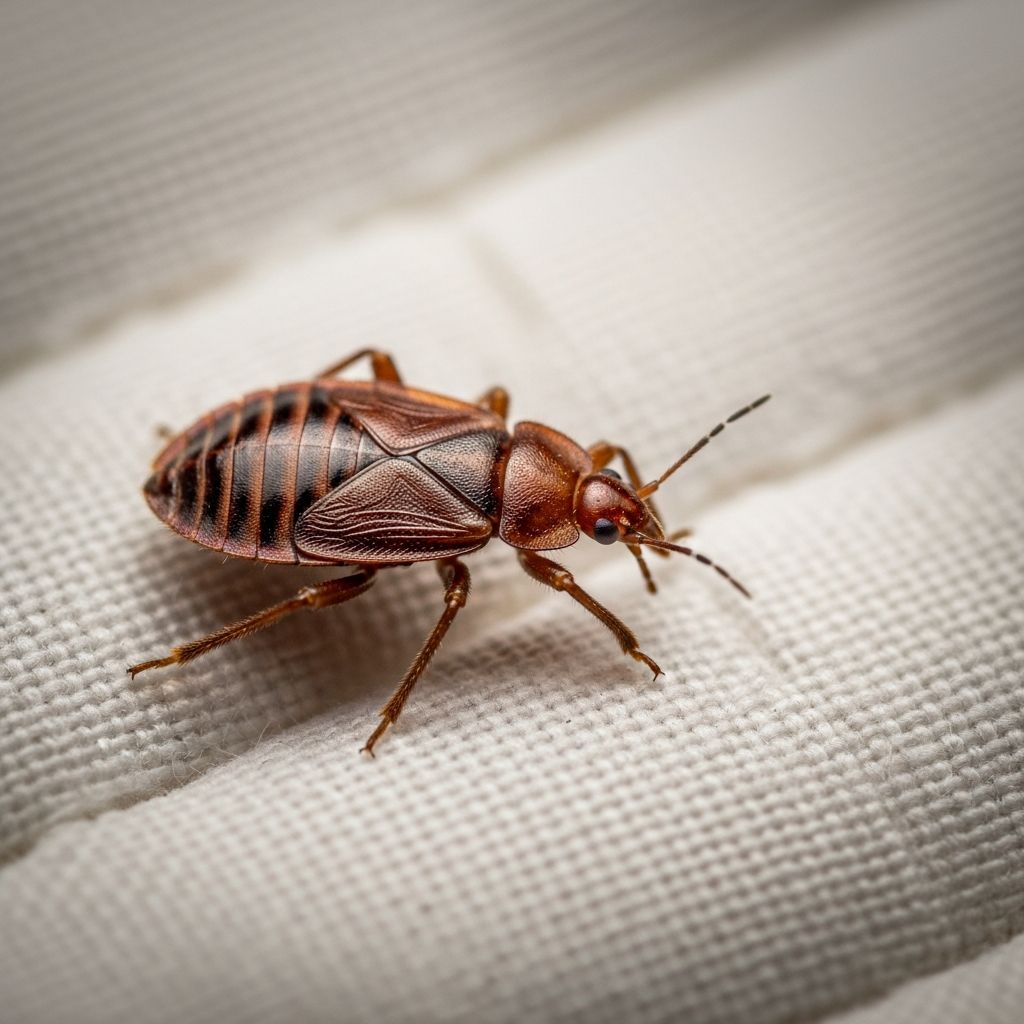
The Paradox of Pest Elimination: From Near-Extinction to Modern Epidemic
The story of bed bugs represents one of the most perplexing failures in modern pest management. During the mid-20th century, the widespread use of powerful insecticides brought these blood-feeding parasites to the brink of complete eradication. Yet today, bed bug infestations have become so prevalent that they dominate conversations in hotels, apartments, and homes across the globe. What transformed a nearly vanquished pest into a widespread public health concern? The answer lies in a complex interplay of scientific, social, economic, and environmental factors that converged to create ideal conditions for their resurgence.
The Chemical Arsenal That Nearly Won: DDT and Its Legacy
The turning point in the historical battle against bed bugs came with the development and deployment of dichloro-diphenyl-trichloroethane, commonly known as DDT. Created in 1939, this synthetic pesticide represented a revolutionary breakthrough in pest control technology. Unlike anything bed bugs had encountered in their evolutionary history, DDT proved devastatingly effective at eliminating these insects. The chemical worked by leaving persistent residues on treated surfaces—residues that could remain active for extended periods, sometimes months or even years after application. This residual effect meant that bed bugs encountered fatal doses simply by crawling across previously treated areas, creating an effective barrier against reinfestation.
The impact was remarkable. Hotels, homes, and public buildings treated with DDT became virtually bed-bug-free zones. The pest that had plagued humanity for millennia suddenly seemed containable, even defeatable. For decades, Americans and people worldwide experienced a world largely free from bed bug infestations. The chemical became so synonymous with pest control that its use became routine practice across the United States and many other nations.
Environmental Awakening and the Shift Away from Synthetic Solutions
The sustainability of the DDT-based victory over bed bugs proved illusory. As environmental science advanced in the 1960s and 1970s, researchers began documenting the broader ecological consequences of widespread DDT use. The chemical accumulated in food chains, threatened bird populations, and posed health risks to humans. This growing body of evidence prompted regulatory action. By 1972, the Environmental Protection Agency implemented a ban on DDT use in the United States, a decision that reverberated globally as other nations adopted similar restrictions.
While the DDT ban represented a crucial environmental protection measure, it inadvertently eliminated the most effective weapon humanity possessed against bed bugs. The pest control industry faced a significant challenge: how to manage bed bug populations without relying on the powerful residual pesticides that had proven so effective. The transition to newer, environmentally friendlier pest control methods represented a genuine improvement for human health and ecosystem integrity, but these alternatives proved less effective against bed bugs. The replacement chemicals, while safer for humans and wildlife, lacked the potency and persistence of their predecessors, fundamentally altering the equation in favor of the insects.
The Evolution of Resistance: When Pests Fight Back
Beyond the elimination of DDT, bed bugs possessed an advantage that would prove crucial to their comeback: the biological capacity to develop resistance to chemical insecticides. Scientific evidence indicates that bed bug populations had already begun developing resistance to DDT as early as 1948—decades before the chemical’s prohibition. This evolutionary adaptation occurred as individual insects with genetic variations that allowed survival in the presence of the pesticide reproduced preferentially, gradually shifting the population toward greater resistance.
Research from the University of Massachusetts Amherst and Seoul National University revealed the dramatic extent of this resistance development. Urban bed bug populations, particularly in New York City, demonstrated resistance levels up to 264 times greater than susceptible strains found in other regions. This pyrethroid resistance—referring to a class of synthetic insecticides chemically similar to natural compounds found in chrysanthemum flowers—has become widespread across bed bug populations throughout the United States and internationally. The mechanisms driving this resistance include altered nervous system receptors that fail to respond to the toxins, as well as enhanced metabolic capabilities that allow insects to detoxify chemicals that would kill susceptible populations.
Global Connectivity as the Disease Vector
The resurgence of bed bugs coincided with transformative shifts in human travel patterns. Beginning in the 1980s and accelerating through the 1990s, air travel became increasingly affordable for middle-class travelers. International tourism expanded dramatically as airlines reduced ticket prices and more people could afford to visit distant destinations. This expansion of global travel created unprecedented opportunities for bed bugs to traverse international borders.
Bed bugs are opportunistic hitchhikers. They travel in luggage, suitcases, backpacks, and clothing of unsuspecting passengers. Hotels, particularly in major metropolitan areas and popular tourist destinations, provide ideal environments for bed bug reproduction and survival. A traveler might encounter bed bugs in a hotel room in Paris, London, or New York, then inadvertently transport them home in their belongings. Once established in a new location, bed bugs spread through connected accommodations—shared walls in apartment buildings, communal areas in hostels, and second-hand furniture moving between homes.
Recent research has identified bed bugs establishing populations in regions previously thought too cold for their survival. Tropical bed bug species, distinct from the common bed bug, have recently appeared across Scandinavia, including Norway, Sweden, and Finland. This geographic expansion reflects both global travel patterns and the warming effects of climate change, which has made previously inhospitable regions suitable for tropical species. The convergence of human mobility, global trade, and climate factors has essentially provided bed bugs with “a passport to the world.”
Economic Factors and the Affordability of Infestation
Economic pressures have exacerbated the bed bug problem in ways that highlight the intersection of public health and socioeconomic status. The market for second-hand and discounted furniture has expanded significantly in recent decades. Thrift stores, online marketplaces, and charity shops offer affordable furniture options to budget-conscious consumers. While economical, this furniture often carries hidden passengers—bed bugs that have infested used items before resale. Without proper inspection or treatment, contaminated furniture becomes a transmission vector that introduces infestations into new homes.
Simultaneously, financial pressures have reduced the resources available for professional pest control services, particularly among lower-income households. When economic downturns occur, pest control becomes a discretionary expense that many families cannot afford to maintain. Shared accommodations, including student housing, hostels, and rental properties, frequently experience bed bug problems due to transient populations and the challenges of coordinating pest control across multiple units. These economic realities create “hotspots” of persistent infestation that serve as reservoirs from which bed bugs continuously re-infest treated areas.
The Knowledge Gap: Recognition and Early Response Challenges
One of the most significant obstacles to managing the bed bug resurgence has been the widespread lack of public awareness and recognition. After decades of near-complete absence, an entire generation grew up without encountering bed bugs. When infestations began recurring in the early 2000s, many people did not recognize the signs of infestation. The itching, welts, and small blood stains on sheets could be attributed to other causes—allergies, mosquito bites, or other skin conditions.
This recognition gap meant that infestations often persisted undetected for weeks or even months before accurate identification occurred. During this period, bed bug populations expanded exponentially, making eventual eradication far more difficult and costly. By the time people recognized their situation, a manageable infestation had often evolved into a severe problem requiring professional intervention. Public health campaigns, particularly in major urban centers, have gradually improved awareness, but educational gaps remain substantial, especially in communities where language barriers or limited access to health information persist.
Biological Adaptability: The Evolutionary Edge
Beyond chemical resistance, bed bugs possess biological characteristics that facilitate population recovery. Their reproductive capacity is remarkable—a single female can initiate an entire infestation. They require minimal food (blood meals), allowing them to survive extended periods of starvation if necessary. Their flattened body structure permits them to hide in extremely tight spaces where detection and treatment become challenging.
Research has identified that bed bugs are attracted to certain environmental cues, particularly the scent of humans. Studies from the University of Sheffield demonstrated that bed bugs show increased feeding activity when exposed to dirty laundry compared to clean clothes, suggesting that human scent serves as a powerful attractant. This biological preference may explain their tendency to travel in the laundry and personal items of international travelers, effectively using human behavior patterns to facilitate global dispersal.
The Challenges of Modern Treatment Approaches
Contemporary pest control methods for bed bugs include heat treatment, vacuuming, diatomaceous earth applications, and biological approaches involving fungal spores. While these methods show promise, each presents limitations. Heat treatment requires raising temperatures to lethal levels throughout an entire structure—a process that is energy-intensive and sometimes impractical for multi-unit buildings. Fungal spore treatments, such as those using Beauveria bassiana, work by infecting bed bugs that cross treated surfaces, but do not prevent infestations from items brought into treated spaces.
The fundamental challenge is that modern pest control emphasizes safety and environmental protection—legitimate priorities that necessarily constrain the potency of available treatments. This creates an ongoing struggle where the most effective residual pesticides remain unavailable due to health and environmental concerns, while safer alternatives provide less reliable control against resistant populations.
Interconnected Factors Creating a Perfect Storm
The bed bug resurgence represents not a single cause but rather the convergence of multiple factors operating simultaneously. The loss of DDT removed the most effective chemical tool. Evolutionary resistance rendered replacement pesticides progressively less effective. Globalization and affordable travel created unprecedented pathways for international dispersal. Economic pressures reduced access to professional pest control services. Public awareness gaps delayed recognition and response. These factors interacted synergistically, each amplifying the effects of the others.
In major cities, infestations have become particularly problematic. Statistics from France documented that 11 percent of households experienced bed bug infestations between 2017 and 2022, illustrating the scale of the modern problem. Urban environments, with their density of hotels, apartments, and transient populations, create ideal conditions for bed bug establishment and spread.
Frequently Asked Questions About Bed Bug Resurgence
Q: Why were bed bugs nearly eradicated in the mid-20th century?
A: DDT, a powerful synthetic pesticide developed in 1939, proved devastatingly effective against bed bugs. The chemical left persistent residues on treated surfaces that remained active for months or years, killing bed bugs on contact and preventing reinfestation. Widespread DDT application across the United States made bed bug infestations extremely rare by mid-century.
Q: How did bed bugs develop resistance to pesticides?
A: Bed bug populations naturally contain individuals with genetic variations that allow survival in the presence of pesticides. These resistant individuals reproduce preferentially, gradually shifting the population toward greater resistance. Evidence shows bed bugs began developing DDT resistance as early as 1948, decades before the chemical’s prohibition. Modern populations exhibit resistance levels up to 264 times greater than susceptible strains.
Q: What role did global travel play in the bed bug comeback?
A: The affordability of air travel, particularly from the 1980s onward, dramatically increased international tourism. Bed bugs hitchhike in travelers’ luggage and clothing, exploiting hotels as breeding grounds before being transported to new destinations. This global connectivity transformed bed bugs from isolated local problems into an international epidemic.
Q: How do economic factors contribute to bed bug problems?
A: The market for second-hand furniture provides affordable options but can introduce infestations. Financial pressures reduce access to professional pest control services, particularly among lower-income households. Shared accommodations and rental properties frequently experience persistent infestations due to transient populations and coordination challenges.
Q: Why was recognizing bed bug infestations difficult in the early 2000s?
A: After decades of near-complete absence, an entire generation had never encountered bed bugs. People did not recognize the signs of infestation—itching, welts, and blood stains—attributing them instead to allergies or other causes. This delayed recognition allowed infestations to expand before accurate identification occurred.
Q: Can bed bugs be completely eliminated today?
A: Complete elimination remains extremely challenging. Resistant populations, persistent hotspots in lower-income areas, and limitations of modern pest control methods create ongoing reinfection risks. Public health experts emphasize that addressing bed bugs requires coordinated community efforts rather than individual interventions alone.
References
- How Bed Bugs Re-emerged In The 21st Century — ThermoPest. 2024-09-23. https://pest.co.uk/2024/09/23/how-bed-bugs-re-emerged-in-the-21st-century/
- Bed Bugs, Nearly Eradicated, Make a Comeback — ABC News/HealthDay News. 2007-01-14. https://abcnews.com/Health/Healthday/story?id=6649760
- How the 90’s Sparked a Major Bed Bug Resurgence in America — Bed Bug BBQ. 2024. https://bedbugbbq.com/how-the-90s-sparked-a-major-bed-bug-resurgence-in-america/
- Why we’re losing the war against inbred super bed bugs — BBC Science Focus. 2023. https://www.sciencefocus.com/the-human-body/bed-bug-invasion
- Bed bugs make a comeback in the U.S. — University of Georgia Cooperative Extension. 2024. https://fieldreport.caes.uga.edu/bed-bugs-make-a-comeback-in-the-u-s/

- Integrated M.A. in Applied Linguistics, University of Hyderabad
- 5+ years in editorial, instructional, SEO, and research-based writing
Sneha is a relationships and lifestyle writer with a strong foundation in applied linguistics and certified training in relationship coaching. She brings over five years of writing experience to theskillvault, crafting thoughtful, research-driven content that empowers readers to build healthier relationships, boost emotional well-being, and embrace holistic living. Her writing and insights reflect the belief that beauty, happiness, and wellness…