
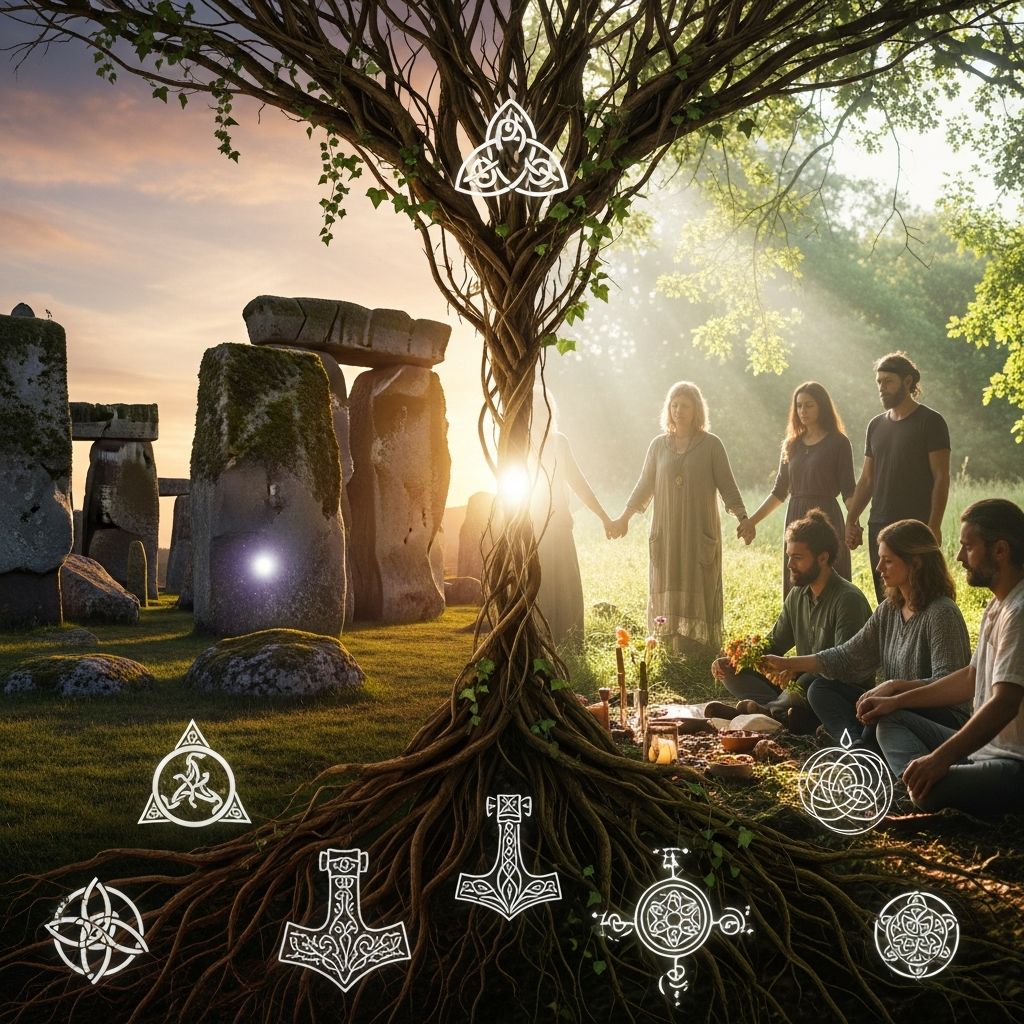
Paganism encompasses a wide array of spiritual traditions rooted in polytheism, nature veneration, and pre-Christian practices, often defined in opposition to Abrahamic religions like Christianity, Judaism, and Islam. Historically viewed pejoratively by Christians as worship of false gods, it has evolved into a vibrant, diverse modern movement emphasizing personal experience and ecological harmony.
The Etymology and Early Meanings of ‘Pagan’
The term ‘pagan’ derives from the Latin paganus, originally meaning ‘rural dweller’ or ‘villager,’ reflecting the slower Christianization of countryside areas in the late Roman Empire compared to urban centers. By the 4th century, Christians adopted it as an exonym for non-adherents to the ‘one true God,’ lumping together polytheists, henotheists, and others outside Abrahamic faiths.
In classical antiquity, these ‘pagans’ practiced diverse rituals without centralized doctrines, focusing on family, local deities, and civic cults rather than universal creeds. Jews and Muslims later used similar terms for outsiders, broadening its pejorative use across monotheistic traditions. Today, the word has been reclaimed by practitioners to denote earth-centered spirituality.
Core Beliefs and Philosophical Foundations
Paganism is not monolithic but shares foundational principles: reverence for nature as sacred, recognition of multiple deities, and emphasis on personal responsibility over dogma. Practitioners view the physical world as inherently good, with divinity manifesting in all aspects of existence—from trees and rivers to human and animal life.
- Nature Veneration: Earth is often personified as a nurturing mother, with seasonal cycles guiding rituals.
- Polytheism or Pantheism: Deities represent natural forces; some see them as distinct beings, others as facets of a singular Great Goddess and God.
- Immanence: The divine is within and around us, not transcendent; every being carries a spark of the sacred.
- No Central Authority: No messiahs or gurus; individuals craft their paths through direct experience.
These tenets contrast sharply with Abrahamic emphasis on a singular, transcendent deity and scriptural authority.
Historical Contexts: From Ancient Tribes to Roman Empire
Pagan traditions predate Abrahamic faiths, forming humanity’s ancestral religions across Europe, Asia, and beyond—from Greco-Roman pantheons to Celtic, Germanic, and Slavic tribes. In the Roman Empire, early Christianity distinguished itself by labeling polytheistic practices ‘pagan’ to assert exclusivity.
Ancient pagans often practiced henotheism, honoring a supreme deity alongside lesser gods or spirits. Lacking formal theology, their spirituality integrated philosophy, ritual, and daily life without proselytizing. The term’s invention in the 2nd-3rd centuries CE arose from Christian-Jewish interactions, framing all others as outsiders.
| Era | Key Pagan Traditions | Distinguishing Features |
|---|---|---|
| Ancient (Pre-4th CE) | G Greco-Roman, Celtic, Egyptian | Polytheistic civic cults, nature spirits, seasonal festivals |
| Late Antiquity | Persian, Northern ‘barbarian’ | Resistance to Christianization in rural areas |
| Modern Revival | Wicca, Druidry, Asatru | Ecological focus, personal magick, feminist elements |
Modern Paganism: Revival and Diversity
Since the 20th century, Paganism has resurged in the West, drawing from ancestral roots amid environmental concerns and spiritual seeking. Not bound by dogma, modern Pagans are creative and individualistic, blending ancient lore with contemporary insights.
Key paths include:
- Wicca: Duotheistic worship of Goddess and God, with covens and solitary practice.
- Druidry: Nature mysticism inspired by Celtic traditions, emphasizing poetry and ecology.
- Asatru/Heathenry: Reconstruction of Norse/Germanic gods like Odin and Thor.
- Naturalistic Paganism: Secular approach without supernatural elements, rooted in science and empiricism.
This revival attracts those alienated by technological disconnection, offering respect for femininity, plurality, and life’s interconnectedness.
Rituals, Magick, and Daily Practices
Pagan worship aligns with solar and lunar cycles, featuring sabbats (eight annual festivals) and esbats (full moon rites). Magick—spelled with a ‘k’ to denote spiritual intent—is central, akin to prayer but incorporating tools like herbs, crystals, and symbols to effect change.
Practices foster harmony:
- Ritual Circles: Sacred spaces cast for protection and focus.
- Divination: Tools like tarot or runes for guidance.
- Earth Celebrations: Honoring solstices, equinoxes, and harvests.
- Personal Altars: Dedicated to patron deities or ancestors.
Ethics emphasize ‘harm none’ and personal sovereignty, without sin doctrines.
Paganism vs. Abrahamic Religions: Key Distinctions
From Christian perspectives, Paganism represents idolatry—worshipping creation over Creator—as critiqued in Romans 1:22–27. Pagans, conversely, celebrate the world’s inherent divinity.
| Aspect | Paganism | Abrahamic Faiths |
|---|---|---|
| Deity View | Multiple/immanent gods | One transcendent God |
| Authority | Personal experience | Scripture and clergy |
| Worldview | Nature as sacred | Creation distinct from divine |
| Salvation | Self-responsibility | Faith in savior |
Challenges and Misconceptions
Pejorative stereotypes paint Pagans as hedonistic or satanic, ignoring their ethical frameworks. Legal recognition varies; some countries classify Paganism as a religion, others marginalize it. Environmental activism often aligns with Pagan values, bridging spirituality and ecology.
Frequently Asked Questions (FAQs)
Is Paganism a recognized religion?
Yes, modern Paganism is legally recognized in many nations, including the UK and US, with organizations like the Pagan Federation advocating for rights.
Do Pagans believe in an afterlife?
Beliefs vary: reincarnation, ancestral realms, or summerlands are common, emphasizing cycles over eternal judgment.
Can atheists be Pagan?
Yes, Naturalistic Pagans embrace rituals and nature reverence without supernatural beliefs.
How does Paganism view gender and sexuality?
Highly inclusive, honoring diverse expressions through goddess worship and fluidity in divine archetypes.
What’s the difference between Paganism and Wicca?
Wicca is a specific Pagan tradition; Paganism is the broader umbrella including many paths.
Conclusion: Paganism’s Enduring Appeal
In 2026, Paganism thrives as a responsive spirituality addressing modern crises like climate change and spiritual disconnection. Its emphasis on diversity, nature, and empowerment resonates globally, proving the ancestral ways’ timeless relevance.
References
- What is a pagan? What is paganism? — GotQuestions.org. Accessed 2026. https://www.gotquestions.org/pagan-paganism.html
- Paganism — Wikipedia. Accessed 2026. https://en.wikipedia.org/wiki/Paganism
- What is Paganism? — Pagan Federation International. Accessed 2026. https://www.paganfederation.org/what-is-paganism/
- Paganism | Definition, Beliefs, Origin, & Christianity — Encyclopædia Britannica. Accessed 2026. https://www.britannica.com/topic/paganism
- Faith and Spirituality: Pagan & Variations — Worcester Polytechnic Institute LibGuides (.edu). Accessed 2026. https://libguides.wpi.edu/faithandspirtuality/pagan
- What Do Pagans Do? — The Pluralism Project (Harvard University). Accessed 2026. https://pluralism.org/what-do-pagans-do

- Integrated M.A. in Applied Linguistics, University of Hyderabad
- 5+ years in editorial, instructional, SEO, and research-based writing
Sneha is a relationships and lifestyle writer with a strong foundation in applied linguistics and certified training in relationship coaching. She brings over five years of writing experience to theskillvault, crafting thoughtful, research-driven content that empowers readers to build healthier relationships, boost emotional well-being, and embrace holistic living. Her writing and insights reflect the belief that beauty, happiness, and wellness…