
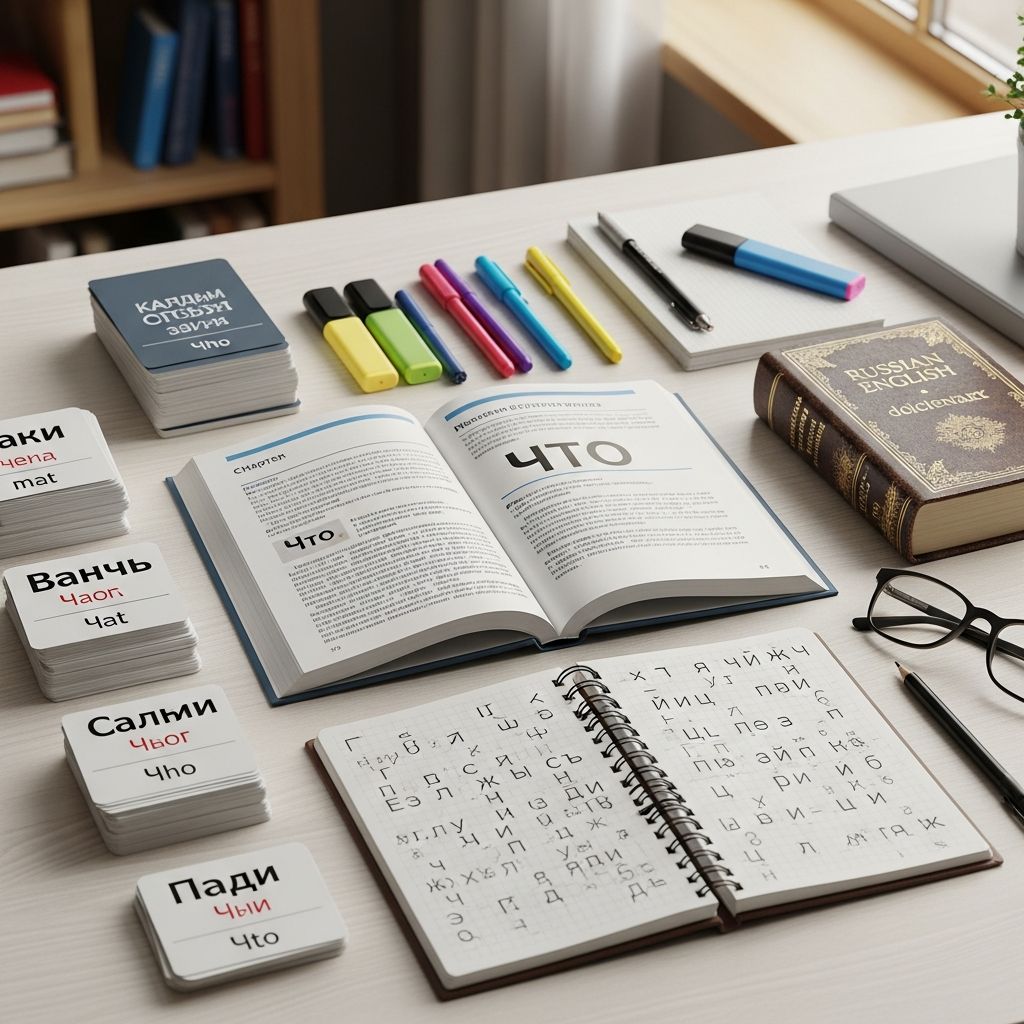
The interrogative word “what” serves as a cornerstone in Russian communication, enabling learners to ask questions, express surprise, and connect ideas. Unlike English, Russian grammar omits articles and conjugates verbs differently, making mastery of что (shto)—the primary word for “what”—essential for natural speech. This guide explores its forms, uses, and contexts, drawing from reliable linguistic resources to help beginners build confidence.
Understanding the Core Word: Что (Shto)
In Russian, что (shto) translates directly to “what” and is used in both formal and informal settings. Pronounced with a soft ‘sh’ sound like in “shoe,” followed by ‘t’ and a short ‘o,’ it forms the basis of countless questions. Russian lacks definite and indefinite articles, so sentences are concise: no “the” or “a” equivalents clutter the structure.
For instance, to inquire about an object’s identity, combine что with это (eto), meaning “this is.” The phrase Что это? (Shto eto?) means “What is it?” or “What is this?” Audio examples confirm native speakers stress the first syllable lightly for clarity. This construction omits the verb “to be,” a hallmark of Russian nominal sentences.
Forming Basic Questions with ‘What’
Questions in Russian often start with the interrogative word, followed by the subject. Here are foundational examples:
- Что это? (Shto eto?) – What is it?/What is this?
- Что ты делаешь? (Shto ty delayesh?) – What are you doing?
- Что это такое? (Shto eto takoye?) – What is this thing?
Practice these by pointing to objects: “Что это?” while holding a book elicits “Это книга (Eto kniga) – It’s a book.” Videos demonstrate intonation rises at the end, distinguishing questions from statements.
Variations and Related Interrogatives
Russian offers nuances for different contexts. While что handles neutral “what,” какой (kakoy) means “what kind of?” and agrees in gender and number:
| English | Russian | Pronunciation | Example |
|---|---|---|---|
| What is this? | Что это? | Shto eto? | Что это? (Pointing to a dog) |
| What kind (masc.)? | Какой? | Kakoy? | Какой дом? (What house?) |
| What kind (fem.)? | Какая? | Kakaya? | Какая книга? (What book?) |
| What (plural)? | Что это? / Какие? | Shto eto? / Kakiye? | Какие горы? (What mountains?) |
Это works for both singular and plural in “this/these is/are” constructions, simplifying plural forms.
Exclamatory Uses: Expressing Surprise
Beyond questions, что за (shto za) expresses astonishment: “What a…!” Examples include Что за собака! (Shto za sobaka!) – “What a dog!” Intonation here is exclamatory, rising then falling dramatically.
- Что за дом! (Shto za dom!) – What a house!
- Что за горы! (Shto za gory!) – What mountains!
This pattern highlights Russian’s expressive brevity, packing emotion without extra words.
Relative Clauses: ‘What’ as a Connector
In complex sentences, что acts as “that which” or “what.” For example, Я знаю, что это. (Ya znayu, shto eto.) – “I know what it is.” It introduces subordinate clauses seamlessly.
Common structures:
- То, что ты сказал. (To, shto ty skazal.) – What you said.
- Скажи, что это. (Skazhi, shto eto.) – Tell me what it is.
Everyday Conversations: Practical Phrases
Incorporate what into dialogues:
- Shopping: Что это стоит? (Shto eto stoit?) – How much does this cost? / What does this cost?
- Directions: Что это за место? (Shto eto za mesto?) – What place is this?
- Food: Что ты хочешь? (Shto ty khochesh?) – What do you want?
These phrases, practiced via audio tools, enhance fluency.
Grammar Nuances and Common Pitfalls
Russian cases affect что: nominative for subjects, accusative identical in this form. No verb in present “is/are” sentences. Pitfalls include:
- Confusing что (what) with кто (kto) (who).
- Forgetting rising intonation in questions.
- Adding English articles: Incorrect *”What is a dog?”* becomes just Что собака? but properly Что это за собака?.
Translators aid practice but verify with native audio.
Practice Exercises for Reinforcement
Build skills with these:
- Translate: “What is this house?” → Что это за дом?
- Respond: Friend shows a pen → Это ручка.
- Create: Describe mountains → Что за горы!
Record yourself and compare to professional clips.
Frequently Asked Questions (FAQs)
Как сказать “What is it?” по-русски?
Что это? (Shto eto?) – Perfect for identifying objects.
В чём разница между “что” и “какой”?
Что asks for essence; какой specifies type, declining by gender.
Как использовать “что” во восклицаниях?
Что за + noun! e.g., Что за машина! – What a car!.
Нужен ли глагол “to be” с “это”?
Нет, в номинативных предложениях он опускается.
Как практиковать произношение?
Слушайте носителей на YouTube и повторяйте.
Advanced Tips for Fluency
Combine with prepositions: О чём ты думаешь? (O chyom ty dumayesh?) – What are you thinking about? Note чём in prepositional case.
Idioms like Что такое? (Shto takoye?) – “What’s up?” add color. Immerse via podcasts and apps for retention.
Expanding vocabulary around что unlocks deeper conversations, from casual chats to debates.
References
- How to say “THIS IS…” in Russian — Yes It’s Russian (YouTube). 2020. https://www.youtube.com/watch?v=hXpPKyTAXMo
- How to Say “What?” in Russian — Mahalo (YouTube). N/A. https://www.youtube.com/watch?v=TVjcmyC8HTw
- How to say “what is” in Russian — WordHippo. 2023-10-01. https://www.wordhippo.com/what-is/the/russian-word-for-f8359e59868fe54146353cf861ef3b76c276a6c2.html
- Russian English Translation, Online Text Translator — Lexilogos. 2024. https://www.lexilogos.com/english/russian_translation.htm
- How to say “What is it?” in Russian — Speechling. 2023. https://speechling.com/how-to/how-to-say-what-is-it-in-russian-1654

- Integrated M.A. in Applied Linguistics, University of Hyderabad
- 5+ years in editorial, instructional, SEO, and research-based writing
Sneha is a relationships and lifestyle writer with a strong foundation in applied linguistics and certified training in relationship coaching. She brings over five years of writing experience to theskillvault, crafting thoughtful, research-driven content that empowers readers to build healthier relationships, boost emotional well-being, and embrace holistic living. Her writing and insights reflect the belief that beauty, happiness, and wellness…