
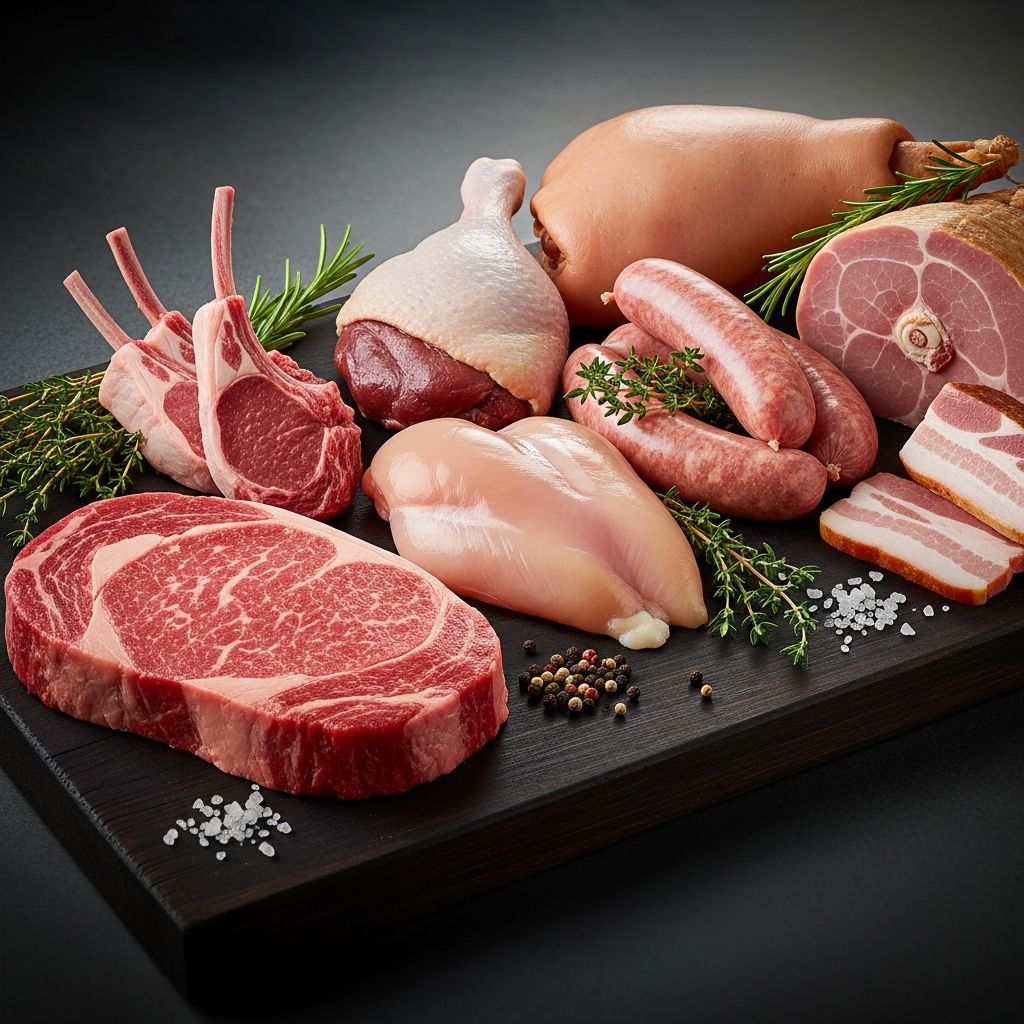
Meat forms the cornerstone of countless cuisines worldwide, offering a rich source of protein, vitamins, and minerals essential for human health. From the robust flavors of beef to the delicate textures of poultry, understanding the different types of meat and their specific cuts empowers home cooks and professionals alike to make informed choices. This guide breaks down the primary categories of meat—beef, pork, lamb, and poultry—detailing their anatomical origins, tenderness levels, ideal preparation methods, and nutritional profiles. Whether you’re grilling a premium steak or slow-cooking a hearty stew, knowing these distinctions ensures optimal flavor and texture in every dish.
Understanding Meat Fundamentals
At its core, meat refers to the edible flesh of animals, primarily mammals and birds, that have been raised for consumption. The quality and characteristics of meat are influenced by factors such as the animal’s age, breed, diet, and the specific muscle group from which the cut is derived. Muscles used frequently for movement develop more connective tissue, resulting in tougher cuts that benefit from moist, low-heat cooking methods like braising or stewing. Conversely, less active muscles yield tender cuts suitable for quick, high-heat techniques such as grilling or pan-searing.
Meats are broadly classified into red and white varieties. Red meats, sourced from mammals like cattle, pigs, and sheep, contain higher levels of myoglobin—a protein that gives them their characteristic color and imparts a deeper flavor. White meats, typically from poultry, are leaner with milder tastes. Pork, despite sometimes appearing pale, is categorized as red meat nutritionally due to its mammalian origin.
| Aspect | Red Meat | White Meat |
|---|---|---|
| Source Animals | Cattle, Pigs, Sheep, Goats | Chicken, Turkey, Duck |
| Myoglobin Content | High (darker color) | Low (paler color) |
| Typical Fat Levels | Moderate to High | Low to Moderate |
| Best Cooking Methods | Braising, Roasting, Grilling | Roasting, Frying, Grilling |
Beef: The King of Red Meats
Beef, derived from cattle, is the most consumed red meat globally, prized for its versatility and bold taste. A mature cow yields between 55% and 60% of its body weight as meat, with cuts divided into eight primal sections: chuck, rib, loin, round, flank, plate, brisket, and shank. These primals are further processed into subprimal and retail cuts, each with unique attributes.
Key Beef Primal Cuts and Their Applications
- Chuck: Sourced from the shoulder, this budget-friendly cut is lean yet tough due to heavy muscle use. Ideal for pot roasts, stews, or ground into burgers. Subprimals include chuck rolls and shoulder clod; popular seconds are flat iron steak and ground chuck.
- Rib: From the upper back, rib cuts boast rich marbling for tenderness and flavor. Perfect for grilling or roasting with minimal seasoning. Features ribeye steaks and prime rib roasts.
- Loin: The tenderest primal, located behind the rib, with minimal connective tissue. High-heat searing preserves juiciness in cuts like filet mignon, T-bone, and New York strip.
- Round: Lean hindquarter meat, economical for roasts like eye of round or London broil. Best moist-cooked to avoid dryness.
- Flank and Plate: Flavorful but tough; flank for stir-fries, plate for short ribs.
- Brisket and Shank: Collagen-rich for low-slow methods like smoking brisket or braising shank into osso buco.
Beef grading—Prime, Choice, Select—reflects marbling and maturity, with Prime offering the juiciest results at a premium price.
Pork: Versatile and Flavorful
Pork, from swine, earns its nickname “the other white meat” for leaner cuts comparable to chicken, though it’s nutritionally red meat. Pigs provide diverse cuts from shoulder to loin, excelling in everything from chops to bacon. Unlike beef, pork primals include shoulder (butt), loin, belly, spareribs, and hams.
Popular Pork Cuts Demystified
The pork shoulder, or Boston butt, is fatty and tough, shining in pulled pork via slow smoking or braising. Pork loin yields tender chops and roasts; cook quickly to prevent drying. Belly becomes bacon or pancetta when cured, while spareribs and baby back ribs are barbecue staples. Hams from the hind leg are cured or smoked for holidays.
| Cut | Tenderness | Best Method | Example Dish |
|---|---|---|---|
| Shoulder/Butt | Tough | Slow Cook/Smoke | Pulled Pork |
| Loin Chops | Tender | Grill/Pan-Sear | Pork Chops |
| Belly | Fatty | Braise/Cure | Bacon |
| Ribs | Tough | Smoke/Braise | BBQ Ribs |
Breeds like Iberico pigs produce exceptionally marbled pork, akin to Wagyu beef, with intense flavor from acorn-fed diets.
Lamb and Mutton: Delicate Yet Robust
Lamb comes from sheep under one year old, offering tender, mildly gamey meat, while mutton from older sheep is stronger-flavored and tougher. Common cuts include leg, rack, loin chops, shoulder, and shanks. Lamb’s primals mirror beef but on a smaller scale, with high demand for roasting legs or frenching racks.
- Leg of Lamb: Lean and versatile for roasting whole or butterflied grilling.
- Rack and Chops: Premium, tender cuts for pan-searing or oven-roasting.
- Shoulder: Budget option for braising into stews.
Lamb provides B vitamins, iron, and zinc, supporting muscle health.
Poultry: Lean White Meat Powerhouse
Poultry—chicken, turkey, duck—dominates as affordable, lean protein. Chicken breasts are white meat classics, while thighs and legs offer darker, juicier dark meat. Turkey mirrors chicken, with breasts ideal for roasting. Duck, fattier, excels in confit or roasting.
Nutritionally, poultry is low-fat, high-protein, with chicken providing complete proteins for growth and repair.
Cooking Methods by Meat Type
Matching method to cut maximizes results:
- Dry Heat (Grill, Roast, Broil): Tender cuts like steaks, chops, breasts.
- Moist Heat (Braise, Stew): Tough cuts like shanks, shoulders.
- Combination: Sear then braise for flavor depth.
Nutritional Breakdown and Health Considerations
Meat delivers heme iron, zinc, B12, but red meat in excess links to health risks; balance with lean cuts and plants. Poultry offers lower saturated fat.
| Meat | Protein (g) | Fat (g) | Iron (mg) |
|---|---|---|---|
| Beef (Sirloin) | 27 | 15 | 2.6 |
| Pork (Loin) | 27 | 10 | 1.0 |
| Lamb (Leg) | 25 | 21 | 2.0 |
| Chicken Breast | 31 | 3.6 | 0.4 |
Frequently Asked Questions (FAQs)
What determines a meat cut’s tenderness?
Tenderness depends on the muscle’s activity level: less-used muscles like loins are tender; heavily used ones like shanks need slow cooking.
Is pork really white meat?
Culinarially yes for lean cuts, but nutritionally it’s red meat due to mammalian source.
How to select quality beef?
Look for bright red color, firm texture, and marbling in premium grades like Prime or Choice.
Best way to cook tough cuts?
Use moist heat methods like braising to break down collagen into gelatin.
Are there health differences between red and white meat?
Red meat has more iron but higher saturated fat; white meat is leaner.
References
- Beef Cuts Explained: Different Cuts of Beef Every Professional Cook Should Know — Escoffier.edu. 2023-05-15. https://www.escoffier.edu/blog/culinary-arts/cuts-of-beef-every-professional-cook-should-know/
- The Home Chef’s Guide: What are the Different Cuts of Meat? — Cocusocial.com. 2024-02-10. https://cocusocial.com/blog/what-are-the-different-cuts-of-meat/
- Undressing the Mystery of Meat — University of Wisconsin Extension (fyi.extension.wisc.edu). 2017-09-01. https://fyi.extension.wisc.edu/wi4hvolunteers/files/2017/09/5-Undressing-Mystery-of-Meat.pdf
- Every Animal Meat Explained — YouTube (Video Transcript). 2023-11-20. https://www.youtube.com/watch?v=p4GyAZXiEzI
- Meat | Definition, Types, & Facts — Britannica.com. 2025-01-12. https://www.britannica.com/topic/meat
- Meat – Wikipedia — Wikipedia.org (Background only; primary sources cited). 2026-03-28. https://en.wikipedia.org/wiki/Meat

Medha Deb is an editor with a master's degree in Applied Linguistics from the University of Hyderabad. She believes that her qualification has helped her develop a deep understanding of language and its application in various contexts. Medha specializes in the areas of beauty, health, sports, and wellness and is committed to ensuring that the content on the website is…