
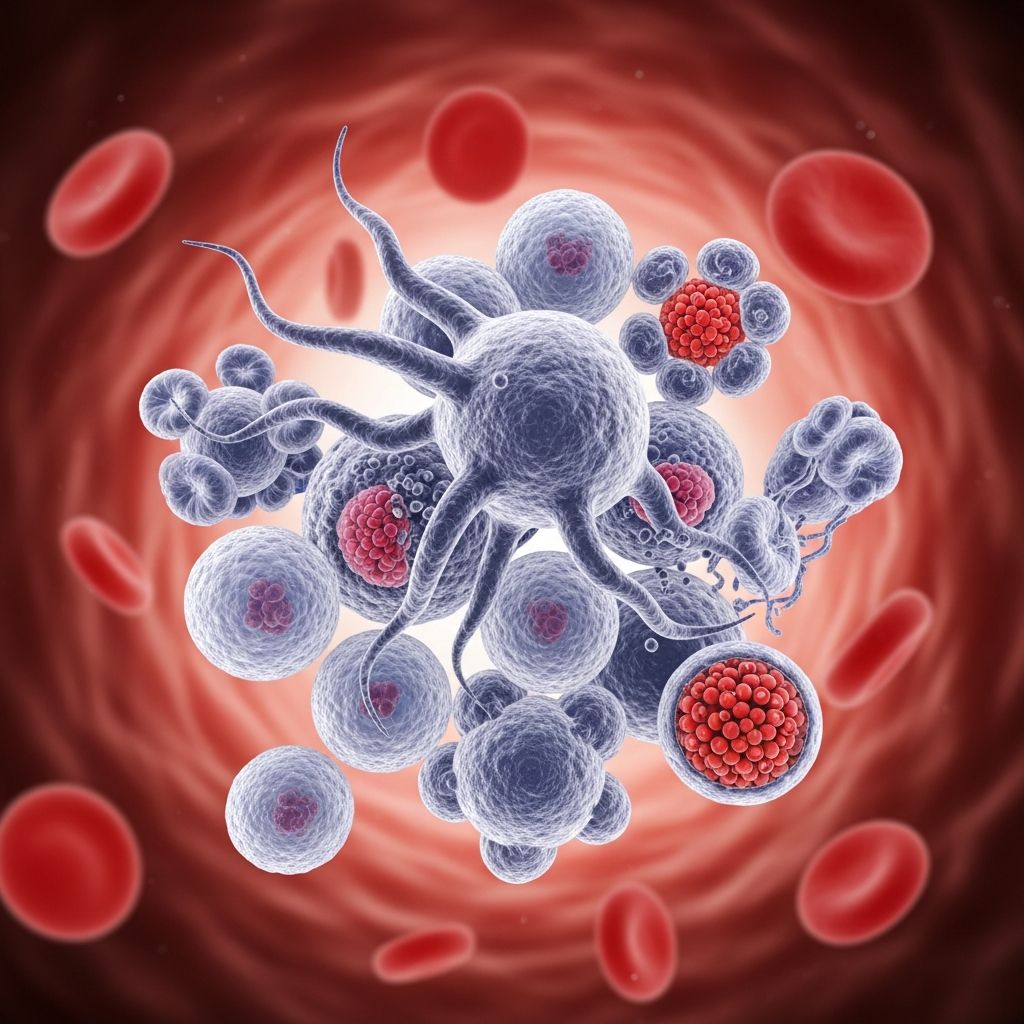
White blood cells, also known as leukocytes, form the cornerstone of the human immune system, tirelessly patrolling the bloodstream and tissues to detect and neutralize threats like bacteria, viruses, parasites, and abnormal cells. Unlike red blood cells, which transport oxygen, these colorless cells are fewer in number but incredibly diverse in function, making up about 1% of total blood volume. They originate primarily from stem cells in the bone marrow and migrate to sites of infection or injury when needed.
Origins and Production of Leukocytes
Leukocytes are produced through a process called hematopoiesis, mainly in the red bone marrow of adults, with some maturation occurring in the thymus, lymph nodes, or spleen. Stem cells differentiate into myeloid or lymphoid progenitors: myeloid lines give rise to granulocytes and monocytes, while lymphoid progenitors produce lymphocytes. Daily production can reach billions of cells to maintain steady levels, ensuring rapid response to dangers. Factors like infections or stress can ramp up this output dramatically.
Classification into Granulocytes and Agranulocytes
Leukocytes divide into two broad categories based on cytoplasmic granules visible under a microscope: granulocytes (neutrophils, eosinophils, basophils) with enzyme-filled granules, and agranulocytes (lymphocytes, monocytes) lacking prominent granules. This classification helps pathologists identify cell types in blood smears and diagnose conditions.
Neutrophils: The Frontline Bacterial Fighters
Neutrophils represent 40-70% of circulating white blood cells, acting as the body’s rapid-response team against bacterial invasions. These granulocytes feature multi-lobed nuclei and fine granules, enabling phagocytosis—engulfing and digesting pathogens via lysosomal enzymes and antimicrobial proteins. They rush to infection sites within hours, forming pus as they die after combat. Low neutrophil counts (neutropenia) heighten infection risk, often seen in chemotherapy patients.
- Key Features: Multi-lobed nucleus, 10-12 µm diameter, short lifespan (days).
- Triggers: Bacterial infections, inflammation.
- Normal Range: 1.6-8 x 10^9/L (40-79%).
Lymphocytes: Architects of Adaptive Immunity
Comprising 20-50% of leukocytes, lymphocytes orchestrate long-term immunity through recognition and memory. Subtypes include B cells (antibody producers), T cells (helper CD4+ coordinating responses and cytotoxic CD8+ killing infected cells), and natural killer (NK) cells targeting viruses and tumors. Small and round with scant cytoplasm, they mature in bone marrow (B cells) or thymus (T cells).
| Lymphocyte Type | Function | Key Markers |
|---|---|---|
| B Cells | Antibody production against bacteria/viruses | CD19, CD20 |
| Helper T Cells | Activate other immune cells | CD4+ |
| Cytotoxic T Cells | Destroy infected/cancerous cells | CD8+ |
| Natural Killer Cells | Target virally infected and tumor cells | CD56 |
Normal range: 1-4.5 x 10^9/L (10-45%). Elevated levels signal chronic infections or cancers; lows indicate viral diseases or immunosuppression.
Monocytes: Versatile Clean-Up Crew
Monocytes, at 2-8% of leukocytes, are the largest cells (12-15 µm) with kidney-shaped nuclei and abundant bluish cytoplasm. Circulating briefly, they enter tissues to become macrophages or dendritic cells, phagocytosing debris, dead cells, and microbes while presenting antigens to lymphocytes for adaptive responses. Crucial in chronic infections and wound healing.
- Transformations: Macrophages (tissue phagocytes), dendritic cells (antigen presenters).
- Normal Range: 0.2-0.8 x 10^9/L.
Eosinophils: Specialists in Parasites and Allergies
Eosinophils (1-4%) feature bilobed nuclei and bright orange-red granules rich in major basic protein, which combat multicellular parasites by releasing toxic contents. They also modulate allergic reactions and asthma via histamine release, though excess contributes to tissue damage.
High counts indicate allergies, parasites, or certain cancers; lows are less clinically notable. Normal range: 0.0-0.4 x 10^9/L.
Basophils: Alarm Sounders of Inflammation
Rarest at 0-1%, basophils are granule-packed with dark-staining contents including histamine and heparin. They initiate immediate allergic responses by degranulating upon antigen exposure, promoting inflammation to recruit other cells. Involved in hypersensitivity reactions like hives.
Normal range: 0.0-0.2 x 10^9/L. Elevations link to allergies or leukemias.
Normal Ranges and Differential Counts
A complete blood count (CBC) with differential assesses total WBC (4-11 x 10^9/L) and percentages. Deviations signal issues: neutrophilia in acute infections, lymphocytosis in viral illnesses.
| Cell Type | Percentage | Absolute Range (x10^9/L) |
|---|---|---|
| Neutrophils | 40-79% | 1.6-8 |
| Lymphocytes | 10-45% | 1-4.5 |
| Monocytes | 2-8% | 0.2-0.8 |
| Eosinophils | 1-4% | 0.0-0.4 |
| Basophils | 0-1% | 0.0-0.2 |
Disorders Linked to Abnormal Leukocyte Counts
Leukocytosis (high WBC) accompanies infections, stress, or leukemia; leukopenia (low) from viral infections, drugs, or marrow failure increases susceptibility. Specific shifts like eosinophilia point to parasites, while monocytosis suggests chronic inflammation.
Diagnostic Importance in Modern Medicine
Blood differentials guide diagnoses—from appendicitis (neutrophil spike) to mononucleosis (lymphocytosis). Flow cytometry refines lymphocyte subtyping for cancers like lymphoma.
Frequently Asked Questions (FAQs)
What causes high neutrophil levels?
Typically bacterial infections, inflammation, or stress responses elevate neutrophils as the first defense.
Can low lymphocytes indicate serious disease?
Yes, reductions may signal HIV, autoimmune issues, or chemotherapy effects, warranting further tests.
How do eosinophils relate to allergies?
They release mediators during allergic reactions, contributing to symptoms like wheezing.
What role do monocytes play in COVID-19?
Monocyte-derived macrophages help clear viral debris but can drive cytokine storms in severe cases.
Are basophils involved in chronic conditions?
Yes, elevated in allergies, ulcerative colitis, and some myeloproliferative disorders.
References
- White blood cells – Healthdirect — Healthdirect Australia. 2023. https://www.healthdirect.gov.au/white-blood-cells
- White Blood cells – The Histology Guide — University of Leeds. Accessed 2026. https://www.histology.leeds.ac.uk/blood/blood_wbc.php
- What Are White Blood Cells? — University of Rochester Medical Center. 2023. https://www.urmc.rochester.edu/encyclopedia/content?ContentID=35&ContentTypeID=160
- Types of White Blood Cells — Mustaqbal University College. 2022. https://www.uomus.edu.iq/img/lectures21/MUCLecture_2022_122457263.pdf
- White Blood Cells: Types, Function & Normal Ranges — Cleveland Clinic. 2023. https://my.clevelandclinic.org/health/body/21871-white-blood-cells
- Classes of Blood Cells — Lymphoma Research Foundation. 2023. https://lymphoma.org/understanding-lymphoma/lymphoma-and-the-immune-system/classes-of-blood-cells/
- Histology, White Blood Cell — StatPearls, NCBI Bookshelf. 2023. https://www.ncbi.nlm.nih.gov/books/NBK563148/

Medha Deb is an editor with a master's degree in Applied Linguistics from the University of Hyderabad. She believes that her qualification has helped her develop a deep understanding of language and its application in various contexts. Medha specializes in the areas of beauty, health, sports, and wellness and is committed to ensuring that the content on the website is…