
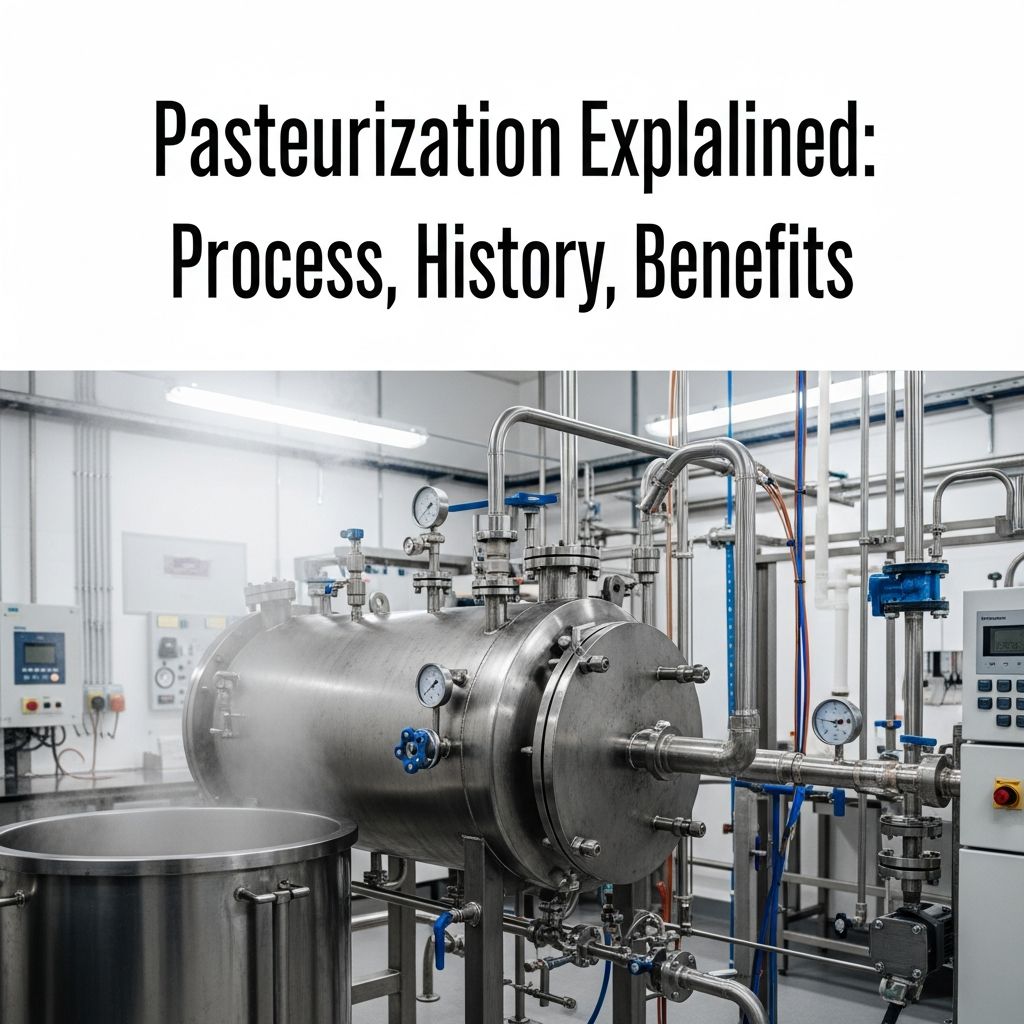
Pasteurization is a controlled heating method applied to foods and beverages to eliminate harmful pathogens while preserving nutritional value and flavor. Developed in the 19th century, it remains a cornerstone of modern food safety practices worldwide.
The Fundamental Science Behind Heat Treatment
At its core, pasteurization targets vegetative bacteria, yeasts, and molds that cause spoilage and illness, without fully sterilizing the product. Unlike sterilization, which kills nearly all microbes including spores, pasteurization achieves a 99.999% reduction in dangerous pathogens through precise temperature and time combinations.
The process hinges on thermal inactivation: proteins in microbial cells denature at specific temperatures, disrupting their function and leading to cell death. Factors like product pH influence the required heat levels—acidic foods like juices need less intensity than neutral ones like milk.
Historical Origins and Louis Pasteur’s Breakthrough
French chemist Louis Pasteur pioneered pasteurization in the 1860s while investigating why wine and beer spoiled prematurely. He discovered that gentle heating to around 57°C (135°F) for minutes prevented fermentation issues without altering taste significantly.
This insight stemmed from his germ theory work, proving microbes caused decay. By the late 1800s, the technique expanded to milk amid rising awareness of diseases like tuberculosis spread via raw dairy. Today, regulations mandate pasteurization for most commercial milk in the U.S. and many countries.
Core Steps in the Pasteurization Workflow
Pasteurization follows a standardized sequence to maximize efficacy and minimize quality loss:
- Heating Phase: Liquid is rapidly brought to target temperature using heat exchangers or baths.
- Holding Phase: Maintained at peak heat for exact duration to ensure every particle receives lethal exposure.
- Cooling Phase: Swiftly chilled to inhibit survivor growth and preserve freshness.
Equipment ensures turbulent flow for uniform treatment, as laminar flow could leave safe zones.
Primary Methods of Pasteurization
Several techniques suit different products and shelf-life goals. Here’s a comparison:
| Method | Temperature | Time | Applications | Shelf Life |
|---|---|---|---|---|
| Low-Temperature Long-Time (LTLT/Batch) | 63°C (145°F) | 30 minutes | Home use, small-scale dairy | 2 weeks refrigerated |
| High-Temperature Short-Time (HTST) | 72°C (161°F) | 15 seconds | Commercial milk, juices | 2-3 weeks refrigerated |
| Ultra-High Temperature (UHT) | 135-150°C (275-302°F) | 2-5 seconds | Shelf-stable milk, cream | Months, no refrigeration |
| Ultra-Pasteurization (UP) | ≥138°C (280°F) | ≥2 seconds | Extended-shelf milk | 2-3 months refrigerated |
HTST dominates industry due to efficiency; UHT enables ambient storage in sterile packaging.
Applications Across Food and Beverage Categories
Dairy Products
Milk processing begins at farms with sanitized equipment, flowing to plants for separation into skim and cream. Pasteurized at 161°F for 15 seconds, it’s cooled using incoming cold milk for energy savings.
Cheese milk often uses lower heats to retain cultures; yogurt benefits from pasteurization pre-fermentation.
Fruit Juices and Beverages
Juices undergo HTST to neutralize E. coli and Salmonella. Flash pasteurization preserves vitamins better than boiling.
Eggs and Other Innovations
Liquid eggs are pasteurized at 60°C for 3.5 minutes, reducing Salmonella by 99.9%. Beers and ciders use similar mild treatments.
Health and Safety Advantages
Pasteurization drastically cuts risks of listeriosis, brucellosis, typhoid, and tuberculosis. Raw milk can harbor these at high levels; pasteurized versions show no nutritional deficits per research.
It extends usability: raw milk spoils in days, pasteurized lasts weeks. Enzymes causing off-flavors are also deactivated.
Quality Retention and Nutritional Impact
Minimal heat preserves 95-99% of vitamins, proteins, and minerals. Taste, color, and texture remain close to fresh. UHT may slightly alter flavor, hence refrigeration needs for UP.
Studies confirm pasteurized milk matches raw in calcium, protein, and B-vitamins.
Home Pasteurization Techniques
For raw milk enthusiasts, double-boiler method works: Heat to 161°F stirring constantly for 15 seconds (or 145°F/30 min), using a metal thermometer. Cool immediately in ice bath.
- Monitor foam—must reach temperature.
- Avoid glass thermometers.
- Store below 4°C post-process.
Compliance with local laws is essential; home use doesn’t replace commercial standards.
Industry Standards and Regulations
U.S. FDA’s Pasteurized Milk Ordinance sets parameters: 161°F/15s or equivalents, ensuring turbulent flow. Global bodies like Codex Alimentarius harmonize practices.
Debunking Raw Milk Myths
Claims of superior nutrition or immunity boosts lack evidence. Pathogen risks outweigh unproven benefits; outbreaks from raw products persist.
Future Directions in Pasteurization Tech
Advances include high-pressure processing (HPP) mimicking heat effects without temperature, and pulsed electric fields for premium juices. These complement traditional methods for ultra-fresh profiles.
Frequently Asked Questions (FAQs)
What exactly does pasteurization kill?
It eliminates most disease-causing bacteria like Listeria and Salmonella, plus spoilage organisms, but not all spores.
Does pasteurization destroy nutrients?
No significant loss occurs; key nutrients remain intact, as confirmed by health authorities.
Can I pasteurize milk at home safely?
Yes, using precise thermometers and methods like double-boiler, but follow guidelines strictly.
What’s the difference between HTST and UHT?
HTST is milder for refrigerated products; UHT is intense for shelf-stable ones.
Is pasteurized milk as healthy as raw?
Yes, with far lower risks; research shows equivalent nutrition.
Global Perspectives on Pasteurization
While mandatory in the U.S., some regions allow raw milk sales with warnings. EU varies by country, prioritizing HTST for dairy. Developing nations adopt it to combat milk-borne diseases.
In summary, pasteurization balances safety, quality, and accessibility, evolving from Pasteur’s experiments to a global safeguard.
References
- Pasteurization — Center for Research on Ingredient Safety, Michigan State University. 2023. https://cris.msu.edu/news/trending/pasteurization/
- Pasteurization — Wikipedia (informed by primary sources). 2023-10-01. https://en.wikipedia.org/wiki/Pasteurization
- What is Pasteurization? — YouTube (FDA guidelines reference). 2018. https://www.youtube.com/watch?v=yJ3TqOXRqk4
- Why Is Milk Pasteurized? 4 Questions Answered — U.S. Dairy. 2023. https://www.usdairy.com/news-articles/why-is-milk-pasteurized-4-questions-answered
- Food Preservation: Pasteurization of Raw Milk for Home Consumption — Ohio State University Extension (ohioline.osu.edu). 2022-05-23. https://ohioline.osu.edu/factsheet/hyg-5817
- Pasteurization — Encyclopædia Britannica. 2023. https://www.britannica.com/technology/pasteurization
- Milk and Milk Product Pasteurization — Louisiana Department of Health. 2023. https://ldh.la.gov/page/milk-and-milk-product-pasteurization

Medha Deb is an editor with a master's degree in Applied Linguistics from the University of Hyderabad. She believes that her qualification has helped her develop a deep understanding of language and its application in various contexts. Medha specializes in the areas of beauty, health, sports, and wellness and is committed to ensuring that the content on the website is…