
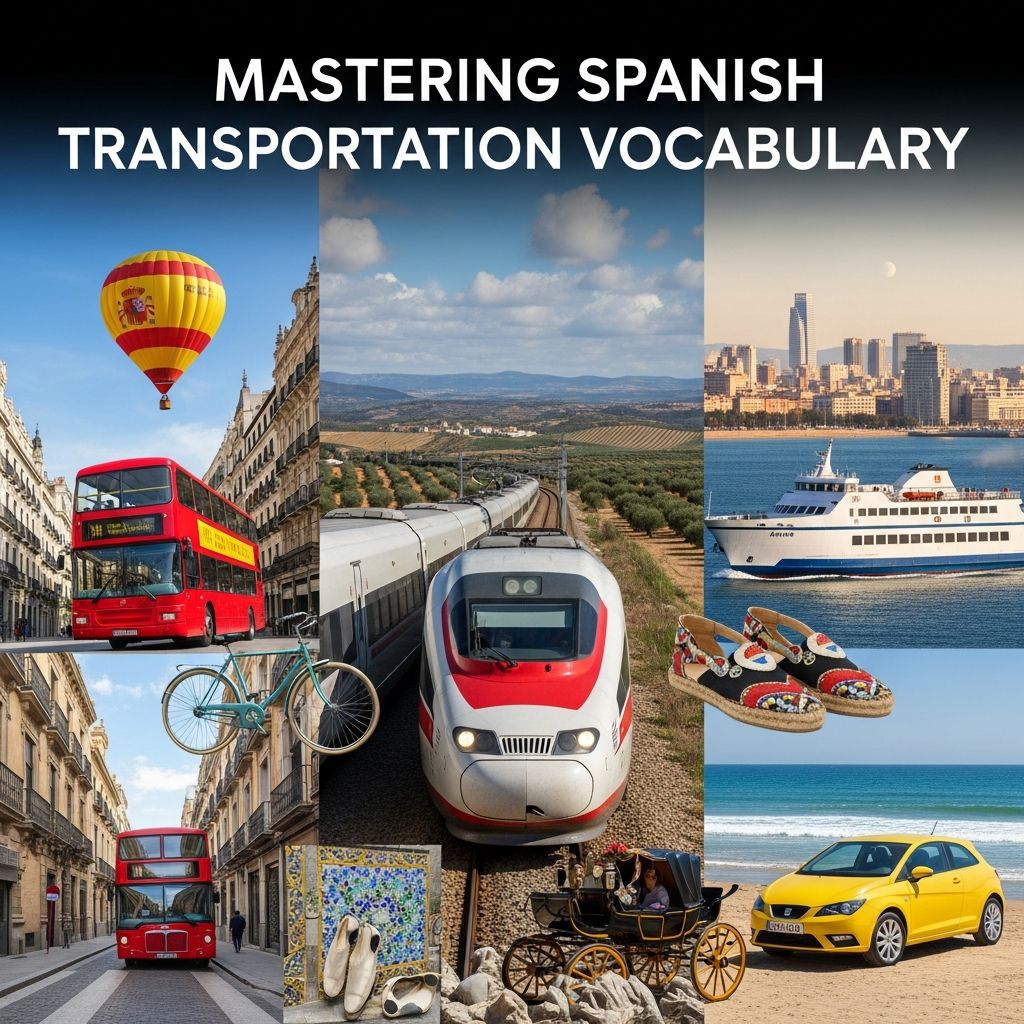
Navigating new destinations becomes effortless when you know the right words for getting around. This guide dives deep into Spanish vocabulary for various modes of transport, highlighting regional differences and practical usage to help learners communicate confidently whether in Spain, Mexico, or Argentina.
Core Vehicles and Everyday Transport Options
Understanding basic vehicles forms the foundation of transportation lingo in Spanish. These terms appear in daily conversations and travel scenarios across Spanish-speaking countries.
- El coche / El carro / El auto: Refers to a car. ‘Coche’ dominates in Spain, while ‘carro’ and ‘auto’ prevail in Latin America.
- El autobús / El bus: Bus, with ‘bus’ as a common shorthand everywhere.
- El tren: Train, universal across regions.
- El metro: Subway or underground train, essential in cities like Madrid or Mexico City.
- El avión: Airplane, key for international flights.
These words vary slightly by dialect. For instance, in Mexico, ‘camión’ can mean bus rather than truck, so context matters. Mastering them equips you for booking tickets or asking directions.
Land-Based Travel: Cars, Buses, and Urban Mobility
Land transport handles most short trips. From personal vehicles to public systems, here’s how to discuss them fluidly.
| English | Spain | Latin America (General) | Notes |
|---|---|---|---|
| Car | El coche | El carro / El auto | Regional preference affects usage. |
| Bus | El autobús | El bus / El camión (Mexico) | Shortened forms common. |
| Train | El tren / El AVE (high-speed) | El tren / Tren regional | AVE specific to Spain. |
| Tram | El tranvía | El tranvía | Urban rail systems. |
| Taxi | El taxi | El taxi / El cab | Nearly identical globally. |
Buses and trains often use terms like ‘estación’ for station and ‘parada’ for stop. In bustling cities, knowing ‘transporte público’ (public transport) helps inquire about routes.
Aerial Journeys: Planes and Airports
Air travel vocabulary is crucial for long-distance trips. Airports buzz with specific terms that ensure smooth check-ins and boarding.
- El aeropuerto: Airport.
- El vuelo: Flight.
- La facturación: Check-in.
- El equipaje: Luggage.
- La puerta de embarque: Boarding gate.
Phrases like ‘¿Dónde está la sala de embarque?’ (Where is the boarding area?) prove invaluable. High-altitude options include ‘el helicóptero’ for helicopters.
Waterways and Maritime Movement
Coastal regions and islands rely on boats. Distinguish between casual outings and large voyages.
- El barco: Boat or ship.
- El bote: Small boat.
- El buque: Large ship.
- El ferry / El transbordador: Ferry.
Verbs like ’embarcar’ (to board) pair well: ‘Voy en barco’ (I’m going by boat). In places like Chile or Spain, ferries connect islands efficiently.
Two-Wheeled Wonders: Bikes and Motorcycles
Eco-friendly and agile, bikes and motos suit urban explorers. Safety gear terms enhance discussions.
- La bicicleta / La bici: Bicycle.
- La motocicleta / La moto: Motorcycle.
- El casco: Helmet.
‘Voy en bici’ conveys casual commuting, popular in bike-friendly cities like Barcelona.
Key Verbs and Phrases for Smooth Travels
Verbs transform nouns into actionable sentences. Learn these to express plans and seek help.
- Ir en + transport: To go by (e.g., ‘Voy en tren’ – I go by train).
- Tomar el/la + transport: To take the (e.g., ‘Tomo el autobús’ – I take the bus).
- A pie / Andando: On foot or walking.
Practical phrases:
- ‘¿Dónde está la parada de autobús?’ (Where’s the bus stop?)
- ‘Un billete a Madrid, por favor.’ (One ticket to Madrid, please.)
- ‘¿Cuánto cuesta el taxi?’ (How much is the taxi?)
Regional Twists: Navigating Dialects
Spanish spans continents, so transport words shift. Awareness prevents mix-ups.
| Country/Region | Unique Terms |
|---|---|
| Spain | Coche, AVE, Cercanías (commuter train) |
| Mexico | Carro, Camión (bus), Metro |
| Argentina | Colectivo (bus), Subte (subway) |
| Chile | Micro (bus), Liebre (fast bus) |
In Argentina, buses are ‘colectivos’; Chileans say ‘micro’. Adapt to local speech for better interactions.
Public Systems and Schedules
Master schedules with:
- El horario: Schedule.
- La línea: Line or route.
- El andén: Platform.
- El vagón: Train car.
Ask ‘¿A qué hora sale el tren?’ (What time does the train leave?)
Advanced and Specialized Vehicles
Beyond basics, recognize:
- El camión: Truck.
- La furgoneta / La camioneta: Van.
- La ambulancia: Ambulance.
- El globo aerostático: Hot air balloon.
Rare but useful for contexts like emergencies or tours.
Frequently Asked Questions (FAQs)
¿Cuál es la diferencia entre ‘coche’ y ‘carro’?
‘Coche’ se usa principalmente en España, mientras que ‘carro’ es común en Latinoamérica.
¿Cómo digo ‘voy en autobús’ en diferentes países?
En todas partes funciona ‘voy en autobús’ o ‘voy en bus’.
¿Qué significa ‘tomar el metro’?
Significa ‘tomar el subway’ o usar el sistema subterráneo.
¿Cómo pido un taxi en español?
‘Un taxi, por favor’ o ‘¿Cuánto al aeropuerto?’.
¿Existen variaciones para tren de alta velocidad?
En España, ‘AVE’; en otros lugares, ‘tren bala’ o similares.
Practice Tips for Retention
Immerse via apps, label items, or role-play scenarios. Travel journals noting local terms build fluency. Combine with audio for pronunciation.
This vocabulary empowers independent travel. From hailing taxis to boarding ferries, these terms open doors to authentic experiences.
References
- Spanish Transport Vocabulary: Essential Words for Travel — Migaku. 2023. https://migaku.com/blog/spanish/spanish-transport-vocabulary
- Transportation vocabulary in Spanish — Kwiziq Spanish. 2024. https://spanish.kwiziq.com/learn/theme/1160533
- Spanish modes of transport “By Car, bus, plane” or “on foot” — YouTube (Transcript). 2022. https://www.youtube.com/watch?v=XszYNESPgxY
- 100+ Words and Phrases Related to Transportation in Spanish — Spanish Academy. 2023. https://www.spanish.academy/blog/100-words-and-phrases-related-to-transportation-in-spanish/
- Spanish Transportation Vocabulary: How To Get Around — Babbel. 2024. https://www.babbel.com/learn-spanish/beginner/spanish-transportation-vocabulary
- 60 Transportation Words in Spanish with Audio and Example Sentences — FluentU. 2023. https://www.fluentu.com/blog/spanish/spanish-transportation-vocabulary/

- Integrated M.A. in Applied Linguistics, University of Hyderabad
- 5+ years in editorial, instructional, SEO, and research-based writing
Sneha is a relationships and lifestyle writer with a strong foundation in applied linguistics and certified training in relationship coaching. She brings over five years of writing experience to theskillvault, crafting thoughtful, research-driven content that empowers readers to build healthier relationships, boost emotional well-being, and embrace holistic living. Her writing and insights reflect the belief that beauty, happiness, and wellness…