
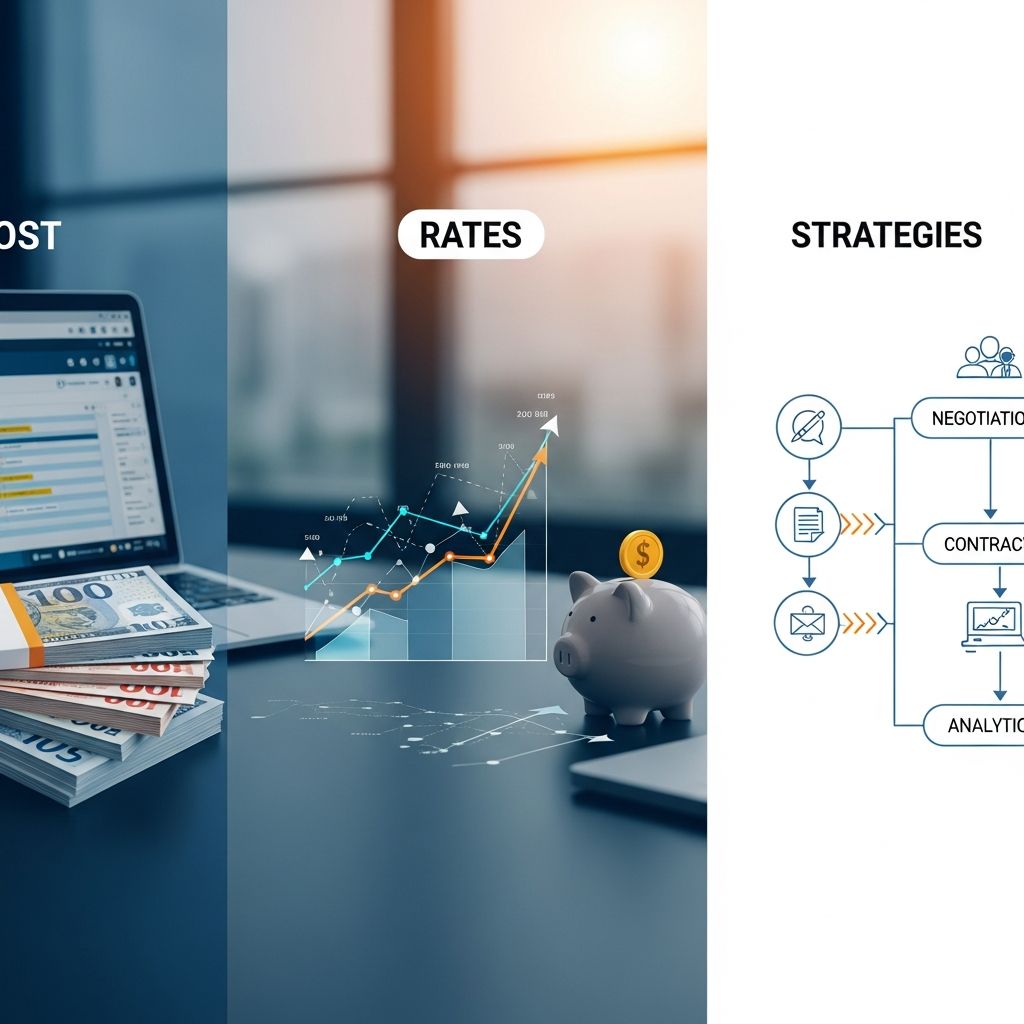
Determining appropriate compensation for bloggers is crucial for businesses seeking high-quality content that drives engagement and conversions. In today’s digital landscape, bloggers serve as key influencers, creating authentic content that resonates with niche audiences. This article explores current industry standards, influencing factors, payment structures, and practical advice for forging profitable partnerships.
Understanding Blogger Compensation Landscape
The creator economy has exploded, with bloggers playing a pivotal role in content marketing. Businesses increasingly rely on freelance bloggers to produce SEO-optimized posts, product reviews, and thought leadership pieces. Average earnings for bloggers vary widely, but full-time professionals often command salaries around $53,000 annually when working for companies, according to labor market data. Freelancers, however, can exceed this through multiple gigs, with expert writers charging $300 or more for posts under 1,000 words, equating to $100+ hourly rates.
These rates reflect the value bloggers add: research, audience insights, and high-quality writing that boosts search rankings and customer trust. Unlike generic content mills, skilled bloggers deliver posts requiring deep industry knowledge, ensuring relevance and accuracy.
Factors Driving Blogger Pay Rates
Several elements determine how much businesses should pay bloggers. Audience size and engagement top the list—bloggers with large, active followings charge premiums due to their reach. For instance, niche experts with proven traffic can demand higher fees because their content converts readers into customers.
- Experience Level: Novices start lower, while veterans with portfolios command top dollar.
- Content Complexity: Posts needing extensive research or data analysis cost more than simple overviews.
- Niche Demand: High-value sectors like finance or health pay premiums for specialized knowledge.
- Deliverables Scope: Including images, SEO optimization, or multiple revisions increases costs.
- Engagement Metrics: High interaction rates justify elevated rates, as they predict better ROI.
Geographic location also plays a role; U.S.-based bloggers often charge more due to living costs, but global talent offers competitive rates. Brands must weigh these against expected returns, such as traffic spikes or sales lifts.
Current Rate Benchmarks for 2026
Industry data reveals tiered pricing models similar to influencers. Nano-bloggers (under 10K monthly visitors) charge $200–$1,000 per post, while micro-influencers (10K–50K) range from $1,000–$5,000. Mid-tier creators with 50K–100K visitors demand $5,000–$20,000, reflecting their ability to drive substantial traffic.
| Blogger Tier | Monthly Visitors | Post Rate Range |
|---|---|---|
| Nano | <10K | $200–$1,000 |
| Micro | 10K–50K | $1,000–$5,000 |
| Mid-Tier | 50K–100K | $5,000–$20,000 |
| Macro | 100K–500K | $20,000–$45,000 |
| Top-Tier | 500K+ | $45,000+ |
These figures adapt from platform-specific influencer data, as blogging overlaps with social media influencing. Per-word rates hover at 20 cents for beginners, but experts charge $0.50+ for premium content. Sponsored posts often scale with audience size; a blogger with 100K followers might earn $2,700 per in-depth review.
Hybrid models are rising: flat fees plus 10-20% sales commissions align incentives, with brands offering base pay and performance bonuses across channels. This approach minimizes risk while rewarding results.
Payment Models: Flat Fees vs. Performance-Based
Businesses have multiple options for structuring payments. Flat fees provide predictability—ideal for one-off posts. For a 1,500-word article, expect $450–$1,500 based on expertise.
Performance-based pay ties compensation to metrics like clicks, leads, or sales. Using Earned Media Value (EMV), brands calculate fair pay: if a post’s EMV is $1,000 and ROI goal is 3x, pay $250–$333. This math ensures marketing budgets yield returns.
Affiliate commissions offer another avenue, where bloggers earn per sale (5-30% typical). Sponsored content combines upfront pay with disclosures for transparency, building trust.
Negotiation Tactics for Businesses
Effective negotiations start with research: review the blogger’s past work, analytics, and rates. Propose value exchanges like long-term contracts for discounted rates or exclusive access to products.
- Set Clear Goals: Define KPIs upfront, such as 10% traffic increase.
- Offer Perks: Free products, affiliate links, or co-branded content sweeten deals.
- Use Contracts: Outline scope, revisions (limit to 2), payment terms (net 30), and rights.
- Start Mid-Range: Bid 20% below ask, with flexibility for proven performers.
- Test Small: Pilot one post before scaling campaigns.
Avoid lowballing; undervaluing talent leads to subpar content. Instead, emphasize mutual growth—successful partnerships often evolve into retainers at $2,000–$10,000 monthly.
Maximizing ROI from Blogger Collaborations
To justify payments, track performance rigorously. Tools measure traffic, bounce rates, and conversions post-publication. High-engagement bloggers (likes, shares, comments) deliver 2-5x better results.
Diversify: mix blogger posts with social shares for amplified reach. In 2025 surveys, 39% of creators earned via blogs, underscoring their relevance. Brands seeing 3x ROI prioritize creators with authentic voices over sheer size.
Legal compliance matters: Mandate FTC disclosures for sponsored content to avoid penalties. Long-term, nurture relationships—top bloggers refer others, expanding networks.
Common Pitfalls and How to Avoid Them
Many businesses overpay for low-impact creators or underpay, causing turnover. Pitfall: Ignoring engagement over followers. Solution: Prioritize 5%+ rates.
Another: Vague briefs lead to revisions. Provide detailed outlines, tone guides, and keywords. Rushing payments erodes trust—pay promptly to encourage repeats.
Scale wisely: Start with micros for testing, graduate to macros as budgets grow. In the $100B+ creator economy, strategic spending yields outsized gains.
Frequently Asked Questions (FAQs)
What is a fair rate for a 1,000-word blog post?
A: Expert freelancers charge $300+, yielding $100/hour for 3-hour jobs. Beginners may accept $100–$200.
How do blogger rates compare to social influencers?
A: Similar tiers; blogs emphasize depth, charging $500–$45K+ per post like Instagram/TikTok.
Should businesses use performance pay?
A: Yes, hybrid models with 10-20% commissions optimize ROI.
What metrics prove blogger value?
A: Engagement ($0.06–$2/post), EMV, and sales conversions.
How to find reliable bloggers?
A: Platforms like Upwork, portfolios, or networks; vet via samples and references.
Future Trends in Blogger Payments
By 2027, the creator market hits $480B, with AI tools aiding but not replacing human insight. Expect rising rates for authentic, SEO-savvy content amid algorithm shifts. Businesses succeeding will blend data-driven pay with creative freedom, fostering win-win dynamics.
References
- How Much Do Influencers Charge Per Post? [2025] — Impact.com. 2025. https://impact.com/influencer/how-much-do-influencers-charge-per-post/
- How Much Freelance Bloggers Earn: The Surprising Truth — BeAFreelanceBlogger.com. 2023-10-15. https://beafreelanceblogger.com/how-much-freelance-bloggers-earn/
- What Should you Pay Influencers for their Work? — Sideqik.com. 2024. https://www.sideqik.com/influencer-marketing/what-should-you-pay-influencers-for-their-work
- How Much Do Bloggers Make (Plus Tips To Earn More) — Indeed.com. 2025-01-20. https://www.indeed.com/career-advice/pay-salary/how-much-do-bloggers-make
- How Much To Pay For Influencer Marketing — CreatorIQ.com. 2025. https://www.creatoriq.com/blog/how-much-to-pay-for-influencer-marketing

Medha Deb is an editor with a master's degree in Applied Linguistics from the University of Hyderabad. She believes that her qualification has helped her develop a deep understanding of language and its application in various contexts. Medha specializes in the areas of beauty, health, sports, and wellness and is committed to ensuring that the content on the website is…