
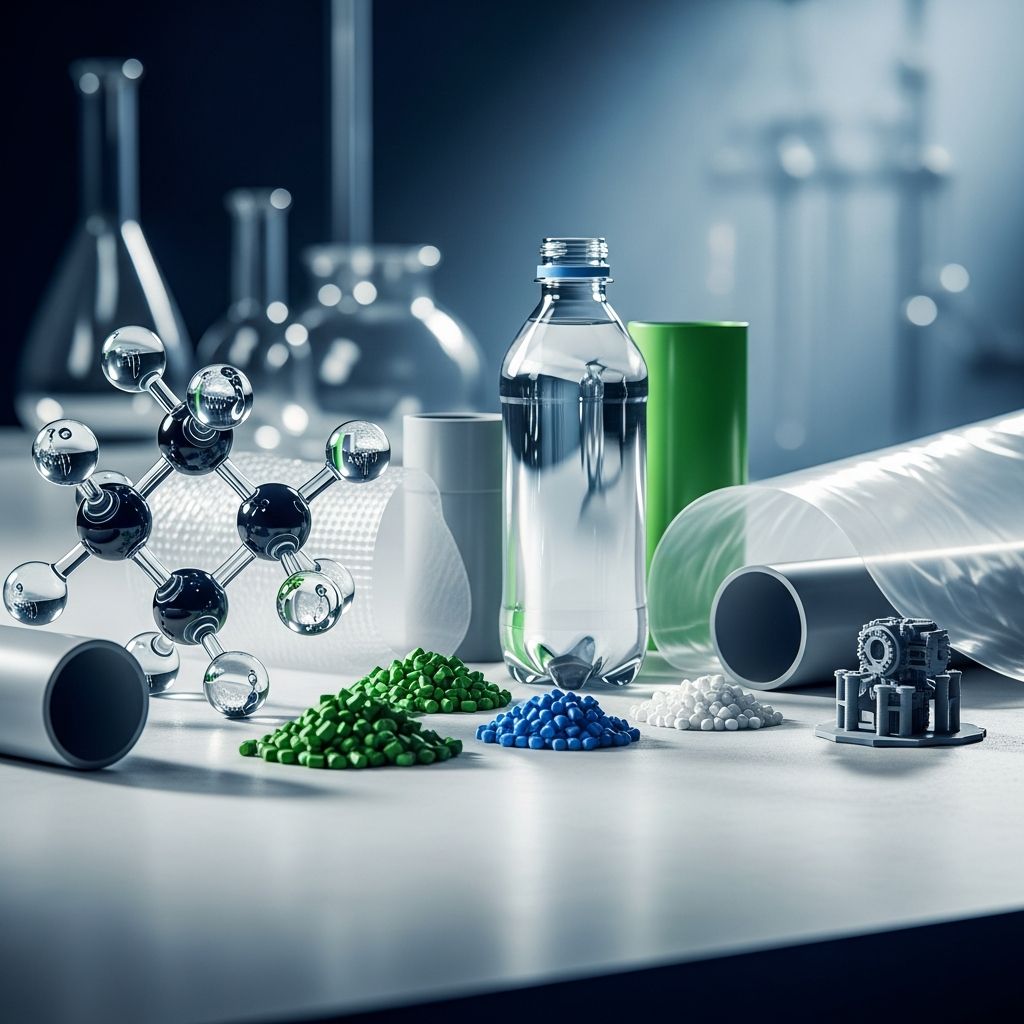
Plastics represent a cornerstone of contemporary manufacturing, offering versatility that stems from their unique molecular structure. These materials, primarily composed of long-chain polymers, can be shaped under heat and pressure into countless forms, from lightweight bottles to durable automotive parts.
The Molecular Foundation of Plastics
At their core, plastics are synthetic or semi-synthetic polymers—large molecules formed by linking smaller units called monomers through a process known as polymerization. This chain-like arrangement imparts properties like flexibility, strength, and resistance to chemicals, making plastics ideal for diverse applications.
Unlike metals or ceramics, plastics exhibit plasticity, the ability to be molded while soft and then hardened. This trait arises from the polymer chains’ capacity to slide past each other when heated, allowing extrusion, injection molding, or pressing into final shapes.
Polymers in plastics can be thermoplastics, which soften upon reheating for reshaping, or thermosets, which cure irreversibly into rigid forms. Thermoplastics dominate due to their recyclability, comprising over 90% of production.
Historical Evolution of Plastic Materials
The journey of plastics began in the 19th century with natural substances like celluloid, derived from cellulose nitrate, used for early films and billiard balls. The 20th century marked a boom post-World War II, as petrochemical advancements enabled mass production of synthetics like polyethylene and polystyrene.
Key milestones include the invention of Bakelite in 1907, the first fully synthetic plastic, and the explosion of varieties during wartime for insulation and packaging. Today, global output exceeds 400 million tons annually, driven by demand in packaging and construction.
Primary Categories and Resin Identification
Plastics are categorized by the Resin Identification Code (RIC), a numbering system from 1 to 7 developed by the Society of the Plastics Industry. This aids recycling by denoting polymer type. Here’s a breakdown:
| Code | Type | Common Uses | Recyclability |
|---|---|---|---|
| 1 | PET (Polyethylene Terephthalate) | Bottles, jars | High |
| 2 | HDPE (High-Density Polyethylene) | Milk jugs, detergent bottles | High |
| 3 | PVC (Polyvinyl Chloride) | Pipes, flooring | Low |
| 4 | LDPE (Low-Density Polyethylene) | Plastic bags, wraps | Moderate |
| 5 | PP (Polypropylene) | Food containers, ropes | Moderate |
| 6 | PS (Polystyrene) | Foam cups, packaging | Low |
| 7 | Other (e.g., polycarbonate) | Baby bottles, eyewear | Varies |
PET and HDPE lead in recycling rates, with PET bottles being the most recycled plastic globally due to efficient curbside programs.
Manufacturing Processes Behind Plastics
Producing plastics involves extracting monomers from petroleum or natural gas, then polymerizing them via methods like free-radical, condensation, or addition polymerization. The resulting resin pellets are melted and formed using techniques such as:
- Injection Molding: For precise parts like gears and toys.
- Extrusion: For films, pipes, and profiles.
- Blow Molding: For hollow items like bottles.
- Thermoforming: For trays and packaging from sheets.
Additives like stabilizers, colorants, and plasticizers enhance performance, with phthalates in PVC increasing flexibility for cables and flooring.
Widespread Applications Across Industries
Plastics’ low density, corrosion resistance, and insulation properties make them indispensable. In packaging, they account for over 40% of U.S. municipal solid waste, protecting food and reducing spoilage.
Construction uses PVC pipes and profiles for durability. Automotive sectors employ engineering plastics like polycarbonate for lightweight components, cutting fuel use. Medical applications include sterile syringes and implants, while consumer goods range from electronics casings to textiles.
Specialty plastics, or engineering resins, rival metals in strength for high-performance needs.
Environmental Footprint and Waste Statistics
Despite benefits, plastics contribute to 14.5 million tons of U.S. packaging waste yearly. Only 8.7% of global plastic is recycled, with much landfilled or incinerated, releasing CO2.
- Landfilled: ~80% of plastics.
- Recycled: PET at 29%, HDPE at 30% in the U.S.
- Ocean pollution: Microplastics from degradation harm marine life.
Production relies on fossil fuels, emitting greenhouse gases, but plastics save energy in transport due to lightness.
Recycling Methods and Challenges
Mechanical recycling shreds and remelts plastics, but contamination and sorting limit it. Chemical recycling breaks polymers back to monomers for purity. Bio-based options like polylactic acid (PLA) from corn offer renewability.
Challenges include mixed resins degrading quality and low collection rates for LDPE/PS. Innovations like advanced sorting via AI and enzymatic breakdown promise improvements.
Innovations Driving Sustainable Plastics
Researchers develop biodegradable plastics and closed-loop systems. Companies explore plant-derived polymers, reducing oil dependency. Policies like extended producer responsibility boost recycling infrastructure.
Future trends include carbon-capture in production and plastics-to-fuel pyrolysis, balancing utility with ecology.
Frequently Asked Questions (FAQs)
What distinguishes thermoplastics from thermosets?
Thermoplastics soften with heat for reshaping, while thermosets harden permanently after curing, suited for heat-resistant items.
Which plastic is most recycled?
PET (type 1) tops recycling lists, especially water/soda bottles, thanks to robust programs.
Are all plastics petroleum-based?
Most are, but bio-plastics from renewables like starch are growing, comprising a small but increasing share.
How do plastics impact the environment positively?
They reduce packaging weight, cut emissions in transport, and replace heavier materials, saving resources overall.
Can PVC be safely recycled?
Yes, but low rates due to additives; specialized facilities handle it for pipes and decks.
References
- Plastic – Wikipedia — Wikipedia Contributors. 2023-10-01. https://en.wikipedia.org/wiki/Plastic
- Plastic | Composition, History, Uses, Types, & Facts — Encyclopædia Britannica. 2024-01-15. https://www.britannica.com/science/plastic
- The 7 Different Types of Plastic — Plastics For Change. 2023-05-20. https://www.plasticsforchange.org/blog/different-types-of-plastic
- An Introduction to Plastics — Chemical Safety Facts, American Chemistry Council. 2024-02-10. https://www.chemicalsafetyfacts.org/chemistry-101/an-introduction-to-plastics/
- Plastics: Material-Specific Data — U.S. Environmental Protection Agency. 2023-11-08. https://www.epa.gov/facts-and-figures-about-materials-waste-and-recycling/plastics-material-specific-data
- History and Future of Plastics — Science History Institute. 2022-09-15. https://www.sciencehistory.org/education/classroom-activities/role-playing-games/case-of-plastics/history-and-future-of-plastics/
- Plastics — American Chemistry Council. 2024-03-05. https://www.americanchemistry.com/chemistry-in-america/chemistry-in-everyday-products/plastics

- Integrated M.A. in Applied Linguistics, University of Hyderabad
- 5+ years in editorial, instructional, SEO, and research-based writing
Sneha is a relationships and lifestyle writer with a strong foundation in applied linguistics and certified training in relationship coaching. She brings over five years of writing experience to theskillvault, crafting thoughtful, research-driven content that empowers readers to build healthier relationships, boost emotional well-being, and embrace holistic living. Her writing and insights reflect the belief that beauty, happiness, and wellness…