
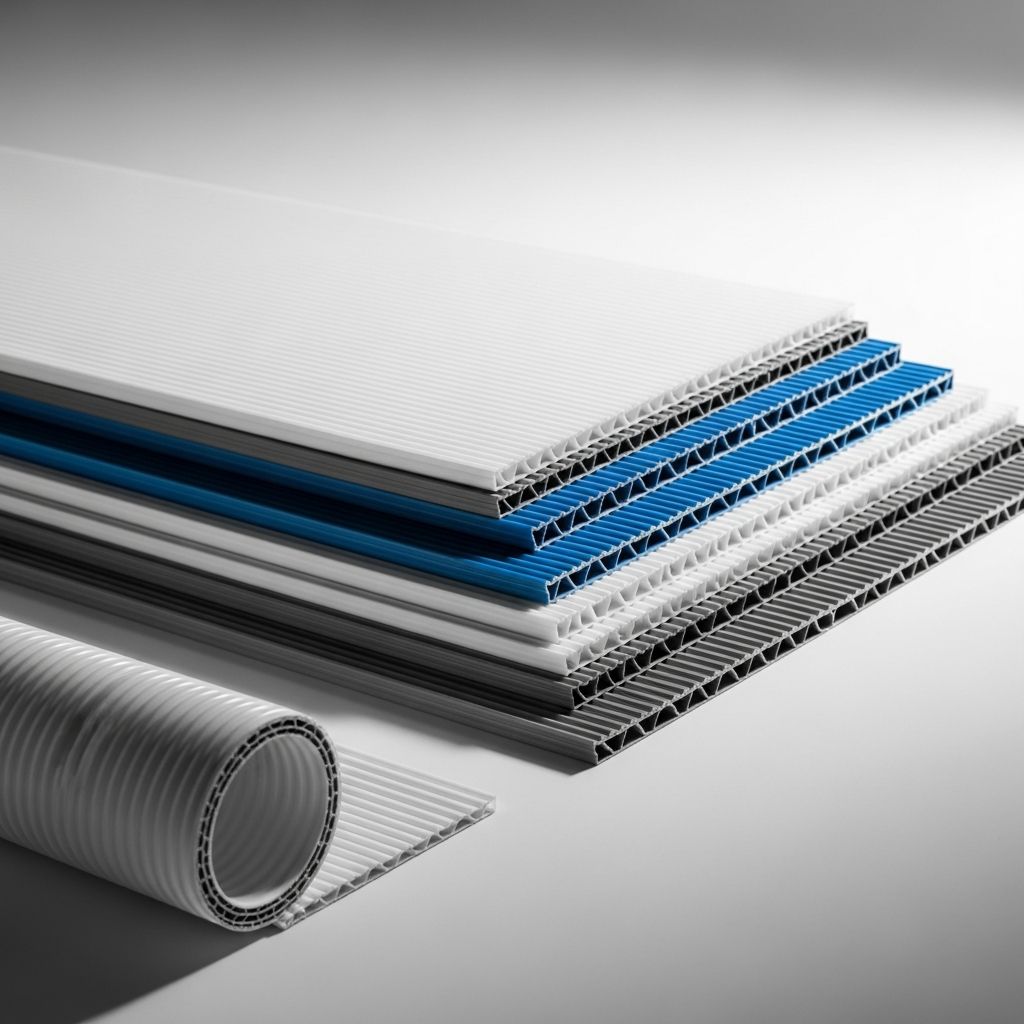
Corrugated plastic, often known as coroplast or polypropylene sheets, features a distinctive wavy internal structure that delivers remarkable strength while keeping weight minimal. This material excels in demanding environments due to its resistance to moisture, impacts, and chemicals, making it a go-to choice for packaging, signage, and construction needs.
Understanding the Structure and Composition
The core innovation of corrugated plastic lies in its twin-wall design: two flat outer layers sandwich a series of parallel flutes or channels running lengthwise. Typically made from high-density polyethylene (HDPE) or polypropylene (PP), this construction traps air within the flutes, enhancing insulation and rigidity without adding bulk.
Available in thicknesses from 2mm to 16mm, these sheets can be customized with various flute heights to balance flexibility and strength. Unlike flat plastics, the corrugation prevents sagging and boosts load-bearing capacity, allowing a single sheet to support significant weight relative to its mass.
Key Advantages Driving Popularity
Corrugated plastic outperforms traditional materials like cardboard or glass in several critical areas. Its lightweight nature—often half the weight of comparable polycarbonate—slashes shipping costs and eases handling.
- Superior Durability: Resists impacts, tears, and abrasions far better than paper-based alternatives, enduring rough transport and repeated use.
- Moisture and Weather Resistance: Unaffected by rain, humidity, or temperature swings, it maintains integrity where cardboard fails.
- Cost Efficiency: Lower upfront and long-term expenses due to reusability and minimal waste during customization.
- Environmental Benefits: 100% recyclable, reusable multiple times, and free from harmful chemicals like BPA, supporting sustainability goals.
- Printability and Customization: Smooth surfaces accept inks easily for vibrant graphics, and sheets can be die-cut, folded, or welded precisely.
Comparing Corrugated Plastic to Alternatives
To highlight its value, consider this comparison table of common materials:
| Property | Corrugated Plastic | Cardboard | Polycarbonate | Plywood |
|---|---|---|---|---|
| Weight | Very Light | Light | Moderate | Heavy |
| Moisture Resistance | Excellent | Poor | Good | Fair |
| Impact Strength | High | Low | Very High | High |
| Cost per sq ft | Low | Very Low | High | Moderate |
| Recyclability | 100% | Yes | Limited | No |
Corrugated plastic strikes an optimal balance for non-structural uses, outperforming cardboard in wet conditions and undercutting polycarbonate on price and weight.
Transformative Applications in Packaging and Logistics
In packaging, corrugated plastic revolutionizes protection for goods in transit. Reusable bins, dividers, and pallets reduce damage claims and freight expenses, with one seafood processor reporting halved shipping costs after switching from foam. Its chemical resistance safeguards electronics, pharmaceuticals, and perishables.
Agricultural sectors use it for stackable crates that withstand ice, dirt, and stacking loads, extending produce shelf life. Custom inserts fit irregular shapes perfectly, minimizing movement and breakage.
Essential Role in Construction and Site Management
Construction professionals rely on corrugated plastic for temporary yet robust solutions. Fire-retardant variants protect floors, walls, and counters from scratches, spills, and heavy equipment.
- Signage for safety warnings and project info, reusable across jobsites.
- Shuttering and formwork that demolds cleanly without warping.
- Temporary roofing and enclosures shielding work from rain and wind.
- Scaffolding panels and dust barriers maintaining clean, safe zones.
Lightweight sheets enable quick deployment for disaster relief shelters, providing insulated, waterproof cover.
Signage and Display Innovations
For advertising, corrugated plastic dominates with bold, fade-resistant prints on yard signs, political boards, and real estate displays. Its rigidity prevents curling in wind, and multiple colors enhance visibility. Event booths and retail POP stands benefit from easy assembly and portability.
Emerging Uses in Agriculture, Pets, and DIY
Agriculture employs ventilated boxes for ventilation during storage and transport. Pet owners favor it for enclosures that repel odors and clean effortlessly. DIY enthusiasts craft models, garden beds, and custom furniture, leveraging its cuttability and paint adhesion.
Sustainability and Future Prospects
As industries prioritize green materials, corrugated plastic’s recyclability—often into new sheets—positions it for growth. Reusable designs cut virgin plastic needs by up to 80% in closed-loop systems. Ongoing innovations include UV-stabilized grades for longer outdoor life and heavier-duty options for extreme loads.
Market demand surges in e-commerce and renewable energy projects, where durable, lightweight panels clad solar farm fences and wind barriers.
Frequently Asked Questions (FAQs)
What is corrugated plastic primarily made from?
It is usually produced from polypropylene (PP) or high-density polyethylene (HDPE), both recyclable thermoplastics that ensure strength and flexibility.
Is corrugated plastic suitable for outdoor use?
Yes, it offers excellent weatherproofing, resisting UV fading, hail, and moisture while retaining shape when wet.
How does it compare to cardboard for packaging?
Corrugated plastic is far more durable, waterproof, and reusable, though initially costlier; it saves money over multiple cycles.
Can corrugated plastic be recycled?
Absolutely—it’s fully recyclable into new products, with no fiber breakdown, supporting circular economy practices.
What thicknesses are available for different projects?
Options range from 4mm for signs to 16mm for heavy-duty construction, with custom fluting for specific needs.
Is it safe for food-related applications?
BPA-free grades meet food safety standards for produce crates and seafood boxes.
References
- Benefits and Uses of Corrugated Plastic Sheets — Piedmont Plastics. 2023-05-15. https://www.piedmontplastics.com/blog/corrugated-plastic-sheet-applications
- What Are the Benefits of Corrugated Plastic Packaging? — MDI. 2024-02-20. https://www.mdi.org/blog/post/what-are-the-benefits-of-corrugated-plastic-packaging-minnesota/
- What Are the Benefits of Using Corrugated Plastic Sheets for Various Applications — Singhal Global. 2023-11-10. https://www.singhalglobal.com/blog/what-are-the-benefits-of-using-corrugated-plastic-sheets-for-various-applications
- Corrugated Plastic’s Advantages and Applications — Coropak. 2024-01-08. https://www.coropak.com/knowledge/corrugated-plastics-advantages-and-applications/
- Benefit of Heavy Duty Coroplast — Polyflute. 2025-08-16. https://polyflute.com/2025/08/16/benefit-of-heavy-duty-coroplast/
- 10 Uses for Fire Retardant Corrugated Plastic on the Construction Site — Americover. 2023-07-22. https://www.americover.com/blog/10-uses-for-fire-retardant-corrugated-plastic-on-the-construction-site/

- Integrated M.A. in Applied Linguistics, University of Hyderabad
- 5+ years in editorial, instructional, SEO, and research-based writing
Sneha is a relationships and lifestyle writer with a strong foundation in applied linguistics and certified training in relationship coaching. She brings over five years of writing experience to theskillvault, crafting thoughtful, research-driven content that empowers readers to build healthier relationships, boost emotional well-being, and embrace holistic living. Her writing and insights reflect the belief that beauty, happiness, and wellness…