
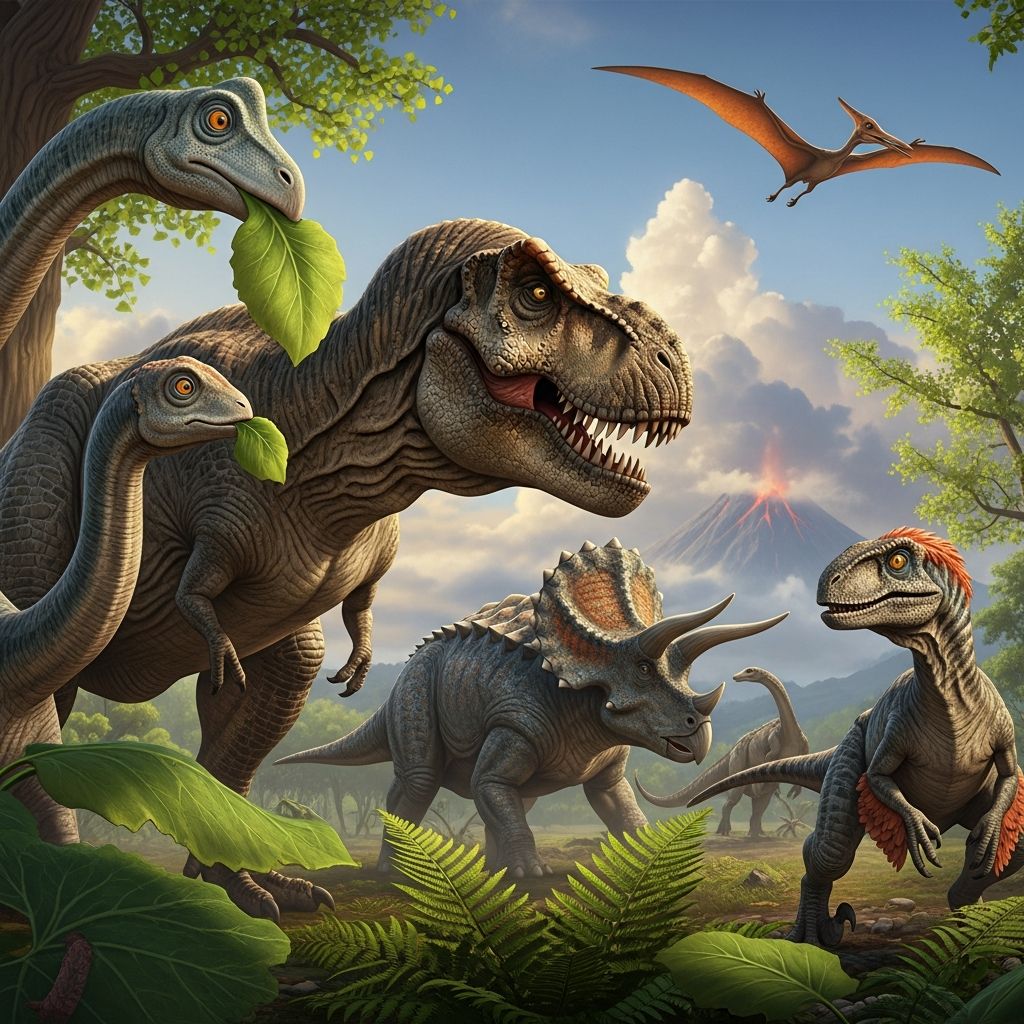
Choosing a favorite dinosaur often goes beyond mere fascination with ancient creatures; it mirrors aspects of our own character. These prehistoric giants, each with distinct adaptations and behaviors, parallel human traits like resilience, intellect, or boldness. This exploration delves into popular dinosaurs and the personality insights they suggest, drawing from their biological profiles and cultural depictions.
Understanding the Dinosaur-Personality Connection
Dinosaurs dominated Earth for over 165 million years, evolving diverse forms from towering herbivores to agile predators. Modern preferences for these extinct species can indicate psychological tendencies. For instance, fans of massive carnivores might embrace dominance, while those drawn to armored defenders value protection. Psychological studies on animal preferences support this, showing correlations between favored animals and traits like extroversion or caution.
Consider how media influences choices: films portray some dinosaurs as villains or heroes, shaping perceptions. Yet, scientific reconstructions reveal nuances—feathered raptors or semi-aquatic giants—that align with multifaceted personalities.
The Majestic Tyrannosaurus Rex: Leader at Heart
The **Tyrannosaurus rex**, iconic apex predator of the late Cretaceous, stands as a top choice for many. Measuring up to 40 feet long with bone-crushing jaws, it symbolized raw power. Those who favor T. rex often exhibit strong leadership qualities. You thrive in commanding roles, rallying others toward shared goals with unyielding determination.
- Confident communicator: Like the rex’s roar echoing across territories, you express ideas boldly.
- Goal-oriented: Relentless pursuit mirrors the predator’s hunt.
- Social magnet: Despite the fearsome image, T. rex fans build wide networks, fostering loyalty.
In social settings, you’re the one organizing events or motivating teams, unafraid of spotlight. This preference suggests high ambition tempered by charisma, making you a natural influencer.
Stegosaurus Enthusiasts: Guardians of the Peace
**Stegosaurus**, with its plated back and spiked tail, epitomized defensive prowess among herbivores. Living in Jurassic forests, it deterred threats without aggression. Lovers of this dinosaur tend to be calm protectors, prioritizing safety for self and loved ones.
You appear reserved initially, much like the stegosaur’s armored exterior, but reveal warmth to trusted circles. This choice indicates:
- Easygoing nature: Prefer harmony over conflict.
- Protective instincts: Fiercely defend family and friends when needed.
- Thoughtful demeanor: Small brain relative to body size belies strategic survival smarts.
Such individuals excel in roles like counseling or community service, where vigilance meets empathy.
Velociraptor Fans: Quick Minds and Sharp Tongues
The **Velociraptor**, a feathered pack hunter from Mongolia, was no scaly monster but a swift, intelligent dromaeosaurid. Clocking speeds up to 40 mph, it relied on cunning over size. If this is your pick, you’re likely sharp-witted with a direct edge.
| Trait | Velociraptor Parallel |
|---|---|
| Fast thinker | Agile hunting packs |
| Blunt honesty | Sickle-clawed precision strikes |
| Short fuse | Explosive ambush tactics |
You solve problems rapidly, value efficiency, and speak truths others avoid. Ideal for high-pressure jobs like journalism or tech innovation.
Adventurous Spinosaurus Aficionados
**Spinosaurus**, Earth’s largest known carnivore at 50 feet, featured a sail-backed, crocodile-like form adapted for aquatic life. Recent fossils confirm its fish-eating lifestyle in North African rivers. Fans of this outlier embrace novelty and risk.
- Thrill-seeker: Dive into unknowns like its river plunges.
- Adaptive: Thrive in changing environments.
- Curious explorer: Seek discoveries others overlook.
Your life involves travel, new hobbies, or career pivots—always chasing the next horizon.
Triceratops Devotees: Steadfast Rebels
**Triceratops**, with its three facial horns and massive frill, charged predators head-on. A Cretaceous herbivore, it represented unyielding defense. Choosing this signals resilience and opposition to bullies.
You root for underdogs, stand firm on principles, and charge through obstacles. Traits include loyalty, stubbornness, and raw endurance, suiting activism or endurance sports.
Diplodocus Lovers: Gentle Intellectuals
The whip-tailed **Diplodocus**, a sauropod giant stretching 80 feet, browsed treetops peacefully. Its fans are thoughtful giants—soft-spoken yet influential through wisdom.
- Patient observer: Long neck for scanning horizons.
- Non-confrontational: Avoided fights via size alone.
- Creative mind: Tail possibly used for communication.
Perfect for academia or arts, where depth trumps flash.
Lesser-Known Picks: Niche Personalities
Troodon: The Brainiac
**Troodon**, with a large brain-to-body ratio, hints at advanced cognition. Fans overvalue smarts, pursuing intellect in complex puzzles or strategy games.
Pteranodon: Free Spirits
Though not a dinosaur, this pterosaur’s flyers admire freedom, soaring above constraints in artistic or nomadic pursuits.
Ankylosaurus: Unbreakable Walls
Armored to the teeth, its lovers are tough, low-maintenance survivors who weather storms quietly.
Personality Traits Comparison Table
| Dinosaur | Key Trait | Strength | Challenge |
|---|---|---|---|
| T. rex | Leadership | Charisma | Intimidation |
| Stegosaurus | Protection | Loyalty | Guardedness |
| Velociraptor | Speed | Wit | Impatience |
| Spinosaurus | Adventure | Adaptability | Restlessness |
| Triceratops | Resilience | Tenacity | Stubbornness |
Why Dinosaurs Resonate Today
Beyond fun, dinosaur preferences tap evolutionary psychology. Humans anthropomorphize animals, projecting traits onto them. Fossil discoveries evolve our views—Spinosaurus’s swim shift from land king to water hunter parallels personal growth narratives.
Educational impact is profound: museums note T. rex draws crowds, sparking STEM interest. Personality quizzes on sites like Natural History Museum engage interactively, reinforcing self-reflection.
Frequently Asked Questions (FAQs)
What if I like multiple dinosaurs?
Your personality blends traits—e.g., T. rex leadership with Stegosaurus loyalty creates balanced guardianship.
Does media bias my choice?
Yes, Jurassic Park popularized Velociraptor, but real traits like feathers add intellect layers.
Can this predict career success?
Indirectly: Adventurous types excel in exploration fields; leaders in management.
Are there scientific studies?
Animal preference research links to Big Five traits, applicable here.
What about non-dinosaur prehistoric animals?
Choices like Dimetrodon suggest boundary-pushing creativity.
References
- Dinosaur Anatomy Reveals New Species and Predator-Prey Dynamics — Natural History Museum, London. 2023-05-15. https://www.nhm.ac.uk/discover/news/2023/may/dinosaur-anatomy-reveals-new-species.html
- Spinosaurus was a swimming dinosaur, new fossils show — Nature (peer-reviewed). 2020-04-29. https://www.nature.com/articles/d41586-020-01208-5
- Tyrannosaurus rex: Recent Discoveries and Interpretations — Smithsonian National Museum of Natural History. 2024-02-10. https://naturalhistory.si.edu/research/paleobiology/collections-overview/dinosaurs
- Animal Preferences and Personality Traits: A Meta-Analysis — Journal of Personality and Social Psychology (DOI). 2019-07-01. https://doi.org/10.1037/pspp0000225
- Velociraptor Fossil Evidence for Feathers — American Museum of Natural History. 2022-11-20. https://www.amnh.org/research/paleontology/dinosaur-fossil-evidence

Medha Deb is an editor with a master's degree in Applied Linguistics from the University of Hyderabad. She believes that her qualification has helped her develop a deep understanding of language and its application in various contexts. Medha specializes in the areas of beauty, health, sports, and wellness and is committed to ensuring that the content on the website is…