
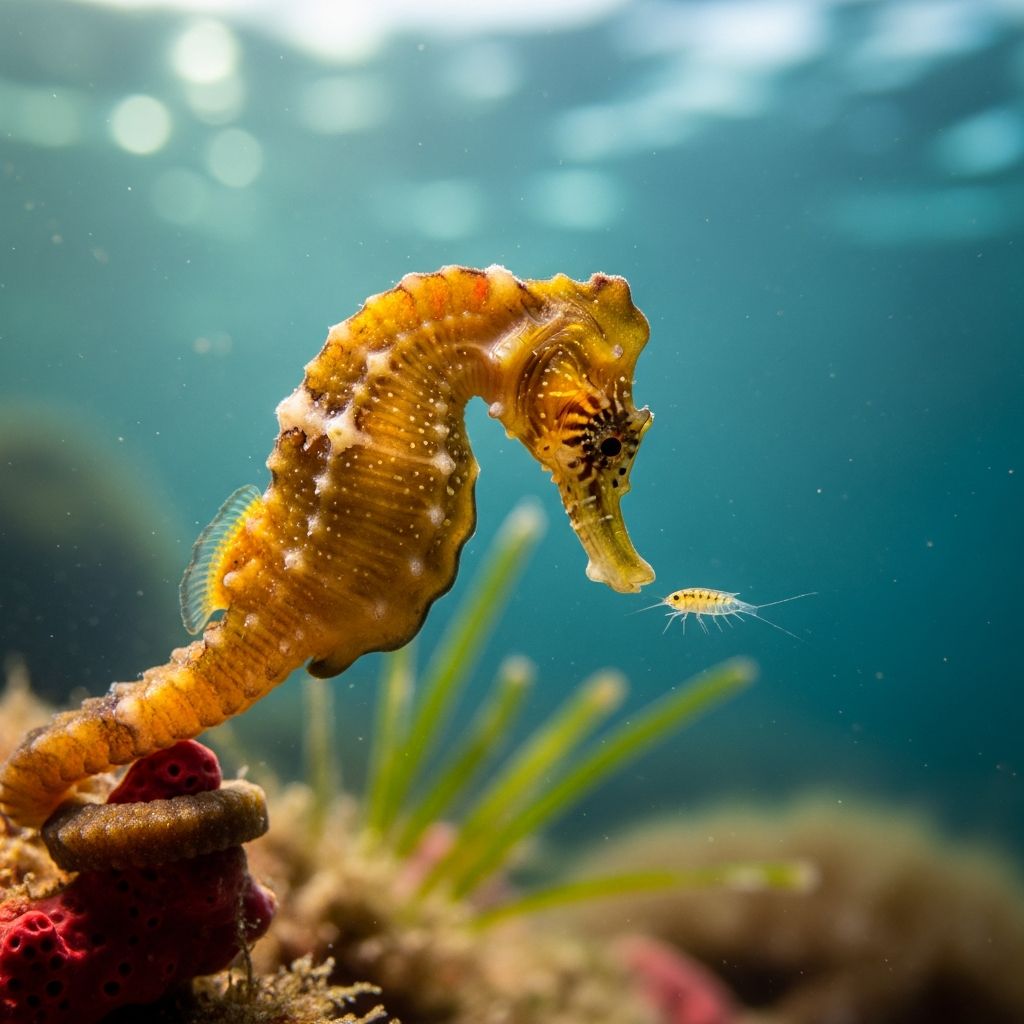
Understanding Seahorse Feeding Behavior and Physiology
Seahorses represent one of nature’s most fascinating marine creatures, yet their dietary needs remain misunderstood by many aquarium enthusiasts and casual observers. These delicate fish possess a remarkably unique approach to consuming food that sets them apart from virtually all other fish species. Their predatory behavior, combined with an exceptional digestive system, creates feeding patterns that demand constant attention and specialized understanding.
The physiological characteristics of seahorses directly influence their nutritional requirements. Unlike most fish, seahorses lack both teeth and a functional stomach, which fundamentally changes how they process food and obtain energy. This anatomical distinction means that food must travel rapidly through their system, necessitating frequent feeding throughout the day. The absence of a stomach is particularly significant because it prevents the storage of nutrients, forcing these creatures into a nearly continuous feeding cycle to maintain adequate energy levels.
Another critical adaptation is their distinctive snout structure. This elongated, tubular formation serves as a sophisticated feeding apparatus designed specifically for capturing minute prey items. The snout’s unique morphology provides a hydrodynamic advantage, allowing seahorses to approach their prey without creating significant water disturbance that might alert potential meals. This specialized head design represents an evolutionary solution to the challenge of hunting organisms that would otherwise escape through standard feeding mechanisms.
The Preferred Prey of Wild Seahorses
In their natural marine environments, seahorses function as dedicated ambush predators, relying on patience and precise timing rather than speed or aggressive pursuit. Their primary prey consists of small crustaceans, collectively referred to as zooplankton, which populate the water column and substrate where seahorses make their homes. These tiny organisms provide the essential nutrients and energy required to sustain seahorse populations across various ocean habitats.
Mysid shrimp represent the cornerstone of the wild seahorse diet, likely accounting for a substantial portion of their daily consumption. These shrimp-like crustaceans, which technically belong to a different taxonomic group than true shrimp, are ideally sized for seahorse consumption and abundant in coastal ecosystems. The prevalence of mysids in seahorse diets suggests they are particularly well-suited to meeting the nutritional requirements of these fish across different species and life stages.
Beyond mysids, seahorses consume numerous other crustacean varieties that collectively constitute their natural feeding palette:
- Copepods: minute crustaceans that form a primary food source, particularly for younger seahorses and dwarf species
- Amphipods: larger crustaceans that provide substantial nutrition for adult seahorses
- Ostracods: small bivalved crustaceans found in marine environments
- Isopods: relatives of terrestrial pill bugs that offer nutritional value comparable to amphipods
- Ghost shrimp: transparent shrimp species consumed opportunistically when available
- Grass shrimp: naturally occurring shrimp that represent important dietary components
- Larval crustaceans: juvenile forms of larger species that seahorses can readily consume
Scientific observation has occasionally documented seahorses consuming invertebrates beyond their typical crustacean diet, including larval fish and other small organisms. However, these instances appear rare and likely represent opportunistic feeding rather than dietary preferences. The overwhelming evidence indicates that crustaceans remain the dominant food group throughout seahorse evolutionary history and contemporary feeding patterns.
The Mechanics of Seahorse Predation
The hunting strategy employed by seahorses demonstrates remarkable sophistication despite their reputation as delicate, slow-moving creatures. Rather than actively pursuing prey through open water, seahorses utilize a sit-and-wait predation method that exploits their exceptional camouflage capabilities. This patient approach allows them to conserve energy while positioning themselves for successful feeding encounters.
The predatory sequence begins with the seahorse anchoring itself to seagrass, coral, or other marine structures using its distinctive prehensile tail. This anchoring behavior serves multiple purposes: it maintains position within productive feeding zones, provides stability despite water movement, and positions the seahorse for rapid strike execution. Once secured, the seahorse enters an observation phase, monitoring the surrounding water for prey movement.
When suitable prey approaches within striking distance, the seahorse initiates a rapid capture sequence involving sophisticated biomechanical movements. The process unfolds through several coordinated phases: initial head positioning, rapid rotational movement, and suction generation. Large tendons surrounding the seahorse’s head store elastic energy that, when released, powers the acceleration required for successful prey capture. This mechanical system allows the snout to move with sufficient speed to overcome prey escape responses, particularly critical when hunting evasive organisms like copepods.
The actual feeding mechanism relies on suction generation through rapid snout expansion. As the seahorse’s mouth opens, a pressure differential draws the prey item into the snout and directly into the digestive tract. This suction feeding mechanism eliminates the need for teeth or crushing mouth parts, allowing the seahorse to consume prey whole without mechanical processing. The effectiveness of this system is remarkable, enabling seahorses to capture prey organisms significantly smaller than the mouth opening itself.
Feeding Frequency and Daily Consumption Requirements
The absence of a functional stomach creates extraordinary feeding demands that distinguish seahorses from virtually all other fish species. Adult seahorses consume food between thirty to fifty times daily under optimal conditions, representing a frequency that astounds many observers unfamiliar with seahorse physiology. This constant feeding requirement reflects the rapid passage of food through their system and the energy demands of maintaining their distinctive body structure and behaviors.
Juvenile seahorses demonstrate even more extreme feeding requirements that seem almost impossibly demanding. Seahorse fry exhibit the most remarkable feeding frequency of any marine organism, consuming approximately three thousand food items daily during their earliest development stages. This astronomical consumption rate reflects the extraordinary metabolic demands of rapid growth and development, combined with the inefficiency inherent in their stomachless digestive system. The fry’s small size and lack of developed energy reserves necessitate nearly continuous feeding to prevent starvation.
The practical implications of these feeding requirements significantly impact seahorse husbandry in captive settings. Maintaining seahorses requires commitment to multiple daily feeding sessions, often spread throughout daylight hours when seahorses are naturally active. The need for frequent feeding has historically limited seahorse popularity in home aquariums and challenged commercial breeding programs attempting to establish sustainable populations.
Dietary Considerations for Captive Seahorses
Replicating the wild seahorse diet in captive environments presents substantial challenges that distinguish seahorse care from most other aquarium fish species. While wild seahorses enjoy access to a diverse zooplankton assemblage representing numerous species and sizes, captive populations must rely on limited food options available through commercial suppliers or developed through individual culture techniques.
Frozen mysid shrimp has emerged as the primary staple diet for captive-bred seahorses, largely because seahorses accept this food readily and it provides comprehensive nutrition supporting growth and reproduction. Commercial aquaculture operations breeding seahorses typically base their feeding protocols on frozen mysids, often enriched with additional nutrients to ensure complete nutritional profiles. For captive-bred seahorses specifically adapted to this diet from early development stages, frozen mysids can represent an effective sole food source, though supplementation improves outcomes.
Live food alternatives provide nutritional diversity and behavioral enrichment that contribute to overall seahorse welfare in captive settings. Aquaculturists and serious hobbyists maintain cultures of various live organisms to supplement or replace frozen preparations:
- Live copepods: particularly valuable for dwarf seahorse species and newly developed fry
- Live amphipods: high-nutrition organisms cultured in refugium systems
- Live brine shrimp: traditionally used for fry rearing despite inferior nutritional value compared to mysids
- Rotifers: microscopic organisms essential for feeding the tiniest seahorse fry during their initial development
Wild-caught seahorses present particular dietary challenges because their feeding preferences remain fixed to organisms from their specific geographic origins. These individuals frequently refuse frozen preparations and unfamiliar food types, requiring extended acclimation periods involving gradual introduction to captive food sources. Some wild-caught specimens never successfully transition to captive diets and gradually decline in condition despite consistent feeding attempts.
Nutritional Adequacy and Enrichment Strategies
Ensuring comprehensive nutrition extends beyond simply providing adequate food volume; seahorses require diverse dietary components to maintain health, support reproduction, and enable successful fry development. Some frozen commercial foods contain insufficient vitamin content and essential micronutrients unless specifically enriched during processing. Fish stores increasingly recommend alternating between multiple food types to ensure seahorses receive complete nutritional profiles.
Enrichment protocols involve supplementing or pre-treating foods to enhance their nutritional value before offering them to seahorses. Live foods can be enriched through specialized feeding protocols that increase their nutrient density before consumption by seahorses. Frozen foods from reputable suppliers are often pre-enriched with spirulina, vitamins, and minerals during manufacturing, though verification of enrichment status remains important for optimal results.
| Food Type | Nutritional Value | Ease of Culture | Suitable For |
|---|---|---|---|
| Frozen Mysid Shrimp | Excellent (if enriched) | N/A (Commercial) | Adult seahorses |
| Live Copepods | High | Moderate | Fry and dwarf species |
| Live Amphipods | Very High | Easy | Adult seahorses |
| Live Brine Shrimp | Low to Moderate | Very Easy | Fry (best option for smallest individuals) |
| Rotifers | Low to Moderate | Moderate | Newborn fry |
Relying exclusively on single food sources creates significant nutritional risks that can manifest through various health problems including reduced reproductive success, color fading, and gradual condition decline. The diversity available in wild environments cannot be perfectly replicated in captivity, but providing multiple food options substantially improves outcomes compared to monotonous diets.
Species-Specific Dietary Variations
While all seahorse species share fundamental dietary preferences for small crustaceans, subtle variations exist between different species reflecting their respective ecological niches and evolutionary histories. Larger seahorse species consume proportionally larger prey items, including substantial mysids and amphipods that dwarf species cannot readily consume. Conversely, dwarf seahorse species rely heavily on copepods and newly hatched brine shrimp throughout their lives due to their diminutive mouth size.
Geographic origin influences dietary adaptability in wild-caught specimens, as seahorses from different regions evolved consuming distinct local zooplankton assemblages. Seahorses from temperate regions may demonstrate different feeding preferences and acceptability of specific food types compared to tropical congeners. Understanding these regional variations helps explain why certain wild-caught individuals resist captive feeding protocols while others transition successfully.
Establishing Effective Feeding Protocols
Successful seahorse maintenance requires establishing consistent feeding schedules that provide adequate nutrition while avoiding food waste and water quality degradation. Most authorities recommend multiple daily feeding sessions, typically two to four depending on seahorse age and species, rather than attempting single large feeding sessions. This approach aligns with natural feeding patterns and allows proper monitoring of individual appetite and condition.
Feed volume should be calibrated to ensure consumption of virtually all offered food within several minutes, preventing uneaten material from accumulating in the aquarium environment. Overfeeding represents a significant concern in seahorse aquariums, potentially degrading water chemistry and promoting disease. Conversely, underfeeding inevitably leads to condition loss and developmental problems in juveniles.
Observation during feeding periods provides valuable information regarding seahorse health and appetite status. Individual variations in feeding enthusiasm may indicate disease development, environmental stressors, or incompatible tank mates. Regular feeding observations allow early intervention when health problems emerge.
Frequently Asked Questions
Q: Can seahorses survive on frozen food alone?
A: Yes, captive-bred seahorses can maintain health on quality frozen mysid shrimp, though supplementation with live foods improves outcomes and supports breeding success.
Q: How do seahorses capture prey without teeth?
A: Seahorses use rapid suction generation through their tubular snouts to draw prey directly into their digestive system, eliminating the need for mechanical crushing.
Q: Why do some seahorses refuse to eat frozen food?
A: Wild-caught seahorses evolved consuming specific live prey from their native environments and may not recognize frozen preparations as food without extended acclimation.
Q: How many times daily should I feed my seahorse?
A: Most experts recommend two to four feeding sessions daily, distributing food intake throughout daylight hours to match natural feeding patterns.
Q: Are brine shrimp adequate nutrition for adult seahorses?
A: Non-enriched brine shrimp lack sufficient nutrition and will eventually cause nutritional deficiencies; mysid shrimp represent superior choices for adult seahorses.
Q: What should I feed newborn seahorse fry?
A: Newly hatched fry require rotifers initially, graduating to enriched brine shrimp and copepods as they develop the ability to consume slightly larger prey.
References
- The Seahorse Diet Requires Stealth and Patience in the Wild — HowStuffWorks. https://animals.howstuffworks.com/fish/seahorse-diet.htm
- Seahorse – Wikipedia — Wikipedia. https://en.wikipedia.org/wiki/Seahorse
- Nutrition Part I: Live Foods for Adult Seahorses — Seahorse.com. https://seahorse.com/fama/nutrition-part-i-live-foods-adult-seahorses/
- Seahorse Facts — The Seahorse Trust. https://www.theseahorsetrust.org/seahorse-facts/
- Seahorse Foods and Feeding — Seahorse.org. https://www.seahorse.org/library/articles/SeahorseFoods.php
- Facts About Seahorses — SEA LIFE Orlando Aquarium. https://www.visitsealife.com/orlando/whats-inside/creatures/seahorses/
- What do seahorses eat? #FunFactFriday — Project Seahorse. https://projectseahorse.org/what-do-seahorses-eat-funfactfriday/

Medha Deb is an editor with a master's degree in Applied Linguistics from the University of Hyderabad. She believes that her qualification has helped her develop a deep understanding of language and its application in various contexts. Medha specializes in the areas of beauty, health, sports, and wellness and is committed to ensuring that the content on the website is…