
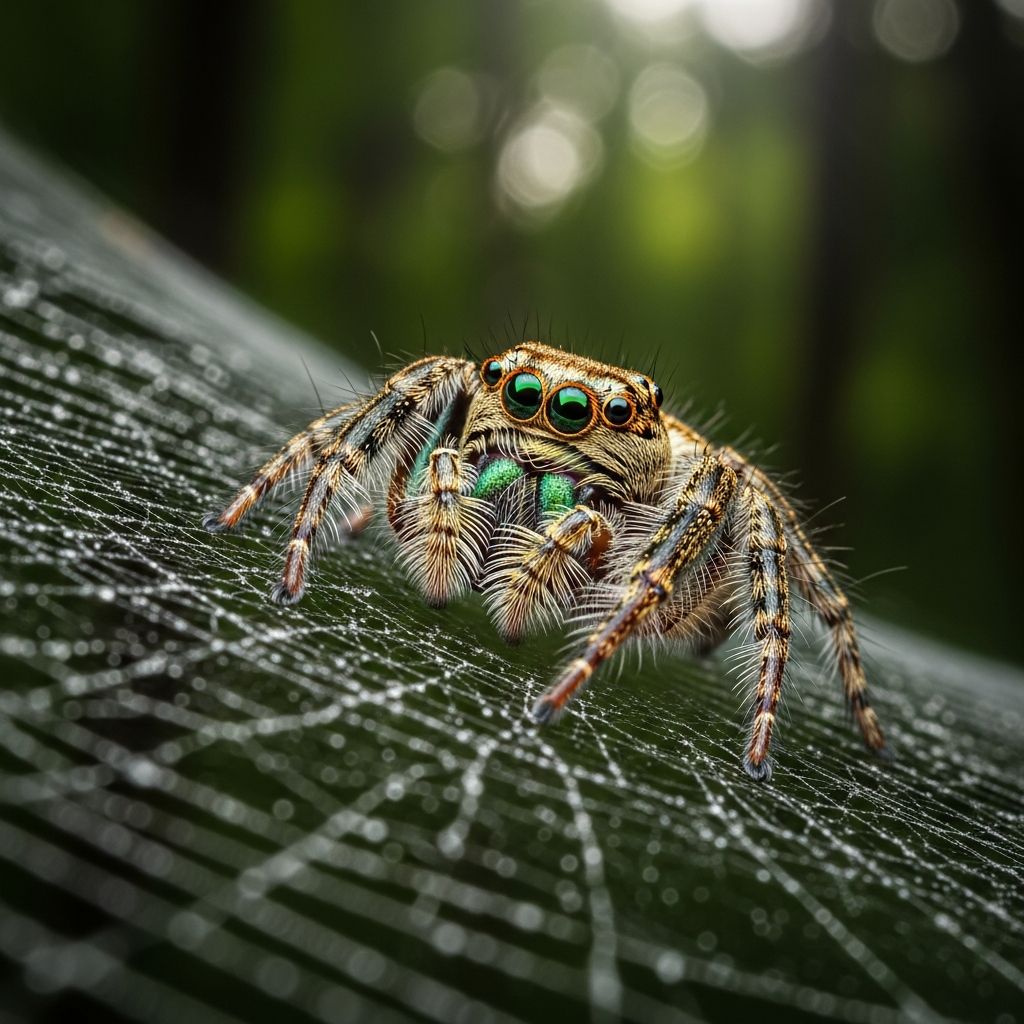
Arachnids represent a captivating class of jointed-limbed creatures within the phylum Arthropoda, distinguished by their eight walking legs and absence of antennae or wings. Encompassing over 110,000 described species, this group includes familiar sights like spiders and scorpions alongside microscopic mites and ticks. These primarily terrestrial invertebrates play crucial roles in ecosystems as predators, decomposers, and occasional parasites, showcasing remarkable adaptations honed over more than 420 million years.
Core Anatomy of Arachnids
The body plan of arachnids is elegantly simple yet highly specialized. Unlike insects with three body segments and six legs, arachnids feature two main tagmata: the prosoma (or cephalothorax) at the front and the opisthosoma (abdomen) at the rear. The prosoma houses four pairs of legs, a pair of chelicerae—pincer- or fang-like mouthparts used for feeding—and pedipalps, appendages that aid in sensing, manipulating prey, or reproduction. In some species, like certain mites or harvestmen, these regions may fuse, creating a more unified appearance.
Arachnids possess a tough chitinous exoskeleton that provides protection and support, requiring periodic molting (ecdysis) for growth. Sizes vary dramatically, from mites smaller than 0.1 mm to scorpions exceeding 20 cm in length. Most bear multiple pairs of eyes, though their vision ranges from rudimentary to acute in hunting spiders. Respiratory systems often include book lungs or tracheae, enabling efficient gas exchange in diverse environments.
Major Groups Within the Arachnida Class
Arachnids diversify into eleven orders, with spiders (Araneae) dominating at around 51,000 species. Here’s an overview of key groups:
- Spiders (Araneae): The largest order, known for silk-producing spinnerets on the abdomen. They range from tiny 0.4 mm species to giants with 28 cm leg spans.
- Scorpions (Scorpiones): Armored predators with pincers and venomous stingers, often nocturnal and fluorescing under UV light.
- Mites and Ticks (Acari): The most species-rich after spiders, including parasites that transmit diseases and free-living forms.
- Harvestmen (Opiliones): Or ‘daddy longlegs,’ with long legs and a single body segment; non-venomous and omnivorous.
- Pseudoscorpions (Pseudoscorpiones): Tiny, scorpion-like with large pedipalp pincers but no tail.
- Other Orders: Include whip scorpions (Amblypygi), vinegaroons (Thelyphonida), and sun spiders (Solifugae), each with unique adaptations like elongated feeler-legs.
Feeding Strategies and Predatory Lifestyles
The vast majority of arachnids are carnivorous, employing chelicerae to inject venom and digestive enzymes that liquefy prey internals for sucking up. Spiders exemplify this: orb-weavers spin webs to ensnare insects, while wolf spiders hunt actively on foot. Scorpions grasp victims with pedipalps before stinging, and solifuges are relentless sprinters chasing down prey.
Exceptions abound in mites, which may feed on plants, fungi, detritus, or as parasites. Ticks attach to hosts, engorging on blood over days. This liquid diet necessitates specialized mouthparts, as few arachnids chew solids—daddy longlegs being a rare omnivorous outlier. These strategies underscore arachnids’ prowess as invertebrate controllers, curbing pest populations.
Habitats and Global Distribution
Arachnids thrive in nearly every terrestrial niche, from Arctic tundras to scorching deserts, and some aquatic realms. Spiders dominate forests, grasslands, and homes worldwide, while scorpions favor arid zones. Mites permeate soils, freshwater, and even hot springs, with over 50,000 species. High-altitude and polar species demonstrate cold tolerance, and desert dwellers like the African scorpion Hadogenes troglodytes endure extreme dehydration.
Human-modified landscapes host synanthropic arachnids like house spiders and dust mites, highlighting their adaptability. Fossil records trace their origins to the Silurian, over 420 million years ago, predating most modern arthropods.
| Feature | Arachnids | Insects |
|---|---|---|
| Legs | 8 (4 pairs) | 6 (3 pairs) |
| Body Segments | 2 (prosoma + opisthosoma) | 3 (head + thorax + abdomen) |
| Antennae | Absent | Present |
| Wings | Absent | Often present |
| Mouthparts | Chelicerae + pedipalps | Mandibles |
Reproduction and Life Cycles
Arachnid reproduction emphasizes internal fertilization via specialized pedipalps in males, which transfer sperm packets (spermatophores) or directly. Spiders exhibit courtship dances to avoid cannibalism, with males often smaller and vibrantly marked. Females guard egg sacs, and spiderlings disperse via ballooning on silk threads.
Scorpions bear live young, which climb onto the mother’s back post-birth. Mites undergo complex metamorphoses, with larval stages differing markedly from adults. Lifespans vary: some spiders live 1-2 years, scorpions up to 25, while mites complete generations in days. Molting punctuates growth, with vulnerability peaking during ecdysis.
Ecological Impact and Human Interactions
Arachnids regulate ecosystems by preying on insects, reducing agricultural pests naturally. Mites aid decomposition and pollination indirectly. Yet, ticks and mites vector diseases like Lyme and typhus, posing health risks. Medically, scorpion and spider venoms yield pharmaceuticals for painkillers and antibiotics.
Cultural fears belie their benefits; spiders consume vast insect quantities annually. Conservation targets threatened species in shrinking habitats.
Common Misconceptions Clarified
- Myth: All arachnids are venomous. Only about half of spiders have venom dangerous to humans; most are harmless.
- Myth: Daddy longlegs are the most venomous but can’t bite. Harvestmen lack venom glands entirely.
- Myth: Camels spiders chase humans. Solifuges are fast predators of small prey, not people.
Frequently Asked Questions (FAQs)
What defines an arachnid?
Arachnids are arthropods with eight legs, two body parts, chelicerae, and no antennae or wings.
How many arachnid species exist?
Over 110,000 named species, mostly spiders and mites.
Are all arachnids spiders?
No, spiders are one order; others include scorpions, ticks, and harvestmen.
Do arachnids bite humans often?
Most do not; bites are rare and usually mild.
Where do arachnids live?
Primarily on land worldwide, some in water; from deserts to homes.
Conservation and Future Research
Habitat loss threatens endemic arachnids, prompting studies in arachnology. Genomics reveals evolutionary ties to chelicerates, informing biodiversity efforts. Citizen science apps track distributions, aiding preservation. Understanding these ancient survivors ensures balanced ecosystems.
(Word count: 1678)
References
- ARACHNID Definition & Meaning — Merriam-Webster. Accessed 2026. https://www.merriam-webster.com/dictionary/arachnid
- Arachnid | Definition, Characteristics, Spiders, Scorpions, Mites — Encyclopædia Britannica. Accessed 2026. https://www.britannica.com/animal/arachnid
- Arachnids and arachnology — British Arachnological Society. Accessed 2026. https://britishspiders.org.uk/arachnids
- Arachnida: INFORMATION — University of Michigan BioKIDS. Accessed 2026. https://biokids.umich.edu/critters/Arachnida/
- Arachnid – Wikipedia — Wikipedia (informational, primary sources preferred). Accessed 2026. https://en.wikipedia.org/wiki/Arachnid

- Integrated M.A. in Applied Linguistics, University of Hyderabad
- 5+ years in editorial, instructional, SEO, and research-based writing
Sneha is a relationships and lifestyle writer with a strong foundation in applied linguistics and certified training in relationship coaching. She brings over five years of writing experience to theskillvault, crafting thoughtful, research-driven content that empowers readers to build healthier relationships, boost emotional well-being, and embrace holistic living. Her writing and insights reflect the belief that beauty, happiness, and wellness…