
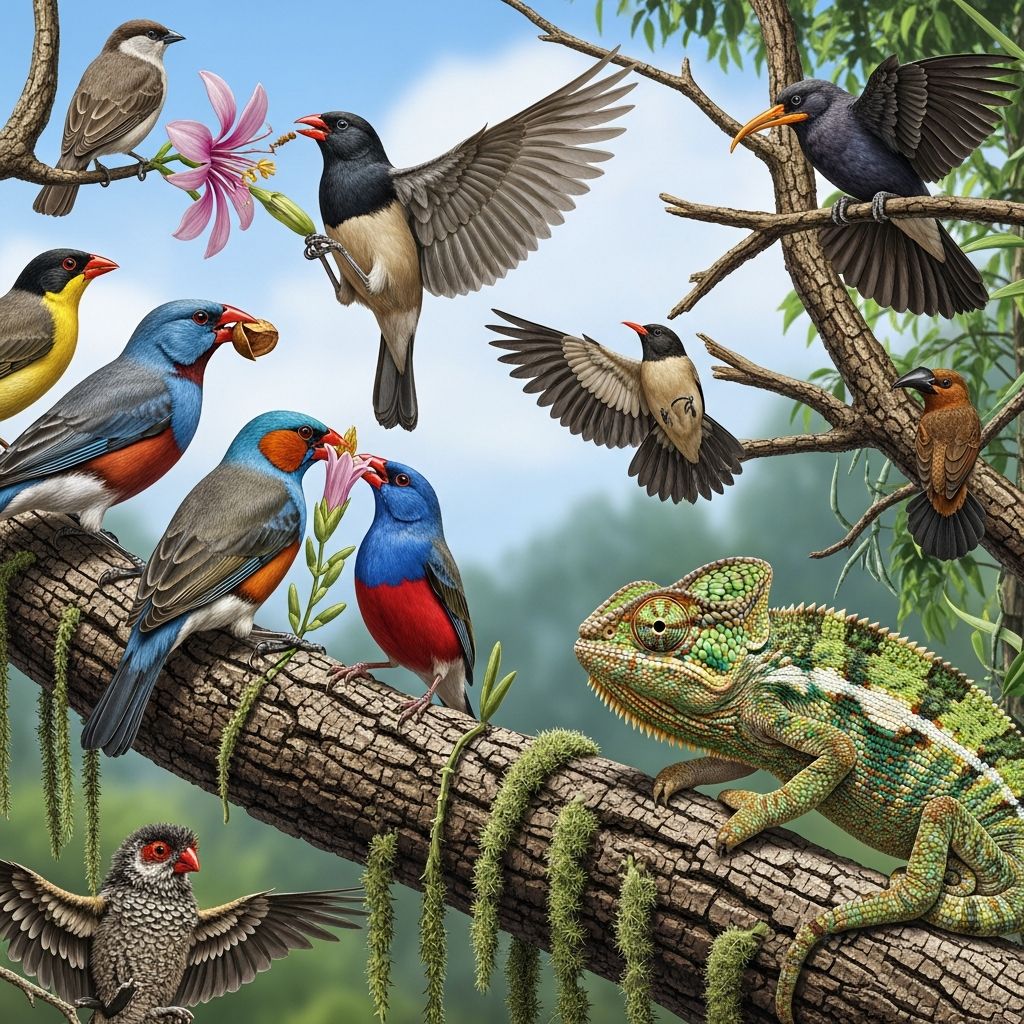
Natural selection serves as the cornerstone of evolutionary biology, acting as the primary driver behind changes in species over generations. By favoring certain heritable traits that enhance survival and reproduction, it molds populations in distinct ways. This article delves into the three main patterns of natural selection—stabilizing, directional, and disruptive—explaining their mechanisms, effects on genetic variation, and observable examples in nature.
Foundations of Natural Selection in Populations
At its core, natural selection operates on phenotypic variation within a population, where individuals with advantageous traits are more likely to survive and pass on their genes. This process influences allele frequencies in the gene pool, leading to adaptive evolution. Environmental pressures, such as predation, resource availability, or climate shifts, determine which traits confer fitness advantages.
Understanding these patterns requires examining how selection acts on trait distributions, often visualized through bell curves representing phenotypic variation. Each type shifts this curve differently: narrowing it, skewing it, or splitting it, ultimately affecting biodiversity and speciation potential.
Stabilizing Selection: Preserving the Status Quo
Stabilizing selection favors individuals exhibiting intermediate phenotypes, reducing extremes and promoting uniformity around the population mean. This pattern decreases genetic variance by selecting against both high and low trait values, reinforcing traits already well-suited to stable environments.
For instance, in human populations, birth weight exemplifies stabilizing selection. Infants with moderate weights (around 7 pounds) have the highest survival rates; those too small face developmental issues, while overly large ones encounter birth complications. Over time, this maintains an optimal average weight.
In birds like sparrows, clutch size follows a similar pattern. Moderate broods balance parental investment: too few offspring waste resources, too many overwhelm care capacity. This results in consistent clutch sizes across generations.
- Key traits affected: Continuous variables like size, weight, or timing of reproduction.
- Genetic impact: Lowers variance, stabilizes population traits.
- Environmental context: Consistent conditions where averages outperform extremes.
Graphically, the bell curve narrows at the tails, peaking sharply at the mean.
Directional Selection: Pushing Toward New Extremes
Directional selection occurs when one phenotypic extreme is preferentially favored, shifting the population’s trait distribution toward that end. This skews the bell curve, increasing the frequency of the selected allele and often leading to rapid evolutionary change.
A classic example is the peppered moth during England’s Industrial Revolution. Light-colored moths thrived in pre-industrial forests, but pollution darkened tree bark, favoring darker mutants that camouflaged better against predators. Within decades, dark moths dominated, demonstrating how environmental shifts drive directional change.
Another case involves antibiotic resistance in bacteria. Exposure to drugs selects for resistant strains, shifting populations toward higher resistance levels as susceptible individuals perish.
- Key traits affected: Traits under novel pressures, like coloration or resistance.
- Genetic impact: Increases frequency of beneficial alleles, reduces others.
- Environmental context: Changing conditions favoring one direction.
This pattern is common in responses to human-induced changes, accelerating adaptation.
Disruptive Selection: Favoring the Extremes
Disruptive selection, also called diversifying selection, advantages both phenotypic extremes while disfavoring intermediates. This bimodal shift can fragment populations, potentially leading to speciation as distinct groups diverge.
Consider African seedcracker finches with beak sizes adapted to hard or soft seeds. Large beaks crack hard seeds efficiently, small beaks handle soft ones, but medium beaks perform poorly on both, getting selected against. This promotes two beak size peaks.
In marine environments, male mating strategies in lobsters illustrate this: dominant large males guard territories aggressively, while small ‘sneaker’ males covertly mate. Mid-sized males succeed at neither, creating extreme phenotypes.
- Key traits affected: Multimodal traits like size or behavior.
- Genetic impact: Increases variance, promotes polymorphism.
- Environmental context: Heterogeneous habitats rewarding specialization.
Over time, disruptive selection heightens genetic diversity and may split gene pools.
Visualizing Selection Patterns
To clarify differences, the table below compares the three types across key dimensions:
| Selection Type | Trait Favoritism | Curve Shift | Genetic Variance | Example |
|---|---|---|---|---|
| Stabilizing | Intermediate | Narrows | Decreases | Human birth weight |
| Directional | One extreme | Skews | Shifts | Peppered moths |
| Disruptive | Both extremes | Bimodal | Increases | Finch beak sizes |
This comparison highlights how each pattern uniquely sculpts evolution.
Beyond Individuals: Multilevel Selection Dynamics
While most selection acts on individuals, multilevel perspectives consider group-level effects. Cultural selection, for example, parallels biological selection by propagating behaviors through imitation and language, influencing human evolution.
Group selection posits benefits to the collective, like altruism in social insects, where worker sterility aids colony survival despite individual costs. Modern theory integrates this with kin and multilevel selection.
Selection Biases in Research Contexts
In scientific studies, selection biases distort findings by non-representative sampling. Healthy worker effect, for instance, underestimates occupational risks since employed people are healthier than the general population.
Other biases include referral filter, where tertiary care patients skew toward severe cases, or volunteer bias, where participants differ systematically from non-volunteers.
Real-World Implications and Modern Applications
These patterns inform conservation, agriculture, and medicine. In crop breeding, directional selection enhances yields; in pest management, it predicts resistance evolution. Climate change may intensify disruptive forces, favoring adaptable extremes.
Genetic studies leverage these dynamics to model speciation, as disruptive selection often precedes reproductive isolation.
Frequently Asked Questions (FAQs)
What is the most common type of natural selection?
Stabilizing selection is prevalent in stable environments, maintaining optimal traits like average body size in many species.
How does directional selection lead to new species?
It shifts populations toward new adaptations; combined with isolation, it facilitates speciation by altering mate compatibility.
Can disruptive selection occur in humans?
Potentially in heterogeneous environments, like varying diets favoring extreme metabolisms, though cultural factors complicate it.
What role do humans play in artificial selection?
Humans impose directional selection in domestication, selecting for traits like milk production in cows or docility in dogs.
How do researchers detect selection patterns?
By analyzing trait distributions, allele frequencies, and fossil records over time.
Conclusion: Shaping Life’s Diversity
Natural selection’s patterns—stabilizing, directional, and disruptive—continuously refine populations, balancing stability with innovation. Recognizing them unlocks insights into past adaptations and future trajectories amid global changes.
References
- Clinimetrics corner: the many faces of selection bias — PMC. 2011-05-28. https://pmc.ncbi.nlm.nih.gov/articles/PMC3101070/
- Three Types of Selection and Three Centuries — International Journal of Psychology and Psychological Therapy. 2003. https://www.ijpsy.com/volumen1/num2/19.html
- The 3 Levels of Selection — YouTube (The Daily BA). Accessed 2026. https://www.youtube.com/watch?v=OWeNyog2GCQ
- 19.3B: Stabilizing, Directional, and Diversifying Selection — Bio LibreTexts. 2023-08-21. https://bio.libretexts.org/Bookshelves/Introductory_and_General_Biology/General_Biology_(Boundless)/19:_The_Evolution_of_Populations/19.03:_Adaptive_Evolution/19.3B:_Stabilizing_Directional_and_Diversifying_Selection
- Group selection — Wikipedia (informed by primary sources). 2026. https://en.wikipedia.org/wiki/Group_selection
- Types of Selection — BioNinja. Accessed 2026. https://old-ib.bioninja.com.au/higher-level/topic-10-genetics-and-evolu/103-gene-pools-and-speciati/types-of-selection.html
- Type of Selection: Disruptive, Directional, Stabilizing, and Artificial — Dragonfly Issues in Evolution. Accessed 2026. https://dragonflyissuesinevolution13.fandom.com/wiki/Type_of_Selection:_Disruptive,_Directional,_Stabilizing,_and_Artificial

- Integrated M.A. in Applied Linguistics, University of Hyderabad
- 5+ years in editorial, instructional, SEO, and research-based writing
Sneha is a relationships and lifestyle writer with a strong foundation in applied linguistics and certified training in relationship coaching. She brings over five years of writing experience to theskillvault, crafting thoughtful, research-driven content that empowers readers to build healthier relationships, boost emotional well-being, and embrace holistic living. Her writing and insights reflect the belief that beauty, happiness, and wellness…