
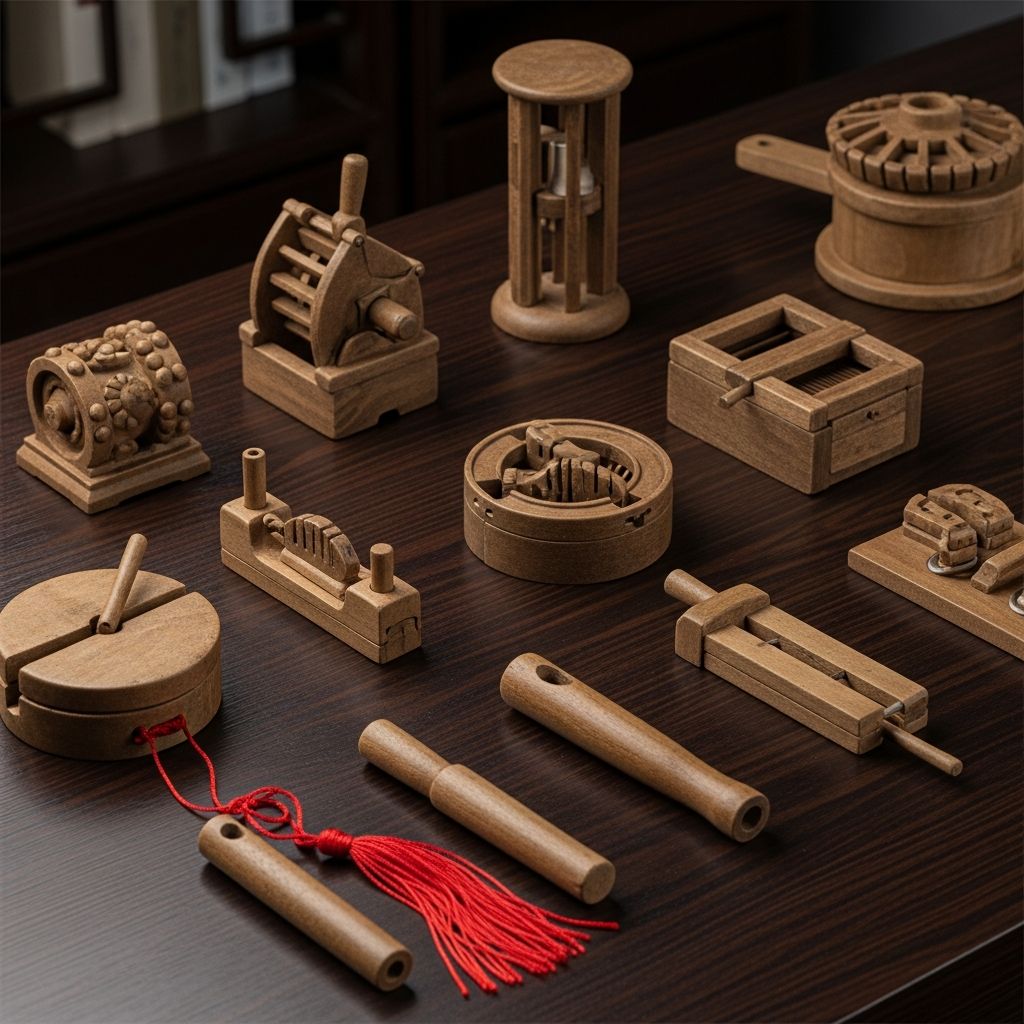
Ancient China stands as a cornerstone of human innovation, producing inventions that fundamentally altered the course of global history. These creations spanned agriculture, warfare, navigation, communication, and everyday utilities, influencing societies far beyond its borders. While the Four Great Inventions—papermaking, printing, gunpowder, and the compass—are widely celebrated, numerous other breakthroughs demonstrate the depth of Chinese ingenuity during dynasties from the Neolithic period to the Song era.
The Foundations of Knowledge: Papermaking and Printing
Papermaking emerged as a transformative invention around 105 AD, credited to Cai Lun, a court official during the Han dynasty. Prior to this, writing relied on expensive silk or cumbersome bamboo slips. By processing mulberry bark, rags, and hemp, Cai Lun created a lightweight, affordable medium that democratized literacy and record-keeping. This innovation spread via the Silk Road, reaching the Islamic world by the 8th century and Europe by the 12th, fueling the Renaissance.
Building on paper, printing techniques revolutionized information dissemination. Woodblock printing appeared around 600 AD, allowing entire pages to be carved and inked for mass replication of texts like Buddhist scriptures. Bi Sheng advanced this in the 11th century Song dynasty with movable clay type, enabling flexible, reusable printing. Though labor-intensive, it produced affordable books for scholars and commoners alike, boosting education and administration.
Navigational Mastery: The Compass and Maritime Advances
The magnetic compass, one of ancient China’s most pivotal contributions, originated in the Han dynasty (202 BC–220 AD) for divination using lodestone spoons. By the Song dynasty (11th century), it evolved into a practical navigation tool—a magnetized needle floating in water, minimizing motion interference for seafaring. This enabled Chinese sailors to venture to East Africa, promoting trade and exploration that later influenced European voyages.
Complementing the compass were engineering feats like the sternpost rudder (1st century AD) and paddleboats (4th century BC), which enhanced ship maneuverability and propulsion. These innovations supported vast maritime networks, underscoring China’s early dominance in naval architecture.
Explosive Power: Gunpowder and Its Legacy
Developed by Taoist alchemists in the 9th century Tang dynasty while seeking an immortality elixir, gunpowder combined charcoal, sulfur, and saltpeter. Initially for fireworks and signals, it soon powered military rockets, bombs, and cannons by the Song era (around 1230 AD). A 1332 bronze cannon, the world’s oldest extant, exemplifies this shift, breaching city walls and reshaping warfare globally as it spread westward.
Agricultural Revolutions: Tools for Abundance
China’s agricultural innovations sustained massive populations. The Neolithic Longshan culture (c. 3000–2000 BC) introduced the plow, enabling surplus production that birthed the Shang dynasty. Later, the heavy moldboard iron plow and multiple-tube seed drill (2nd century BC) mechanized planting, reducing waste and boosting yields. Iron smelting, flourishing from the 5th century BC Zhou dynasty, produced durable tools, with the Han government monopolizing production for efficiency.
Other aids included the wheelbarrow (invented for military logistics) and horse collar, which prevented choking during heavy loads, revolutionizing transport and farming.
| Invention | Dynasty/Era | Impact |
|---|---|---|
| Moldboard Plow | Han (202 BC–220 AD) | Increased tilling efficiency on heavy soils |
| Seed Drill | 2nd century BC | Precise seeding for higher crop yields |
| Wheelbarrow | 1st–4th century AD | Improved labor in farms and battlefields |
| Horse Collar | Warring States (475–221 BC) | Enabled stronger animal-powered plowing |
Metallurgy and Engineering Marvels
Cast iron production began in the 4th century BCE, leveraging refractory clays and phosphorus to lower melting points. Coal-fueled blast furnaces cast intricate shapes for plows and ornaments, predating Western methods by millennia. Bronze mastery by 1700 BC during the Shang dynasty produced ritual vessels and weapons, marking the Bronze Age.
Mechanical ingenuity shone in water-powered clockworks with escapement mechanisms (8th century) and chain drives (11th century), powering automatons and puppet theaters. Paddlewheel boats and early helicopters via rotor prototypes hinted at aviation precursors.
Everyday Innovations: From Kitchen to Cosmos
- Abacus: An ancient calculating device, still used today for rapid arithmetic, originating in the Zhou dynasty.
- Seismograph: Zhang Heng’s 132 AD bronze vessel detected distant earthquakes via dropping balls, an early seismology triumph.
- Toothbrush: Tang dynasty (7th–9th century) hog-bristle on bamboo handles improved oral hygiene.
- Soy Sauce: Fermented from soybeans, a global culinary staple born in ancient China.
- Tea: Cultivated for millennia, spreading worldwide as a beverage and medicine.
- Kites: Early aerodynamic experiments led to modern aviation insights.
Brine mining (500 BC) used deep bamboo-drilled wells, akin to oil rigs, extracting salt vital for preservation.
Global Dissemination and Enduring Influence
These inventions traversed continents via trade routes, transforming societies. Paper and printing ignited intellectual revolutions; gunpowder redefined combat; the compass opened oceans. Agriculture sustained empires, while tools like the abacus persist in commerce. China’s innovations underscore a holistic approach—blending philosophy, science, and practicality.
Frequently Asked Questions (FAQs)
What are the Four Great Inventions of ancient China?
Papermaking (105 AD), printing (woodblock ~600 AD, movable type 11th century), gunpowder (9th century), and the compass (11th century for navigation).
How did gunpowder change the world?
It evolved from elixirs to fireworks, then weapons like cannons, spreading warfare tech globally by the 13th century.
Did ancient China invent the plow?
Yes, Neolithic plows (3000 BC) and advanced iron versions supported massive populations.
Who invented the seismograph?
Zhang Heng in 132 AD, detecting quakes up to 500 km away.
How did Chinese printing precede Gutenberg?
Woodblock by 600 AD and movable type by Bi Sheng (1040s), enabling mass books centuries earlier.
References
- 20 Chinese Inventions That Have Revolutionized Our Lives — Palos Verdes Pulse. n.d. https://www.palosverdespulse.com/blog/chineseinventions
- List of Chinese inventions — Wikipedia. n.d. https://en.wikipedia.org/wiki/List_of_Chinese_inventions
- Chinese Inventions — Asia Society. n.d. https://asiasociety.org/education/chinese-inventions
- Top 20 Ancient Chinese Inventions — mrssimmons6thss2016-2017.weebly.com. n.d. https://mrssimmons6thss2016-2017.weebly.com/uploads/2/3/1/1/23118740/20_ancient_china_inventions.pdf
- Four Great Inventions of China — Agriculture Consulate General of the People’s Republic of China in Toronto. 2023-02-10. https://ag.china-embassy.gov.cn/eng/zgyabjw/202302/t20230210_11023529.htm

Medha Deb is an editor with a master's degree in Applied Linguistics from the University of Hyderabad. She believes that her qualification has helped her develop a deep understanding of language and its application in various contexts. Medha specializes in the areas of beauty, health, sports, and wellness and is committed to ensuring that the content on the website is…