
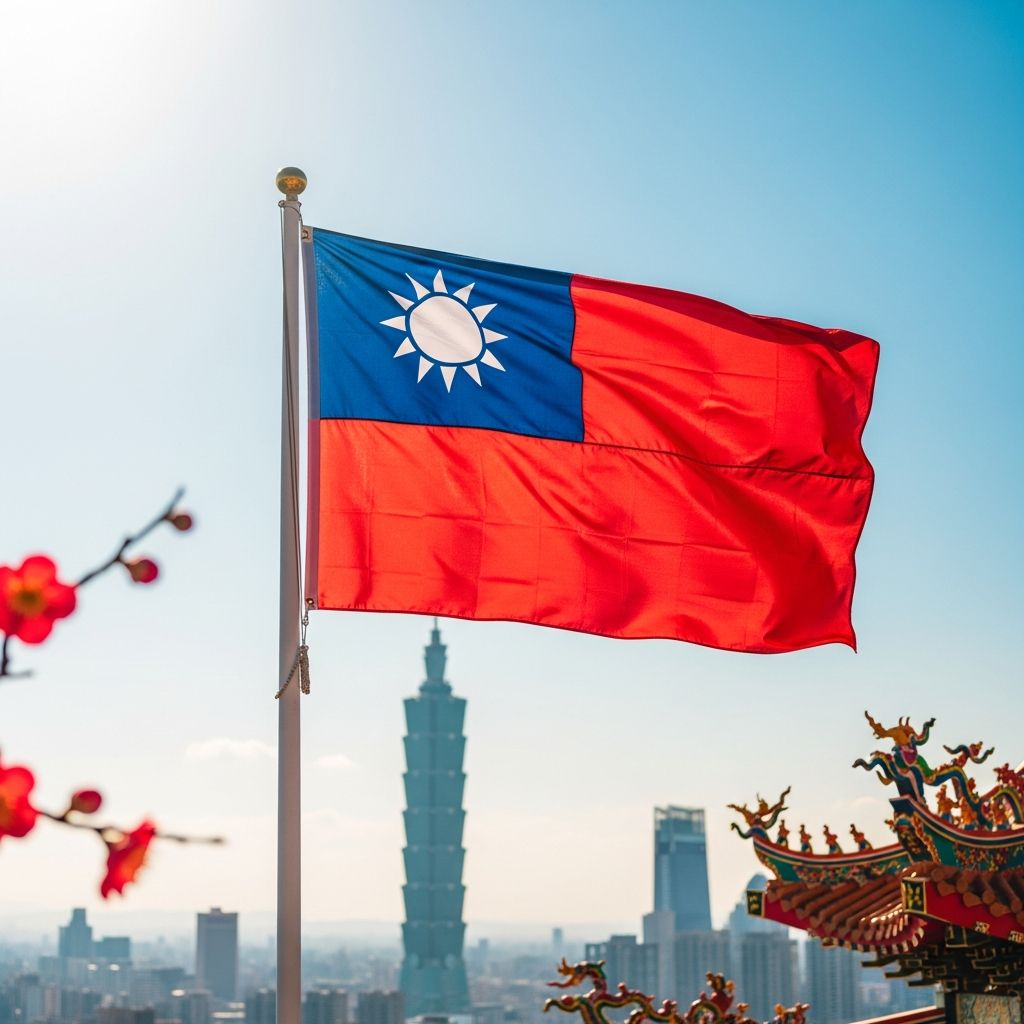
Double Ten Day, observed every October 10, stands as one of the most important public holidays in Taiwan, officially known as the Republic of China (ROC). This day honors the pivotal Wuchang Uprising of 1911, which ignited the Xinhai Revolution and led to the downfall of China’s Qing Dynasty after over two millennia of imperial rule. What began as a revolutionary spark in mainland China has evolved into a vibrant celebration of national identity, democracy, and resilience in Taiwan.
The Spark of Revolution: Origins in 1911
The story of Double Ten Day traces back to a dramatic moment on October 10, 1911, in Wuchang, a district now part of Wuhan in Hubei Province. Revolutionaries, frustrated with the weakening Qing Dynasty’s corruption, foreign influences, and failure to modernize, had been plotting an overthrow. A premature bomb explosion the day before forced their hand, leading to an impromptu uprising that spread like wildfire across China.
Key figures like Sun Yat-sen, who founded the Tongmenghui alliance while in exile abroad, played crucial roles in rallying support. Though Sun was not present at Wuchang, his vision of a republican government inspired the rebels. The uprising marked the beginning of the Xinhai Revolution, culminating in the Qing abdication and the ROC’s formal establishment on January 1, 1912. The ‘double ten’ name simply reflects the date: 10/10.
From Mainland China to Taiwan: A Turbulent Journey
Following the ROC’s founding, China plunged into warlord eras, Japanese invasion, and civil war between Nationalists (Kuomintang, or KMT) under Chiang Kai-shek and Communists led by Mao Zedong. After the KMT’s defeat in 1949, the ROC government relocated to Taiwan, bringing with it the institutions, flag, and symbols of the republic.
In Taiwan, Double Ten Day transformed from a mainland commemoration into a symbol of the ROC’s survival and distinct identity separate from the People’s Republic of China (PRC) on the mainland. It underscores Taiwan’s commitment to democratic governance, especially after martial law ended in 1987, allowing for greater public participation in celebrations.
Modern Celebrations: Parades, Flags, and Festivities
Taiwan’s Double Ten Day is a three-day weekend affair, blending solemn ceremonies with joyous public events. The day kicks off with a flag-raising ceremony at the Presidential Office Building in Taipei, where the ROC flag—the blue canton with white sun on a red field—is hoisted amid national anthem renditions.
The highlight is the grand National Day Celebration parade along Ketagalan Boulevard, featuring precision marching bands, floats representing Taiwan’s indigenous peoples, industries, and achievements, as well as performances by athletes, firefighters, and police. Fireworks light up the sky in the evening, capping off a day of national pride.
- Flag-Raising Ceremony: Dawn event at key landmarks, symbolizing unity.
- Military and Civic Parade: Thousands participate, showcasing discipline and diversity.
- Cultural Performances: Traditional dances, music from various ethnic groups.
- Fireworks and Concerts: Evening spectacles in major cities like Taipei and Kaohsiung.
- Public Holidays: October 10 is off, often extended for family gatherings.
Beyond Taipei, celebrations ripple across Taiwan with local fairs, temple visits, and family reunions. Businesses offer promotions, and tourism spikes as visitors flock to witness the pageantry.
Key Figures and Symbols of the Holiday
Sun Yat-sen, revered as the ‘Father of the Nation,’ looms large over Double Ten Day. Statues of him adorn Zhongshan (his honorific name) Roads nationwide, and his Three Principles of the People—nationalism, democracy, and people’s livelihood—form the ideological backbone of the ROC.
Chiang Kai-shek, who led the KMT retreat to Taiwan, also shaped early celebrations with military parades emphasizing anti-communism. Today, symbols like the ROC flag and anthem reinforce national cohesion amid ongoing cross-strait tensions.
| Symbol | Meaning | Usage on Double Ten Day |
|---|---|---|
| ROC Flag | Blue sky, white sun, red earth | Raised at ceremonies; ubiquitous in decorations |
| National Anthem | ‘Three Principles of the People’ | Sung at all official events |
| Sun Yat-sen Portrait | Revolutionary founder | Displayed prominently in parades |
| Zhongshan Road | Honor for Sun | Parade routes and street names |
Cultural and Political Significance Today
In contemporary Taiwan, Double Ten Day navigates complex identities. For many, it’s a celebration of Taiwan’s democratic achievements and multicultural fabric, including Hoklo, Hakka, indigenous, and new immigrant communities. Parades now highlight civilian heroes like rescue teams, softening the military focus of past decades.
Politically, it asserts the ROC’s legitimacy against PRC claims, promoting values like freedom and rule of law. Debates persist: some view it as ROC-centric rather than purely ‘Taiwanese,’ fueling discussions on national identity amid independence movements. Yet, it unites citizens in pride over Taiwan’s economic miracles and global standing.
Global Observance and Diaspora Connections
Double Ten Day resonates beyond Taiwan in overseas Chinese communities, especially in the US, Canada, and Southeast Asia. Chinatowns host events with lion dances, flag ceremonies, and feasts, honoring shared revolutionary heritage while supporting Taiwan’s democracy.
In Hong Kong and even mainland China historically, it was marked, though suppressed post-1949. Today, it symbolizes resistance to authoritarianism for some diaspora members.
Common Misconceptions Clarified
- Myth: It’s Taiwan’s ‘birthday.’ Fact: Taiwan was under Japanese rule in 1911; it’s the ROC’s national day.
- Myth: Solely KMT party holiday. Fact: Commemorates the broader Xinhai Revolution, not just one party.
- Myth: Republic founded exactly on 10/10. Fact: Uprising started then; formal founding was 1912.
Frequently Asked Questions (FAQs)
What is the official name of Double Ten Day?
It is the National Day of the Republic of China, or Shuāng Shí Jié (雙十節) in Mandarin.
Is Double Ten Day a public holiday?
Yes, October 10 is a statutory holiday in Taiwan, often creating a long weekend.
Why October 10 specifically?
It marks the Wuchang Uprising’s start, symbolized by the ‘double ten’ date.
How has the celebration changed over time?
From militaristic parades to inclusive events featuring civilians and culture.
Does mainland China celebrate it?
No, the PRC observes its own National Day on October 1; Double Ten is suppressed there.
Evolving Traditions and Future Outlook
As Taiwan matures democratically, Double Ten Day adapts, incorporating indigenous rights displays and tech innovations like drone shows. Amid geopolitical shifts, it reinforces Taiwan’s vibrant civil society. Families picnic in national parks, schools teach its history, and it fosters unity in diversity—a testament to a revolution that continues to inspire.
This holiday encapsulates Taiwan’s journey from revolution to republic, blending history with hope for the future. Whether through grand spectacles or quiet reflections, Double Ten Day reminds all of the enduring quest for self-determination.
References
- Double Ten Day in Taiwan: History, Celebrations, and Why Years … — Community Center. 2023. https://communitycenter.org.tw/celebrate-double-ten-day-in-taipei-history-celebrations-and-meaning/
- What Is Double Ten Day? A 2025 Guide — Remitly. 2025. https://www.remitly.com/blog/lifestyle-culture/double-ten-day/
- Double Ten: Taiwan’s National Day (sort of…) — Life of Taiwan. N/A. https://lifeoftaiwan.com/history/double-ten-taiwans-national-day-sort-of/
- Taiwan Double Ten Day Holiday Guide — Taiwan Travel Blog. N/A. https://taiwantravelblog.com/taiwan-double-ten-day-holiday-guide/
- National Day of the Republic of China — Wikipedia. 2026-04-01. https://en.wikipedia.org/wiki/National_Day_of_the_Republic_of_China
- 100 Years of History Behind “Double Ten” Day of the R.O.C. — Taiwanese American. 2011-10. https://www.taiwaneseamerican.org/2011/10/100-years-of-history-behind-double-ten-day-of-the-r-o-c/
- Double Ten Day — OFTaiwan. N/A. https://oftaiwan.org/culture/double-ten-day/

- Integrated M.A. in Applied Linguistics, University of Hyderabad
- 5+ years in editorial, instructional, SEO, and research-based writing
Sneha is a relationships and lifestyle writer with a strong foundation in applied linguistics and certified training in relationship coaching. She brings over five years of writing experience to theskillvault, crafting thoughtful, research-driven content that empowers readers to build healthier relationships, boost emotional well-being, and embrace holistic living. Her writing and insights reflect the belief that beauty, happiness, and wellness…