
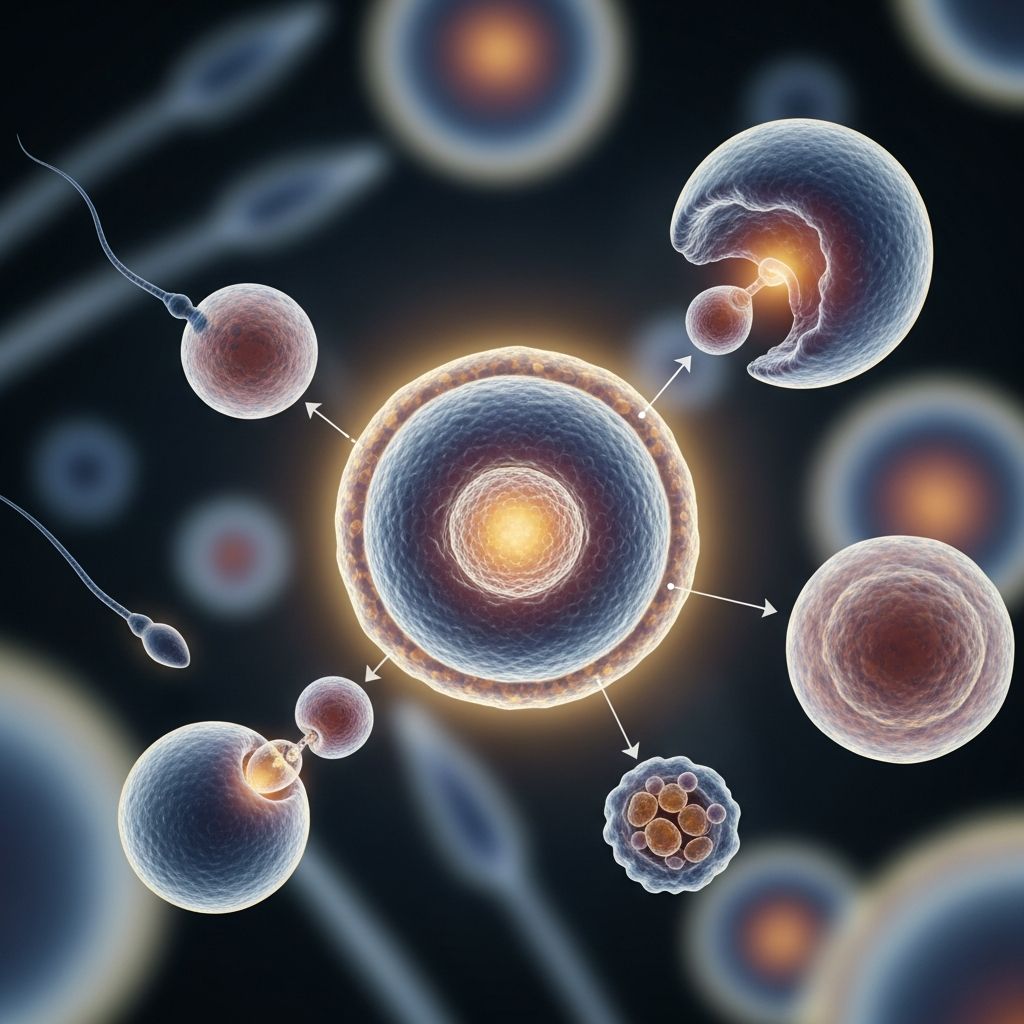
Embryology stands at the crossroads of biology and medicine, meticulously charting the extraordinary journey from a single fertilized cell to a fully formed newborn. This discipline examines the prenatal phases of development, revealing how gametes unite, embryos form, and fetuses mature. Understanding these processes not only illuminates the origins of life but also underpins advancements in fertility treatments, birth defect prevention, and regenerative medicine.
Defining the Core of Embryology
At its essence, embryology investigates the formation and growth of embryos and fetuses, spanning from the moment of fertilization until birth. Derived from Greek roots meaning ‘unborn’ and ‘study,’ it encompasses the biological mechanisms driving cellular division, tissue differentiation, and organogenesis in various species, with a primary focus on humans.
The field divides prenatal development into distinct periods: the pre-embryonic stage (first two weeks), embryonic stage (weeks 3-8), and fetal stage (week 9 to birth). Each phase builds upon the last, transforming a zygote—a single cell—into a complex organism with functioning systems.
Historical Foundations and Evolutionary Insights
Embryology’s roots trace back to ancient philosophers like Aristotle, who pondered whether embryos pre-existed in miniature form (preformationism) or gradually differentiated from undifferentiated material (epigenesis). Early microscopy in the 17th century, pioneered by Marcello Malpighi, revealed initial structures but clung to preformationist views.
The 19th century brought cellular biology and comparative studies, shifting paradigms. Karl Ernst von Baer’s discovery of germ layers in the 1820s laid groundwork for modern understanding, while the 20th century’s genetic revolution integrated molecular biology, highlighting gene expression’s role in development.
Evolutionary embryology, championed by Ernst Haeckel (though his ‘ontogeny recapitulates phylogeny’ is now nuanced), compares developmental stages across species to infer common ancestry. Shared embryonic features, like gill slits in vertebrates, underscore deep biological connections.
Key Stages of Prenatal Development
Prenatal growth unfolds in orchestrated stages, each marked by milestones essential for viability.
- Pre-embryonic Phase (Weeks 1-2): Fertilization occurs when sperm penetrates the ovum, forming a zygote with a diploid nucleus. Rapid cleavages produce a morula (solid cell ball) by day 4, then a blastocyst with an inner cell mass (future embryo) and trophoblast (placental precursor). Implantation into the uterine wall follows around day 6-10.
- Embryonic Phase (Weeks 3-8): Gastrulation forms three germ layers: ectoderm (skin, nerves), mesoderm (muscles, bones, heart), endoderm (gut, lungs). Organogenesis ensues—neural tube closes (week 4), heart beats (week 5), limbs bud (week 6). By week 8, the embryo measures ~3 cm with basic organ systems.
- Fetal Phase (Week 9-Birth): Growth accelerates; organs refine. Viability emerges around week 24. Milestones include fetal movement (week 16), lung maturation (week 36), and fat deposition for thermoregulation.
| Stage | Duration | Key Events | Size (Crown-Rump) |
|---|---|---|---|
| Pre-embryonic | Weeks 1-2 | Fertilization, cleavage, implantation | Microscopic to 2mm |
| Embryonic | Weeks 3-8 | Gastrulation, organogenesis, heart beat | 3-30mm |
| Fetal | Weeks 9-38 | Organ maturation, growth, viability | 30mm to 50cm |
This table illustrates the progression, highlighting vulnerability peaks during organogenesis when teratogens pose highest risks.
The Germ Layers: Building Blocks of the Body
Central to embryology are the three primary germ layers established during gastrulation around week 3. These layers differentiate into all tissues:
- Ectoderm: Outer layer yielding epidermis, hair, nervous system, pituitary, lens.
- Mesoderm: Middle layer forming skeleton, muscles, circulatory system, kidneys, gonads.
- Endoderm: Inner layer developing lungs, liver, pancreas, thyroid, bladder lining.
Disruptions here lead to congenital anomalies; e.g., neural tube defects from ectodermal issues.
Teratology: Decoding Birth Defects
Teratology, embryology’s study of malformations, identifies causes like genetic mutations, infections (e.g., Zika), drugs (thalidomide), or maternal conditions (diabetes). Critical periods align with organ formation; prevention via folic acid supplementation reduces neural tube defects by 70%.
Modern imaging like ultrasound and MRI aids early detection, enabling interventions.
Embryologists: Architects of Reproductive Success
Embryologists are specialized experts managing gametes and embryos in fertility labs. Holding advanced degrees, they oversee IVF: egg retrieval, fertilization, embryo culture, biopsy for PGT, cryopreservation, and transfer.
In research, they pioneer stem cell therapies and organoids—mini-organs from pluripotent cells—advancing regenerative medicine.
Modern Frontiers in Embryology
Today, embryology intersects with genomics (CRISPR editing), AI-driven imaging, and bioethics. IVF success rates exceed 50% for select groups, with time-lapse microscopy optimizing selections. Synthetic embryos from stem cells promise ethical models for study.[10]
Challenges persist: preterm birth (10% globally), infertility (15% couples), and climate impacts on gamete quality.
Frequently Asked Questions (FAQs)
What distinguishes an embryo from a fetus?
An embryo spans weeks 1-8, focusing on organ formation; a fetus from week 9 emphasizes growth and maturation.
How does IVF rely on embryology?
Embryologists handle fertilization, culture, and selection, boosting success by mimicking natural conditions.
What causes most birth defects?
Multifactorial: 20-30% genetic, 10% environmental teratogens, rest idiopathic; timing critical.
Can embryology inform evolution?
Yes, conserved developmental genes (Hox) across species reveal evolutionary ties.
Is prenatal sex determination embryological?
Yes, SRY gene on Y chromosome triggers testis development by week 7.
References
- Embryology — Wikipedia Contributors. 2023-10-15. https://en.wikipedia.org/wiki/Embryology
- Embryology | Health and Medicine | Research Starters — EBSCO. 2024-01-12. https://www.ebsco.com/research-starters/health-and-medicine/embryology
- Embryology, Week 1 – StatPearls — National Center for Biotechnology Information (NCBI). 2023-05-01. https://www.ncbi.nlm.nih.gov/books/NBK554562/
- Embryology | Description & History — Encyclopædia Britannica. 2024-02-20. https://www.britannica.com/science/embryology
- What is Embryology? — News-Medical.Net. 2023-11-08. https://www.news-medical.net/health/What-is-Embryology.aspx
- Embryology Basics | Early Development and Organ Systems — TeachMeAnatomy. 2024-03-15. https://teachmeanatomy.info/the-basics/embryology/

Medha Deb is an editor with a master's degree in Applied Linguistics from the University of Hyderabad. She believes that her qualification has helped her develop a deep understanding of language and its application in various contexts. Medha specializes in the areas of beauty, health, sports, and wellness and is committed to ensuring that the content on the website is…