
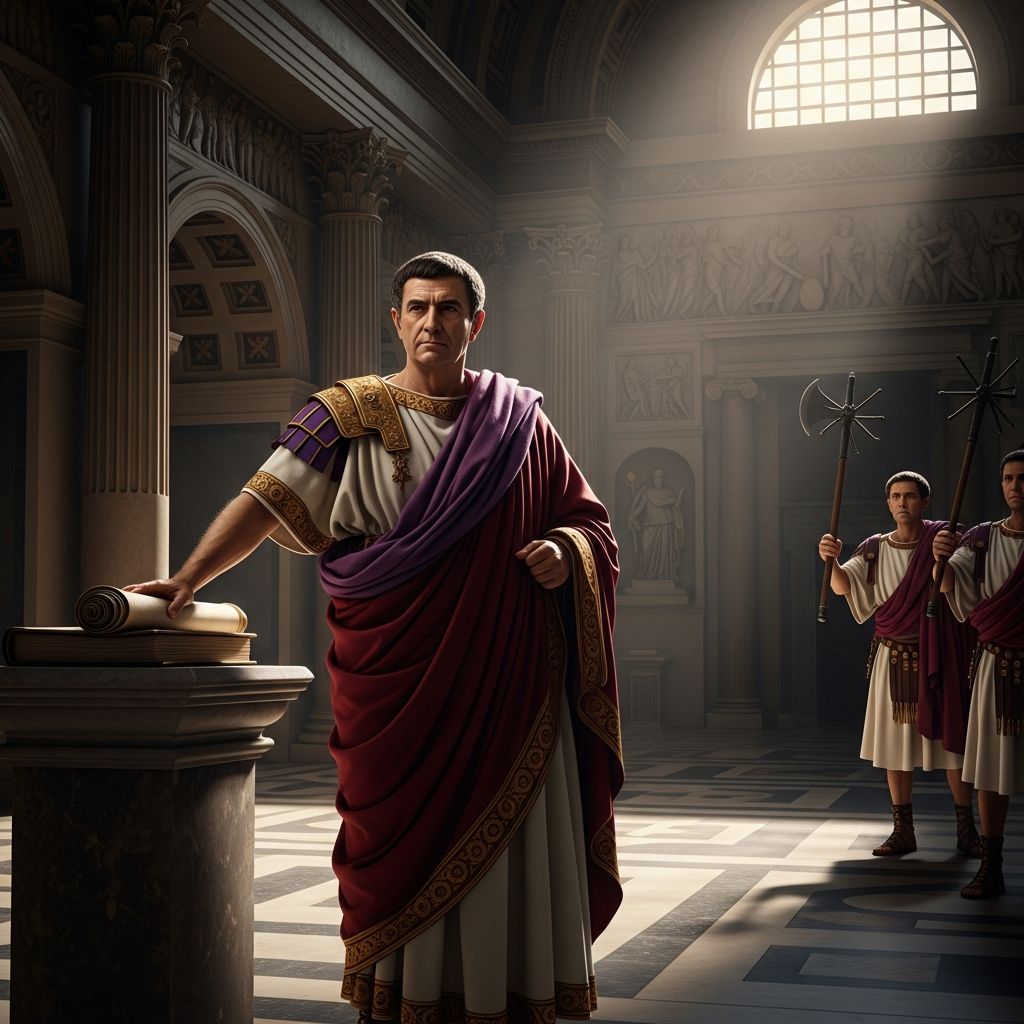
The praetor stood as one of the most versatile and influential figures in the Roman Republic’s governmental framework. These high-ranking officials wielded imperium, the authority to command armies and enforce laws, bridging the gap between judicial oversight and military leadership. Emerging in the early Republic, praetors adapted to Rome’s territorial expansion, evolving from singular legal experts to a cadre of administrators managing courts, provinces, and public spectacles.
Origins and Early Development of the Praetorship
The office of the praetor traces its roots to the turbulent transition from monarchy to republic around 509 BCE. Following the expulsion of the last king, Tarquinius Superbus, Rome initially experimented with a single chief magistrate called the praetor, who assumed many royal duties. This figure embodied supreme executive power, overseeing both civil administration and military affairs.
Concerns over concentrated authority, reminiscent of monarchical tyranny, prompted reforms. By 501 BCE, the dual consulship emerged, relegating the original praetor to a secondary role focused primarily on justice. The term ‘praetor’ derives from the Latin praeo, meaning ‘to go before’ or ‘to lead,’ reflecting their role in presiding over legal proceedings and guiding the populace.
Initially restricted to patricians, the office opened to plebeians around 337 BCE amid the Struggle of the Orders, broadening political participation. Livy records that this change addressed plebeian demands for access to high magistracies while preserving patrician influence in justice. As Rome’s population and legal disputes grew, the need for dedicated judicial officers became acute, solidifying the praetor’s foundational purpose.
Expansion of Praetorian Offices: From One to Eight
Rome’s relentless expansion necessitated more praetors. In 366 BCE, the first praetor was established specifically for urban justice. By 242 BCE, a second, the Praetor Peregrinus, was added to handle cases involving foreigners, reflecting Rome’s burgeoning international ties.
The table below outlines key milestones in the praetorship’s numerical growth:
| Year BCE | Number of Praetors | Key Changes |
|---|---|---|
| c. 366 | 1 | Praetor Urbanus created for citizen disputes. |
| 242 | 2 | Praetor Peregrinus added for non-citizen cases. |
| 227 | 4 | Two assigned to new provinces (Sicily, Sardinia). |
| 197 | 6 | Expansion for Spanish provinces. |
| 81 (Sulla) | 8 | Further provincial governors. |
Julius Caesar temporarily raised the number to 16 in 46 BCE to manage his conquests, though it reverted post-assassination. This proliferation mirrored Rome’s imperial ambitions, transforming praetors into provincial governors.
Judicial Authority: Pillars of Roman Law
Praetors were the backbone of Rome’s legal system, issuing edicta—annual proclamations outlining how they would interpret laws. The Praetor Urbanus adjudicated disputes between citizens, while the Peregrinus managed quis custodiet ipsos custodes cases blending Roman and foreign law, pioneering principles of equity.
- Civil Cases: Property, contracts, inheritance—praetors could grant interdicta (injunctions) or appoint judges.
- Criminal Jurisdiction: Later, specialized courts under praetors tried extortion, embezzlement, and treason.
- Equity Powers: In gaps of strict law, praetors applied fairness, influencing the ius gentium (law of nations).
Under Emperor Hadrian (117-138 CE), praetors oversaw criminal courts and public games, blending tradition with imperial oversight. Their edicts formed the ius honorarium, supplementing the Twelve Tables and evolving Roman jurisprudence.
Military and Provincial Governance
Beyond courts, praetors held imperium, enabling army command. In consuls’ absence, they led legions, as seen in praetors governing Sicily from 227 BCE or Spain post-197 BCE. Provincial praetors collected taxes, maintained order, and defended frontiers, often transitioning to proconsular roles post-term.
This dual mandate fostered corruption; the quaestio de repetundis court, chaired by the Praetor Urbanus, prosecuted venal governors. Figures like Quintus Sertorius exemplified praetorian military prowess, wielding legions in Spain with notable success.
Election, Qualifications, and Career Trajectory
Praetors were elected annually by the Comitia Centuriata, a weighted assembly favoring the wealthy. The Lex Villia Annalis (180 BCE) mandated a minimum age of 40 and prior service as quaestor or aedile, embedding praetorship in the cursus honorum.
Eligibility required:
- Roman citizenship and patrician/plebeian status post-337 BCE.
- Military experience and oratorical skill.
- Sufficient wealth for campaigns and lictors’ support.
Post-praetorship, many became propraetors or proconsuls, culminating in consulships for the elite. This ladder ensured experienced leadership.
Notable Praetors and Their Legacies
Several praetors left indelible marks:
- Marcus Fulvius Nobilior (189 BCE): Conquered Aetolia, celebrated with lavish games.
- Publius Cornelius Dolabella (81 BCE): Served under Sulla, later proscribed.
- Caecilius Metellus (3rd cent. BCE): Pioneered provincial administration in Sicily.
Praetors like these exemplified the office’s breadth, from battlefield triumphs to legal innovations.
Transformation into the Empire
The Republic’s fall altered praetorship. Augustus retained eight praetors for urban duties, diminishing military roles. By the Principate, they focused on jurisdiction and games, with provinces under legates.
Yet, praetors influenced law profoundly; their edicts inspired Justinian’s Digest (533 CE), preserving Roman legal heritage.
Frequently Asked Questions
What was the primary role of a praetor?
Praetors primarily administered justice, presided over courts, and issued legal edicts, while also holding military imperium.
How did praetors differ from consuls?
Consuls were senior with broader powers; praetors assisted in justice and provinces, serving as consulship prerequisites.
Could plebeians become praetors?
Yes, after 337 BCE, opening the office amid class struggles.
How many praetors existed at Rome’s peak?
Typically eight by late Republic, expanded temporarily by Caesar.
What powers did praetors hold in provinces?
Provincial praetors governed with imperium, commanding troops, taxing, and judging local disputes.
Conclusion: Enduring Influence of Praetorian Authority
Praetors embodied Rome’s adaptive genius, merging law, war, and governance. Their legacy endures in modern judiciary concepts and administrative hierarchies.
References
- Praetor – Judge, Commander, Administrator of the Roman Republic — The SPQR Historian (YouTube). c. 2023. https://www.youtube.com/watch?v=C02ZAzlFcQk
- Roman Praetors — UNRV Roman History. Accessed 2026. https://www.unrv.com/government/praetors.php
- Praetor | Magistrate, Law & Jurisdiction — Encyclopaedia Britannica. Updated 2023-10-12. https://www.britannica.com/topic/praetor
- Praetor — World History Encyclopedia. 2016-08-03. https://www.worldhistory.org/praetor/
- Praetor — Livius.org. Accessed 2026. https://www.livius.org/articles/concept/praetor/

- Integrated M.A. in Applied Linguistics, University of Hyderabad
- 5+ years in editorial, instructional, SEO, and research-based writing
Sneha is a relationships and lifestyle writer with a strong foundation in applied linguistics and certified training in relationship coaching. She brings over five years of writing experience to theskillvault, crafting thoughtful, research-driven content that empowers readers to build healthier relationships, boost emotional well-being, and embrace holistic living. Her writing and insights reflect the belief that beauty, happiness, and wellness…