
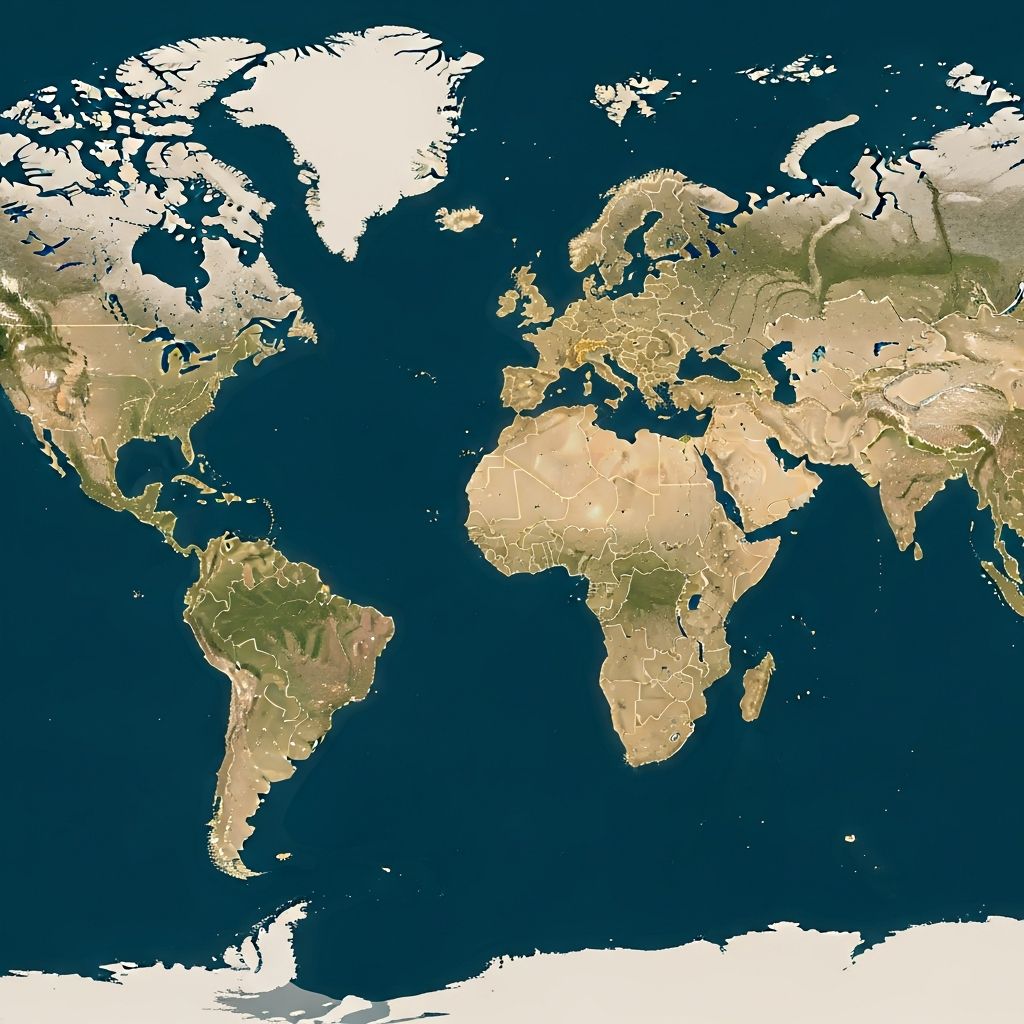
The German language, a cornerstone of Western European culture, extends far beyond its continental heartland. Spoken by approximately 130-135 million people as a first language, it holds official status in six countries and maintains vibrant communities across multiple continents. This article delves into its primary strongholds, dialects, global diaspora, and cultural significance, highlighting why German remains a key world language today.
Core European Nations: Pillars of German
Germany stands as the epicenter, home to the largest population of native speakers. With around 75 million native speakers comprising 91.8% of its 84.6 million residents, Standard German (Hochdeutsch) serves as the de facto official language. Regional dialects like Bavarian, Swabian, and Saxon enrich the linguistic tapestry, each featuring distinct pronunciations and vocabularies that reflect local histories.
Austria, with 8 million native speakers (93% of its population), treats German as its sole nationwide official language. Austro-Bavarian dialects dominate, influencing everyday speech and literature. Switzerland integrates German as one of four national languages, spoken natively by 64.6% or 5.3 million people across 17 of 26 cantons. Swiss German (Schwiizerdütsch), an Alemannic variant, differs markedly from Standard German, used mainly in informal settings while High German prevails in writing and formal contexts.
Liechtenstein, nestled between Switzerland and Austria, adopts German as its official language, with 86% of residents speaking it natively and 92% overall. Local dialects echo Swiss German with unique nuances. Luxembourg features German alongside French and Luxembourgish; German is widely used officially and in media, blending with the national tongue to form Luxembourgish German.
Belgium’s German-speaking Community in the east, representing 0.6% of the population (about 73,000 natives), holds co-official status. This enclave preserves Standard German amid French and Dutch influences.
Official Status and Speaker Statistics
German’s official recognition spans these six nations, forming the Sprachraum—a central European zone where it is a primary or co-official language. Annual meetings of German-speaking countries since 2004 foster orthography and cultural ties among Germany, Austria, Belgium, Liechtenstein, Luxembourg, and Switzerland.
| Country | Population | Native Speakers | % Native | Notes |
|---|---|---|---|---|
| Germany | 84.6M | 75.1M | 91.8% | De facto sole official |
| Austria | ~9M | 8M | 93% | Sole nationwide official |
| Switzerland | ~8.7M | 5.3M | 64.6% | Co-official in 17 cantons |
| Belgium | 11.8M | 73K | 0.6% | Co-official in east |
| Liechtenstein | ~39K | ~33K | 86% | National language |
| Luxembourg | ~660K | ~400K+ | Significant | Co-official |
This table summarizes key demographics, underscoring Germany’s dominance while showing Switzerland’s multilingual balance.
Beyond Europe: Diaspora and Historical Legacies
German’s footprint extends globally due to migration, colonization, and trade. In South America, Brazil hosts the largest non-European communities, particularly in Rio Grande do Sul, Santa Catarina, Paraná, and São Paulo. Descendants of 19th-century immigrants speak dialects like Riograndenser Hunsrückisch; Standard German is recognized in municipalities like Pomerode. Hunsrik and East Pomeranian are official in select areas.
Namibia recognizes German as a national language among a minority, rooted in its history as German South-West Africa (Deutsch-Südwestafrika). Speakers, mainly settler descendants, maintain cultural ties.
In Oceania, New Zealand’s 36,642 German speakers (2013 census) rank it ninth overall, stemming from 19th-century immigration. Papua New Guinea preserves Unserdeutsch, a German creole from the former German colony, now endangered with ~100 speakers.
- Africa: Namibia’s German minority; pockets in South Africa and Tanzania from colonial eras.
- Americas: Brazil’s Hunsrückisch communities; smaller groups in Argentina, Paraguay, Uruguay, USA (e.g., Pennsylvania Dutch), Canada.
- Asia: Kazakhstan border regions; historical presence in China, Japan via trade.
- Other: German minorities in 42 countries worldwide, totaling ~7.5 million.
Dialect Diversity: From Hochdeutsch to Schwiizerdütsch
German’s varieties showcase its adaptability. Standard German unifies formal communication, but dialects define regional identities:
- High German (Hochdeutsch): Basis for media, education across core nations.
- Austro-Bavarian: Prevalent in Austria, southern Germany; melodic with unique idioms.
- Swiss German: Alemannic group; mutually intelligible variants per canton, unwritten in daily use.
- Luxembourgish German: Hybrid influenced by Letzebuergesch.
- Overseas Dialects: Hunsrückisch in Brazil retains archaic features; Unserdeutsch mixes German with English/Pidgin.
The Council for German Orthography ensures spelling consistency across borders.
Cultural and Economic Impact Worldwide
German’s global influence permeates literature (Goethe, Kafka), philosophy (Kant, Nietzsche), science (Einstein, Planck), and music (Bach, Beethoven). As the EU’s most spoken language, it drives business in engineering, automotive (Volkswagen, BMW), and tech. Learning German opens doors to 42 countries with mother-tongue speakers.
In education, Goethe-Institut promotes it globally. Economically, Germany’s export power amplifies its utility; Swiss precision industries and Austrian tourism rely on it too.
Learning German: Why and How in a Global Context
With 135 million speakers, German ranks 12th worldwide, ideal for careers in Europe-centric firms. Online platforms offer dialect exposure, from Swiss variants to Brazilian Hunsrückisch. Travelers benefit in the Alps or Namibian lodges.
Frequently Asked Questions (FAQs)
Which countries have German as an official language?
Germany, Austria, Switzerland (in 17 cantons), Liechtenstein, Belgium (German Community), and Luxembourg.
How many people speak German worldwide?
Over 130 million native speakers, plus millions more as a second language.
What is the most spoken German dialect?
Standard German is universal formally; Swiss German has 5+ million speakers informally.
Is German spoken outside Europe?
Yes, notably in Brazil, Namibia, USA, Canada, and New Zealand via immigrant communities.
Are German dialects mutually intelligible?
Often not fully; e.g., Swiss German differs greatly from Standard German.
References
- Exploring German-Speaking Communities Around the World — Olesen Tuition. 2023. https://www.olesentuition.co.uk/single-post/where-german-is-spoken-exploring-german-speaking-communities-around-the-world
- German language — Wikipedia. 2026-04-04. https://en.wikipedia.org/wiki/German_language
- German-Speaking Countries Around the World — Preply. 2024. https://preply.com/en/blog/german-speaking-countries/
- How Many People Speak German, And Where Is It Spoken? — Babbel. 2023. https://www.babbel.com/en/magazine/how-many-people-speak-german-and-where-is-it-spoken
- List of countries and territories where German is an official language — Wikipedia. 2026. https://en.wikipedia.org/wiki/List_of_countries_and_territories_where_German_is_an_official_language
- Mother tongue German – in 42 countries around the world — Deutschland.de. 2020-02-14. https://www.deutschland.de/en/topic/knowledge/mother-tongue-german-in-42-countries-around-the-world

- Integrated M.A. in Applied Linguistics, University of Hyderabad
- 5+ years in editorial, instructional, SEO, and research-based writing
Sneha is a relationships and lifestyle writer with a strong foundation in applied linguistics and certified training in relationship coaching. She brings over five years of writing experience to theskillvault, crafting thoughtful, research-driven content that empowers readers to build healthier relationships, boost emotional well-being, and embrace holistic living. Her writing and insights reflect the belief that beauty, happiness, and wellness…