
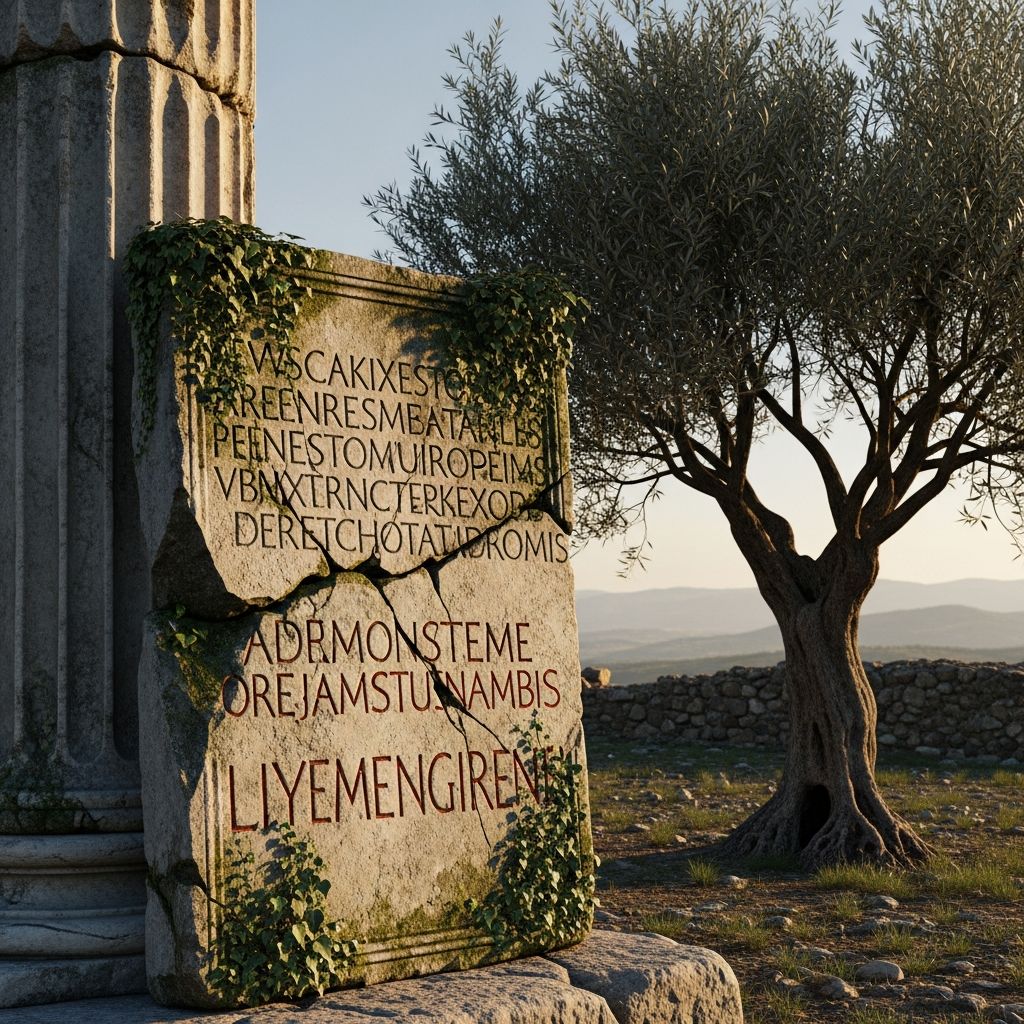
The Misconception Surrounding Vulgar Latin and Its True Nature
The designation “Vulgar Latin” carries with it considerable historical baggage and terminological confusion that has plagued scholarly discourse for centuries. Contrary to popular assumption, the term does not refer to crude, vulgar, or inferior speech patterns. Rather, it represents the diverse, living everyday language spoken across the Roman Empire by millions of ordinary people across multiple centuries and geographic regions. The modern interpretation of this linguistic phenomenon emerged during the Renaissance when Italian scholars theorized that Romance languages descended from a “corrupted” form of Latin distinct from the formal literary variety. This conceptual framework, while influential, obscured the reality that written and spoken Latin existed along a continuum, with informal speech simply evolving more rapidly than formal writing.
Linguistic Terminology and Scholarly Evolution
Understanding Vulgar Latin requires clarity regarding its multiple designations. Scholars employ various terms interchangeably, including Colloquial Latin, Popular Latin, Spoken Latin, and Vernacular Latin. Each designation attempts to capture the essence of non-formal linguistic registers that emerged from the Late Roman Republic onward. The terminology itself reflects the language’s fundamental characteristics: it represented how ordinary Romans genuinely communicated in daily interactions, trade, military service, and domestic settings.
During antiquity, Roman authors themselves recognized distinctions between formal and informal speech patterns, employing the phrases “sermo plebeius” and “sermo vulgaris,” meaning “common speech” or “people’s language.” These expressions could denote unadorned communication devoid of rhetorical embellishment, representing plain, straightforward discourse without elaborate stylistic flourishes. This ancient acknowledgment demonstrates that Romans consciously distinguished between elevated literary language and everyday expression.
Distinguishing Between Classical and Late Latin Registers
A fundamental misunderstanding pervades discussions of Vulgar Latin: the notion that it constituted a completely separate language from Classical Latin used exclusively by lower social classes while elites maintained Classical standards. Modern linguistic scholarship has thoroughly dismantled this simplistic dichotomy. Instead, evidence reveals a complex linguistic landscape where written and spoken varieties formed a natural continuum, much as contemporary languages demonstrate today. Speech consistently evolved faster than written language, while formalized written conventions exerted gradual pressure back upon spoken usage patterns.
Classical Latin, particularly in its stylistic sense, represented an exceptionally refined literary register that probably remained largely confined to educated written contexts. It is highly unlikely that spontaneous, informal conversation ever approximated the elaborate Classical style; consequently, virtually all naturally occurring speech would necessarily fall within what scholars term the Vulgar category. The period designated as Later Latin, commencing approximately the third century CE onward, increasingly exhibits characteristics that modern linguists identify as Vulgar features, particularly evident in texts such as the Vulgate Bible, which contain grammatical and vocabulary conventions diverging markedly from Classical norms.
Phonological Transformations in Vulgar Registers
Among the most significant linguistic shifts distinguishing Vulgar Latin from Classical standards are the profound phonological changes that gradually reshaped the language’s acoustic and rhythmic properties. One of the most striking transformations involved the systematic loss of the Classical vowel-length distinction system. In Classical Latin, vowels possessed designated long or short values that carried meaningful linguistic weight, functioning within metrical patterns and occasionally differentiating word meanings. Within Vulgar contexts, this systematic distinction collapsed into a modified system where long vowels became increasingly tense while short vowels became characteristically lax, precipitating wholesale alterations to the language’s overall rhythmic structure.
Evidence preserved in written texts demonstrates confusion between specific vowel pairs, particularly the interchange of ĭ with ē and ŭ with ō throughout western Romance territories. This phenomenon directly correlates with phonological developments observable in modern Romance languages descended from Latin. The strengthening of stress accent during the Late period triggered additional profound changes, including the systematic shortening and eventual elision of unstressed syllables. The transformation of “viridem” (green) into “virdem,” which subsequently became “verde” in multiple Romance languages, exemplifies this process tangibly. Similarly, “vinea” (vine) underwent reduction to “vinia,” from which French “vigne” and Spanish “viña” derived.
Vocabulary Preferences and Semantic Shifts
Vocabulary constitutes another domain where Vulgar Latin exhibited marked divergence from Classical conventions, with speakers progressively rejecting more restrained Classical terminology in favor of colorful, expressive popular alternatives. This preference manifested particularly through the adoption of derivative formations and diminutive constructions that conveyed nuance and emotional content more directly than Classical options.
Consider the vocabulary shift from “ferre” to “portare” for expressing the concept of carrying. The Classical verb “ferre” gradually yielded to “portare” throughout popular speech, ultimately becoming the standard root for this concept across Romance languages: French “porter,” Italian “portare,” Spanish “portar.” Similarly, the concept of singing underwent transformation as “canere” gave way to “cantare,” a repetitive formation suggesting continuous or iterative action. This verb evolved into French “chanter,” Spanish “cantar,” and Portuguese “cantar” respectively. The substitution of “vetulus” (little old man, a diminutive suggesting endearment or familiarity) for the Classical “vetus” (old) demonstrates the popular preference for expressive diminutive formations over austere Classical vocabulary. This development traces directly into Romanian “vechi,” Italian “vecchio,” and French “vieux.”
Comparative Analysis: Structural Differences Between Registers
| Linguistic Feature | Classical Latin | Vulgar Latin | Modern Romance Outcome |
|---|---|---|---|
| Vowel Length System | Systematically distinguished | Lost/confused | No vowel length distinction |
| Unstressed Syllables | Preserved clearly | Shortened/elided | Reduced syllable count |
| Vocabulary Choices | Restrained, formal | Expressive, colorful | Modern everyday terms |
| Stress Accent | Secondary prosodic feature | Increasingly primary | Dominant prosodic element |
| Diminutive Forms | Limited use | Frequent, productive | Extensively employed |
Chronological Development and Geographic Variation
Vulgar Latin was never a monolithic, uniform phenomenon confined to specific temporal or geographic boundaries. Rather, it represented a remarkably varied and inherently unstable linguistic landscape spanning many centuries across vast territorial expanses. Any generalizations attempting to characterize Vulgar Latin necessarily obscure tremendous internal variation and localized differences reflecting regional pronunciation patterns, vocabulary preferences, and grammatical tendencies. The Eastern Mediterranean regions maintained different linguistic characteristics than Western provinces; urban centers demonstrated different patterns than rural settlements; military garrisons developed specialized vocabulary distinct from civilian populations.
The evidence preserved in texts demonstrates conclusively that written and spoken Latin maintained continuous reciprocal influence. No insurmountable barrier separated elite speech from middle-class or lower-class communication; rather, sociolinguistic variation existed naturally, much as all contemporary languages exhibit social stratification without constituting genuinely different systems. Individuals navigated between registers flexibly, adjusting formality levels according to contextual requirements while fundamentally employing the same underlying language.
Medieval Latin and External Linguistic Influences
Following the Western Roman Empire’s collapse, Latin persisted through Medieval periods, increasingly transformed by external linguistic pressures and evolving communicative needs. The Vulgate Bible, containing numerous terms and constructions divergent from Classical precedents, profoundly influenced how medieval scholars and clergy employed Latin. Heavy reliance upon biblical vocabulary introduced extensive borrowings from Greek and Hebrew sources, supplemented by grammatical influences reflecting translation necessities. These modifications occurred predominantly among educated ecclesiastical and scholarly populations rather than general populations, yet they substantially enriched and modified Latin’s expressive capabilities.
Medieval theologians and scholars confronted persistent challenges expressing abstract philosophical concepts that Classical Latin had developed insufficiently. Translating Greek philosophical texts and biblical material required developing new terminology; consequently, scholars created innovative abstract-concept vocabulary largely absent from Classical usage. The challenge of expressing Platonic abstraction “the Truth” in Latin, for instance, necessitated circumlocution describing “what is always true.” This translation imperative drove linguistic innovation while simultaneously widening the divergence between Classical standards and contemporary practice.
Scholarly Debate and Modern Understanding
Modern scholarly consensus has substantially revised earlier perspectives regarding Vulgar Latin’s nature and significance. Contemporary linguistics, enriched by sociolinguistic frameworks developed since the 1960s, recognizes that linguistic variation across social classes, geographic regions, and temporal periods represents entirely natural phenomena rather than linguistic pathology. Such variation and linguistic flexibility typically confer advantages rather than constituting problems requiring remediation.
The imbalance between Classical and Vulgar scholarship reflects archival realities rather than intrinsic importance. Classical Latin dominates surviving written records because educated authors deliberately endeavored conforming to prestigious standardized conventions established by authorities like Aelius Donatus and Priscian. Spoken phenomena require indirect deduction from textual evidence, fragmentary documentary records, and comparative Romance language analysis. Consequently, scholars possess vastly more direct evidence regarding Classical standards while accessing Vulgar phenomena primarily through inference and linguistic reconstruction techniques.
Common Misconceptions Requiring Clarification
- Vulgar Latin did not represent inferior or degenerate language but rather natural spoken variation
- It was not exclusively lower-class speech; middle and upper-class individuals utilized Vulgar features in informal contexts
- Classical Latin was rarely if ever employed in spontaneous everyday communication even by educated individuals
- Vulgar Latin constitutes the direct ancestor of modern Romance languages, not Classical Latin
- The term “Vulgar” derives from Latin “vulgus” (the people) rather than suggesting crude or offensive characteristics
Frequently Asked Questions About Vulgar Latin
Q: Why is it called “Vulgar” Latin if it does not mean crude or inferior?
A: The designation derives from the Latin term “vulgus,” meaning “the people” or “the common population.” “Vulgar” in modern English carries negative connotations, but the original Latin terminology simply denoted popular or commonly-spoken varieties without pejorative implications. The unfortunate modern semantic drift has created enduring confusion regarding the term’s historical meaning.
Q: Did Classical Latin actually exist as a spoken language?
A: Almost certainly not in informal everyday contexts. Classical Latin, particularly in its stylistic sense, represented an elevated literary register cultivated through specialized education and employed in formal writing. Even educated Romans almost certainly spoke more casually in informal settings, meaning nearly all actual conversation would fall within categories modern scholars term Vulgar.
Q: How do modern Romance languages relate to Vulgar Latin?
A: Modern Romance languages—including French, Spanish, Italian, Portuguese, and Romanian—evolved directly from various Vulgar Latin registers spoken across different geographic regions during the Late Roman Empire and Medieval periods. This explains why these languages share consistent similarities in vocabulary, phonological patterns, and grammatical structures that diverge from Classical norms.
Q: What is the relationship between Vulgar Latin and the Vulgate Bible?
A: The Vulgate Bible, Jerome’s Late Latin translation of biblical texts created in the fourth century, contains numerous vocabulary items, grammatical constructions, and stylistic features characteristic of Late Vulgar Latin. It provides scholars with one of the most extensive documentary sources for understanding how Latin actually functioned beyond Classical literary conventions.
Q: Why do linguists rarely use the term “Vulgar Latin” in contemporary scholarship?
A: Modern linguists increasingly prefer more precise terminology such as “Late Latin,” “Spoken Latin,” or “Colloquial Latin” that avoids the pejorative connotations and theoretical ambiguities accumulated through centuries of usage. The term remains employed but with explicit recognition of its historical baggage and need for clarification regarding its actual referent.
References
- Vulgar Latin — Wikipedia (Wikimedia Foundation). Accessed 2026-04-05. https://en.wikipedia.org/wiki/Vulgar_Latin
- Vulgar Latin: Origins, Development & Influence — Britannica. Accessed 2026-04-05. https://www.britannica.com/topic/Vulgar-Latin
- Vulgar Latin — Oxford Classical Dictionary, Oxford University Press. Accessed 2026-04-05. https://academic.oup.com/edited-volume/61673/chapter/550565471
- How Vulgar: The Development of the Latin Language in the Medieval World — Brewminate. Accessed 2026-04-05. https://brewminate.com/how-vulgar-the-development-of-the-latin-language-in-the-medieval-world/

- Integrated M.A. in Applied Linguistics, University of Hyderabad
- 5+ years in editorial, instructional, SEO, and research-based writing
Sneha is a relationships and lifestyle writer with a strong foundation in applied linguistics and certified training in relationship coaching. She brings over five years of writing experience to theskillvault, crafting thoughtful, research-driven content that empowers readers to build healthier relationships, boost emotional well-being, and embrace holistic living. Her writing and insights reflect the belief that beauty, happiness, and wellness…